
The principles, and what is actually adjustable
Vaastu in an apartment is a negotiation with a plan somebody else drew. The useful distinction is between fixed elements — entrance position, wet-area location, structural walls, window positions — and adjustable ones, which is almost everything else. Our vaastu interiors page sets out the approach; the direction checker works out your flat's orientation.
| Element | Fixed or adjustable | Vaastu preference | Practical response in a flat |
|---|---|---|---|
| Main entrance | Fixed | North, east or north-east | Keep it clear, well lit, and unobstructed inside |
| Kitchen position | Fixed by plumbing | South-east | Control hob direction and storage mass instead |
| Hob / cooking direction | Adjustable | Cook facing east | Usually achievable within the same room |
| Bed position | Adjustable | Head to south or east | Almost always achievable |
| Heavy storage | Adjustable | South and west walls | Wardrobes and tall units placed accordingly |
| North-east corner | Adjustable | Light, clean, open | Avoid heavy joinery or a toilet here |
| Pooja placement | Adjustable | North-east; face east or north | See the pooja room guide |
| Mirror placement | Adjustable | North or east walls | Avoid facing the bed |
| Toilet position | Fixed | North-west or west | Keep the door closed; ventilate well |
Can vaastu be followed properly in a flat?+
Partially, and honestly that is the correct answer. The major positional principles — where the kitchen, toilets and entrance sit — were fixed when the building was designed. What remains adjustable is direction of use, distribution of weight, light and clutter, and these are where a vaastu-aware interior in a flat actually operates.
What are the most important principles to follow?+
Three carry most of the weight in practice: heavy mass to the south and west, a light and uncluttered north-east, and the direction a person faces while cooking, sleeping and working. If nothing else is achievable, these three can be applied in almost any Mumbai flat without structural change.
Does vaastu conflict with good design?+
Occasionally, and when it does we say so and let the client decide. Placing a wardrobe on a south wall is usually compatible with good planning. Refusing to use the only workable position for a bed because of a direction is not, and a bedroom that functions badly is not improved by its orientation.
Room by room
What does vaastu say about the kitchen?+
South-east is the preferred zone, with the cook facing east at the hob, the sink on the north or north-east run and the refrigerator to the south-west. In a fixed flat the room position rarely moves, so the achievable actions are hob orientation, sink placement within the room, and putting the storage mass on the south and west. See vaastu for kitchen.
Which direction should the bed face?+
Head to the south is the primary preference, with east as the alternative, and the head towards the north generally avoided. In practice a Mumbai bedroom often permits only one or two bed positions, and where the preferred direction is not available the usual response is to adjust the placement of storage and mirrors instead. See vaastu for bedroom.
Where should the pooja space go?+
North-east is the preferred zone, with the person facing east or north while praying, and the space kept above floor level, clean and separate from bathroom walls. In a compact flat a dedicated room is rarely possible; a well-designed niche or a cabinet unit in the correct zone is the normal solution. Detail in our pooja room guide.
What about a home office or study?+
Face east or north while working, with a solid wall behind the chair rather than a window or a door. The west and south-west zones are considered suitable for the study itself. These are among the easiest preferences to satisfy, because a desk can usually be turned. See vaastu for office.
Does the entrance direction matter most?+
It is given great weight traditionally and it is also the element you cannot change in a flat. The practical response is to treat the entrance well rather than to worry about its bearing: keep it clear and uncluttered, light it properly, avoid placing a shoe rack or a bin immediately inside, and make sure the door opens fully without obstruction.

Design and build under one accountable roof
Remedies, colours and common questions
What if my flat has a vaastu 'defect'?+
Traditional practice offers remedies — adjusting colour, light, mirrors, weight distribution and the placement of specific elements. What we will not do is recommend structural alteration on vaastu grounds, because breaking walls in a Mumbai building is a structural and legal matter rather than a design one. Most defects have a non-structural response.
Which colours does vaastu recommend?+
Broadly: light yellows and creams for the east, greens for the north, blues for the north-east, earthy tones and terracotta for the south-east, and darker or stronger tones in the south and west where mass belongs. These map comfortably onto a contemporary palette, so colour is usually the easiest preference to honour.
Should I consult a vaastu practitioner?+
If it matters to you, yes, and ideally before the layout is finalised rather than after the joinery is fabricated. We work alongside a client's own vaastu consultant regularly. What makes that collaboration productive is having the consultant's recommendations in writing at drawing stage, when they cost nothing to accommodate.
Does vaastu affect the cost?+
Rarely by much. Reorienting a hob, moving storage mass to different walls and adjusting colour cost nothing extra when decided at design stage. Where cost appears is when vaastu requirements arrive after fabrication has started, or when a requirement can only be met by relocating plumbing — which is when we usually recommend the adjustable alternative instead.

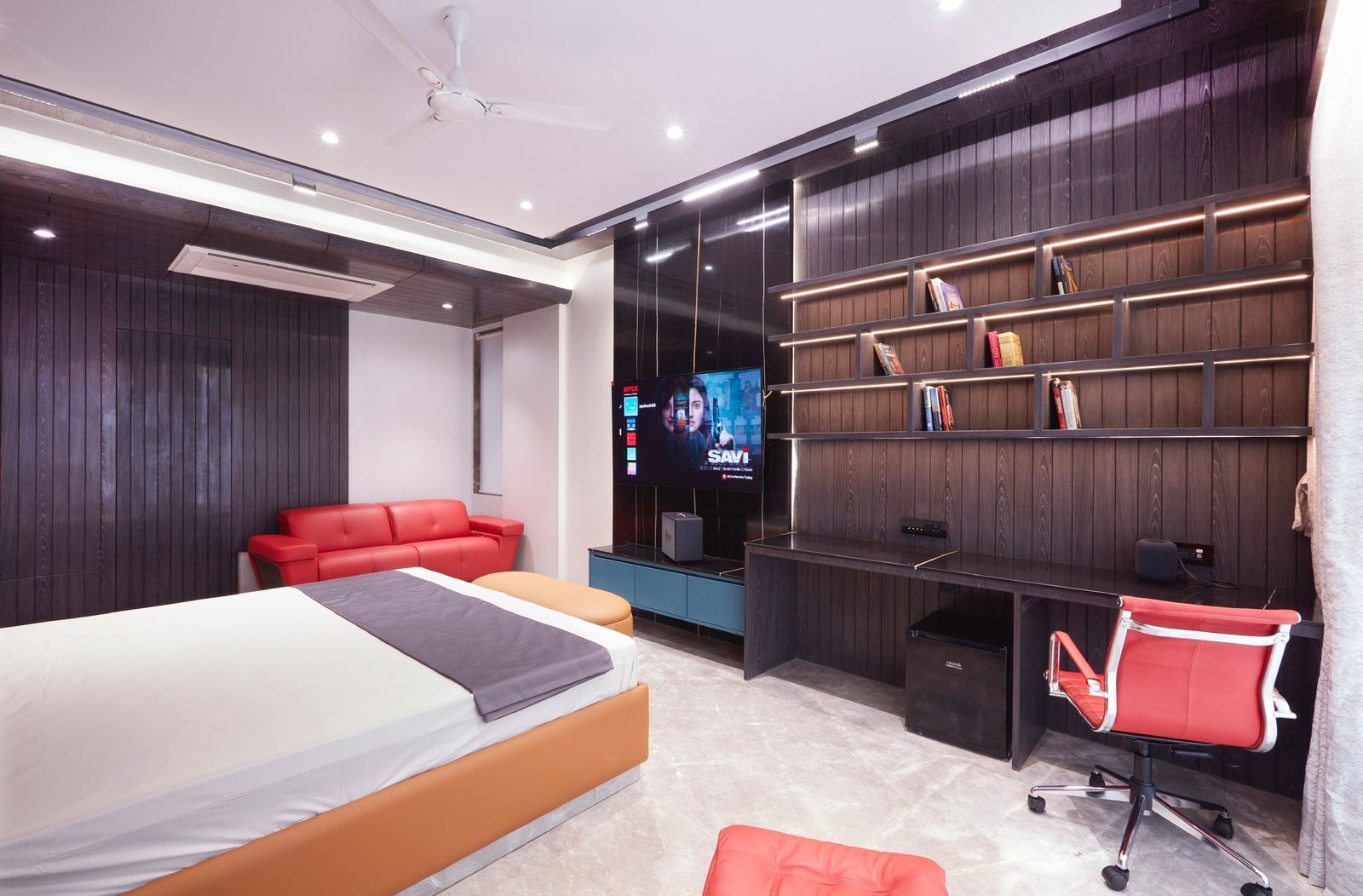


Selected work by Greenbox Design Studio. Tap any image to enlarge.
Frequently asked questions
Can vaastu be followed in an apartment?+
Partially. Entrance position, wet areas and structural walls are fixed by the building. What remains adjustable is the direction you face while cooking, sleeping and working, the distribution of heavy storage to south and west, and keeping the north-east light and uncluttered. Those three cover most of what is achievable.
Which direction should the bed face?+
Head to the south is the primary preference and east the alternative, with north generally avoided. Many Mumbai bedrooms allow only one or two workable bed positions, and where the preferred direction is unavailable the usual response is to adjust storage placement and mirror positions rather than compromise the room's function.
What is the correct kitchen direction in vaastu?+
South-east for the kitchen, with the cook facing east at the hob, the sink on the north or north-east run and the refrigerator to the south-west. Since the room's position is fixed by the plumbing stack in a flat, hob orientation and storage mass are the levers that remain.
Do I need to break walls to fix a vaastu problem?+
No, and we do not recommend it. Structural alteration in a Mumbai building is a structural and legal question, not a design preference. Traditional practice offers non-structural remedies through colour, light, mirrors and the redistribution of weight, and those are what a vaastu-aware interior in a flat actually uses.
What colours does vaastu recommend?+
Light yellows and creams for the east, greens for the north, blues for the north-east, terracotta and earth tones for the south-east, and stronger or darker tones in the south and west where mass belongs. These map onto a contemporary palette easily, which makes colour the simplest preference to satisfy.
Does a vaastu-aware design cost more?+
Almost never, if it is decided at design stage — reorienting a hob, shifting storage mass and adjusting colour are free decisions on a drawing. Cost appears only when requirements arrive after fabrication has begun, or when the only way to satisfy one is relocating plumbing.