
Calculate GST on your interior contract
Enter the ex-GST values and choose how your contract is structured.
How this calculator works
- Composite works contract: GST = (materials + labour + design) × 18%. One supply, one rate, one invoice.
- Separate supply: GST = materials × the goods rate you select, plus (labour + design) × 18%.
- Design fee only: GST = professional fee × 18%.
- The effective rate is total GST divided by the total taxable value, which is the number worth comparing between two quotes structured differently.
- Selecting the input-tax-credit option adds the goods GST line and the section 17(5) blocked-credit note — it does not assume you can claim anything.
| What is supplied | Typical treatment | Rate applied here |
|---|---|---|
| Turnkey interior fit-out, single contract | Composite works contract, SAC 9954 | 18% |
| Interior design consultancy alone | Professional service, SAC 9983 | 18% |
| Modular furniture supplied as goods | HSN 9403 | 18% |
| Plywood, laminate, hardware | Goods, various HSN | 18% |
| Paints and varnishes | Goods, HSN 3208/3209 | 18% |
| Cement | Goods, HSN 2523 | 28% |
| Pure labour supply | Service, SAC 9954 | 18% |
Classification follows what is actually supplied under the contract, not what the invoice is titled. Where a contract bundles goods and services that are naturally supplied together, it is a composite supply and the principal supply's rate applies to the whole.
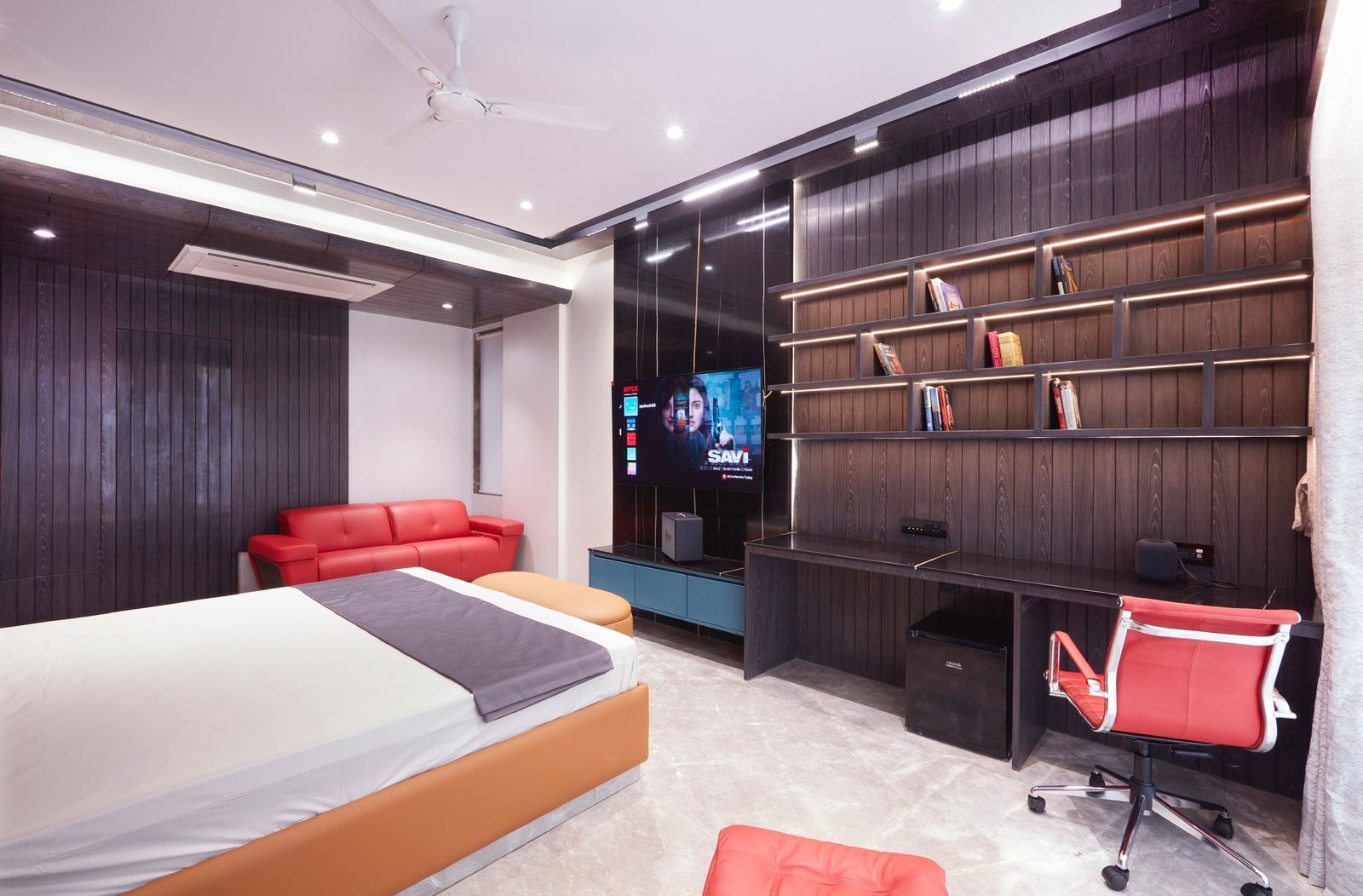
Design and build under one accountable roof
Composite works contract, or separate supplies?
The question people hope has a clever answer. It mostly does not. If your contractor supplies materials and installs them as one job, that is a composite supply of works contract service and the whole value is taxed at the works contract rate. Splitting the invoice into 'material' and 'labour' does not change the underlying supply, and a tax officer looking at the contract will treat it as what it actually is.
Where a genuine split exists — you buy the appliances yourself from a retailer and the contractor only installs them — then yes, two supplies, two invoices, each at its own rate. The distinction is commercial reality, not invoice formatting.
| Structure | When it is genuine | GST outcome |
|---|---|---|
| Single turnkey contract | One party designs, supplies and installs | 18% on the whole value |
| Design contract + separate build contract | Two unrelated parties, two scopes | 18% on each, separately invoiced |
| You buy goods, they install | You contract with the retailer directly | Goods at HSN rate, labour at 18% |
| Contractor splits one job into two invoices | Not genuine | Still a composite supply; the split is cosmetic |
Input tax credit: the part people get wrong
Section 17(5) of the CGST Act blocks input tax credit on works contract services supplied for construction of an immovable property, and on goods or services received for construction of immovable property on one's own account — except where the recipient is in the same line of business, or where the item qualifies as plant and machinery.
- A residential client is not registered and cannot claim anything. GST is simply part of the price.
- An office fit-out for a registered business is where most of the confusion lives. Permanent fit-out — false ceilings, partitions, flooring, joinery fixed to the building — is generally treated as immovable and the credit is blocked.
- Movable furniture and equipment capitalised separately is treated differently from immovable fit-out, and is where any available credit usually sits.
- Being told 'you can claim it all back' by a contractor is a commercial claim, not a tax opinion. Get it from your CA, in writing, before it affects your budget.
- Everything on this page is a general summary of the position as we understand it in 2026. It is not tax advice and we are not your accountant.
What a compliant invoice must show
- The supplier's GSTIN and legal name.
- A sequential invoice number and date.
- The HSN or SAC code for what is supplied.
- Taxable value, then CGST and SGST shown separately (or IGST for an inter-state supply).
- Your name, address, and your GSTIN if you are registered.
- The place of supply, which for works on immovable property is the location of the property.
If a quotation says 'GST extra as applicable' and nothing else, ask for the SAC code before you sign. It takes one message and it tells you whether the person you are hiring understands their own tax position.
Greenbox design & build team
Every constant above comes from Greenbox site records — measured drawings, signed BOQs and completion certificates from projects delivered between 2023 and 2026 — rounded to figures an estimator would actually use. We publish them so you can audit the arithmetic instead of trusting a black box. Treat the output as a planning figure: it is accurate enough to brief a landlord, a bank or a spouse, and not accurate enough to sign a contract against.
What this tool does not cover
- This is not tax advice. It is a calculator built on the standard treatment for interior fit-out in 2026. Your contract, your registration status and the actual HSN or SAC classification decide the real answer.
- Rate changes. GST rates and notifications change, and a rate correct today may not be correct when you invoice.
- Reverse charge situations, composition-scheme suppliers and unregistered suppliers are not modelled.
- TDS under GST, applicable to certain government and notified recipients, is out of scope.
- State-specific issues, inter-state supply and place-of-supply edge cases are not covered.
- Customs duty on imported materials, which arrives before GST does, is not included.
- For the pre-GST project cost, use the interior design cost calculator — every figure on this site is quoted ex-GST for exactly this reason.
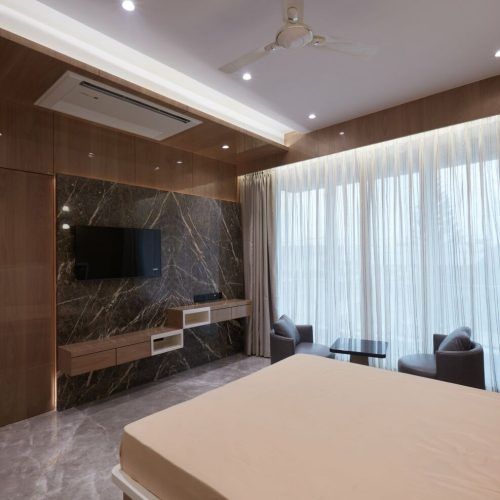
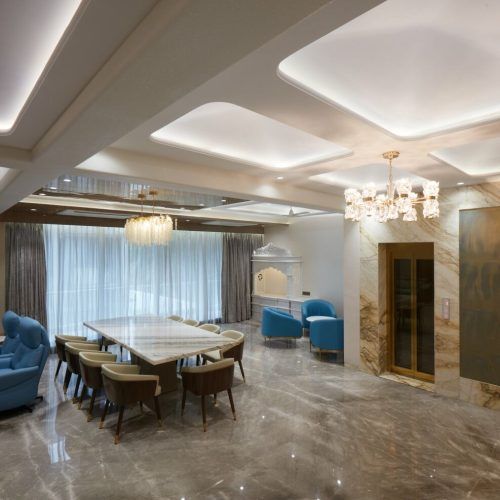
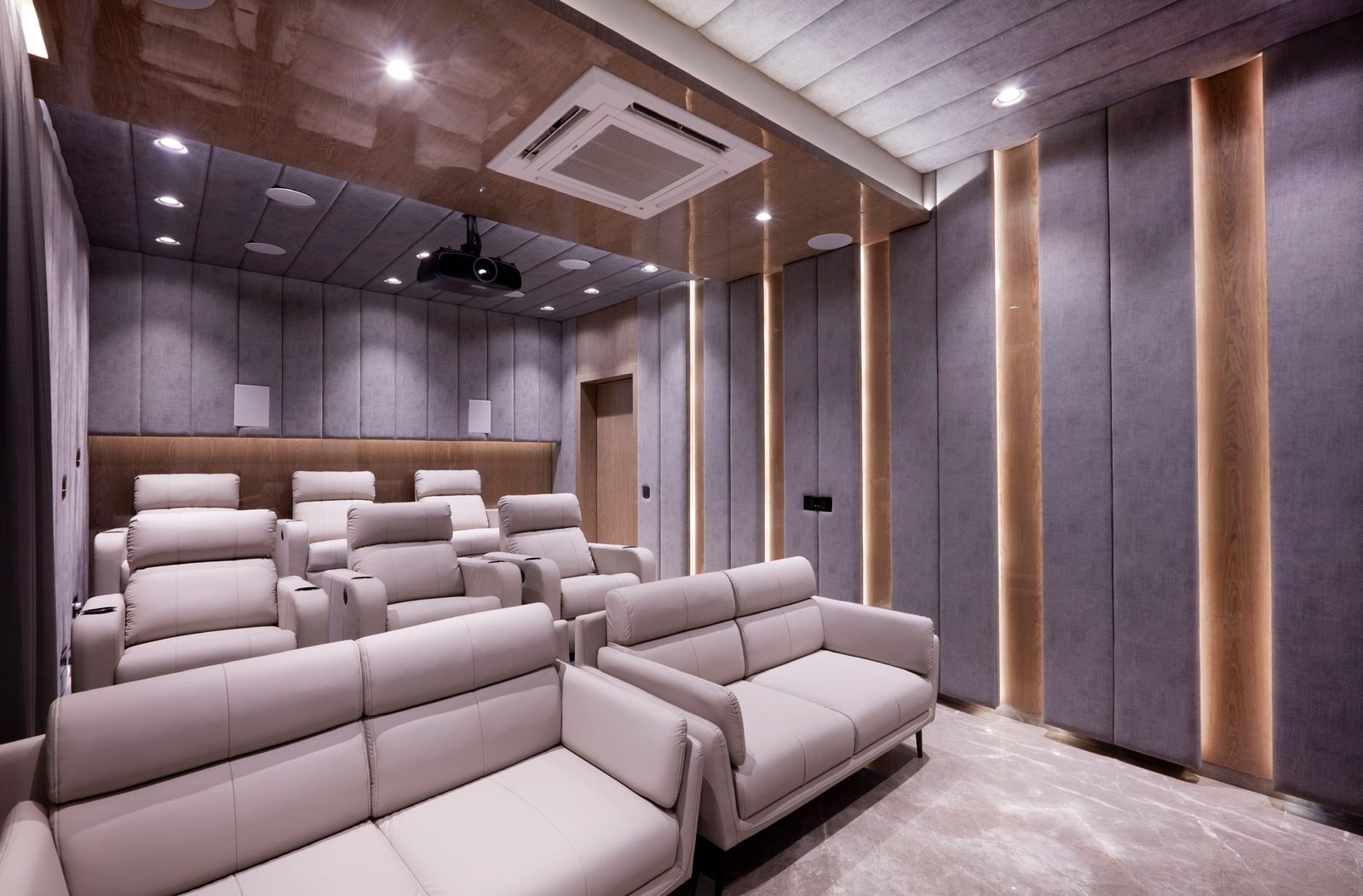
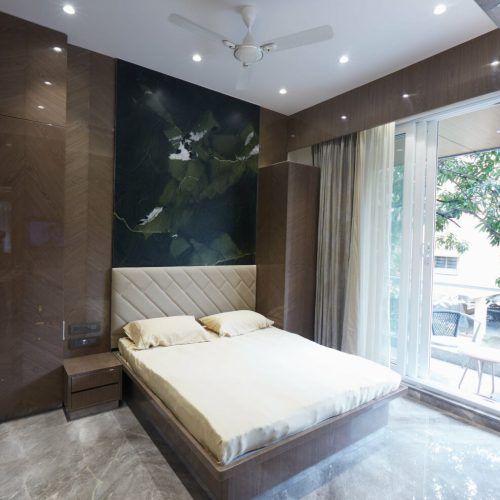
Selected work by Greenbox Design Studio. Tap any image to enlarge.
Frequently asked questions
What is the GST rate on interior design services in India?+
18%. Standalone interior design consultancy is a professional service under SAC 9983. Where design is bundled into a turnkey fit-out contract, the whole contract is a composite works contract and is also taxed at 18%.
Is GST 18% on modular kitchen and furniture?+
Yes. Modular furniture under HSN 9403 attracts 18%, as do plywood, laminate, hardware and most fit-out goods. Where the same party supplies and installs, it is generally a composite works contract at 18% rather than a separate goods supply.
Can I claim GST input credit on office interior work?+
Usually not on the permanent fit-out. Section 17(5) blocks credit on works contract services and goods used for construction of an immovable property, unless you are in the same line of business or the item is plant and machinery. Movable furniture capitalised separately is treated differently. Confirm the specifics with your CA before you budget for a refund.
Can splitting the contract into materials and labour reduce GST?+
No, not where one party supplies and installs. That is a composite supply of works contract service and the whole value carries the works contract rate regardless of how the invoice is formatted. A genuine split exists only when you contract separately for the goods and the installation.
Should the quote show GST separately?+
Yes, always. A quotation should show the taxable value, the GST amount, the rate and the HSN or SAC code. 'GST extra as applicable' with no rate or code is a warning sign — it usually means nobody has worked out the classification.
Do I pay GST if my contractor is not registered?+
An unregistered supplier below the threshold cannot charge GST and cannot issue a tax invoice. That is legal, and it is also why such quotes look cheaper. You get no tax invoice, no HSN classification and, in practice, far weaker documentation if something goes wrong later.