
Survey before quotation
Everything expensive in a renovation is behind something. A proper pre-quote survey converts unknowns into line items, and the difference between studios shows up here rather than in the mood board.
| What we check | How | What it changes |
|---|---|---|
| Electrical age and load | Open the DB, check conductor material and sanctioned load | Rewiring is ₹1.2 – 3.2 L; it is the biggest single swing |
| Plumbing material | Inspect exposed runs and the shaft | GI pipe from before 2000 is at end of life; PPR or CPVC replacement |
| Waterproofing age | Ask for records; look for efflorescence on adjacent walls | Determines whether a bathroom is a refresh or a rebuild |
| Slab and wall dampness | Visual plus a moisture meter on suspect walls | Decides whether a false ceiling or panelling is safe to install |
| Structural alterations by a prior owner | Compare the current layout to the original plan | Unapproved changes can block permissions |
| Flooring build-up | Lift a tile at an inconspicuous point | Overlay versus demolition; changes cost and debris volume |
| Window and joinery condition | Operate everything; check seals and frames | Replacement is often cheaper than repair on 20-year aluminium |
What to open up and what to leave alone
The instinct in a renovation is to strip everything. That is usually wrong, and expensive. The rule we work to is that you open a surface when the thing behind it has failed, is about to, or is impossible to reach later.
- Open the bathrooms if the waterproofing is over 12 years old, if there is any damp on an adjacent wall, or if the plumbing is GI. Half-renovating a bathroom is the most common false economy in the trade.
- Open the walls for wiring if the conductors are aluminium, the DB has rewireable fuses, or the sanctioned load will not carry what you intend to run. Do it once, properly, with conduits sized for the future.
- Leave sound flooring. A serviceable vitrified floor does not justify ₹180–₹420 per sq ft plus a fortnight of demolition and debris. Overlay where the level allows, or live with it.
- Leave sound internal doors. New handles, hinges, a repaint and a decent stop transform a flush door for under ₹4,000.
- Replace 20-year-old aluminium windows rather than servicing them. The seals are the problem, and the seals are not replaceable.
- Treat, do not cover, any damp. Panelling over a damp wall hides it for eleven months.
Anything you close up in a renovation, you are agreeing to live with for fifteen years. Decide accordingly.
Greenbox site principle
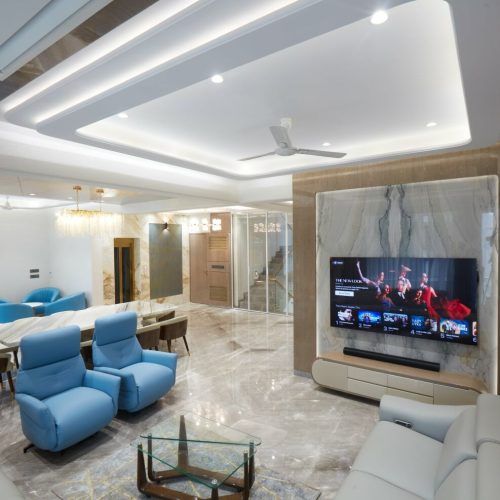
Design and build under one accountable roof
Cost by depth of renovation
| Depth | Scope | ₹ per sq ft carpet | 1,000 sq ft home | Duration |
|---|---|---|---|---|
| Cosmetic refresh | Paint, lighting, soft furnishing, minor joinery | ₹350 – 700 | ₹3.5 – 7 L | 3 – 4 weeks |
| Light renovation | Above plus kitchen, wardrobes, false ceiling | ₹900 – 1,500 | ₹9 – 15 L | 7 – 9 weeks |
| Full renovation | Above plus rewiring, bathrooms, flooring in parts | ₹1,600 – 2,600 | ₹16 – 26 L | 12 – 16 weeks |
| Strip-back rebuild | Down to shell: all services, all wet areas, all finishes | ₹2,700 – 4,200 | ₹27 – 42 L | 18 – 24 weeks |
Excluding 18% GST and a 10–15% contingency, which should be held separately rather than spent on scope. Estimate your own with the renovation cost calculator.
The contingency conversation
A renovation quote with no contingency is not cheaper — it is a quote that will be revised. We hold 10–15% as a named line, and we tell clients plainly what usually consumes it.
- Plumbing found in worse condition than expected once a wall or floor is opened — the most frequent single cause.
- Slab or wall dampness traced to a source outside the flat, requiring coordination with a neighbour or the society.
- Levels. Old floors are rarely flat. Screeding to a workable level adds cost that cannot be seen before the tiles come up.
- Electrical load upgrade requiring a new sanctioned load application rather than just a new distribution board.
- Client-side scope creep, which is legitimate but should be priced as a variation rather than absorbed into contingency.
Sequence, and living through it
- Survey and scope freezeCondition report, decisions on what is opened, a line-item BOQ with a named contingency.
- Protection and demolitionEverything retained is protected first. Demolition generates the debris volume the whole programme has to absorb.
- Services first fixPlumbing and electrical rough-in, before any surface closes. This is the point of no cheap return.
- Waterproofing and wet areasMembrane, ponding test for 48 hours minimum, then tiling. Never skip the ponding test.
- Civil making good and screedsLevels corrected, chases filled, surfaces prepared.
- Ceiling, joinery, finishesThe visible build, in the same order as a fresh fit-out.
- Snag, clean and handoverJoint snag walk, closure, deep clean, warranty documents.
Living in the home during a full renovation is possible if it is zoned — one bathroom kept working, a temporary kitchen, and a sealed dust barrier. It typically adds around 15% to the programme and a great deal to the household's patience. For a cosmetic refresh or light renovation it is entirely reasonable; for a strip-back rebuild, move out.
Waterproofing: the one thing to get right
If a renovation has a single point of failure, this is it. Everything else that goes wrong is inconvenient; a bathroom that leaks into the room or flat below is expensive, disputed and extremely difficult to fix without doing the work twice.
- Strip to the slab. Waterproofing applied over old tiling or old membrane is a coating, not a system. If the floor is coming up, it comes up completely.
- Treat the corners and the penetrations first. Wall-to-floor junctions, drain outlets and pipe penetrations get a reinforcing fabric band before the general coats. Ninety per cent of leaks start at a junction, not in the middle of a floor.
- Take the membrane up the wall — 300 mm minimum in a dry area, and full height in the shower zone.
- Two coats, cross-applied, with the manufacturer's stated cure time between them. Rushing the second coat is the most common site shortcut.
- Pond test for 48 hours minimum. Flood the floor, mark the level, and check the ceiling below. This is non-negotiable and it is the step that gets skipped when a programme is tight.
- Photograph every stage. Once the tiles go down nobody can verify what is underneath, and the photographs are what settle a dispute two years later.
Where we work
We renovate homes across India. For society NOCs, monsoon scheduling, BMC debris rules and the specific problems of older Mumbai buildings, see home renovation contractors in Mumbai.
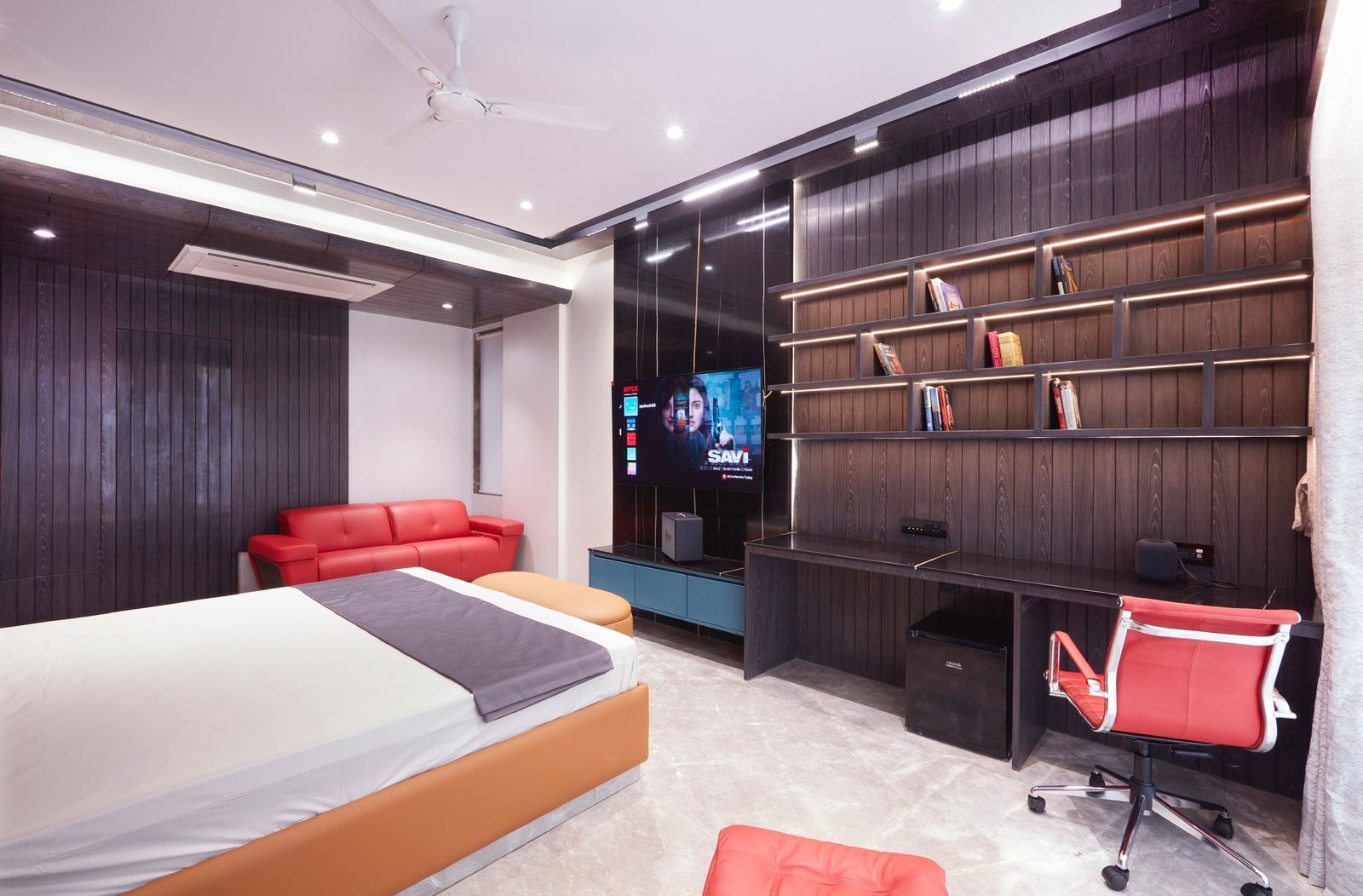
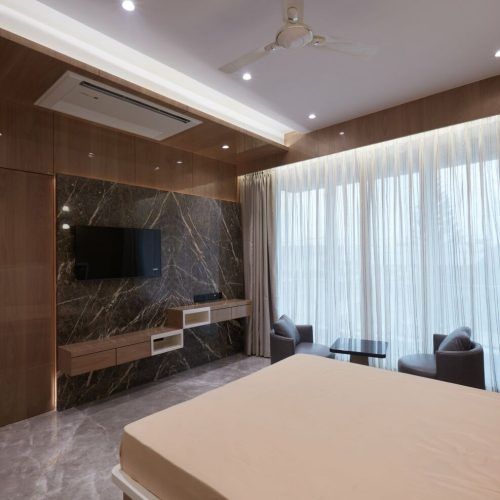
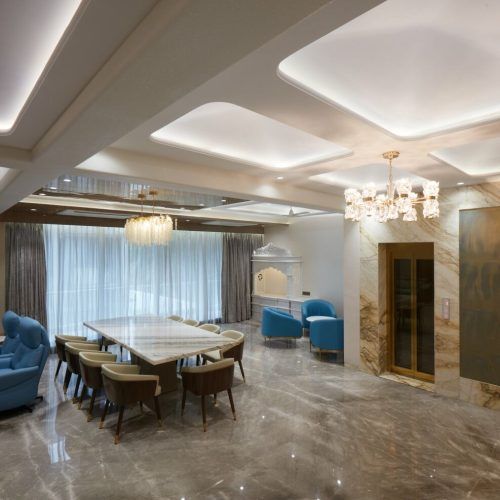
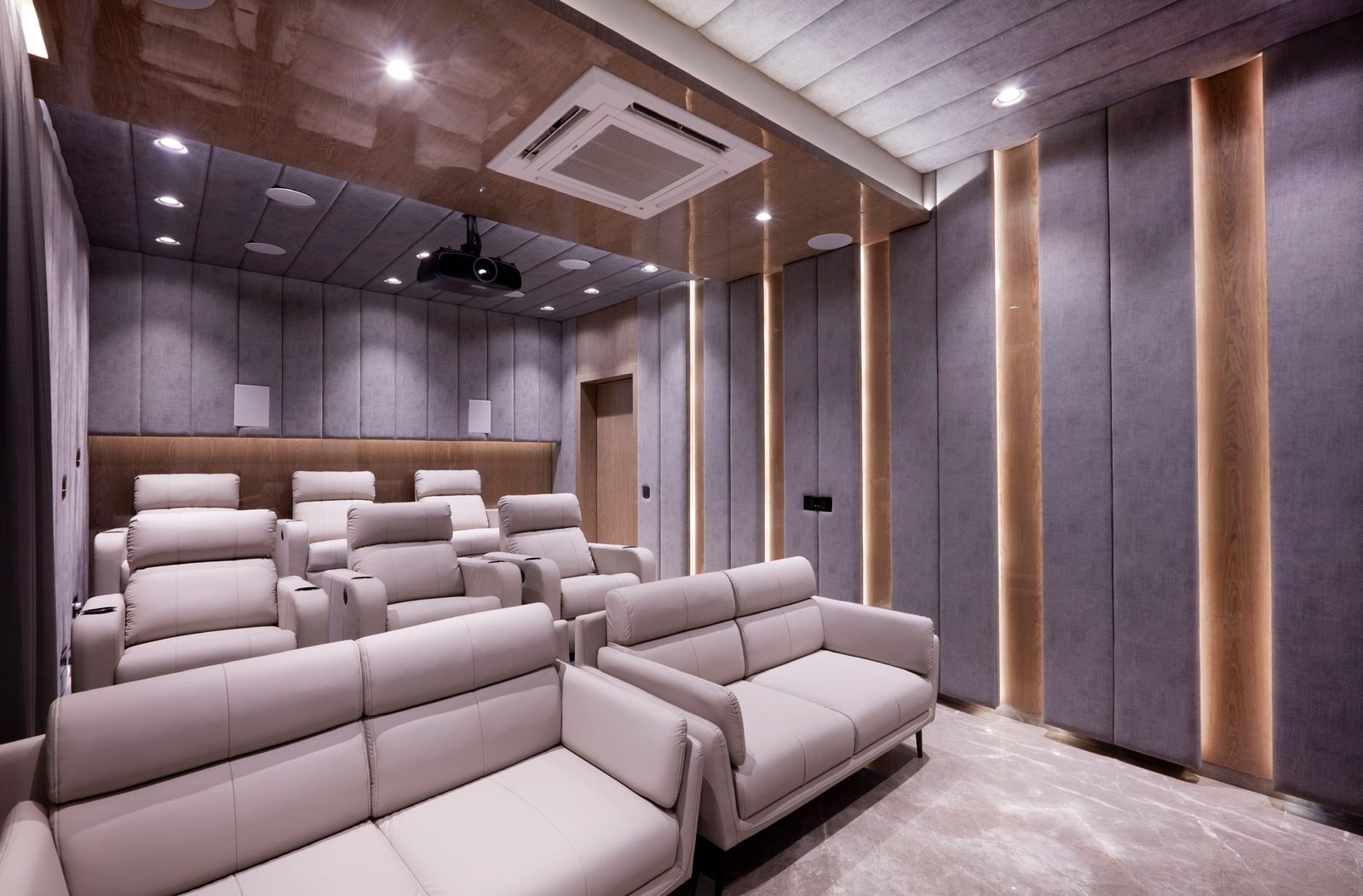
Selected work by Greenbox Design Studio. Tap any image to enlarge.
Frequently asked questions
How much does a home renovation cost?+
₹350–₹700 per sq ft for a cosmetic refresh, ₹900–₹1,500 for a light renovation including kitchen and wardrobes, ₹1,600–₹2,600 for a full renovation with rewiring and bathrooms, and ₹2,700–₹4,200 for a strip-back rebuild. Excluding 18% GST and a 10–15% contingency held separately.
Why do renovation quotes change mid-project?+
Because part of the scope is genuinely unknown until surfaces open. The usual causes are plumbing in worse condition than expected, dampness traced to a source outside the home, uneven floor levels revealed after demolition, and electrical load upgrades. A proper pre-quote survey reduces this; a 10–15% contingency absorbs what remains.
Should I renovate my bathroom or just refresh it?+
Open it fully if the waterproofing is over about 12 years old, there is damp on any adjacent wall, or the supply pipes are GI. Retiling over failing waterproofing is the most common false economy in renovation — the finish lasts, the leak continues, and the second attempt costs more than doing it once.
Can I live in the house during renovation?+
For a cosmetic refresh or light renovation, comfortably, with a sealed dust barrier and a working bathroom and kitchen. For a full renovation it adds roughly 15% to the programme because work has to be zoned. For a strip-back rebuild with all services replaced, move out — it is faster, cheaper and considerably less unpleasant.
Does old wiring need to be replaced?+
If the conductors are aluminium, the distribution board still has rewireable fuses, or the sanctioned load will not carry your intended appliances, then yes. Rewiring a home costs ₹1.2–₹3.2 lakh depending on size and is the one item never worth deferring, because doing it later means reopening finished walls.