
Cost by home size
| Home | Carpet area | Essential | Premium | Luxury |
|---|---|---|---|---|
| 1BHK | 380–550 sq ft | ₹5.5 – 8.5 L | ₹8.5 – 12 L | ₹12 L+ |
| 2BHK | 550–800 sq ft | ₹8.5 – 12 L | ₹12 – 19.5 L | ₹19.5 – 27 L+ |
| 3BHK | 800–1,200 sq ft | ₹16 – 18 L | ₹18 – 27 L | ₹27 – 43 L+ |
| 4BHK / duplex | 1,200–1,800 sq ft | ₹17 – 27 L | ₹27 – 43 L | ₹43 L – 1.2 Cr+ |
Why Mumbai costs more
| Factor | Impact | Why |
|---|---|---|
| Skilled labour rates | +8 – 12% | Higher cost of living; carpenter and polisher rates exceed national average |
| Restricted working hours | +5 – 10% | 10am–6pm only in most societies; longer programme, same overheads |
| Vertical logistics | +3 – 6% | Service-lift bookings, manual handling, restricted loading windows |
| Humidity-grade materials | +4 – 8% | BWP ply and WPC instead of MR-grade — necessary, not optional |
| Small carpet areas | +3 – 5% | Everything is custom-sized; little standardisation possible |
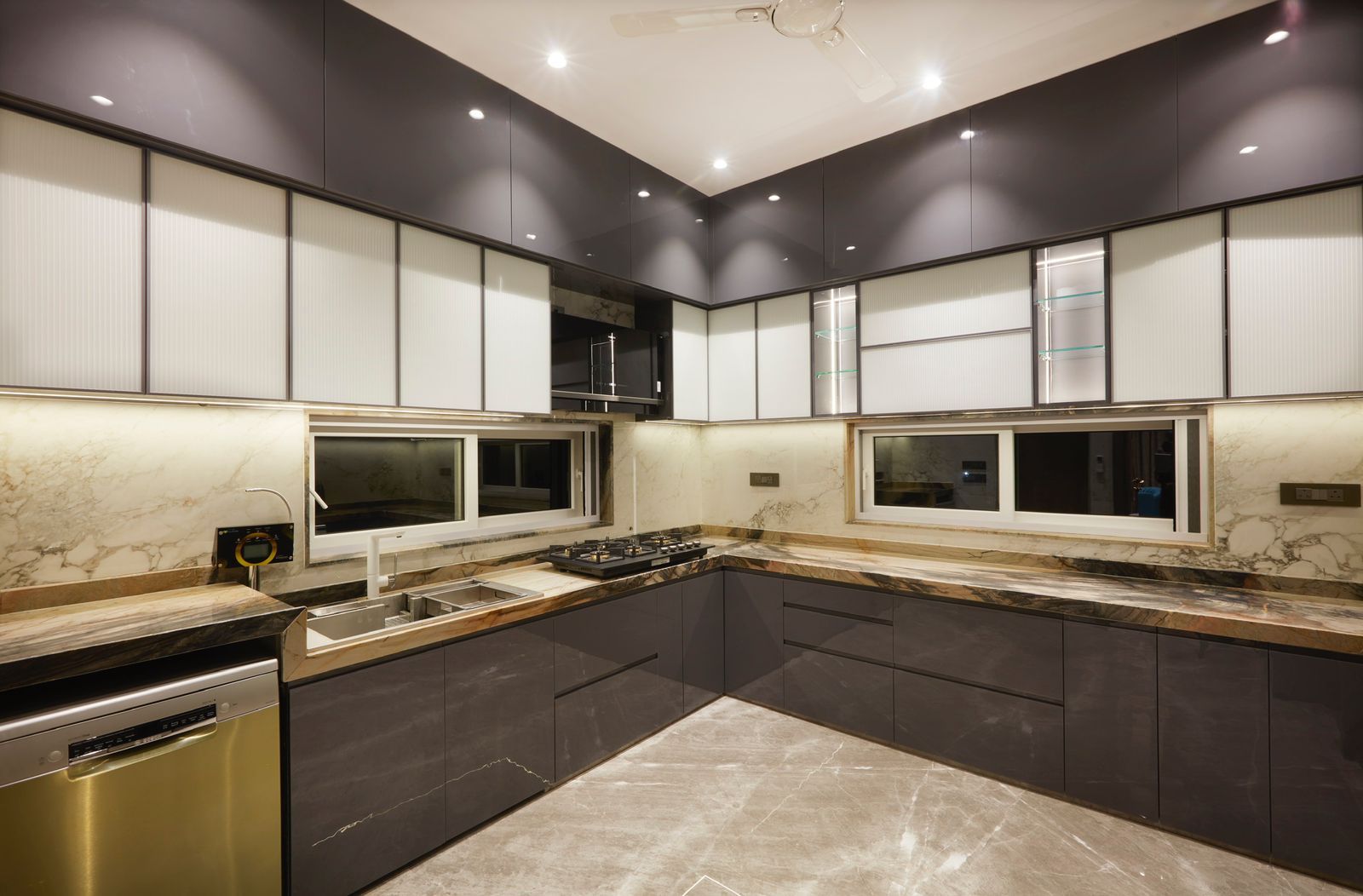
Design and build under one accountable roof
Suburb variation
Within Mumbai, rates move with building type and access more than with postcode prestige:
| Area | Typical ₹/sq ft | Why |
|---|---|---|
| South Mumbai (Malabar Hill, Colaba) | ₹2,680 – 4,620 | Older buildings, difficult access, heritage constraints |
| Bandra / Juhu / Worli | ₹2,370 – 5,600 | Premium expectations, salt-air specification |
| Andheri / Goregaon / Malad | ₹1,610 – 2,980 | High-rise stock, standard logistics |
| Powai / Chembur | ₹1,700 – 3,280 | Good access, strict societies |
| Thane / Navi Mumbai | ₹1,580 – 2,680 | Easier logistics, larger layouts, lower labour cost |
Indicative for a premium-level finish. See individual suburb pages for local detail. Every band quoted on this page is set from Mumbai homes we have completed and invoiced, re-priced to October 2026.
Clients often assume Bandra costs more because it is Bandra. It costs more because the lift is small and the society allows six hours of noise a day.
Greenbox project manager
New possession, resale or redevelopment flat
Three very different starting conditions sit behind the same headline rate, and which one you have moves your number before any design decision is taken.
- New builder possession. Cleanest and cheapest to fit out — level slabs, plumb walls, fresh electrical and no demolition. Expect to land in the lower half of your chosen band.
- Redevelopment possession. Similar to a new possession, but developer-fitted flooring and sanitaryware are often retained, which pushes budget towards storage volume rather than finishes.
- Resale flat, fifteen years or older. Out-of-plumb walls, aged wiring, corroded GI supply lines and a strip-out before anything begins. Add 10–20% and three weeks over an equivalent new possession in the same building type.
What your society will ask for
In Mumbai the managing committee is a stakeholder in your project whether you like it or not. Every building runs its own version of the same list, and none of it can be started the week before site start — allow seven to ten working days.
- A written scope of work naming every activity, so the committee can see that nothing structural is proposed.
- Contractor details and workers' identity copies, usually with photographs and police verification for anyone staying on site.
- A refundable renovation deposit, released after an inspection of the lift, lobby, staircase and common walls.
- An undertaking on structural members — no column, beam or slab is to be cut, chased or loaded.
- A structural consultant's certificate wherever an opening in a wall is proposed, which many committees now demand even for a non-load-bearing partition.
- Agreed working hours and a debris plan — typically 10am to 6pm on weekdays, no Sundays, no festival days, and debris bagged and carried down rather than left at the gate.
Monsoon and the Mumbai programme
From June to September relative humidity sits at 75–85% and nothing that needs to cure behaves normally. This is not a reason to avoid monsoon projects — most of the work is unaffected and workshops are less busy — but it is a reason to sequence them differently.
- PU polish and lacquer will not cure properly at high humidity. Push polished items to the workshop and install them finished.
- Emulsion on a fresh plaster wall needs a dry substrate; a moisture-meter reading before painting is worth the ten minutes it takes.
- Carcass boards must be stored raised and covered on site, never flat on a damp floor — a week of that will bow a sheet permanently.
- Waterproofing work in kitchens, bathrooms and dry balconies should be scheduled outside the monsoon wherever the programme allows it.
- Allow a week to ten days of float. A Mumbai programme that assumes no weather delay is a programme that will be renegotiated in August.
Society and statutory costs outside the quote
These sit outside your contractor's number entirely and are paid by you, directly, to the building or to a statutory body. Budget them from the start rather than discovering them in week three.
| Item | Typical Mumbai cost | Notes |
|---|---|---|
| Refundable renovation deposit | ₹25,000 – ₹2,00,000 | Returned after a clean-handover inspection of the common areas |
| NOC and administrative fee | ₹2,000 – ₹15,000 | Non-refundable; varies enormously between buildings |
| Service-lift charge | ₹500 – ₹2,000 a day | Booked in slots; older buildings without a goods lift charge less but cost more in labour |
| Additional common-area housekeeping | ₹3,000 – ₹12,000 a month | Levied for the duration of the work in most managed societies |
| BMC-compliant debris disposal | ₹20,000 – ₹60,000 | Bagged, carried down and taken to an approved site |
| Structural consultant's certificate | ₹8,000 – ₹35,000 | Required before any opening is cut in a wall |
Paid directly by the homeowner. Ex-GST and outside the interior contract value.
The society paperwork was handled before we even signed. That week of lead time is invisible on a quote and it is exactly where most projects lose time.
Started in July. They told us upfront which items would wait for the weather and which would not, and the polished pieces arrived from the workshop already finished.
Line-item estimate, deposit and lift charges included, and the final invoice matched it. No week-three surprises.
For the national picture — rate bands across India, the component-wise split and how the specification ladder works — read interior design cost in India.
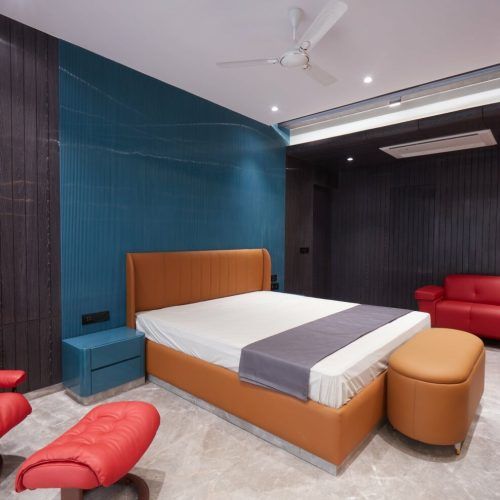



Selected work by Greenbox Design Studio. Tap any image to enlarge.
Frequently asked questions
How much does interior design cost in Mumbai per sq ft?+
₹1,580–₹4,260+ per sq ft of carpet area depending on finish level. Essential finishes start near ₹1,580–₹2,190, premium runs ₹2,310–₹3,160, and luxury begins around ₹3,290 and rises well beyond ₹4,260. All figures exclude 18% GST.
How much does a 2BHK interior cost in Mumbai?+
₹8.5–12 lakh for an essential finish, ₹12–19.5 lakh for premium and ₹19.5–27 lakh or more for luxury, on a typical 550–800 sq ft carpet area, excluding GST.
Why is Mumbai more expensive than other Indian cities?+
Roughly 10–20% more, driven by higher skilled-labour rates (+8–12%), restricted society working hours that stretch programmes (+5–10%), vertical material logistics (+3–6%), and humidity-grade materials such as BWP plywood (+4–8%).
Is Navi Mumbai cheaper than Mumbai for interiors?+
Yes, typically 15–25% cheaper per sq ft. Logistics are simpler, societies are often less restrictive, layouts are larger and more standardised, and labour rates are lower. Thane sits between Navi Mumbai and the island city.
What is not included in a typical Mumbai interior quote?+
Society deposits and charges, civil work such as wall or plumbing changes, flooring replacement, appliances, loose furniture, and 18% GST. Ask for every one of these to be explicitly listed as included or excluded.