
Find your interior style
Six questions. The result updates as you answer — nothing is submitted anywhere.
How the scoring works
Each answer awards points to one or two styles. Most award 3 to a single style; the ones that genuinely overlap award 3 and 1. Totals are converted to percentages and the highest wins, with ties broken in the fixed order Minimal, Indian, Scandinavian, Classic, Industrial.
| Question | Maximum points available | What it is really testing |
|---|---|---|
| Wall finish | 4 | Tolerance for texture and ornament |
| Joinery finish | 3 | Material honesty versus polish |
| Pattern | 4 | Whether you want the eye to rest or to travel |
| Seating plan | 3 | Formality and how you actually use a living room |
| Lighting | 3 | Whether fittings should be seen or hidden |
| Display | 4 | How much visual information you are comfortable with |
A perfect single-style run scores 18 to 19 points out of a possible 21, which is why nobody ever comes out at 100%.
Design and build under one accountable roof
The five styles, honestly described
Contemporary Minimal
Flat shutters, hidden handles, a tight palette, and storage designed so nothing needs to sit out. The discipline is the point, and it demands a household willing to keep it. Cheapest of the five to build well, hardest to live in badly.
Modern Indian
Teak and cane against lime plaster, brass detail, jaali screens, block-printed textiles. Contemporary planning with Indian material memory. Craft-dependent, so the joinery and the sourcing matter more than the drawing.
Warm Scandinavian
Pale oak, off-white walls, wool, linen and daylight. The most forgiving of a modest budget because it relies on proportion and restraint rather than expensive material. Needs genuine daylight to work.
Classic Luxe
Panelled joinery, veneer and stone, symmetry, layered lighting. Expensive to execute properly and unforgiving of a cheap shortcut — half-done panelling reads immediately. It dates more slowly than anything else on this list.
Industrial Urban
Micro-cement or exposed concrete, black metal, open shelving, visible services. Needs volume, height and light. In a standard 9 ft Mumbai ceiling it can read as unfinished rather than intentional, so we use it selectively.
What a style choice actually costs
Style is not free of budget consequences, and any studio that tells you otherwise is about to surprise you at the BOQ stage:
| Style | Relative build cost | Where the money goes | Where you can save |
|---|---|---|---|
| Warm Scandinavian | Lowest | Good laminate, honest proportion, decent lighting | Almost everywhere; it rewards restraint |
| Contemporary Minimal | Low to moderate | Precision joinery, handleless profiles, flush detailing | Finish grade; the detailing cannot be cheapened |
| Industrial Urban | Moderate | Micro-cement application, metal fabrication | Fewer, larger gestures instead of many small ones |
| Modern Indian | Moderate to high | Solid teak, cane weaving, brass, craft time | Mix solid wood accents with veneer bodies |
| Classic Luxe | Highest | Panelled joinery, stone, PU polish, symmetry | Restrict panelling to two rooms and do them fully |
Nobody lives in one style. What people actually want is one style's discipline and another one's warmth, and saying so out loud at the concept stage saves three rounds of revision.
Greenbox principal designer
Every constant above comes from Greenbox site records — measured drawings, signed BOQs and completion certificates from projects delivered between 2023 and 2026 — rounded to figures an estimator would actually use. We publish them so you can audit the arithmetic instead of trusting a black box. Treat the output as a planning figure: it is accurate enough to brief a landlord, a bank or a spouse, and not accurate enough to sign a contract against.
What this tool does not cover
- It is six questions. A real style conversation covers how you cook, who visits, whether you have small children, what you already own and what you cannot bear to throw away. None of that is here.
- It does not account for what the flat wants. A 9 ft ceiling, a single-aspect plan or a west-facing living room will each push against certain styles regardless of preference.
- It does not account for resale. If you are fitting out to let or to sell within five years, a neutral scheme outperforms a strong one, whatever this quiz says.
- Nothing is stored, submitted or emailed. The scoring runs entirely in your browser and no personal data is collected.
- Pair it with the colour palette generator for a palette, and the cost calculator for a number.
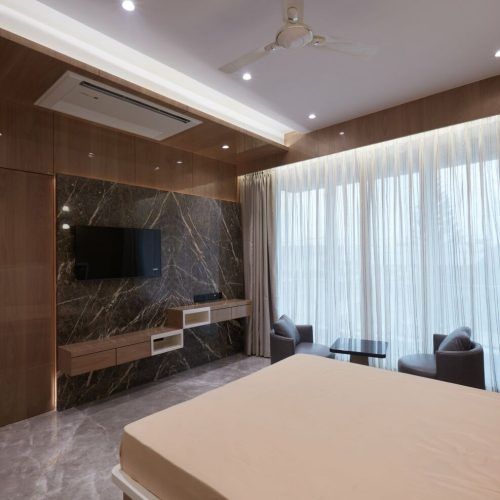
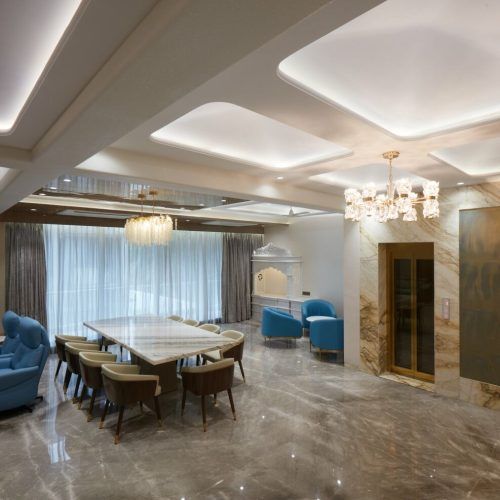
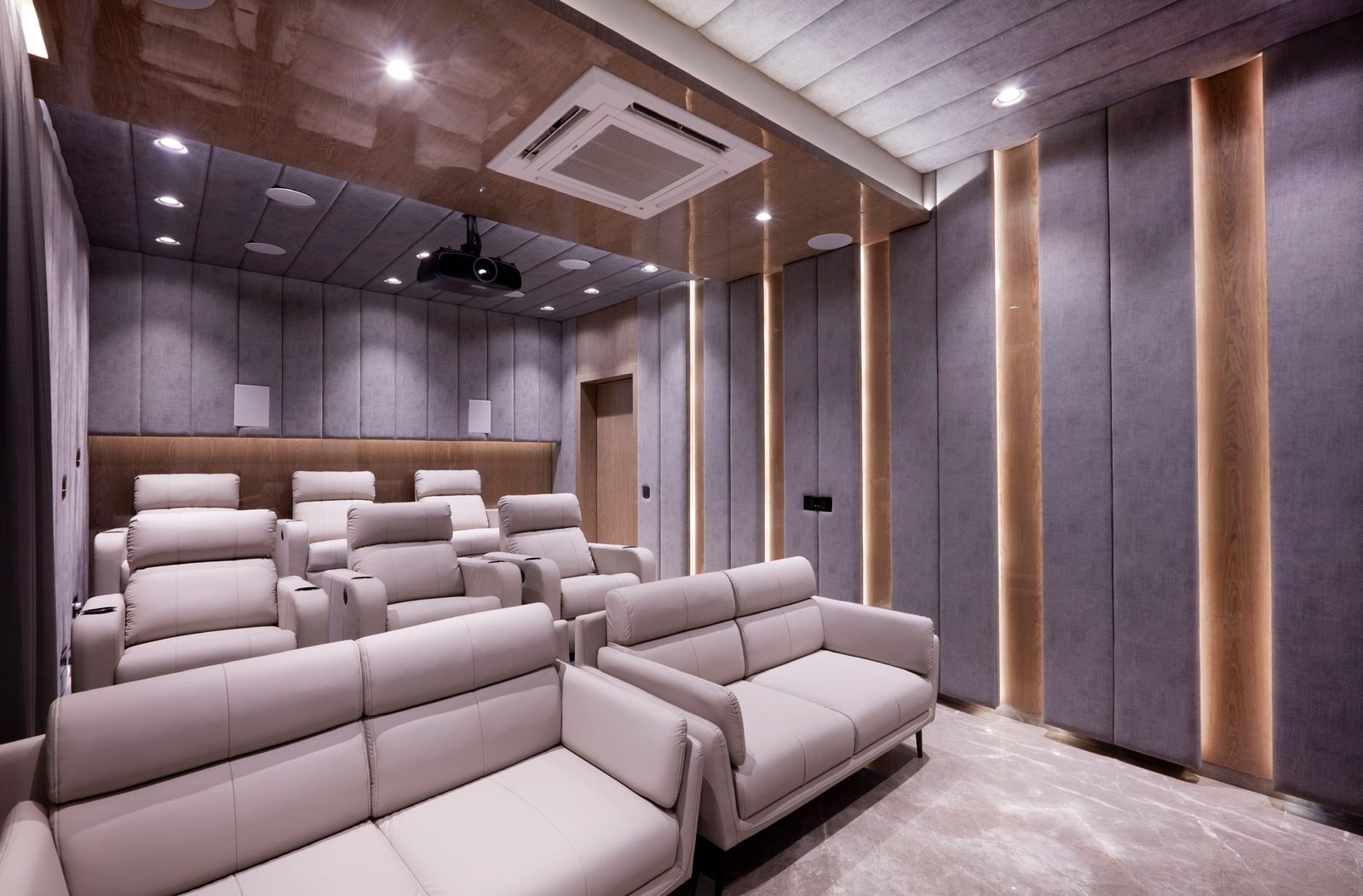
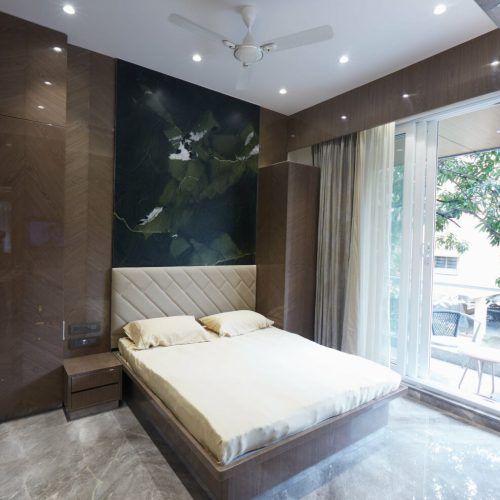
Selected work by Greenbox Design Studio. Tap any image to enlarge.
Frequently asked questions
How accurate is an interior design style quiz?+
It is a starting point, not a diagnosis. Six questions can reliably separate five broad directions, which is enough to stop a first design meeting going in circles. It cannot account for your flat's daylight, your family's habits or what you already own — and those change the answer more than preference does.
What if my top two styles are almost tied?+
Then you are a hybrid, which is the most common real outcome. The usual resolution is to take the planning discipline from one and the materials and warmth from the other — Contemporary Minimal layouts in Modern Indian materials, for instance, is a scheme we build often.
Which interior style is cheapest to build?+
Warm Scandinavian, because it depends on proportion, restraint and good lighting rather than expensive material. Classic Luxe is the most expensive, because panelled joinery, stone and PU polish are all labour- and material-intensive and none of them tolerate a shortcut.
Does style choice affect resale value?+
Strong, specific schemes narrow the buyer pool. If you plan to sell or let within five years, keep the fixed joinery neutral and put the personality into things you can take with you — art, rugs, lighting, textiles. If it is your long-term home, ignore this entirely.
Do you only work in these five styles?+
No. These are the five that cover most of what clients ask for in Mumbai and they make a quiz possible. We have built Japandi, mid-century, art-deco revival and several schemes that refuse to be named. Bring a reference image and we will work from that instead.