
Work out your tile order
Enter the room in feet. Wastage is set by the laying pattern and the number of cuts.
How this calculator works
- Area to tile = length × width + extra area. Extra area covers dado, skirting bands and niches tiled from the same batch.
- Tile face area is converted from millimetres to square feet: (mm ÷ 304.8) × (mm ÷ 304.8). A 600 × 600 tile is 1.969 ft × 1.969 ft = 3.88 sq ft.
- Wastage % = laying pattern + room complexity. Straight grid 5, brick 8, diagonal 12, herringbone 15; add 3 for niches and columns, 5 for an L-shaped room with many cuts.
- Tiles = ceiling of (area × (1 + wastage%) ÷ face area).
- Boxes = ceiling of (tiles ÷ tiles per box), using the standard Indian box counts shown in the table below.
- Spares = boxes × tiles per box − tiles required.
| Tile size | Face area | Tiles per box | Coverage per box | Typical use |
|---|---|---|---|---|
| 300 × 300 mm | 0.97 sq ft | 11 | 10.7 sq ft | Bathroom and utility floors, anti-skid |
| 600 × 600 mm | 3.88 sq ft | 4 | 15.5 sq ft | The standard living and bedroom floor tile |
| 800 × 800 mm | 6.89 sq ft | 3 | 20.7 sq ft | Large living rooms; needs a flat substrate |
| 600 × 1200 mm | 7.75 sq ft | 2 | 15.5 sq ft | Slab-look floors and feature walls |
| 300 × 600 mm | 1.94 sq ft | 6 | 11.6 sq ft | Bathroom wall tiling, laid horizontally |
| 200 × 300 mm | 0.65 sq ft | 20 | 12.9 sq ft | Kitchen dado and older bathroom walls |
Box counts vary slightly by brand — check the carton before you finalise the order.
Design and build under one accountable roof
Worked example: a 12 × 10 ft bedroom
- Area = 12 × 10 = 120 sq ft, no extra area
- Wastage = 5% straight grid + 0% simple rectangle = 5%
- Area including wastage = 120 × 1.05 = 126 sq ft
- One 600 × 600 tile covers 3.88 sq ft
- Tiles = 126 ÷ 3.88 = 32.5, rounded up = 33 tiles
- Boxes = 33 ÷ 4 = 8.25, rounded up = 9 boxes (36 tiles, covering 139 sq ft)
- Spares left after laying = 3 tiles.
Things the tile count will not tell you
- Batch and shade number. Buy the whole order in one batch and check the shade code on every carton. Two cartons from different runs will read as a patch under daylight.
- Rectified versus non-rectified. Rectified tiles are machine-cut to size and can be laid with a 2 mm joint. Non-rectified need 3–4 mm and will look uneven if you try to close them up.
- Setting-out matters more than count. Starting from the door wall rather than the room centre is what produces a sliver cut in the most visible corner.
- Adhesive, not mortar, for large formats. Anything above 600 × 600 should go down on a notched-trowel adhesive bed, not a sand-cement dot bed. Hollow tiles crack under point loads.
- Epoxy grout in wet areas. It costs more and it is harder to apply, but cement grout in a Mumbai bathroom goes black within two monsoons.
What this calculator does not include
- Tile price, adhesive, grout and laying labour — use the flooring cost calculator for those
- Bathroom and balcony waterproofing below the tile bed
- Skirting tile cut from full tiles, which changes the count if you are cutting rather than buying
- Spare boxes deliberately kept aside for future repairs, which we recommend at two boxes per floor finish
This calculator uses the same rate bands and site rules our estimators apply, taken from Greenbox project records and cross-checked against 2026 supplier and contractor quotations in Mumbai. It is an indicative estimate, not a quotation — the real figure depends on your drawings, site condition and the brands you finally specify.
Reading a tile spec sheet
| Spec | What it means | What to ask for in a flat |
|---|---|---|
| Water absorption | How porous the body is, by weight | Below 0.5% for vitrified floors; below 3% for wall tile |
| PEI rating | Surface abrasion resistance, I to V | PEI IV for living and kitchen floors; PEI III is fine in bedrooms |
| Rectified | Machine-cut to an exact size after firing | Yes, if you want 2 mm joints; otherwise plan for 3–4 mm |
| Anti-skid / R rating | Wet slip resistance, R9 to R13 | R10 or better in bathrooms, balconies and utility |
| Shade / batch code | Production run identifier | One code across the whole order, printed on every carton |
| Thickness | Body thickness in mm | 8–10 mm for floors; 6–8 mm is wall tile, not floor tile |
Two of these are routinely ignored on Indian sites. Anti-skid rating is the first: a glossy 600 × 600 tile continued from the bedroom into the bathroom is a genuine hazard, and the cost difference to an R10 body in the wet area is negligible. The second is thickness — an 8 mm wall tile sold cheaply and laid on a floor will crack under a dropped pan within the year.
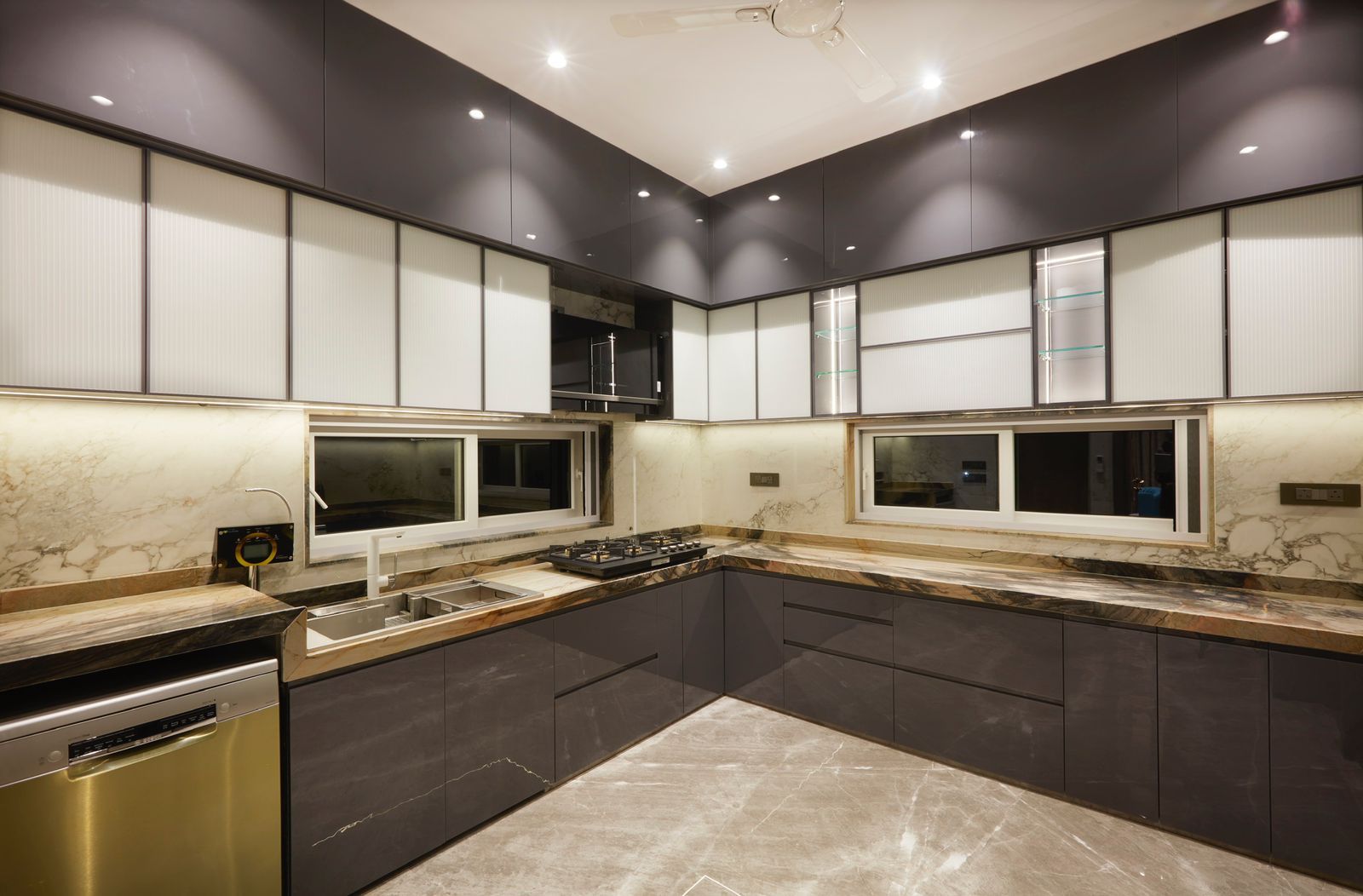
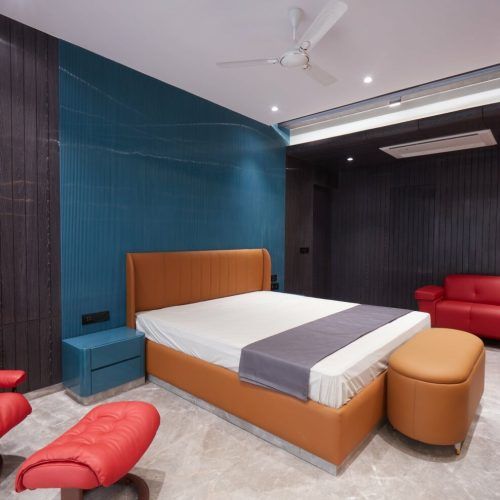
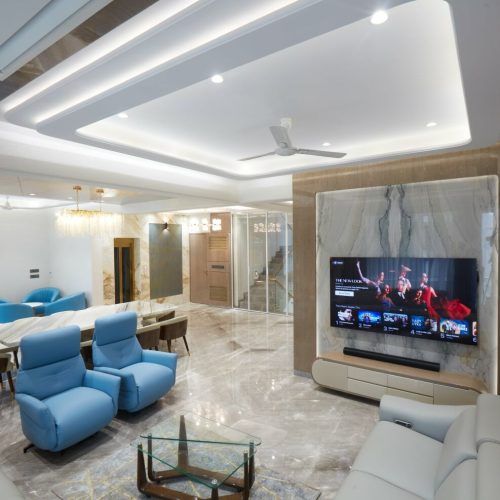
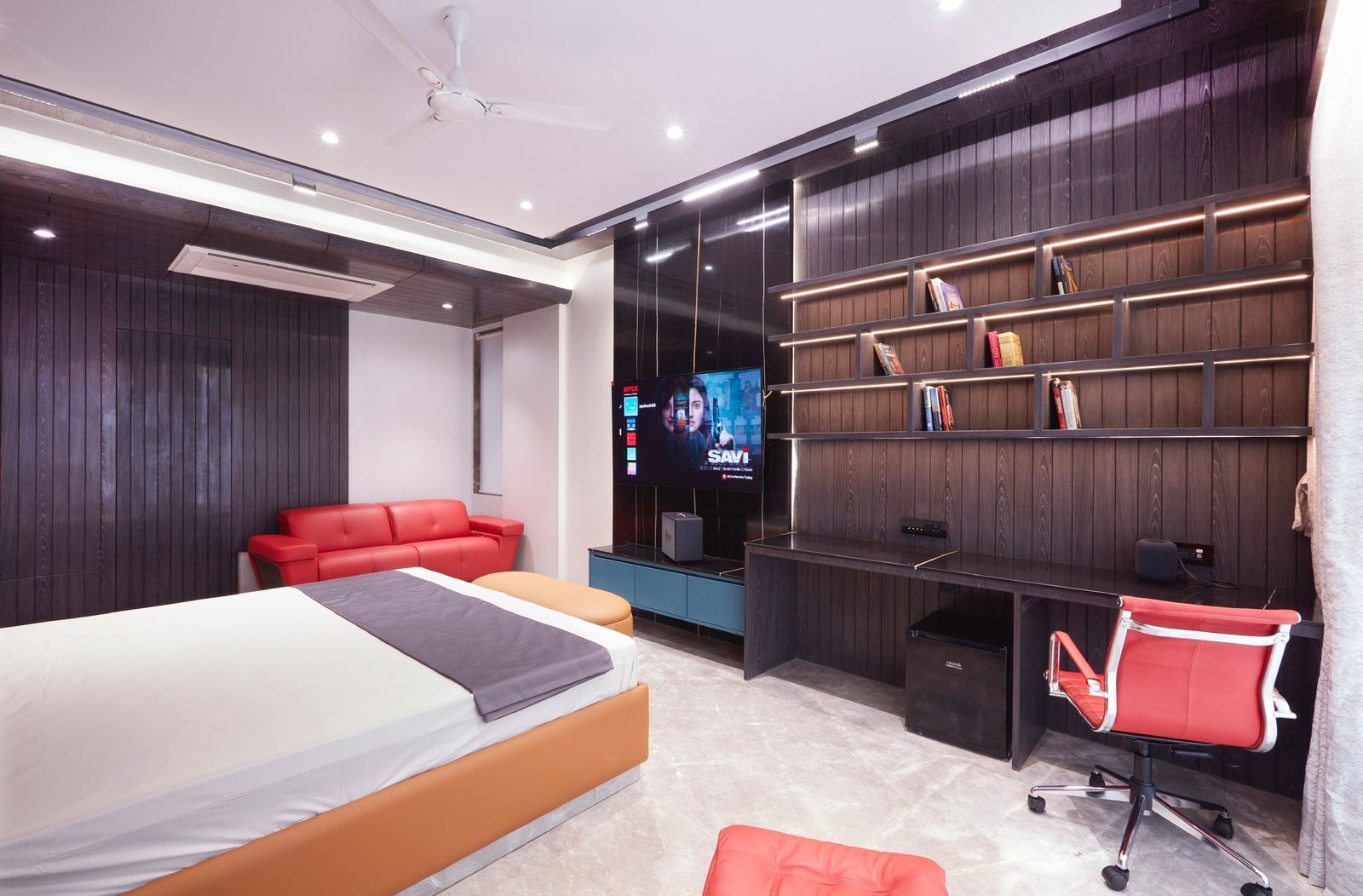
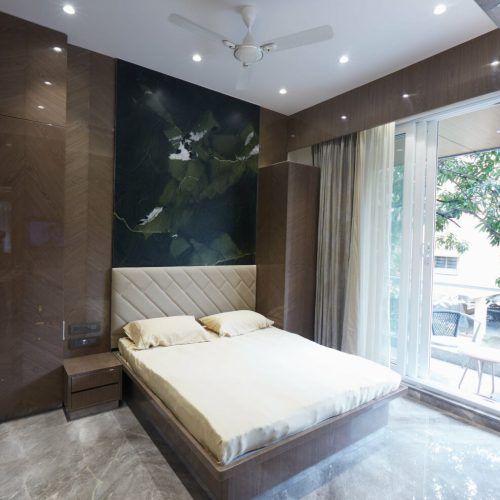
Selected work by Greenbox Design Studio. Tap any image to enlarge.
Frequently asked questions
How many 600×600 tiles are in one box?+
Four, covering 15.5 sq ft or 1.44 square metres. Some brands pack 600 × 600 in boxes of four with a stated coverage of 1.44 m² — always confirm on the carton, as premium ranges occasionally differ.
How much wastage should I allow for tiles?+
5% for a straight grid in a simple rectangular room, 8% for a staggered brick pattern, 12% for diagonal and 15% for herringbone. Add 3% if the room has niches or columns, and 5% if it is L-shaped or full of cuts. Below 5% you will run short.
Should I buy spare tiles?+
Yes — keep two boxes per finish. Tile production runs change shade between batches, so a replacement bought two years later will not match. Two boxes is cheap insurance against a cracked tile after a heavy object is dropped.
Does this calculator work for wall tiles?+
It does. Enter the wall height as the room length and the wall width as the room width, or put the total wall area into the extra-area field. The 200 × 300 and 300 × 600 sizes in the dropdown are the common Indian wall formats.
Why does the calculator round up to full boxes?+
Because dealers do not sell part boxes, and because a job that runs two tiles short at the end stops for a week while the same batch is chased. Rounding up to full boxes is what you will actually be invoiced for.