
What actually separates luxury work
- Tolerances. A 2 mm shadow gap that stays 2 mm for six metres. This is a fabrication and site-management discipline, and it is the clearest visual tell.
- Material continuity. Book-matched stone, grain-matched veneer across adjacent shutters, and flooring set out so cuts land where nobody looks.
- Concealment. No visible hinges, handles, trims, speaker grilles, AC grilles or switch plates where they can be avoided.
- Integrated services. Lighting scenes, climate, blinds, audio and security planned together, with a single interface.
- Bespoke everything. Furniture, joinery and often hardware made for the room's exact dimensions.
- Restraint. Fewer materials, used more confidently. The most common failure in expensive interiors is too many ideas.
You can see the budget in a room. You can only see the craft in the joints.
Greenbox principal designer
Where luxury budgets go
| Element | Share of budget | Why it costs what it does |
|---|---|---|
| Bespoke joinery & furniture | 30 – 38% | Made to dimension, veneer-matched, imported hardware |
| Stone, flooring & wall finishes | 18 – 25% | Book-matching, wastage, specialist installation |
| Lighting, AV & automation | 12 – 20% | Designed schemes, concealed fittings, integration |
| Civil & services | 12 – 18% | Levels, shadow-gap detailing, concealed services |
| Specialist rooms | 8 – 15% | Home theatre acoustics, spa bathrooms, wine storage |
| Project management | 5 – 8% | Longer programmes, more coordination, more inspection |

Design and build under one accountable roof
Specialist rooms need early input
A home theatre is the clearest example. Acoustic treatment, riser heights, sightlines, speaker positions and cable routes all have to be resolved before the false ceiling is designed — not after, when the only remaining option is to hang speakers where they look wrong and sound worse.
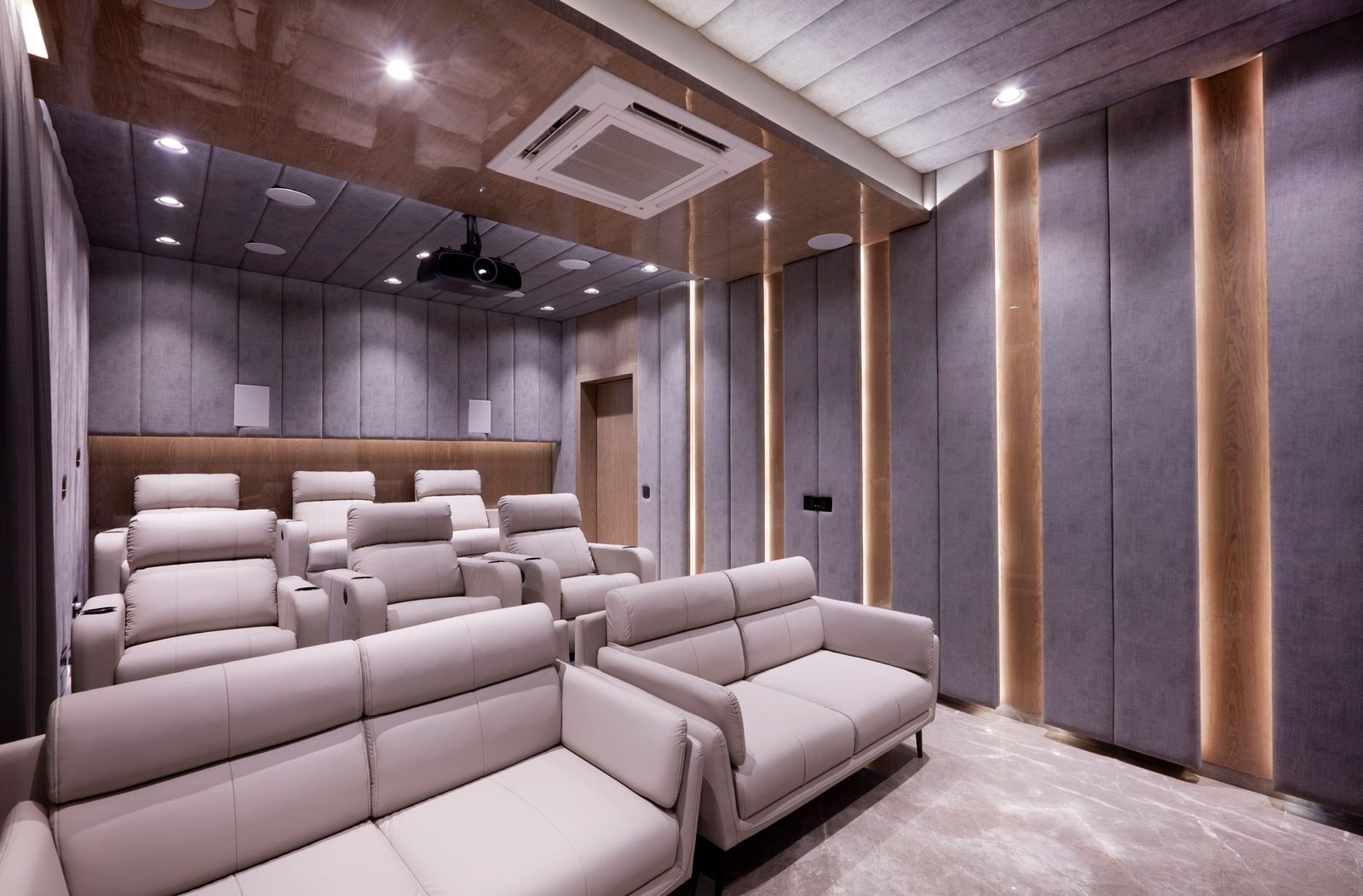


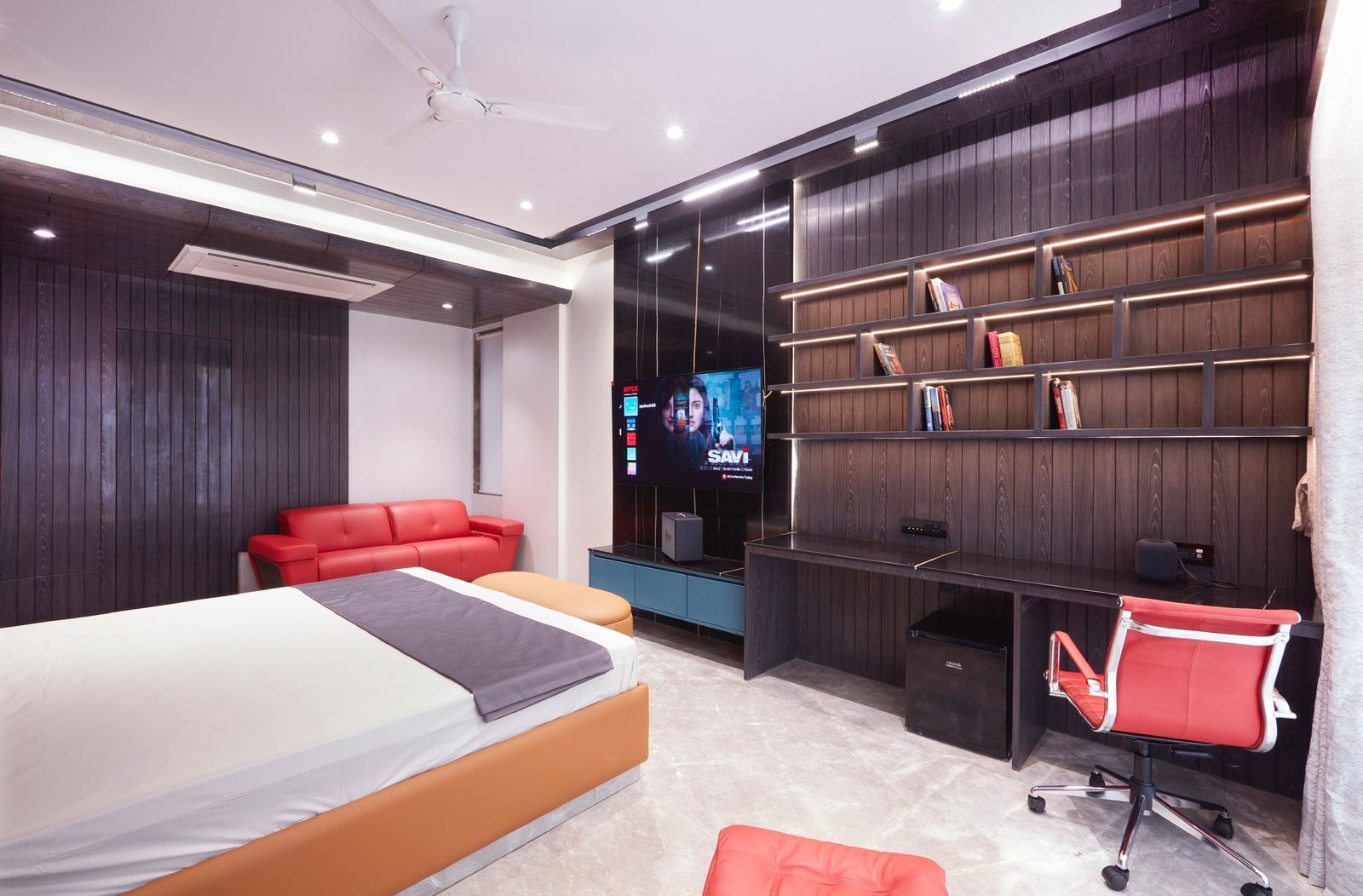

Selected work by Greenbox Design Studio. Tap any image to enlarge.
Frequently asked questions
What is luxury interior design?+
Interior design defined by execution quality rather than material cost: tight and consistent tolerances, bespoke joinery made to dimension, book-matched natural materials, concealed hardware and services, and lighting, AV and automation designed in from the start rather than added later.
How much does luxury interior design cost per sq ft?+
Budgets typically start around ₹2,500 per sq ft and commonly run ₹3,500–₹5,000+, with no practical upper limit once imported stone, bespoke furniture, automation and specialist rooms are involved. The jump from premium to luxury is mostly labour and fabrication time, not raw material.
How long does a luxury project take?+
Twenty to thirty-six weeks for a full home is normal. Longer programmes are a function of bespoke fabrication lead times, imported material shipping, specialist trades and the additional inspection cycles that tight tolerances require.
Do you design home theatres and other specialist rooms?+
Yes — home theatres, spa bathrooms, wine storage, dedicated studies and walk-in dressing rooms. These need technical input before the ceiling and services are designed, so they must be in the brief at concept stage rather than added midway.
Is imported material always better?+
No. Imported stone and hardware can be excellent, but plenty of Indian material is equally good and far easier to replace if a slab cracks or a hinge fails in year six. We specify imports where they genuinely outperform, not by default.