
The three kinds of interior contractor
People use one word for three different commercial relationships. Knowing which one you are buying decides who carries the risk when a sheet of ply arrives warped.
| Model | What you pay for | Who buys material | Typical premium | Risk sits with |
|---|---|---|---|---|
| Labour contract | Manpower only, per sq ft or per day | You | Baseline | You — fully |
| Labour plus material | Trade-wise rate including board and hardware | Contractor, to your brand list | +12 – 18% | Shared |
| Turnkey design-build | One BOQ covering design, material, execution, handover | Contractor | +22 – 35% | Contractor |
| Modular brand package | Factory units for kitchen and wardrobe only | Brand | +30 – 45% on that scope | Brand, narrow scope |
Premiums are against a bare labour rate for identical specification. A turnkey number is not 30% more expensive — it is the same work with the coordination and wastage priced in rather than billed later.
If you have the time to be on site daily, can source board and hardware yourself, and can tell BWP from MR by the edge, a labour contract is genuinely cheaper. Almost nobody can. The turnkey model exists because coordination is real work with a real cost.
The national rate card by trade
Interior quotations are built from trade rates, not from a single per-square-foot number. These are the bands we see across Indian metros in 2026 for competent, warranty-backed work — not the lowest available price.
| Trade | Unit | Economy | Standard | Premium |
|---|---|---|---|---|
| Carpentry — wardrobes, units | per sq ft shutter area | ₹1,350 – 1,650 | ₹1,700 – 2,200 | ₹2,400 – 2,900 |
| False ceiling — gypsum | per sq ft | ₹85 – 105 | ₹110 – 140 | ₹150 – 210 |
| Electrical — new point | per point | ₹550 – 750 | ₹800 – 1,050 | ₹1,100 – 1,600 |
| Plumbing — point shift | per point | ₹1,800 – 2,400 | ₹2,500 – 3,400 | ₹3,500 – 5,000 |
| Painting — plastic emulsion | per sq ft wall area | ₹22 – 28 | ₹30 – 40 | ₹45 – 70 |
| Tiling — supply excluded | per sq ft | ₹55 – 75 | ₹80 – 110 | ₹120 – 180 |
Excluding 18% GST. Carpentry rates include carcass, shutter, edge banding and standard soft-close hardware; they exclude appliances, stone and glass.
Multiply honestly. A 2BHK with 240 sq ft of shutter area at ₹1,900 is ₹4.56 lakh of carpentry alone — before ceiling, paint, electrical and flooring. If a lump-sum quote for the whole flat is under that, something has been left out of the scope rather than out of the price.

Design and build under one accountable roof
What separates a good contractor from a cheap one
- Carcass grade is stated, not implied. BWP 710 with an ISI mark and a brand name, not the word 'waterproof ply'.
- Hardware is named. Hettich, Hafele, Blum, Ebco — with the series. 'Imported soft close' names nothing and warrants nothing.
- Edge banding is 2 mm PVC on exposed edges, 0.8 mm internally. A 0.45 mm band on a wardrobe shutter lifts within two monsoons.
- Making good is in scope. Chasing walls for wiring creates damage; the quote should say who fills, sands and repaints it.
- There is a shop drawing. Carpenters working from a 3D render alone will improvise dimensions on site, and you will pay for the improvisation.
- Payments are milestone-linked, not date-linked. Verified progress, photographed, before each release.
- Retention exists. Five per cent held for 60 days after handover concentrates attention on the snag list more effectively than any warranty document.
- GST registration and a real address. A contractor who prefers cash has no interest in being findable in year three.
Every cheap quote is honest about the price and silent about the scope. The gap between the two is the actual conversation.
Greenbox contracts team
How a contract-led project runs
- Survey and condition reportMeasured site survey, photographs of existing services, and a written note of anything already defective. This protects both sides when a wall opens up.
- Scope freeze and BOQLine-item quantities, rates, brands and exclusions. Anything not on this sheet is a variation and should be priced in writing before it is built.
- Shop drawingsElevation-by-elevation joinery drawings with internal dimensions. Approved by you, issued to the floor, and the only document the carpenter follows.
- Material approvalPhysical samples of board, laminate, hardware and stone signed off before procurement, not after delivery.
- Execution in trade sequenceCivil, then plumbing and electrical first fix, then ceiling, then carpentry carcass, then finishes. Reversing any two of these creates rework.
- Snag, retention and handoverJoint snag walk, written list with dates, closure, then handover with warranty documents and the 5% retention clock starting.
Timelines you can hold a contractor to
| Scope | Site duration | Critical path | Common slippage |
|---|---|---|---|
| Single room refresh | 2 – 3 weeks | Carpentry fabrication | Late laminate selection |
| Kitchen replacement | 3 – 5 weeks | Countertop templating | Plumbing discovered on demolition |
| Full 2BHK | 10 – 12 weeks | Carpentry and ceiling overlap | Client-side material decisions |
| Full 3BHK | 12 – 16 weeks | Carpentry volume | Variations added mid-build |
| Deep renovation with civil | 16 – 22 weeks | Waterproofing cure time | Hidden plumbing condition |
Assumes six working days a week. Where a building restricts hours, add roughly 20%.
Warranty, and what it is actually worth
A warranty document is only as useful as the firm standing behind it, and interior warranties in India are inconsistent enough that the wording matters more than the headline number of years.
- Separate the carcass from the hardware. Board and workmanship are the contractor's liability; hinges, runners and channels carry the manufacturer's own warranty, which Hettich, Hafele and Blum honour directly.
- Ask what voids it. Water ingress from a building leak, client-side modification and normal wear are standard exclusions. Anything broader than that is a warranty designed not to be claimed on.
- Check the claim route. A named service contact and a stated response time are worth more than an extra two years on paper.
- Look for a defects liability period of six to twelve months, during which the contractor returns to fix anything that emerges — distinct from the longer warranty on materials.
- Match it to retention. A 5% retention held for 60 days and a defects liability period that runs longer together cover the two windows in which problems actually appear.
Where we work
We contract across India for design-led residential and commercial projects, and we run our own site teams in the Mumbai Metropolitan Region. For city rates, society paperwork and suburb-by-suburb logistics, see interior contractors in Mumbai.


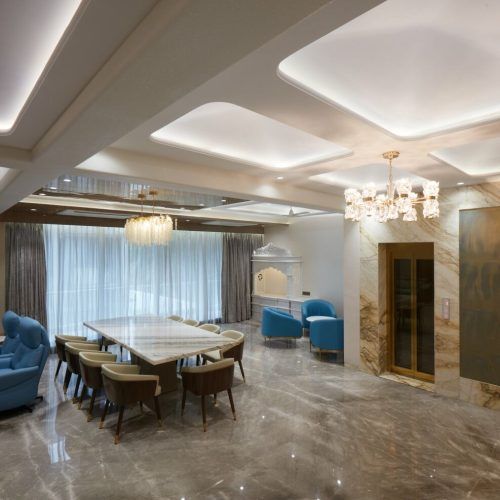
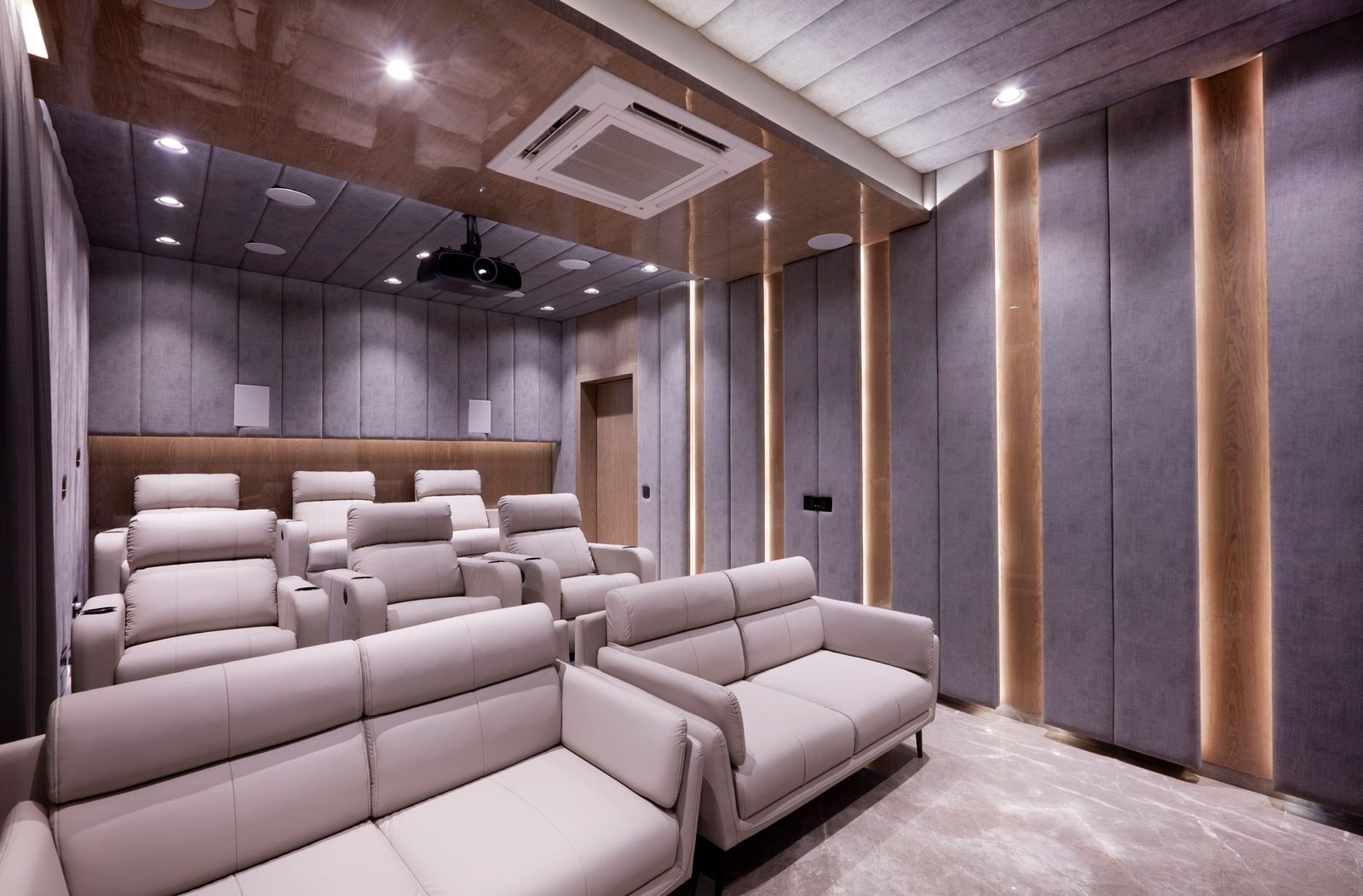
Selected work by Greenbox Design Studio. Tap any image to enlarge.
Frequently asked questions
What is the difference between an interior designer and an interior contractor?+
A designer decides what should be built — layout, storage volumes, materials, lighting. A contractor builds it. A design-and-build firm does both, which removes the argument about whether a problem is a drawing error or a site error, because one party owns both.
How do interior contractors calculate their rates?+
Carpentry is priced per square foot of shutter or finished surface area, false ceiling and painting per square foot of area, and electrical and plumbing per point. A lump-sum turnkey figure is simply these trade quantities added up, which is why you should always ask to see the underlying bill of quantities.
Should I buy materials myself to save money?+
Only if you can identify board grade, hardware series and laminate thickness confidently and can be available for deliveries. Self-supply typically saves 10–15% on paper and loses it again to wastage, wrong sizes and the contractor disclaiming responsibility for anything you supplied.
What should a contractor's payment schedule look like?+
Roughly 10% on scope freeze, 25% on mobilisation and material procurement, 30% at carpentry carcass and first fix, 25% at finishes and installation, 5% at snag closure, and 5% retained for 60 days after handover. Each stage should release against photographed progress, never against a calendar date.
What is the most common thing left out of a cheap quotation?+
Hardware grade, edge banding thickness, making good after chasing walls, debris removal, and site protection. Together these are typically 8–14% of a real project cost, which is roughly the gap between a suspiciously low quote and an honest one.