
Size your air conditioner
A heat-load estimate in BTU, converted to the nearest standard unit.
How this calculator works
- Base load = floor area × 80 BTU/hr × (ceiling height ÷ 10). The 80 BTU figure is the standard Indian residential allowance, and the height ratio corrects for the actual air volume.
- Sun exposure factor: shaded north or east ×1.0, moderate afternoon sun ×1.10, heavy west or south-west glazing ×1.22.
- Top floor or exposed roof: ×1.18. A flat under a terrace slab gains heat all evening from a roof that has been baking since noon.
- Climate factor: ×1.08 for coastal humid conditions in Mumbai and MMR, ×1.0 inland. This covers the latent load — the energy spent condensing moisture rather than dropping air temperature.
- Occupants: the first two are inside the base figure; each additional person adds 600 BTU/hr.
- Appliances: TV and electronics add 800 BTU/hr, an open kitchen or heavy equipment 1,500.
- Tonnage = total BTU ÷ 12,000, rounded up to the nearest standard size: 0.8, 1.0, 1.5, 2.0, 2.5, 3.0, 3.5, 4.0, 5.0 ton.
| Room | Area | Mumbai, moderate sun, ground or middle floor | Same room, top floor, west sun |
|---|---|---|---|
| Small bedroom 10 × 10 | 100 sq ft | 1.0 ton | 1.5 ton |
| Standard bedroom 12 × 10 | 120 sq ft | 1.5 ton | 1.5 ton |
| Master bedroom 12 × 12 | 144 sq ft | 1.5 ton | 2.0 ton |
| Living room 16 × 12 | 192 sq ft | 2.0 ton | 2.5 ton |
| Open living and dining 20 × 14 | 280 sq ft | 2.5 ton | 3.0 ton — use two units |
| Home office 10 × 8 with equipment | 80 sq ft | 1.0 ton | 1.0 ton |
Design and build under one accountable roof
Worked example: a 12 × 12 ft Mumbai bedroom
- Area = 144 sq ft; base = 144 × 80 × (10 ÷ 10) = 11,520 BTU/hr
- Moderate afternoon sun ×1.10 = 12,672 BTU/hr
- Not a top floor ×1.0, coastal humidity ×1.08 = 13,686 BTU/hr
- Two occupants — no additional load; no appliance load
- Total = 13,686 ÷ 12,000 = 1.14 ton calculated
- Rounded up the standard ladder = 1.5 ton, single indoor unit, 5 star with ISEER above 4.5.
Why an oversized AC is worse than a slightly small one
An oversized unit hits the set temperature fast, shuts off, and restarts a few minutes later. Each of those short cycles cools the air without running long enough to condense much moisture out of it, so in Mumbai you end up with a room that reads 24°C and feels damp. Compressor wear goes up, the coil stays wet between cycles, and the smell that follows is the reason people have their AC serviced twice a year.
An inverter unit tolerates mild oversizing far better than a fixed-speed one, because it can modulate down rather than stopping. If you are between sizes and the room is genuinely borderline, an inverter at the larger size is defensible. A fixed-speed compressor at the larger size is not.
Installation details that change the answer
- Indoor unit height and throw. Mount at 7 to 7 ft 6 in with a clear throw down the long axis of the room. An indoor unit blowing into a wardrobe front three feet away wastes a third of its capacity.
- Outdoor unit ventilation. In a Mumbai society, the ODU usually sits in a shaft or a slot with almost no airflow. A restricted ODU can cost you 15% of rated capacity in May, which is precisely when you notice.
- Copper run length. Beyond about 15 feet you lose capacity and need gas top-up. Plan the ODU position before the false ceiling closes over the pipe route.
- Drain fall. A drain line with insufficient slope backs up into the indoor unit and drips down a freshly painted wall. This is the most common post-handover complaint on any fit-out.
- Society rules. Most Mumbai societies restrict ODU positions on the façade and require the drain to be piped to a designated outlet, not dripping onto the flat below.
What this calculator does not do
- It is a load estimate, not a full ISHRAE heat-load calculation with fenestration and U-values
- It does not size ducted, cassette or VRF systems, which need a professional load sheet
- It does not cover wall and roof insulation, which can cut the load meaningfully
- It excludes the electrical work — a 1.5 ton split needs a dedicated 16 A point and a 4 sq mm run
- It does not price the equipment or the installation
This calculator uses the same rate bands and site rules our estimators apply, taken from Greenbox project records and cross-checked against 2026 supplier and contractor quotations in Mumbai. It is an indicative estimate, not a quotation — the real figure depends on your drawings, site condition and the brands you finally specify.
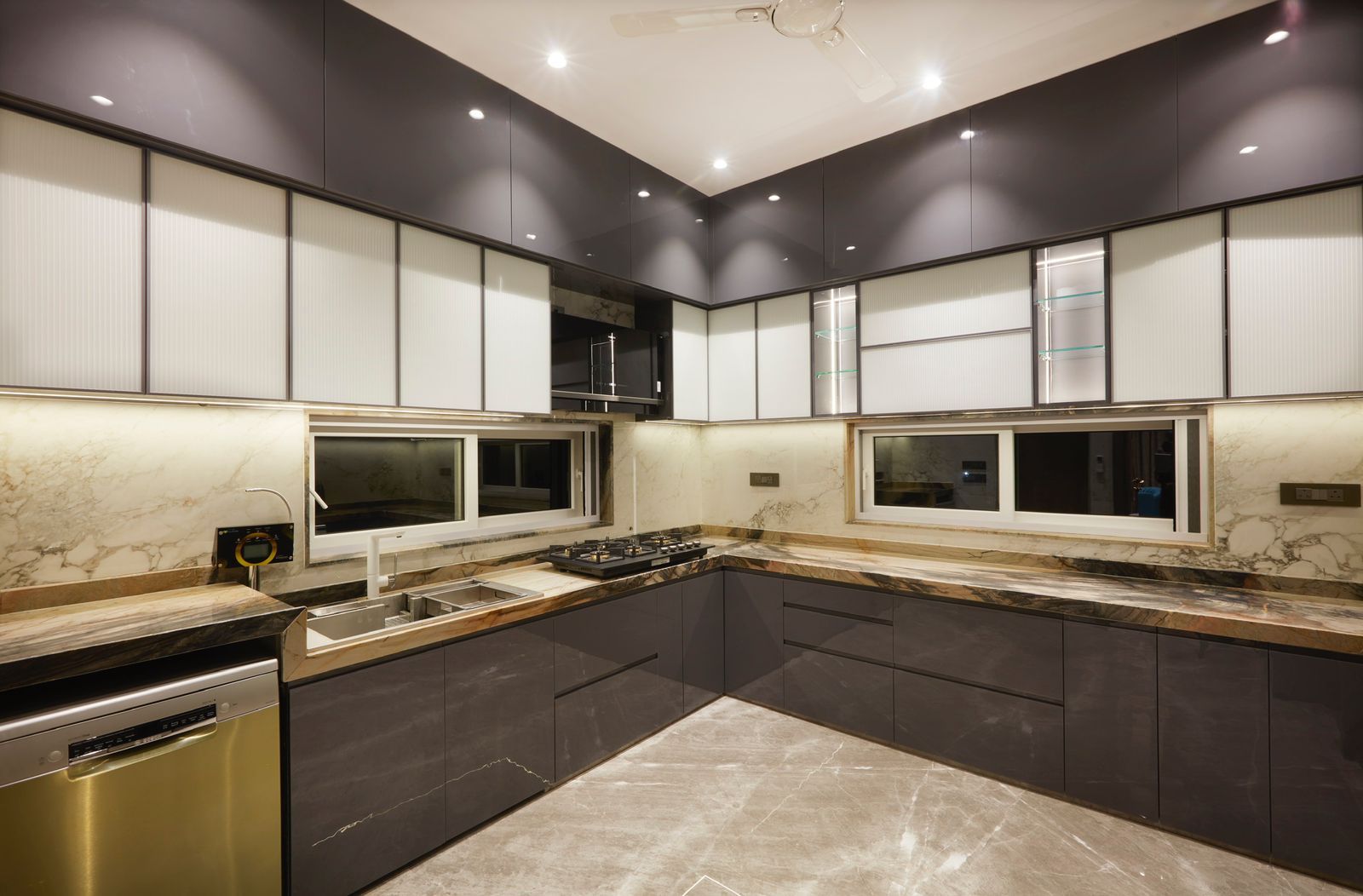
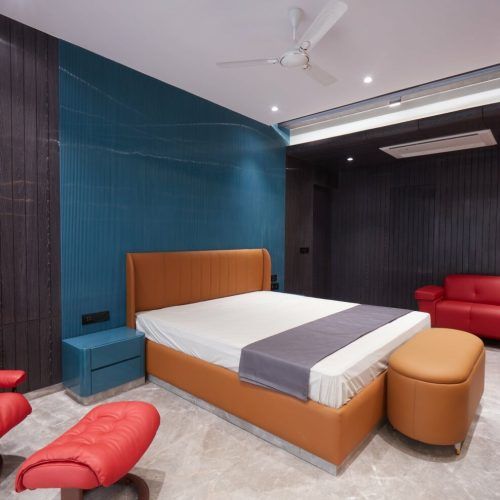
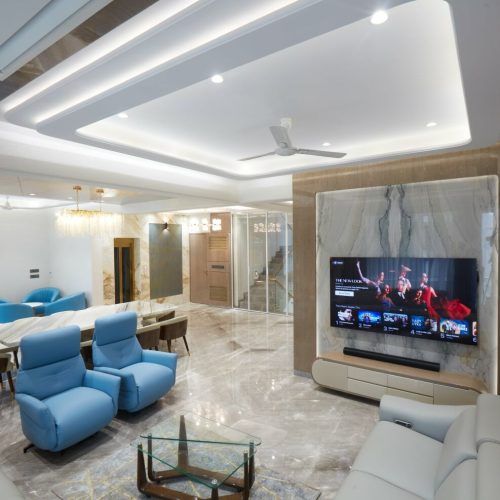
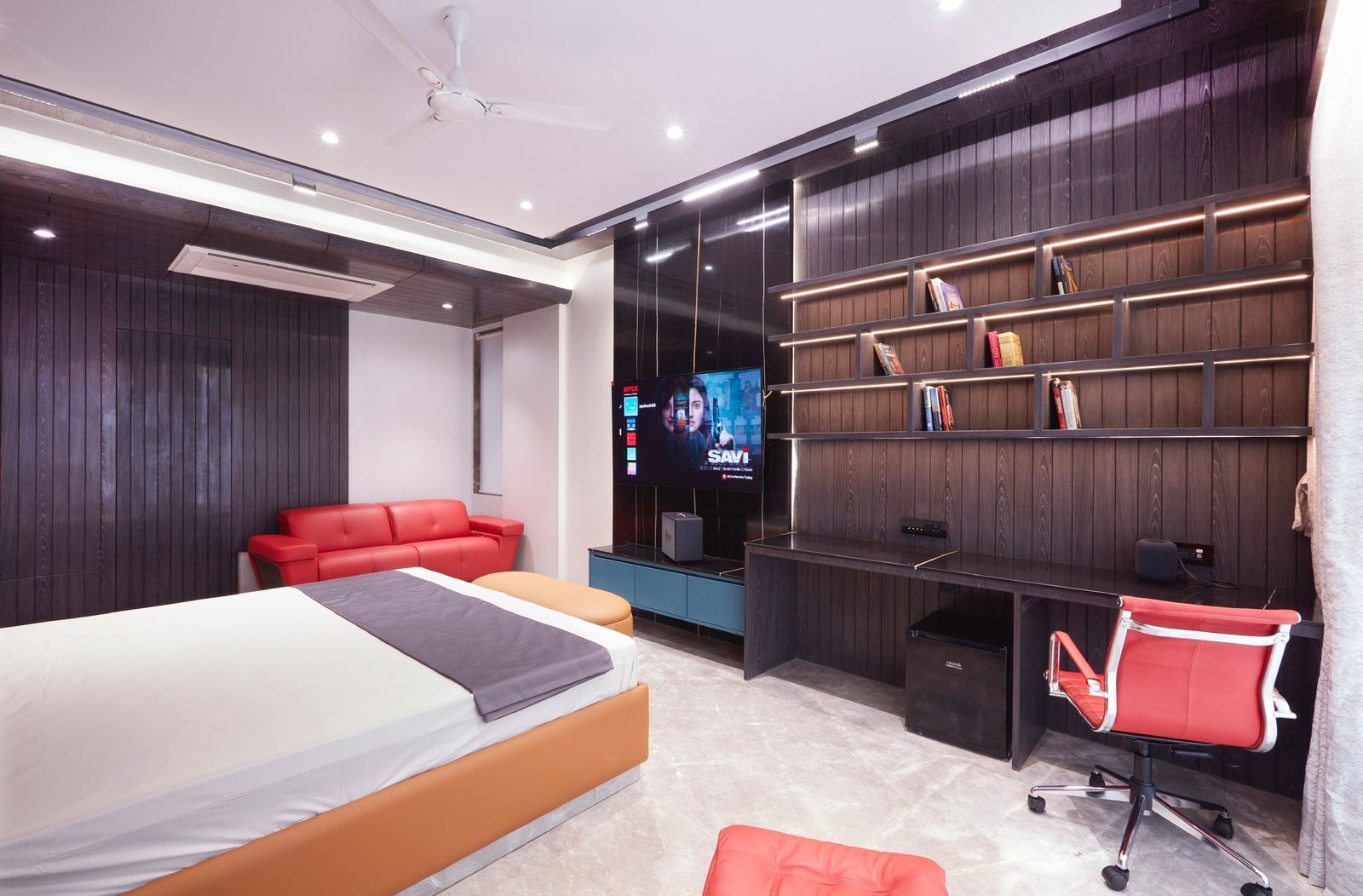
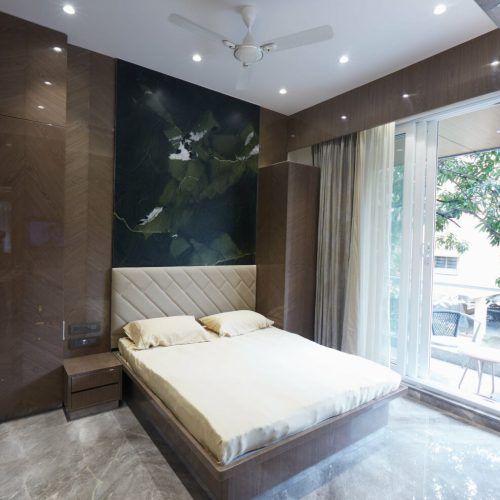
Selected work by Greenbox Design Studio. Tap any image to enlarge.
Frequently asked questions
What tonnage AC do I need for a 12 × 12 room?+
A 1.5 ton unit in Mumbai, at a 10 ft ceiling with moderate afternoon sun and two occupants — the calculated load is about 13,700 BTU/hr. In a shaded inland room the same 144 sq ft comes to roughly 11,500 BTU and a 1 ton unit will hold, but 1.5 ton remains the safer choice on a top floor.
Is 1 ton enough for a 150 sq ft room?+
Usually not in Mumbai. At 80 BTU per sq ft, 150 sq ft is 12,000 BTU before any adjustment, and a single ton is exactly 12,000 BTU — no margin for sun, humidity or occupants. Expect to need 1.5 ton unless the room is genuinely shaded and on a middle floor.
Does a top-floor flat need a bigger AC?+
Yes, about 18% bigger. A terrace slab absorbs sun all day and radiates into the flat well into the evening, which is why top-floor rooms stay warm after sunset. Roof insulation or a china-mosaic finish above can claw back part of that, but plan the AC for the building as it is.
Should I buy a bigger AC to be safe?+
No. An oversized fixed-speed AC short-cycles: it reaches the set temperature before it has run long enough to dehumidify, so a Mumbai room ends up cold and clammy, and the compressor wears faster. If you are genuinely between sizes, choose an inverter unit at the larger size rather than a fixed-speed one.
Why does humidity affect AC sizing?+
Because part of the unit's capacity goes into condensing water vapour rather than lowering air temperature — the latent load. On a humid Mumbai afternoon that can be a quarter of the total work the machine does, which is why this calculator adds 8% for coastal conditions.