

The varieties worth knowing
| Variety | Source | Character | Rate (₹/sq ft) | Use |
|---|---|---|---|---|
| Makrana white | Rajasthan | Dense, hard, warm white, ages beautifully | ₹180 – 450 | Temple work, formal floors, counters in dry areas |
| Ambaji white | Gujarat | Bright white, moderate hardness, fine grain | ₹130 – 280 | Living and dining floors |
| Rajnagar white | Rajasthan | Slight grey cast, dependable, widely available | ₹90 – 190 | Whole-flat flooring on a budget |
| Katni beige | Madhya Pradesh | Warm beige with fine veining | ₹110 – 240 | Living rooms, dado, skirting |
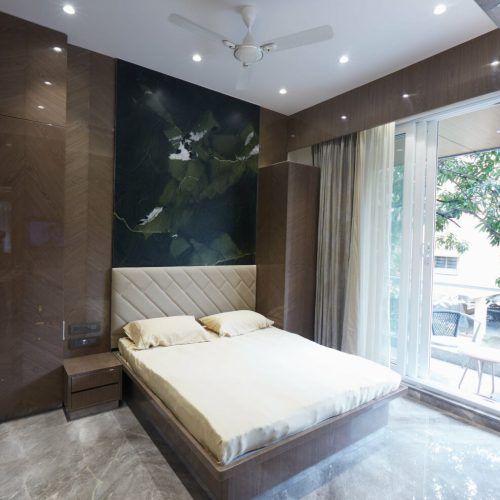
| Udaipur green | Rajasthan | Deep green serpentine with white veining | ₹120 – 300 | Feature walls, pooja units, thresholds |
| Dungri / commercial white | Rajasthan | Soft, chalky, inexpensive | ₹70 – 120 | Low-traffic rooms, lofts, cladding |
| Banswara white | Rajasthan | Good white with grey veining, harder than commercial | ₹140 – 300 | Floors where Statuario is out of budget |
Add ₹100–180 per sq ft for laying, grinding and polishing. Thickness is usually 16–18 mm, against 18–20 mm for imported.
Hardness is the specification, not whiteness
The commonest mistake in the Mumbai market is buying the whitest stone in the yard. Whiteness and hardness are unrelated, and the softest commercial whites scratch under ordinary furniture movement.
- Scratch test: draw a steel key firmly across a polished offcut. Makrana resists; commercial Dungri marks visibly. Do this in the yard, on the actual consignment.
- Water absorption test: leave water on the sample for fifteen minutes. A soft, porous stone darkens and stays dark for an hour.
- For corridors, entrance lobbies and anywhere chairs are dragged, choose a harder variety even if the colour is less perfect.
- For bedrooms and low-traffic rooms, a softer, cheaper stone is entirely reasonable and saves real money over a large area.
Design and build under one accountable roof
Laying practice, and the green marble exception
- Standard laying. Cement-sand bed of 25–40 mm with a neat cement slurry bonding coat, followed by at least three weeks of curing before grinding. Same discipline as imported stone.
- Green marble is different. Serpentine reacts with water in cement and warps, curls at the edges and develops a dull bloom. It must be laid on an epoxy or polymer adhesive over a dry, level screed — never on a wet cement bed. Contractors who do not know this produce a floor that fails within a year.
- Thickness and levelling. Indian slabs are gang-sawn and vary in thickness within a consignment. Slabs must be calibrated or the bed adjusted piece by piece; otherwise the ground floor level wanders and the polish cuts through on high spots.
- Skirting. Cut from the same slabs so the vein and colour match. Buying skirting separately is how a floor ends up with two different whites.
How it lives in a Mumbai flat
- Indian marble handles Mumbai humidity well. The problem locations are the same as for any stone: an inadequately waterproofed bathroom, a leaking balcony threshold, a planter set directly on stone.
- Harder varieties take the grit tracked in during monsoon far better. Soft whites develop a dull traffic path in the main circulation route within two or three years.
- Repolishing is cheap here and makes an old floor new: ₹60–120 per sq ft for a full re-grind and polish in Mumbai.
- Avoid acidic cleaners entirely. Most branded bathroom cleaners are acidic and will etch marble skirting in a single wipe.
Care, life and BOQ wording
- Damp mop with plain water or a pH-neutral cleaner. Wipe spills of lemon, curd and pickle immediately.
- Impregnating sealer at handover and every 18–24 months. Rangoli colours, alta and haldi during festivals are the stains we are most often called about; a sealed floor releases them, an unsealed one does not.
- BOQ: “Flooring in 18 mm Indian marble, variety [name], from a single consignment, slabs calibrated for uniform thickness; laid on 30 mm cement-sand bed with slurry bonding coat; 21 days curing before grinding.”
- BOQ: “Green marble, where used, to be laid on epoxy adhesive over dry screed. Cement bedding not permitted.”
- BOQ: “Skirting to be cut from the same slabs as the floor. Machine polishing in not fewer than three passes plus final diamond polish.”
Specification summary
| Property | Specification |
|---|---|
| Thickness | 16 – 18 mm, calibrated |
| Bedding | 30 mm cement-sand; epoxy for green marble |
| Curing | 21 days before grinding |
| Rate | ₹70 – 450 slab + ₹100 – 180 laying, per sq ft |
| Sealing | Impregnating sealer, every 18–24 months |
| Re-polish | ₹60 – 120 per sq ft, every 6–10 years |
| Best value | Ambaji and Rajnagar white for whole-flat flooring |
| Avoid | Soft commercial white in corridors; cement bedding under green marble |



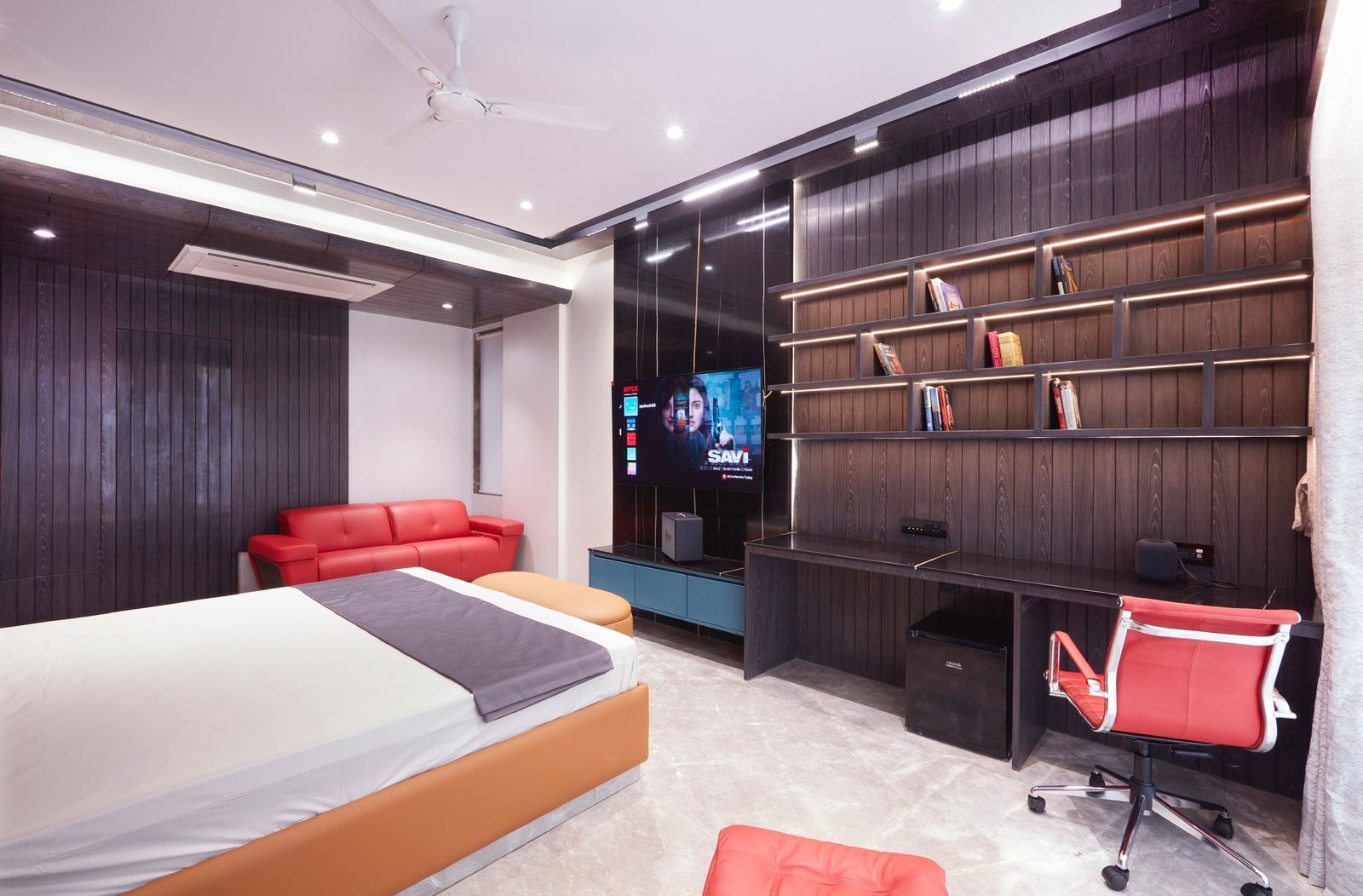
Selected work by Greenbox Design Studio. Tap any image to enlarge.
Frequently asked questions
Is Indian marble as good as Italian marble?+
For durability, often better — Makrana and Banswara are harder than most imported whites. For appearance, imported stone offers whiter grounds and more dramatic veining. At a quarter of the price, Indian marble is the right answer for large areas in most Mumbai homes.
Why did my green marble floor curl at the edges?+
It was laid on a cement bed. Serpentine reacts with the water and alkalinity in cement mortar and distorts. The only cure is lifting and re-laying on epoxy adhesive over a dry screed, which is why the bedding specification must appear in the BOQ before work starts.
Which Indian marble is best for flooring in Mumbai?+
Ambaji or Banswara white for a bright scheme, Katni beige for a warmer one, and Makrana if the budget allows and the floor matters. For corridors and entrance areas, pick the hardest variety in your budget rather than the whitest.
Can Indian marble be used in bathrooms?+
Yes, on walls and on dry-zone floors, provided the waterproofing beneath is done properly and the stone is sealed. Keep it out of the direct shower zone where acidic cleaners are used, or accept that the surface will need periodic re-polishing.
How much does it cost to re-polish an old marble floor?+
In Mumbai, ₹60–120 per sq ft for a full machine re-grind and diamond polish, done room by room over three to five days for a typical flat. It is the cheapest transformation available in an old flat and it is the reason stone floors outlive every other floor finish.