
The first-year calendar
| When | What to do | Why | Who |
|---|---|---|---|
| Week 1 | Ventilate hard; keep windows open through the day | Residual VOCs from adhesives and finishes | You |
| Month 1 | Walk the snag list again with fresh eyes | Settling defects appear after occupation, not at handover | You and the studio |
| Month 3 | Hinge, drawer and shutter alignment visit | Joinery settles; alignment drifts 1–2 mm | The studio |
| Month 6 | Silicone and sealant inspection, kitchen and bathrooms | Silicone shrinks as it fully cures | You or a handyman |
| July | Monsoon check: shutter binding, damp patches, drain clearing | Mumbai's annual stress test | The studio |
| Month 9 | Deep clean of joinery interiors and appliance seals | Dust and grease accumulate where you do not look | Professional |
| Month 11 | Full review and written warranty list | Before the first anniversary, while cover is unambiguous | You and the studio |
Adjustment versus defect
This distinction decides whether a conversation with your studio is easy or awkward. An adjustment is something that has moved within its design tolerance and can be corrected with a screwdriver: a shutter sitting 2 mm low, a drawer that no longer closes softly, a door catching on a strike plate. A defect is a failure of material or workmanship: delamination, a swollen bottom rail, a cracked stone joint, a hinge that has torn out of the carcass.
New joinery always needs adjustment in the first few months. Ply settles, buildings move fractionally, and hardware beds in. A studio that includes a three-month service visit is not admitting to poor work; it is doing what the product requires. Treat that visit as routine and raise everything on a single list, rather than calling six times about individual shutters.
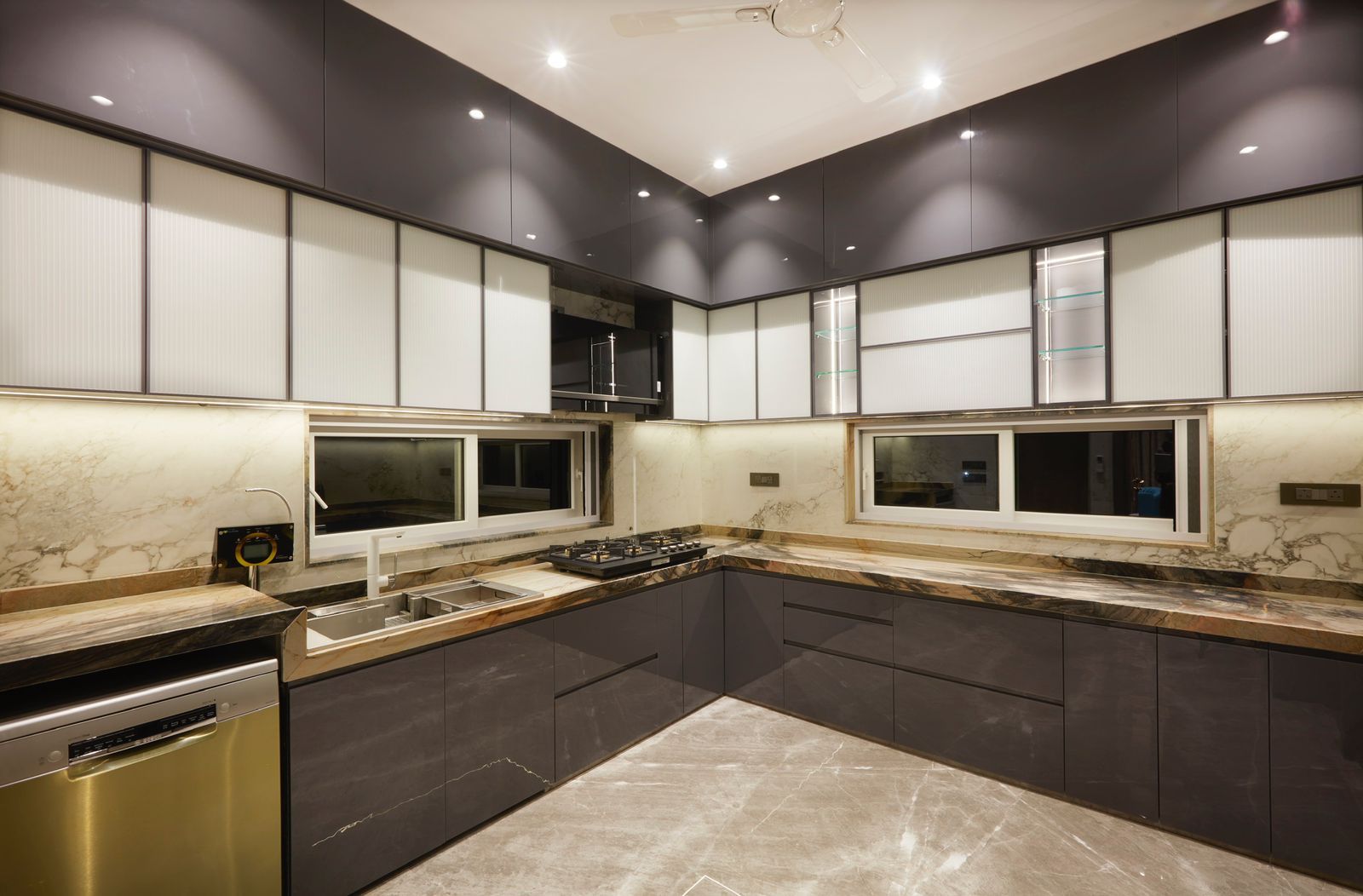
Design and build under one accountable roof
Cleaning, by surface
- Laminate and acrylic shutters: a soft cloth with dilute dish soap. Never a scouring pad, never a solvent, never an abrasive cream. Acrylic in particular scratches and the scratches show.
- Quartz counters: soap and water. Avoid acidic cleaners, bleach, and anything alkaline left standing. Do not place hot pans directly on quartz — the resin binder discolours.
- Natural stone: pH-neutral cleaner only. Vinegar, lemon and most bathroom cleaners etch marble and Kota permanently. Reseal annually where it is used for food preparation.
- Veneer and PU polish: dry microfibre for dust; slightly damp for marks; a wood-care polish twice a year. Water left standing on a PU surface will whiten the finish.
- Glass and mirror: ammonia-free glass cleaner. Ammonia attacks mirror backing at the edges and causes the black creep you see on old mirrors.
- Upholstery: vacuum monthly, professional clean annually. In Mumbai, humidity plus dust means fabric needs more attention than in a dry climate.
- Hardware: wipe SS and brass with a dry cloth. Do not use metal polish on PVD-coated finishes — it removes the coating.
The monsoon check
Mumbai's first year includes one monsoon, and it is the event that reveals whether the specification was right. The check is short and worth doing in the second week of July rather than in September, when whatever went wrong has had three months to get worse.
- Open and close every shutter and drawer. Binding at the top corner is normal seasonal movement; a hinge cam adjustment fixes it in minutes.
- Look behind the wardrobes on external walls. A torch and a mirror. Damp appearing on the back panel means a wall problem that needs attention before it reaches the carcass.
- Check under every sink. Condensation and slow leaks are invisible until the carcass swells. A dry paper towel left overnight tells you more than looking does.
- Clear balcony and utility drains. Twice during the season, not once at the start.
- Check the silicone at the counter-to-backsplash junction. This is where kitchen water gets into a carcass, and it is a five-minute repair if caught.
- Look at the ceiling in every room after the first heavy week. A faint patch in July is a manageable problem; the same patch in September is a rectification.
Using the warranty properly
Most interior warranties in India run one year comprehensive on workmanship, with longer manufacturer-backed cover on specific components such as hardware. The practical advice is to raise things in writing during month eleven. Verbal reports get forgotten, and a claim made at month thirteen for something first noticed at month seven is difficult to argue however reasonable it is.
Keep three documents together from handover: the signed BOQ, the warranty terms, and the sample set with material references. When something fails, those three make the conversation factual. Without them, the discussion becomes a matter of recollection, and recollection favours whoever has better records.
Everything that fails in year two was visible in year one. The service visit exists so that somebody looks.
Greenbox principal designer
What to keep, and where
A handover pack is only useful if it survives the first year. The documents that matter are the signed BOQ with brands and grades, the warranty terms, the electrical and plumbing as-built drawings showing where every point and pipe actually runs, the appliance manuals and serial numbers, the paint shade codes, and the laminate and veneer reference numbers. Scan all of it on the day you receive it and keep the digital copy somewhere that is not a phone.
The as-built drawings deserve particular emphasis, because their value appears the day someone needs to drill a wall. A photograph of every wall taken after electrical chasing and before plastering is worth more than a drawing and takes twenty minutes to produce. Ask for that set at handover; most studios take the photographs during construction anyway and simply never pass them on. When you later want a wall-mounted television, an extra light or a shelf above the counter, that folder is the difference between a clean job and a severed cable.
- Signed BOQ with brands, grades and IS numbers. The reference for every warranty conversation.
- Pre-plaster wall photographs. The single most useful document you will be handed.
- Paint shade codes and laminate references. Touch-ups two years later are otherwise guesswork.
- Appliance serials and warranty cards, photographed, because the cards get lost.
- The studio's service contact and the escalation name. The person who answers in month eighteen is rarely the person who sold the project.



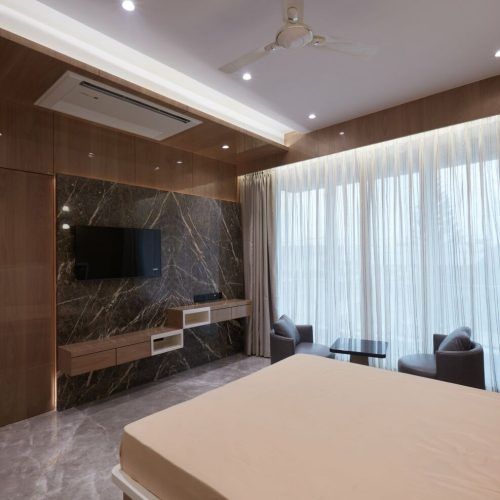
Selected work by Greenbox Design Studio. Tap any image to enlarge.
Frequently asked questions
What maintenance does new joinery need?+
An alignment visit at around three months, when ply and hardware have settled and shutters typically drift by a millimetre or two, and a monsoon check in July for binding and damp. Beyond that, correct cleaning and an annual look at silicone joints covers almost everything in the first year.
How do I clean quartz and acrylic surfaces?+
Soap and water with a soft cloth, for both. Avoid abrasive pads, acidic cleaners such as vinegar or lemon, bleach and solvents. Acrylic shutters scratch easily and the scratches are permanent; quartz discolours where hot pans are placed directly on it, because the resin binder is heat-sensitive.
When should I raise a warranty claim?+
In writing, as soon as you notice an issue, and certainly before month eleven of a one-year warranty. A claim raised at month thirteen for something first seen at month seven is hard to argue. Keep the signed BOQ, the warranty terms and the sample set together so the conversation stays factual.
Is a shutter that has dropped a defect?+
Usually not. European hinges have three-way cam adjustment, and new joinery routinely drifts one to two millimetres in the first few months as the carcass settles. It is a fifteen-minute adjustment. A shutter that has dropped because the hinge has torn out of the carcass is a defect, and that distinction is visible on inspection.
What does annual interior maintenance cost?+
₹8,000–₹18,000 a year for a 2BHK: a professional deep clean, hinge and channel servicing, silicone renewal where needed, and polish care on veneered surfaces. Studios that include year-one service visits cover most of this in the first twelve months.
What should I check after the first monsoon?+
Shutter and drawer operation, the back panels of wardrobes on external walls, the underside of every sink, the silicone at the counter-to-backsplash junction, and the ceiling of every room after the first heavy week of rain. Do it in the second week of July, not in September.