
What snagging actually is
A snag is a defect or incomplete item of work found at practical completion. Snagging is not a complaint and it is not an adversarial exercise — every construction project in the world generates a list, and a good contractor expects one and has priced for closing it. The problems arise when the list is verbal, when it is not categorised, and when the final payment has already been made.
How to walk the flat
- Book it for a weekday morningDaylight shows what an evening with warm lighting hides — colour variation in laminate, a misaligned shadow gap, a poorly finished putty patch.
- Bring five thingsA torch for inside cabinets, a spirit level, a roll of low-tack masking tape, a phone for dated photographs, and someone who did not design it.
- Walk empty, room by roomFurniture and boxes hide 30 per cent of the list. Snag before anything moves in.
- Tape and number every itemA numbered tape tag on the wall next to the defect, matched to a numbered photograph. It removes all ambiguity about which shutter you meant.
- Operate everything twiceEvery shutter, every drawer, every tap, every switch, every socket with a tester, every lock with the key.
- Issue the list within 48 hoursAs a table, with a photograph, a location, a description and a category. Email it; do not send it as WhatsApp messages.
- Re-walk on closureItem by item against the list, not as a general look-around. Sign the closure sheet.
Design and build under one accountable roof
Room-by-room inspection list
| Area | Check | Common snag |
|---|---|---|
| Joinery, all rooms | Shutter alignment, gap consistency, soft-close action, edge banding, internal finish | Shutters out of line by 2–4 mm on a run |
| Kitchen | Counter joint, sink silicone, hob cut-out, chimney duct, drawer loading, skirting | Counter joint not colour-matched; chimney duct un-taped |
| Wardrobes | Hanging rod level, shelf sag, loft shutter clearance, mirror fixing, lock operation | Loft shutter fouls the ceiling cove |
| False ceiling | Joint cracking, cove line straightness, light spacing, AC grille alignment | Cove shadow line wandering by 5 mm |
| Painting | Coverage in corners, cutting-in at switch plates, sheen consistency, putty marks under raking light | Roller marks visible from an angle |
| Electrical | Every socket tested, plate level, switch grouping, RCCB test, earth continuity | Plate not flush; two-way switching not working |
| Plumbing | Taps, flush, hot water, drainage speed, silicone lines, shower fall | Standing water at one corner of the bathroom floor |
| Flooring / skirting | Level change at thresholds, skirting gaps, grout consistency, hollow tiles | Hollow-sounding tiles near the balcony door |
| Doors and windows | Swing, latch, stopper, gap at the bottom, lock keys, mosquito mesh | Door does not hold at 90 degrees |
| Glass and mirrors | Edge polish, fixing, silicone neatness, safety film where needed | Mirror clips visible and uneven |
Categorise, or nothing gets fixed
A flat list of 110 undifferentiated items is unmanageable, and it invites the contractor to start with the easy ones. Three categories make the list actionable and make the retention conversation straightforward.
| Category | Definition | Examples | Payment position |
|---|---|---|---|
| A — before final payment | Affects function, safety or is not repairable later | Socket not working, shutter fouling, water not draining, hollow tile | Final instalment withheld |
| B — within 14 days | Cosmetic but clearly a defect | Paint touch-up, edge band lifting, silicone untidy, handle misaligned | Retention withheld |
| C — accepted | Within tolerance or a material characteristic | Grain variation, a hairline in veneer after a monsoon, minor stone veining | Nothing withheld |
Agreeing the categories with the contractor at the walk, rather than afterwards, removes 80 per cent of the argument.
Retention, and how much to hold
Retention is the mechanism that gets a snag list closed. Five to ten per cent of the contract value, held against written closure of the A and B lists, is standard and fair in Indian residential work. Holding more than ten per cent tends to sour the relationship and rarely speeds anything up; holding nothing means the last three items take four months. Release it against a signed closure sheet, not against a verbal assurance, and release it promptly once the sheet is signed — a contractor who is chased for a legitimate release will remember it during your warranty period.
A long snag list is not a bad project. An unwritten snag list is.
Greenbox principal designer
The handover file
Closure is not just the defects. A proper handover includes the documentation that makes the home maintainable for the next decade, and it is the part most often skipped. Ask for all of it before releasing the retention.
- As-built electrical layout showing point positions and circuits, so nobody drills into a conduit in year four.
- Plumbing layout showing concealed line routes and the isolation valve positions.
- Final BOQ as executed, including every signed variation.
- Material and hardware schedule with makes, models, shades and batch numbers.
- All manufacturer warranty cards and invoices — board, hardware, appliances, sanitaryware, glass.
- Appliance manuals and the installer's contact for each.
- Paint shade codes and the finish schedule, for touch-ups.
- A written maintenance note: what to clean with, what not to, and what to service annually.
- The signed snag closure sheet and the warranty document.
Where handovers go wrong
- Paying the final instalment at the walk. Once it is paid, the list is goodwill. Pay against closure.
- Snagging after the furniture moves in. You will miss a third of it and every subsequent item becomes disputable.
- An evening walk. Warm dim light is flattering. That is the problem.
- Verbal lists. Nothing survives contact with a busy site unless it is written and numbered.
- Treating everything as category A. It removes the contractor's ability to prioritise and guarantees the important items are not done first.
- Not re-walking. Closure has to be verified item by item. Roughly 10 to 15 per cent of items are marked closed and are not.
- Skipping the handover file. It costs nothing at handover and is impossible to assemble two years later.
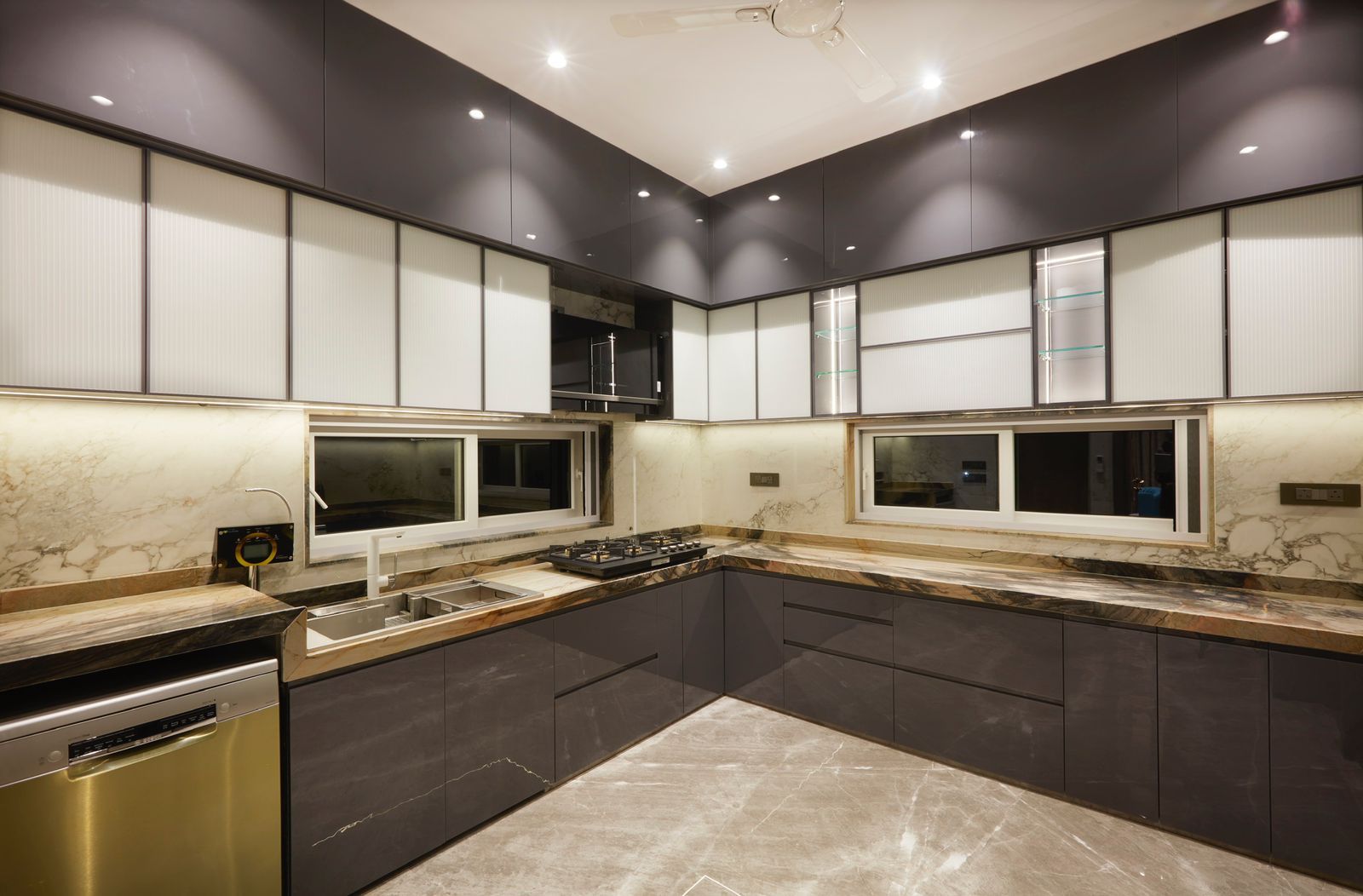



Selected work by Greenbox Design Studio. Tap any image to enlarge.
Frequently asked questions
How many snags are normal on an interior handover?+
60 to 140 items on a full 2BHK fit-out, and more on a 3BHK. That is normal and expected — it reflects thorough inspection rather than poor work. A list of a dozen items usually means the walk was done in the evening, with furniture in place, or with the designer narrating. Every large construction project in the world produces a list.
How much retention should I hold on an interior project?+
5 to 10 per cent of contract value, released against a signed snag closure sheet. Holding nothing means the last few items drift for months; holding more than 10 per cent rarely speeds anything up and does sour the relationship you will need during the warranty period. Release it promptly once the closure sheet is signed.
How long should it take to close a snag list?+
7 to 21 days for a residential list of 60 to 140 items, assuming the contractor still has a team mobilised. Beyond 30 days the problem is usually process rather than work — an uncategorised list, a demobilised site, or a final payment that was already released. Agree the closure date in writing at the walk itself.
Should I do the snag walk myself or hire someone?+
Either works, but bring someone who did not design the space. Familiarity blinds you to the thing you have walked past forty times. A professional snagging inspection in Mumbai costs roughly ₹8,000 to ₹25,000 for a flat and typically finds 20 to 40 per cent more items than an owner walking alone — worth it on a project above about ₹25 lakh.
What documents should I get at handover?+
As-built electrical and plumbing layouts, the final executed BOQ with signed variations, a material and hardware schedule with makes and shade codes, every manufacturer warranty card and invoice, appliance manuals, paint codes, a written maintenance note, the signed snag closure sheet and the warranty document. Ask for all of it before releasing retention — it is impossible to assemble later.