
What the industry actually means by 'ten years'
When a Mumbai studio advertises a ten-year warranty, it is almost always warranting the plywood carcass against delamination, borer and manufacturing defect — and in most cases that is not even the studio's warranty, it is the plywood manufacturer's, passed through. Century, Greenply and Merino all publish their own warranties on BWP IS:710 board. That is a real and useful cover, and it is not the same thing as the studio being responsible for your kitchen for a decade.
| Element | Realistic warranty | Who honours it | What it covers |
|---|---|---|---|
| Plywood carcass, BWP IS:710 | 7–10 years | Board manufacturer, via the studio | Delamination, borer, manufacturing defect |
| Joinery workmanship and installation | 12–24 months | The studio | Alignment, sagging, joints opening, shutters dropping |
| Hinges and drawer runners | Maker's stated life | Hettich, Blum, Hafele, Ebco | Mechanism failure within cycle rating |
| Laminate / acrylic surface | 12 months | The studio | Adhesion and edge lifting, not scratches |
| PU and paint finishes | 6–12 months | The studio | Peeling and blistering, not fading or chips |
| False ceiling | 12–24 months | The studio | Cracking at joints, sagging; not water damage |
| Electrical points and switches | 12–24 months workmanship | Studio + Legrand / Havells on the device | Loose terminations, device failure |
| Quartz and sintered stone | 10–15 years | The brand | Manufacturing defect only |
| Natural stone | Nil | — | Natural material; veining and porosity are inherent |
| Upholstery and fabric | 6–12 months | The studio or the supplier | Stitching and frame, not fading or staining |
The exclusions that are always there
These appear in every reasonable warranty, and a studio that does not state them has simply not written the document carefully — which is its own warning.
- Water ingress from the building. A leaking terrace slab, a failed neighbour's bathroom, or monsoon seepage through an external wall. Your joinery will be damaged and it is not the studio's defect.
- Client-supplied materials and appliances. If you bought the hob, the studio warrants the cut-out and the installation, not the hob.
- Normal wear and tear. Scratches, dents, fading, grout discoloration, soft-close mechanisms slowing with use.
- Modification by others. The moment another carpenter opens a unit, the cover on that unit ends. This is standard and reasonable.
- Natural material movement. Solid wood and veneer move with humidity. A hairline at a veneer joint after one monsoon is behaviour, not a defect.
- Neglect. A wardrobe standing in 20 mm of water for a week is not a warranty event.
- Consequential loss. The studio will repair the shutter; it will not pay for the shirts inside it.
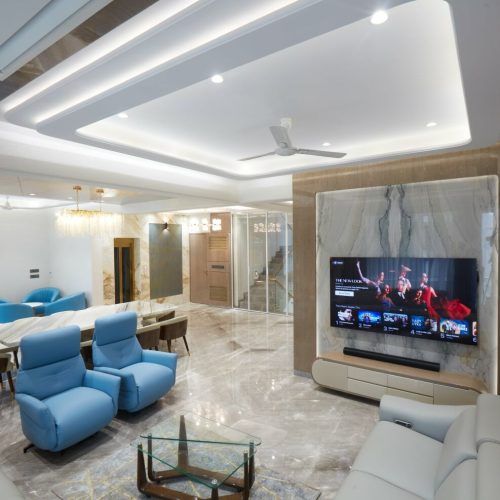
Design and build under one accountable roof
The four clauses to read before you sign
- Response time. A warranty with no stated response time is a warranty with no obligation. Ask for a written figure — we work to 48 hours for an acknowledgement and seven working days for a site visit, and you should expect something comparable in writing.
- Transferability. If you sell the flat in year three, does the cover pass to the buyer? Most warranties in India are not transferable unless the document says so. It is worth asking for, costs the studio nothing, and is worth something at resale.
- What triggers a void. Usually: work by others, non-payment of the final instalment, and water damage. Make sure 'minor repairs by a building handyman' does not void cover on the whole flat rather than the affected unit.
- Who honours it if the studio closes. An honest answer is that board, hardware and appliance warranties survive because they belong to the manufacturers, and the workmanship cover does not. A studio that claims otherwise is telling you something that is not true.
What usually fails, and when
Knowing the failure curve tells you which warranty periods are worth negotiating. Most interior defects surface in one of two windows: the first three months, when installation errors work themselves loose, and years four to seven, when mechanisms and finishes reach the end of their real service life. Very little fails in between, which is why a 24-month workmanship cover catches most of what a studio is genuinely responsible for.
| Failure | Typically appears | Cause | Covered? |
|---|---|---|---|
| Shutter dropping out of line | Month 1–4 | Hinge not adjusted at handover, or carcass racking | Yes, workmanship |
| Edge banding lifting near the hob | Month 6–18 | Heat and steam on a 0.8 mm band | Usually, if within the period |
| Drawer runner sticking | Year 3–6 | Cycle life, or overloading | Manufacturer, against the cycle rating |
| Laminate delaminating in a wet zone | Year 2–5 | MR carcass used instead of BWP | Yes — and it is a specification failure |
| Hairline at a veneer joint | Month 8–14, after a monsoon | Natural movement | No — material behaviour |
| False ceiling joint crack | Month 6–24 | Building movement or a taped joint without mesh | Usually workmanship, if within period |
| PU finish chipping at handle position | Year 2–4 | Wear | No |
| Soft-close slowing | Year 5–8 | Damper fluid ageing | Manufacturer, sometimes |
What to keep so a claim is straightforward
- The signed BOQ with brandsThis is the document a warranty claim is assessed against. Without it, the discussion is about memory.
- Material invoices and batch detailsPlywood, laminate, hardware. The board manufacturer's warranty is claimed against the invoice, not against your kitchen.
- Hardware model numbersA Hettich Sensys hinge and a Hettich Intermat have different ratings and different spares. Photograph the boxes.
- Photographs at handoverEvery elevation, dated. It settles the 'was that there at handover' question permanently.
- The snag list and its closure sign-offA closed snag list is the baseline. Anything after it is a warranty item rather than an incomplete work item.
- Your written maintenance recordRe-siliconing, re-polishing, servicing the chimney. It matters when a studio argues neglect.
A warranty is only as good as the document it is written in and the company that is still trading. Read both.
Greenbox principal designer
What a good warranty document contains
Six things, and it should fit on two pages: an element-by-element table with periods; the named exclusions; the response and rectification timelines; what voids the cover; whether it is transferable; and the escalation contact with a name rather than a generic inbox. If a studio's warranty is a single sentence in the quotation footer, that is the whole product. Ours is set out on our warranty page along with the on-time completion guarantee, and we would encourage you to compare it line by line against whatever else you are considering.
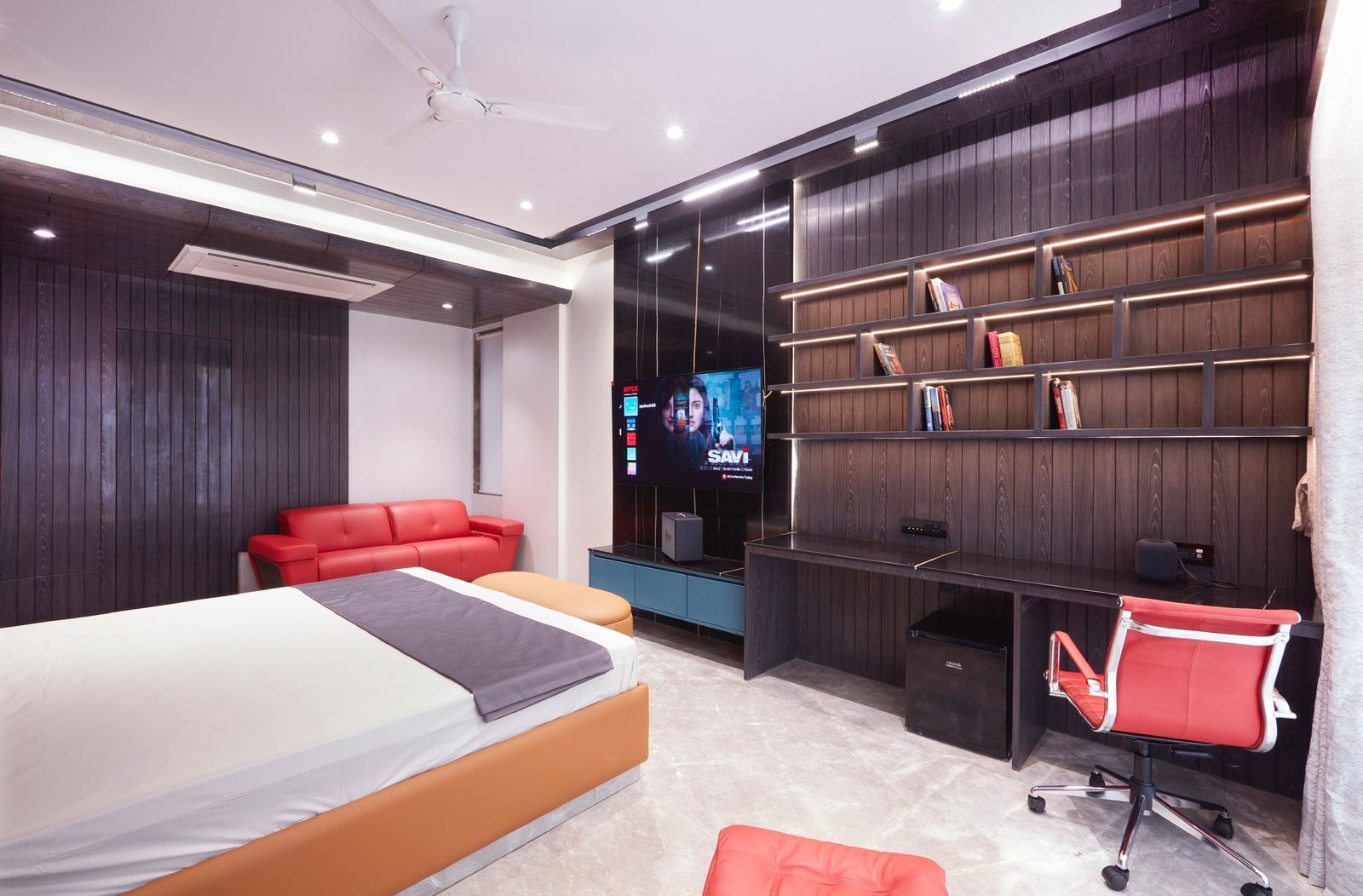
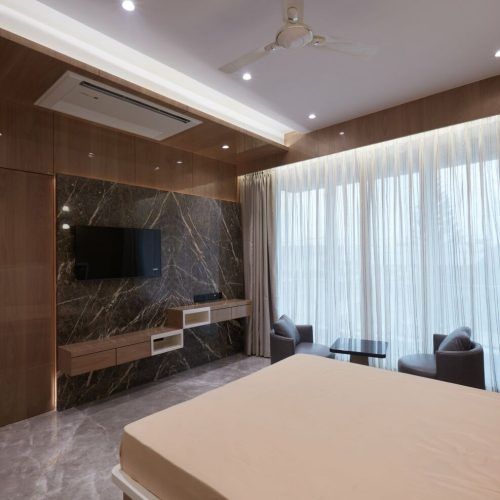
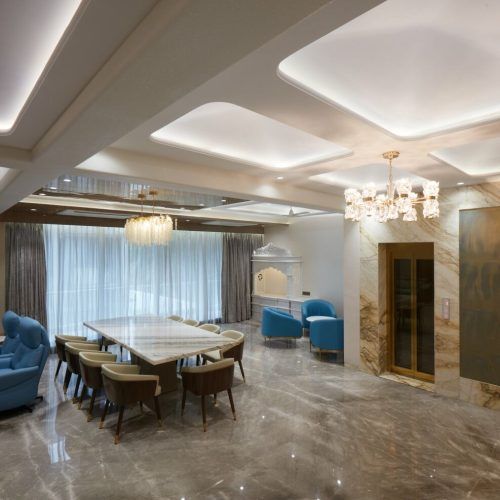
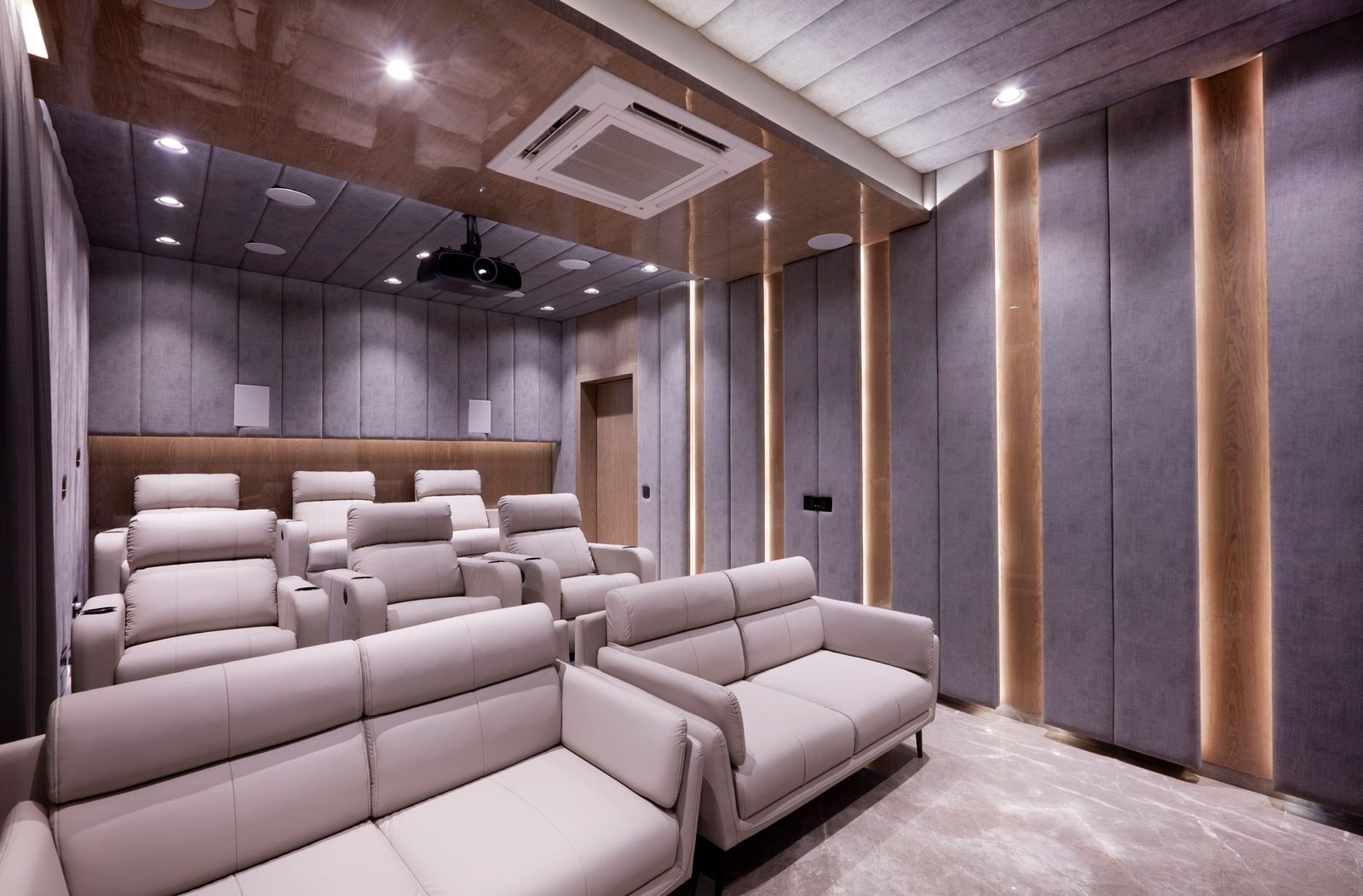
Selected work by Greenbox Design Studio. Tap any image to enlarge.
Frequently asked questions
Is a 10-year interior warranty real?+
Usually it is the plywood manufacturer's warranty on BWP IS:710 board, passed through by the studio, and it covers delamination, borer and manufacturing defect on the carcass. That is genuine and useful. It is not a ten-year commitment on your kitchen — the studio's own workmanship cover is typically 12 to 24 months, and that is the clause you will actually use.
What is not covered by an interior warranty?+
Water ingress from the building, client-supplied appliances and materials, normal wear and tear, scratches and fading, modification by other contractors, natural movement in solid wood and veneer, and consequential loss. Every reasonable warranty excludes all seven, and a document that does not list them has simply not been written carefully.
How long should hardware last?+
To the manufacturer's cycle rating. A Hettich Sensys hinge is rated around 80,000 open-close cycles and a Blum Tandembox runner around 100,000 — roughly 15 to 20 years of domestic use. Keep the invoices and photograph the boxes at installation; those warranties are claimed against the maker, not against your contractor.
Does an interior warranty transfer if I sell the flat?+
Not unless the document explicitly says so, and most Indian warranties are silent on it, which means no. Ask for transferability in writing before signing. It costs the studio nothing, and a transferable warranty with the handover documentation is a small but real asset at resale.
What should I do the moment I notice a defect?+
Photograph it with the date visible, email the studio rather than only messaging, and quote the BOQ line item. An email creates the record that a WhatsApp thread does not, and the BOQ reference moves the conversation from opinion to specification. Then expect an acknowledgement within 48 hours and a site visit within a week.