
Where Mumbai bungalows actually are
There is no single bungalow market here. There are five, and they behave differently on site.
| Stock | ₹ / sq ft (carpet) | The local problem | |
|---|---|---|---|
| JVPD scheme, Juhu | 1960s–80s bungalows and low-rise floors | ₹3,410 – 6,330 | Beach at 600 m, rising damp on ground floors, neighbour noise agreements |
| Pali Hill, Bandra West | Heritage cottages and rebuilt bungalows | ₹3,530 – 6,330 | Heritage precinct on some plots, lanes no truck can enter |
| Madh Island and Erangal | Coastal bungalows and weekend houses | ₹2,430 – 4,140 | Ferry or a long road route, CRZ constraints, full salt exposure |
| Gorai and Uttan | Village plots and newer weekend villas | ₹2,430 – 3,890 | Ferry logistics, no reliable three-phase supply on some plots |
| Thane, Panvel and Karjat gated villas | New developer villa schemes | ₹2,560 – 4,380 | Developer fit-out manuals, shared site gates, fixed handover windows |
Carpet area basis, ex-GST. Excludes civil alteration, external works and waterproofing. Pocket by pocket, these are what the bungalows we have built and invoiced in them actually cost, held at October 2026.
Coastal specification, written down
Every practitioner in this city says ‘marine grade’. Here is what we actually put on a Mumbai bungalow drawing, and the distance band it applies from.
| Distance from open sea or creek | Hardware | Board | External metal |
|---|---|---|---|
| Under 500 m | SS 316 throughout, including screws | Marine ply (IS 710 BWP with a marine finish) on all external walls | Anodised aluminium, minimum 20 micron; no MS anywhere outside |
| 500 m – 2 km | SS 316 on exposed faces, SS 304 internally | BWP 710 throughout, marine ply on balcony and terrace joinery | Powder-coated aluminium; MS only if fully encapsulated |
| 2 – 5 km | SS 304 with a passivated finish | BWP 710 in wet areas and external walls | Powder-coated MS acceptable with an annual inspection |
| Inland, above 5 km | Standard SS 304 | BWP in wet areas, 710 elsewhere | Standard powder-coated MS |
Distance is to the nearest open water, including the Malad, Thane and Manori creeks — not only to the Arabian Sea.
Bungalow work in a city with no bungalow plots left
Rising damp, and why we test before we quote
Roughly two in three Mumbai ground-floor bungalows we survey show measurable moisture in the plinth walls. It is not a defect of the house; it is what a 1970s plinth without a damp-proof course does after fifty monsoons.
- We take protimeter readings at 150 mm, 600 mm and 1,200 mm above floor level on every external wall, before the layout is even drawn.
- Anything above 18% is treated, not covered. Injected damp-proofing or a chemical course costs ₹900–₹1,700 per running metre and takes a week; hiding it behind panelling costs the panelling twice.
- No timber flooring, timber skirting or MDF within 900 mm of a damp wall. PVC or aluminium skirting, vitrified or stone flooring, and a ventilated cavity behind any joinery on that wall.
- Wardrobe backs get a 10 mm cavity and a vent grille, top and bottom, on every external ground-floor wall.
- Painting waits. A treated wall needs six to eight weeks to dry down before a breathable emulsion goes on it; a plastic emulsion applied early blisters by the next monsoon.
Access, and what it costs here
- Pali Hill and Ranwar lanes. A 14-foot tempo is the largest vehicle that turns in. Boards come in half-loads, and we price the extra handling on the BOQ rather than absorbing it and returning with a variation.
- JVPD lanes. Wider, but parked solid. Deliveries here are booked before 9am, and we keep a stores lock-up inside the house so material never waits on the road.
- Madh and Gorai. Either the Versova ferry with a load limit, or a 35-kilometre road detour through Malad. Both are planned deliveries, not phone-call deliveries; a missed slot costs a day.
- Neighbour agreements substitute for a society NOC. There is no managing committee on a bungalow lane, so we write to the immediate neighbours before start with the working hours, the noisy-works window and a contact number. It has prevented more stoppages than any permission ever has.
- Debris. BMC requires bagged debris and disposal at approved sites. On a bungalow strip-out that is ₹45,000–₹1,40,000 and it belongs on the quote, not in the surprises.
The monsoon governs the programme
From roughly the second week of June to the last week of September, nothing on the roof, nothing to the external facade, and no polishing or painting that needs a dry cure. That is not caution; it is four months of the year.
| Work | Window | What happens if you force it |
|---|---|---|
| Terrace waterproofing | October – May | Membrane laid on a damp deck debonds within one season |
| External painting and render | November – May | Blistering and efflorescence by the following monsoon |
| PU and melamine polishing | October – May, or a dehumidified room | Bloom and a milky finish at 80%+ relative humidity |
| Internal joinery installation | All year | No constraint if material is stored dry on site |
| Electrical and plumbing first fix | All year | No constraint |
| Landscape and driveway | October – May | Compaction fails on saturated subgrade |
Every bungalow client asks us to start in June because that is when they have time. We start the internal work in June and put the roof in the October programme, and we say so on the first sheet of the BOQ.
Greenbox site team
What the survey finds in an older Mumbai bungalow
Most JVPD, Pali Hill and Santacruz bungalows were built between 1955 and 1985, extended at least once, and rewired at least twice by different people. Five findings recur often enough that we now price a survey allowance into every bungalow proposal.
- Two generations of wiring in the same conduit. Aluminium from the original build alongside later copper, sharing a neutral. It fails a megger test and it has to be resolved before any ceiling closes.
- A first-floor extension on the original slab. Frequently added without a structural check. If you intend to load it with stone flooring or a full joinery package, that check happens now.
- Cast-iron soil stacks running inside the wall. Replacement with CPVC or SWR costs ₹55,000–₹1,10,000 per stack and involves opening the wall on every floor. Doing it later means opening a finished wall.
- A terrace that was waterproofed by brush coat. A bitumen or acrylic brush coat on an old deck lasts three to five monsoons and is almost always due.
- A water storage arrangement nobody has looked at. Underground sump, overhead tank, pump and the pipework between them. On half the bungalows we survey, one of those four is the actual reason for low pressure upstairs.
How this differs from the national picture
If you are building outside the MMR, the scope boundaries, consultant team and programme logic are the same — the specification and the rates are not. The national version of this page, with rate bands by finish level and the standard scope split, is at villa interior design services. For a line-item Mumbai budget, see villa interior design cost in Mumbai.
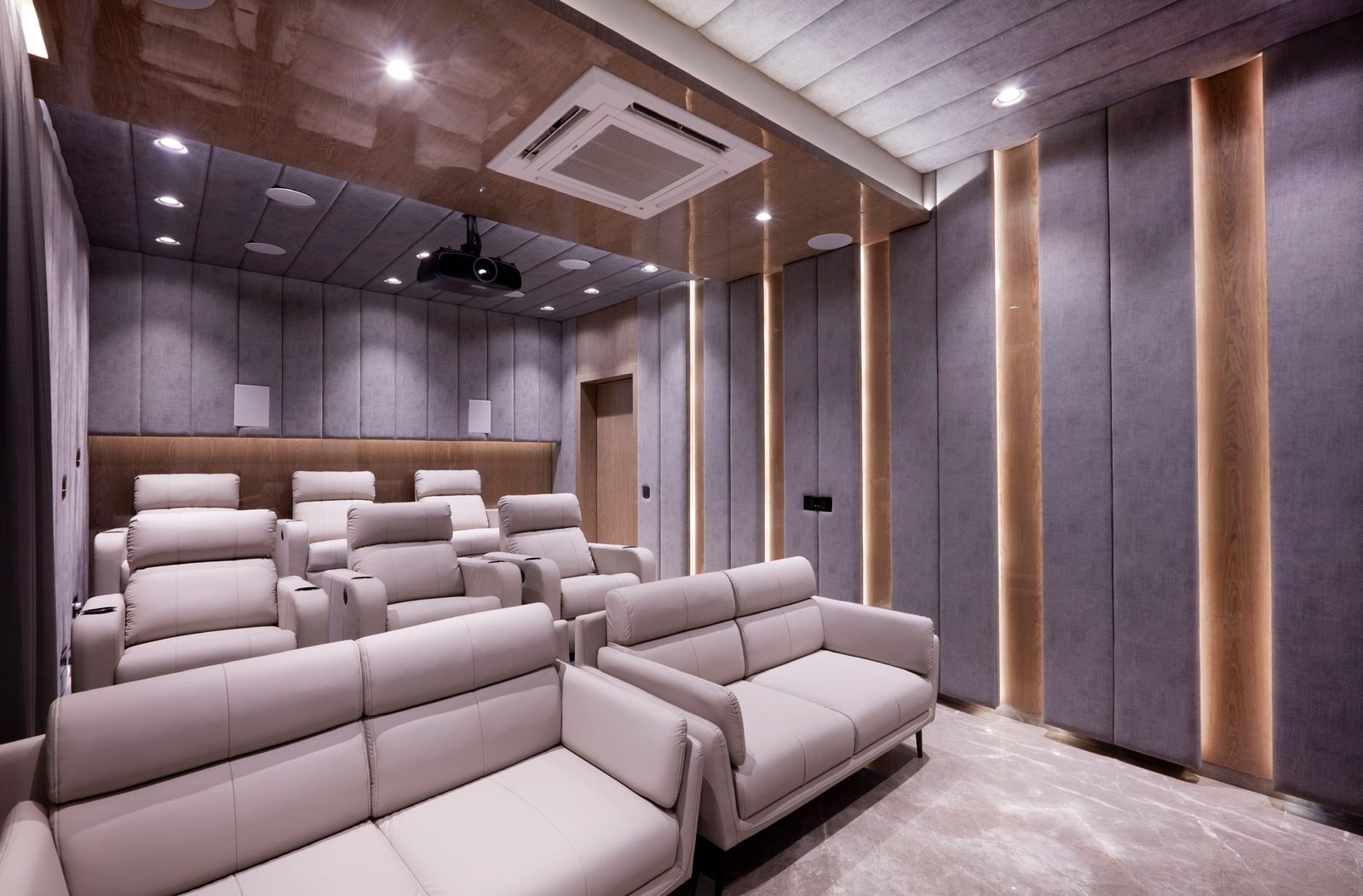
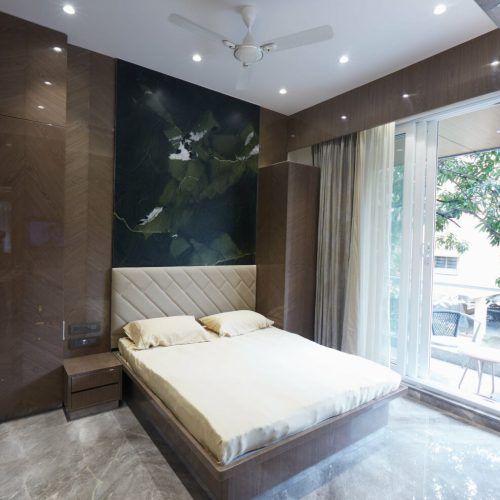
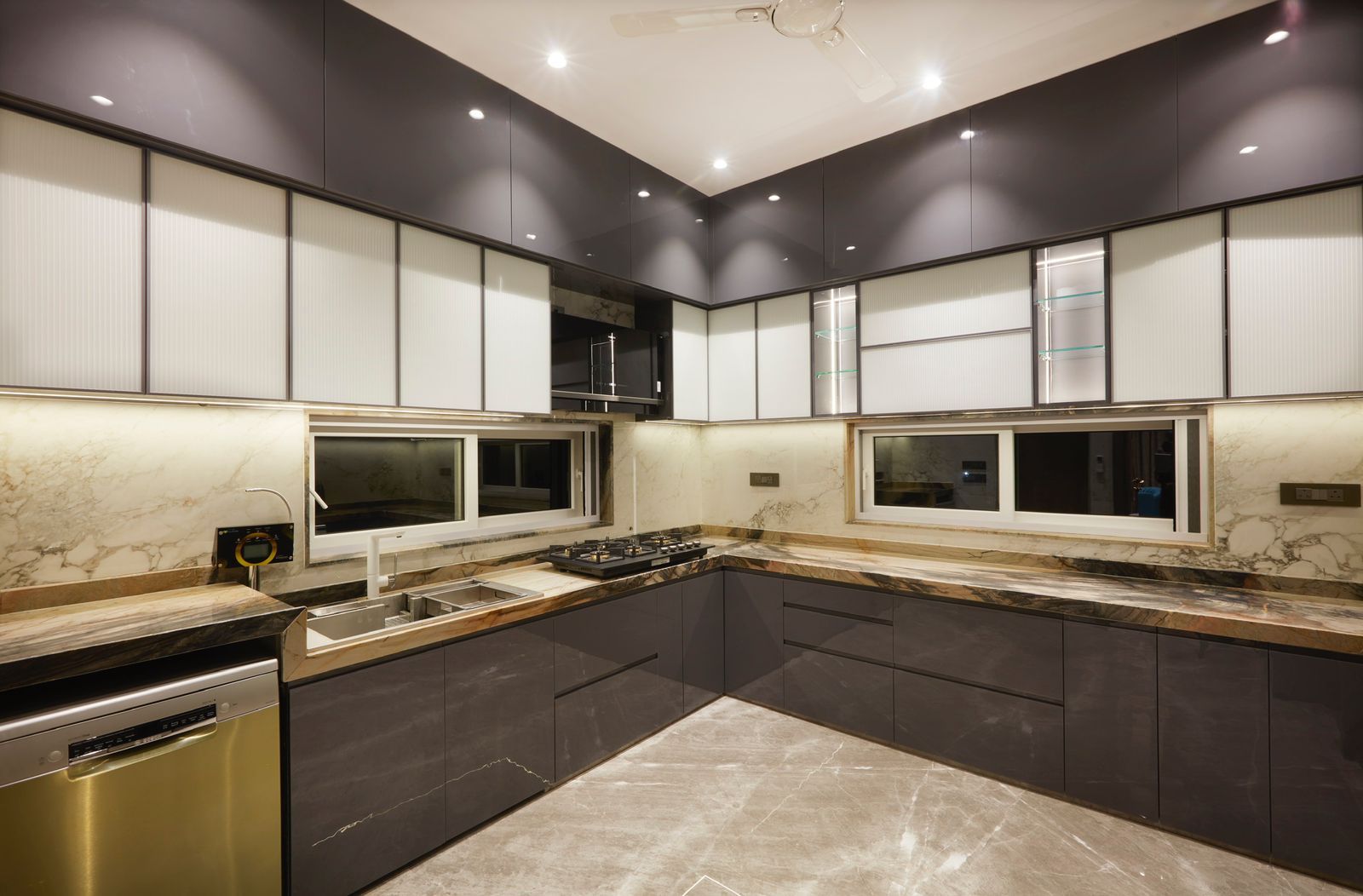
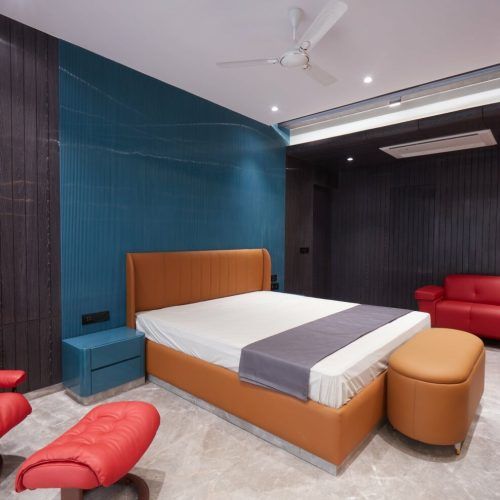
Selected work by Greenbox Design Studio. Tap any image to enlarge.
Frequently asked questions
What do villa interiors cost in Mumbai?+
₹2,430–₹6,330 per sq ft of carpet area, about 25–30% above the national villa band. Madh, Gorai and the Panvel–Karjat gated schemes sit at ₹2,430–₹4,380; JVPD and Pali Hill run ₹3,410–₹6,330 because of coastal specification, lane access and the age of the stock.
What is different about a coastal Mumbai bungalow specification?+
Under 500 m from open water we use SS 316 for every exposed fixing including screws, marine ply on all external walls, and anodised aluminium at a minimum of 20 microns. Between 500 m and 2 km, SS 316 on exposed faces and BWP 710 throughout. Standard SS 304 hardware visibly pits within two to three years on a Juhu or Madh plot.
Do Mumbai bungalows need a society NOC?+
No, because there is no society. What replaces it is a written notice to the immediate neighbours setting out working hours and the noisy-works window, plus BMC compliance on debris disposal and, where any structural opening is proposed, a registered structural engineer's letter. In a heritage precinct such as parts of Pali Hill, external changes need separate approval.
Can bungalow work run through the monsoon?+
Internal joinery, electrical and plumbing, yes. Terrace waterproofing, external render and painting, and any PU or melamine polishing, no — those need October to May. We routinely split a bungalow programme so internal work runs June to September and the envelope work sits either side of it.
How do you get material into a Madh Island or Gorai site?+
Either the Versova ferry, which has a vehicle load limit and fixed timings, or a road route of about 35 km via Malad. Both mean scheduled, consolidated deliveries rather than daily top-ups, and a secured stores area on site. We build a week of float into the material programme for ferry disruption during the monsoon.
Is rising damp common in Juhu and JVPD bungalows?+
Very. About two in three ground floors we survey read above 18% moisture in the plinth walls, because plinths built before the 1980s here rarely have a damp-proof course. We treat it with an injected chemical course at ₹900–₹1,700 per running metre and allow six to eight weeks of dry-down before painting, rather than panelling over it.