
The abbreviations, translated
| Type | What it is | Rate (₹/sq ft) | Chip behaviour | Where to use it |
|---|---|---|---|---|
| GVT — glazed vitrified | Digital print under a clear glaze | ₹45 – 95 | Shows pale body | Bedrooms, low-traffic rooms |
| PGVT — polished glazed | GVT with a polished glaze; higher gloss | ₹70 – 160 | Shows pale body | Living rooms, dining, feature floors |
| DGVT — double charge | Two layers of pigmented powder pressed together, 3–4 mm deep | Barely visible | Corridors, lobbies, commercial floors | |
| Full body | Colour through the entire thickness | ₹120 – 220 | Invisible | Heavy traffic, offices, retail, staircases |
| Soluble salt | Pigment penetrated into the surface only | ₹38 – 60 | Shows quickly | Budget work; wears through in traffic paths |
| Large format slab, 800 × 1,600 mm and above | PGVT or full body in slab sizes | ₹140 – 320 | Depends on type | Living rooms where fewer joints matter |
Laying adds ₹35–70 per sq ft in Mumbai, more for large-format tiles which need two masons and a levelling system.
Sizes, and why the big ones cost more to lay
A 600 × 600 tile is a one-man job. An 800 × 1,600 slab is a two-man job with a vacuum lifter, a laser level and a tile levelling clip system, and it is far less tolerant of a wavy substrate.
- 600 × 600 mm: the workhorse. Cheapest to buy and lay, most forgiving of an uneven floor.
- 800 × 800 mm: fewer joints, still manageable. Our default for living rooms.
- 600 × 1,200 mm: contemporary proportion, needs a flat screed within 3 mm over 2 m.
- 800 × 1,600 mm and larger: striking, and expensive to lay. Add ₹25–45 per sq ft over standard laying, plus wastage from cuts.
- Rectified edges allow a 2 mm joint; non-rectified tiles need 3–4 mm. If you want a near-seamless floor, rectified is the specification word.
Design and build under one accountable roof
Laying specification for a Mumbai flat
- Substrate. Old flooring removed to the structural slab, debris cleared, levels checked. In a redevelopment flat, the developer’s screed is often 15–20 mm out over a room.
- Adhesive, not mortar. Large-format tiles must be laid on a cement-based tile adhesive with full back-buttering, not dot-fixed on a sand-cement bed. Hollow spots under a 1,200 mm tile are how cracks start.
- Levelling clips on anything over 600 mm. Lippage of 1 mm on a polished tile catches light and looks like a defect from the doorway.
- Joint width and grout. 2 mm for rectified tiles, filled with epoxy grout in kitchens and bathrooms, cement grout elsewhere. Epoxy costs more and does not discolour.
- Skirting. Cut from the same batch, 75–100 mm high, with the same joint alignment as the floor.
How they behave in Mumbai
- Vitrified tile is effectively unaffected by humidity, salt air or monsoon damp. This is why it dominates Mumbai flooring and why we specify it in any flat where the client will not commit to maintaining stone or timber.
- The one real hazard is wet-floor slip. A polished glazed tile with water on it is genuinely dangerous, especially for elderly residents. In bathrooms and balconies, specify a matt or anti-skid tile with an R10 or R11 rating and accept that it looks less glossy.
- Tiles laid over an old floor rather than the structural slab can debond when the building moves. In older Mumbai buildings we lift the old floor rather than overlay.
- Grout is the weak point in a bathroom. Cement grout in a shower will darken and harbour mould within two monsoons. Epoxy grout costs ₹35–70 per sq ft more and removes the problem.
Care, life and BOQ wording
- Daily: soft broom or vacuum, then a damp mop with a mild neutral cleaner. Acid cleaners attack cement grout, not the tile.
- Expected life: 25 years and more. What ages a tile floor is the grout and the fashion, not the tile.
- BOQ: “Flooring in 800 × 800 mm double-charge vitrified tile, water absorption under 0.5%, PEI IV minimum, rectified edges; laid on cement-based tile adhesive with 100% coverage, 2 mm joints with levelling clips.”
- BOQ: “Wet areas in matt anti-skid tile, slip rating R10 minimum, laid to falls towards the drain; all joints in wet areas filled with epoxy grout.”
- BOQ: “All tiles from a single batch and shade lot; 5% surplus to be handed over at completion.”
Specification summary
| Property | Specification |
|---|---|
| Water absorption | Under 0.5% |
| Abrasion class | PEI IV residential, PEI V commercial |
| Type | Double charge or full body in traffic areas; PGVT elsewhere |
| Size | 800 × 800 mm general, 600 × 600 mm in small rooms |
| Fixing | Cement-based tile adhesive, full coverage |
| Joints | 2 mm rectified; epoxy grout in wet areas |
| Rate | ₹45 – 220 tile + ₹35 – 70 laying, per sq ft |
| Slip | R10 minimum in bathrooms and balconies |
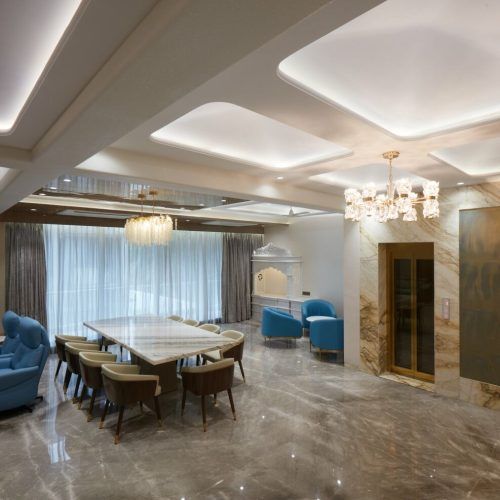
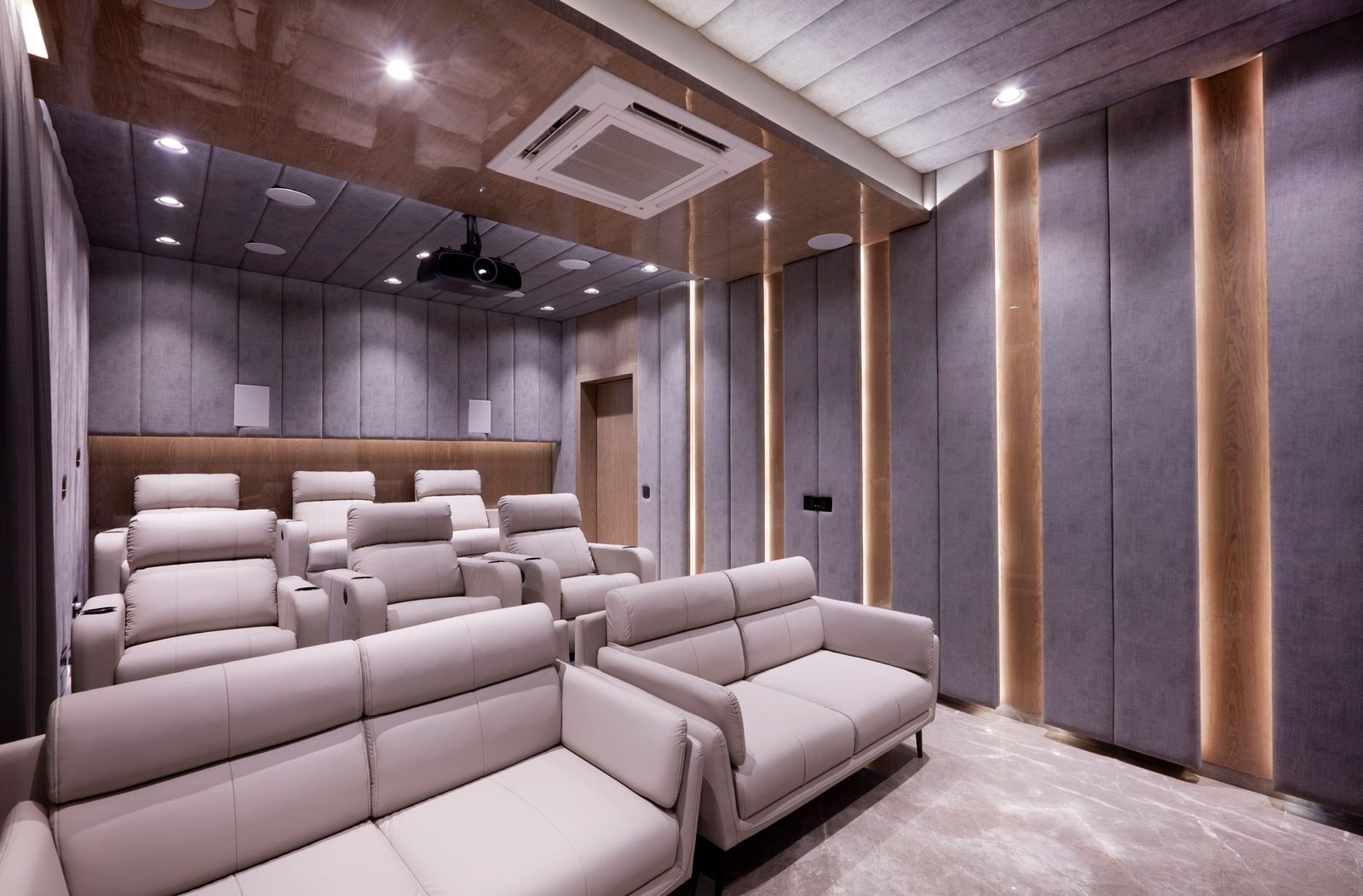
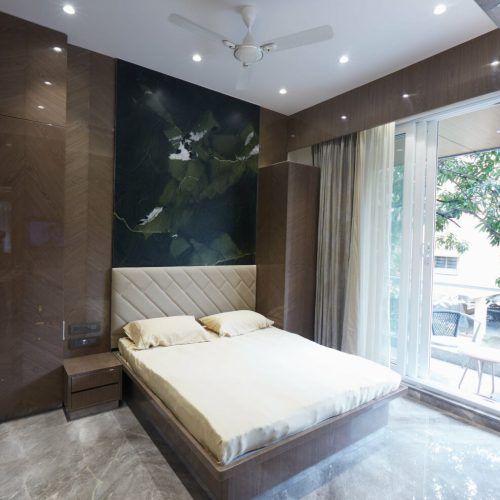
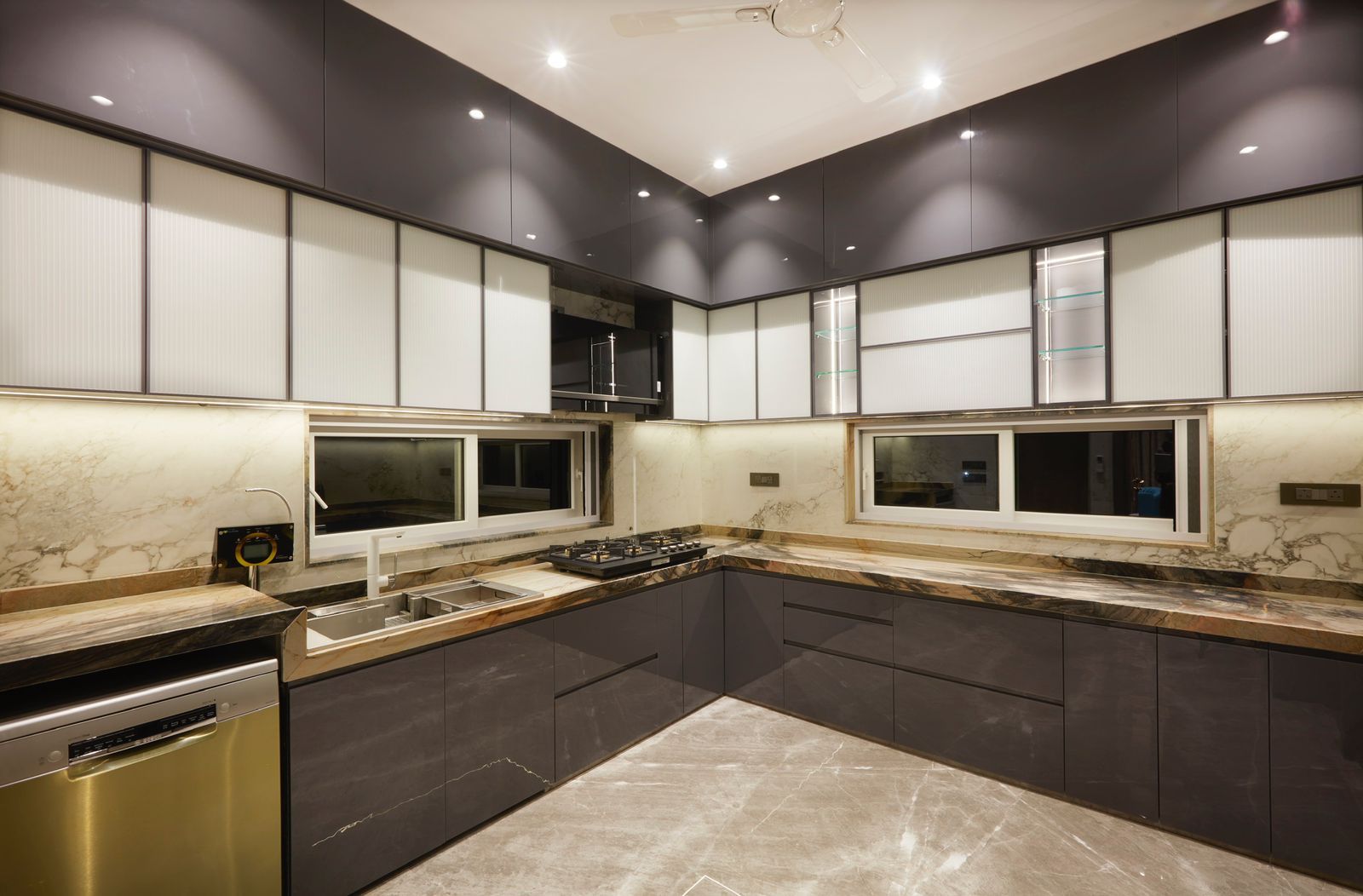
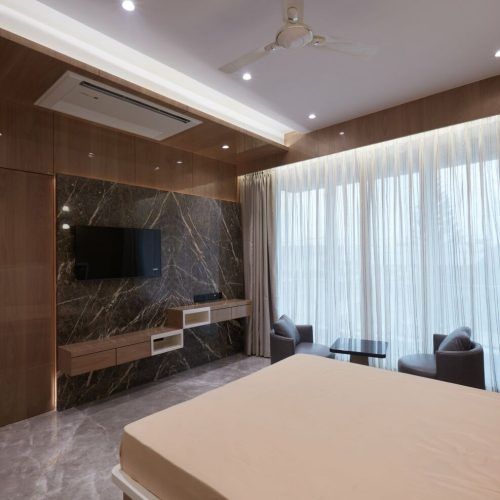
Selected work by Greenbox Design Studio. Tap any image to enlarge.
Frequently asked questions
What is the difference between vitrified and ceramic tiles?+
Water absorption. Vitrified tile absorbs under 0.5% because the body fuses into a glass-like mass during firing; ceramic absorbs 3–10%. That makes vitrified tile stronger, less prone to frost and stain damage, and suitable for floors. Ceramic belongs on walls.
Is double charge worth the extra over glazed vitrified?+
In corridors, entrances and any room where chairs are dragged, yes — the 3–4 mm of pigmented body means a chip does not show a white scar. In bedrooms, glazed vitrified is perfectly adequate and the money is better spent elsewhere.
Can vitrified tiles be laid over an existing floor?+
Technically yes, with a bonding primer, and it saves demolition cost and dust. We generally advise against it in older Mumbai buildings: you raise the floor level at every doorway, you inherit whatever is wrong underneath, and debonding of the whole assembly is a real risk.
Which tile size looks best in a small Mumbai flat?+
800 × 800 mm in living areas and 600 × 600 in bedrooms is the practical answer. Very large slabs in a 10 ft wide room produce awkward cuts at two walls, and the visual benefit of fewer joints is lost once furniture is in.
Why is grout the first thing to look tired?+
Because cement grout is porous and the floor is cleaned with water. It absorbs, darkens and in wet areas grows mould. Epoxy grout is non-porous and solves it at ₹35–70 per sq ft more — the single best value upgrade in a tiling package.