
Categories and market bands
| Category | Typical use | Band we observe (₹/sq ft) |
|---|---|---|
| Ceramic wall tile | Bathroom and kitchen walls | ₹35 – 90 |
| Glazed vitrified floor tile | Bedrooms and general floors | ₹45 – 100 |
| Polished glazed vitrified | Living and dining | ₹75 – 165 |
| Full body and heavy duty | Corridors, lobbies, commercial | ₹115 – 210 |
| Outdoor and parking tile | Driveways, podiums, parking decks | ₹70 – 160 |
| Mosaic and terrazzo-type | Lobbies, balconies, restoration work | ₹90 – 280 |
| Natural stone | Feature floors and cladding | ₹120 – 600 |
Buying observations only, not an official price list. Quantities in a society redevelopment or a full-building order attract materially better rates.
Outdoor tiles: a different specification problem
Most tiling advice assumes an internal floor. A Mumbai podium, terrace or parking deck is a different environment and the governing criteria change.
- Slip resistance first. R11 or better on any surface that will be wet and walked on. A polished tile on a monsoon-wet podium is a liability, not a design choice.
- Breaking strength for parking. Tiles under vehicle loads need a rated breaking strength and a full adhesive bed on a sound screed. Ordinary floor tiles crack under a wheel within a season.
- Thermal movement. An exposed terrace in Mumbai swings from 26°C at dawn in January to over 55°C surface temperature in May. Movement joints every 3–4 m and at every perimeter are mandatory, not optional.
- Falls and drainage. A minimum fall of 1 in 100 towards outlets, checked with water before the grouting is done.
- Waterproofing below. Tiles are not a waterproofing layer. The membrane under them is what keeps the flat below dry, and it must be tested by ponding before tiling.
Design and build under one accountable roof
Mosaic and terrazzo-type surfaces
- These suit older Mumbai buildings where a large-format modern tile would look out of place, and building lobbies where a seamless poured or precast finish reads better than a grid of joints.
- In-situ terrazzo is a wet trade with a long programme; precast tiles are far faster and more predictable in a society with restricted working hours.
- Polishing after laying is what produces the surface, and it is a dusty, slow operation. Plan it before other finishes are installed.
- Maintenance is periodic re-polishing rather than replacement, which over thirty years is cheaper than two tile floors.
- For a heritage-adjacent building or a restoration, a mosaic or terrazzo floor is often the only finish that will not look like an intrusion.
Specifying and buying in Mumbai
- Confirm availability before approving a design. A discontinued line discovered halfway through an order costs a redesign.
- Order 10% over measured area outdoors, where cuts around drains and upstands are numerous.
- Record the shade lot and keep 3–5% as spares, especially for outdoor areas, where a damaged tile will eventually need replacing.
- Specify the adhesive and the grout explicitly — outdoors, a flexible C2TE S1 adhesive and a weather-resistant grout, not the same materials used inside.
- Ask whether the quoted rate is ex-warehouse or delivered to the flat. On a large order, hoisting and lift charges in a Mumbai building are a real line item.
Our independence
Greenbox is an independent design and build studio. We are not a dealer, distributor or channel partner for Nitco or for any other tile or stone supplier, and we take no brand-linked incentives. We buy through Mumbai dealers at market rates and pass through invoices where we procure on a client’s behalf. The bands quoted here are our own market observations.
Specification summary
| Location | Specification |
|---|---|
| Internal floors | Absorption under 0.5%, PEI IV, rectified where joints matter |
| Bathrooms and balconies | R10 minimum, laid to falls, epoxy grout |
| Terraces and podiums | R11 minimum, flexible adhesive, movement joints at 3–4 m |
| Parking decks | Rated breaking strength, full bed on sound screed |
| Waterproofing | Membrane below, ponding tested before tiling |
| Lobbies | Mosaic or terrazzo where a tile grid would read wrong |
| Spares | 3 – 5%, stored flat and dry |
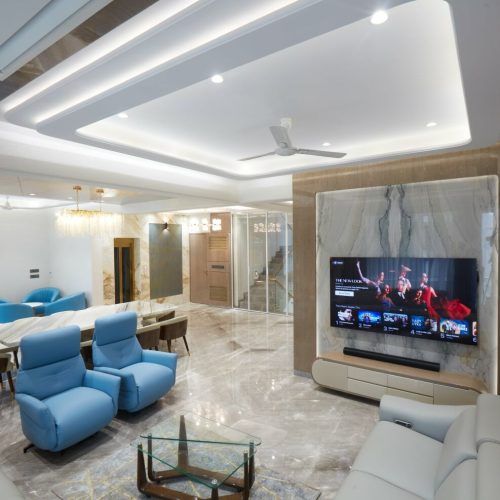
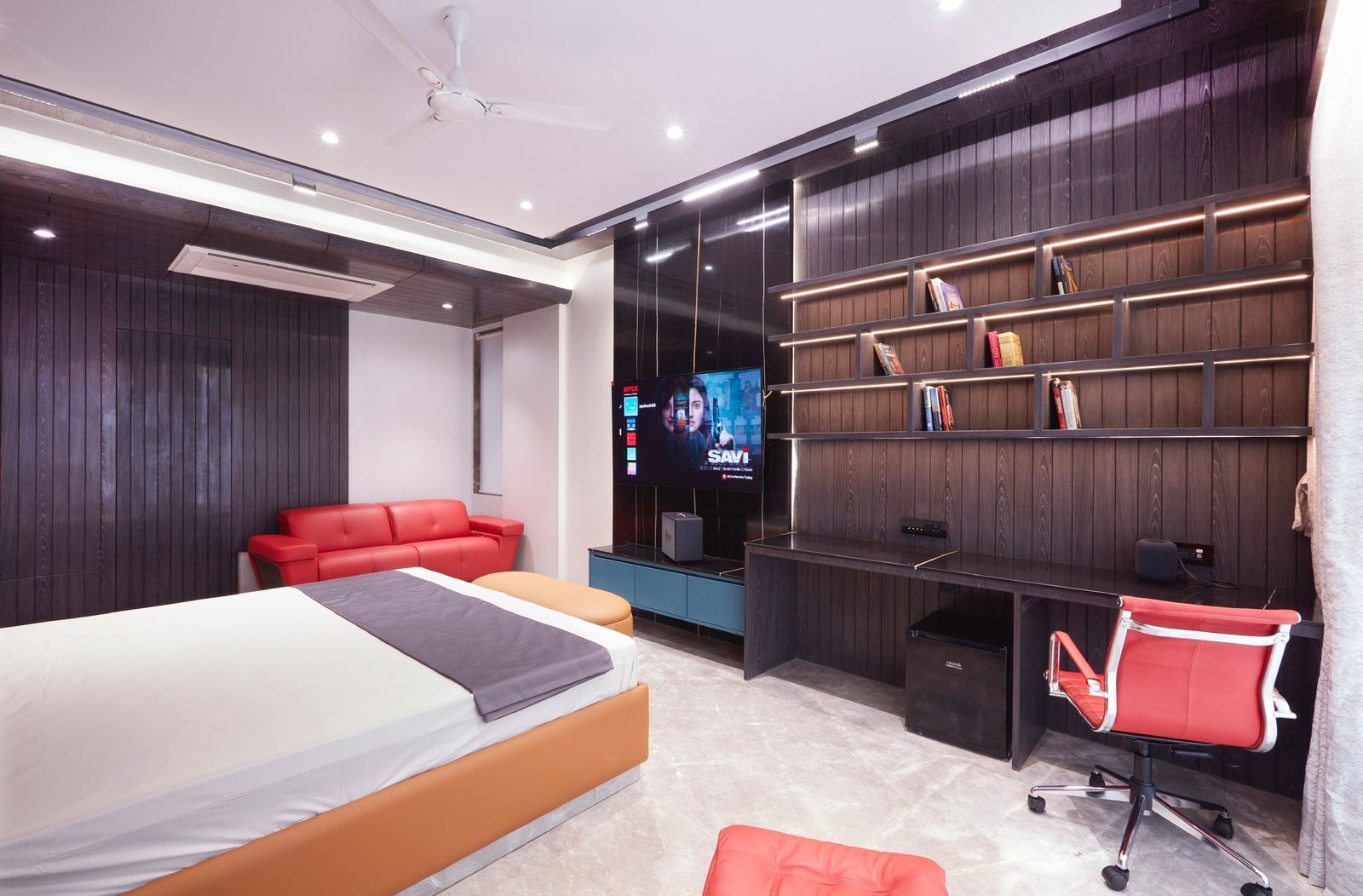
Selected work by Greenbox Design Studio. Tap any image to enlarge.
Frequently asked questions
Are outdoor tiles different from indoor tiles?+
Substantially. Outdoors you need higher slip resistance, greater breaking strength where vehicles run, a flexible adhesive to absorb thermal movement, weather-resistant grout and properly spaced movement joints. Laying an internal floor tile on a Mumbai terrace will fail within two monsoons.
Why does a terrace floor crack and lift?+
Thermal movement with no movement joints, usually combined with a rigid sand-cement bed. The tile field expands in May heat, has nowhere to go, and tents along a line. Joints every three to four metres and a flexible adhesive prevent it.
Is Greenbox connected to Nitco?+
No. We hold no dealership or distribution arrangement with Nitco or with any other tile supplier. We specify on merit, buy through the open market and share supplier invoices where we procure for clients.
Is terrazzo worth considering in a Mumbai flat?+
In a lobby or a large continuous floor, yes — it is seamless, extremely durable and can be re-polished rather than replaced. In an occupied flat, the programme and the dust of in-situ work are the obstacle; precast terrazzo tiles give much of the look with a normal tiling programme.
How much wastage should I allow outdoors?+
Around ten per cent, against eight indoors, because of cuts at drains, upstands and parapets. Add three to five per cent again as retained spares; outdoor tiles get damaged by dropped objects and planters more often than internal floors do.