
The range, and what coordination actually buys
| Product | Typical use | Coordination benefit |
|---|---|---|
| Decorative laminates | Shutters, panels, wall surfacing | Base shade language for the project |
| Compact laminates | Washroom cubicles, lockers, wet areas | Washroom matches the joinery outside it |
| Decorative veneers | Feature shutters and panelling | Timber tone matched to laminate elsewhere |
| Engineered doors | Internal door leaves and frames | Door face matches the wardrobe run |
| Laminate flooring | Bedrooms and dry areas | Floor tone coordinated with joinery |
| Exterior compact | Balcony cladding, soffits | Consistent language onto the balcony |
On a single kitchen none of this matters. On a whole-flat fit-out, or a commercial floor plate where thirty doors and two hundred metres of joinery need to read as one scheme, sourcing within one family removes a lot of approvals.
Mumbai market bands we observe
| Item | Band we observe |
|---|---|
| 1.0 mm decorative laminate sheet | ₹1,200 – 2,400 per 8 × 4 ft |
| 0.8 mm interior laminate sheet | ₹800 – 1,400 per sheet |
| Compact laminate, 12 mm | ₹300 – 470 per sq ft |
| Decorative veneer sheet | ₹2,200 – 8,500 per sheet |
| Engineered internal door, finished | ₹9,000 – 28,000 per door leaf |
| Laminate flooring, AC4 | ₹110 – 200 per sq ft supplied and fixed |
Buying observations, not official prices. Door pricing depends heavily on core, finish and whether the frame is included.
Design and build under one accountable roof
Engineered doors: a specification worth considering
Most internal doors in Indian flats are a flush door leaf finished on site, hung on a timber frame by the same carpenter who built the wardrobes. A factory-finished engineered door is a different product and, on a renovation with many doors, often a better one.
- The leaf arrives finished, so there is no site polishing, no dust and no colour variation between doors.
- Frames come machined to match, which removes the commonest cause of a door that does not close properly — a site-built frame out of square.
- Cost is higher per door than a site-finished flush door, and the saving is in programme and in consistency rather than in rupees.
- Measure openings accurately before ordering; a factory door cannot be trimmed as freely as a site-made one.
- In a Mumbai flat, specify a moisture-tolerant core for bathroom doors and a WPC or aluminium frame at the bathroom threshold rather than timber.
Specification discipline, whatever the brand
- Balancing sheet on the reverse of every laminated shutter, without exception.
- Marine-grade synthetic resin adhesive, both faces, four-hour press.
- Two millimetre PVC edge banding, machine applied, on all four edges.
- One batch per shade, checked on delivery, with two square metres of surplus retained.
- Compact rather than laminate-over-board anywhere that will be wet regularly.
Approving a scheme across several product types
Coordinating shades across laminate, veneer, doors and flooring sounds straightforward and is the part of a fit-out that most often goes wrong at approval stage, because each product carries colour differently.
- Approve everything together, in one place, under the light of the actual room. A laminate and a floor plank that match on a showroom counter can diverge badly under warm domestic lighting.
- Compare at the right scale. A 50 mm chip of laminate against a 200 mm flooring sample tells you almost nothing; get the largest samples the dealer will release.
- Remember that veneer is a natural material and will not match a printed laminate exactly, ever. Aim for a deliberate relationship rather than an exact match.
- Fix the door finish last, after the joinery and floor are approved. A door reads against both and is the easiest element to adjust.
- Photograph the approved set together with a date, and keep it in the handover file. It settles every later argument about what was agreed.
Our independence
Greenbox is an independent design and build studio and holds no dealership, distributorship or commercial arrangement with Greenlam Industries or with any other surfacing manufacturer. We specify on merit, buy through Mumbai dealers at market rates and pass through supplier invoices where we procure on a client’s behalf. Figures quoted here are market observations.
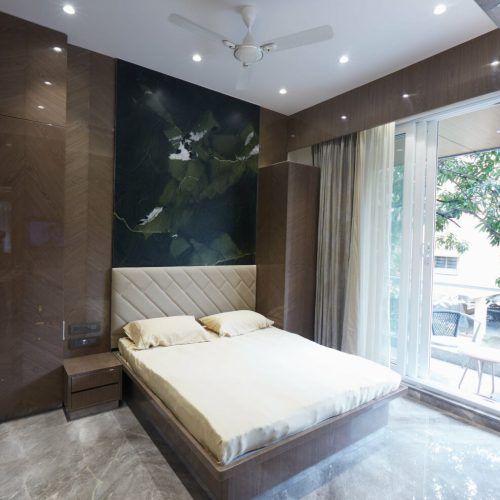
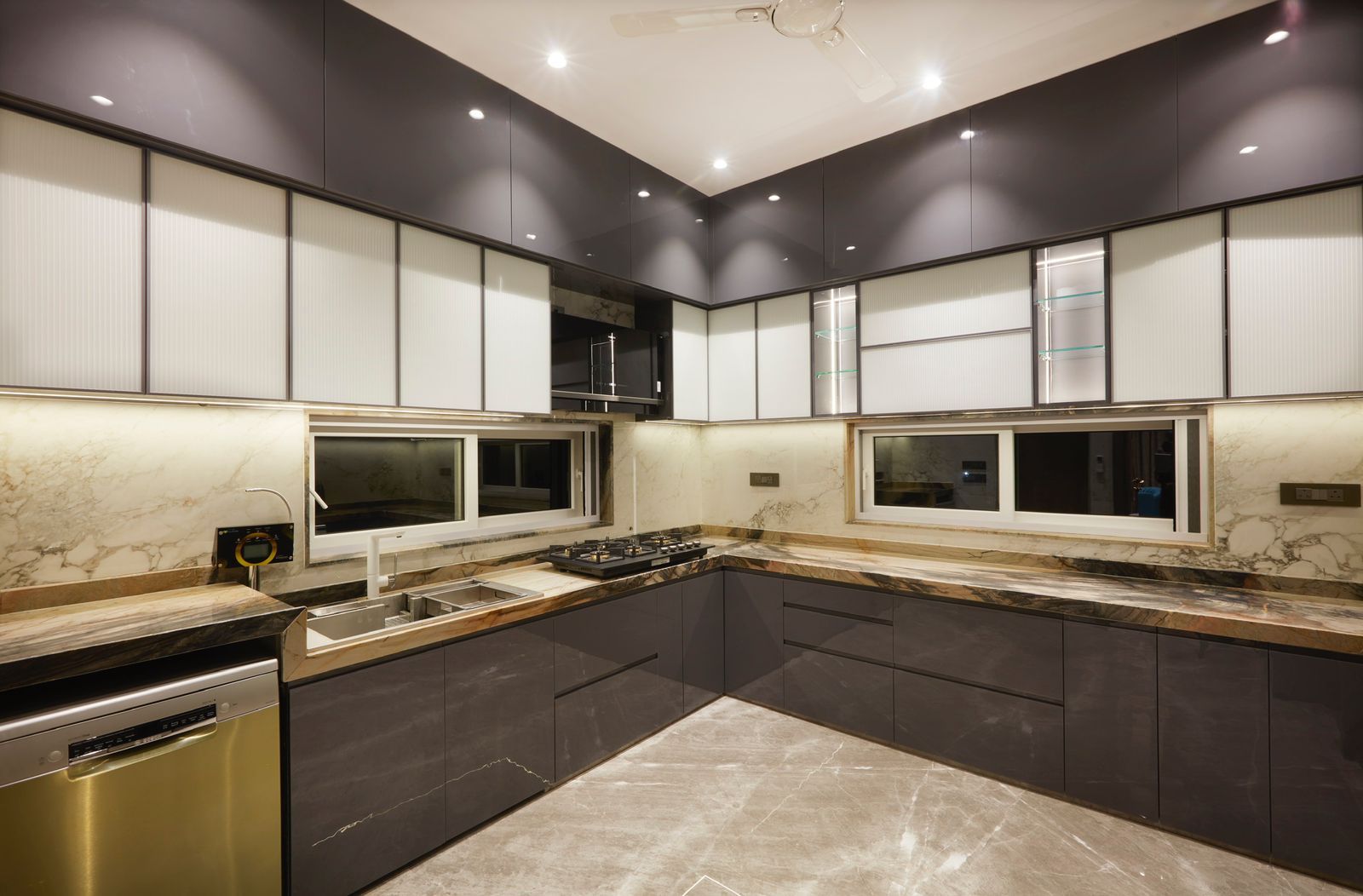
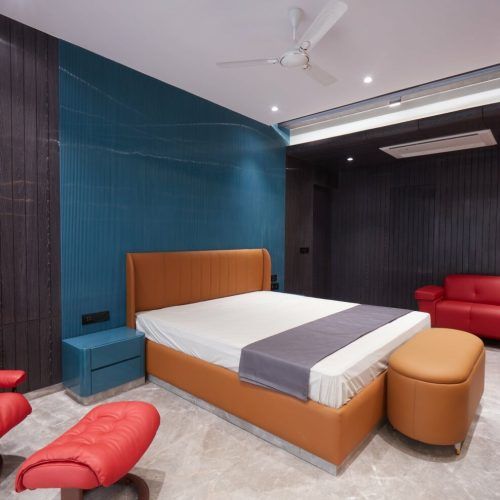
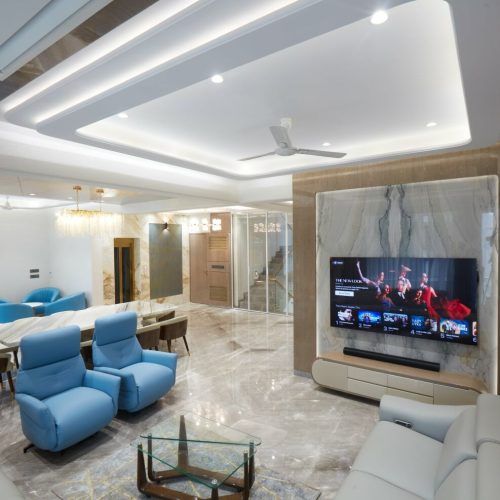
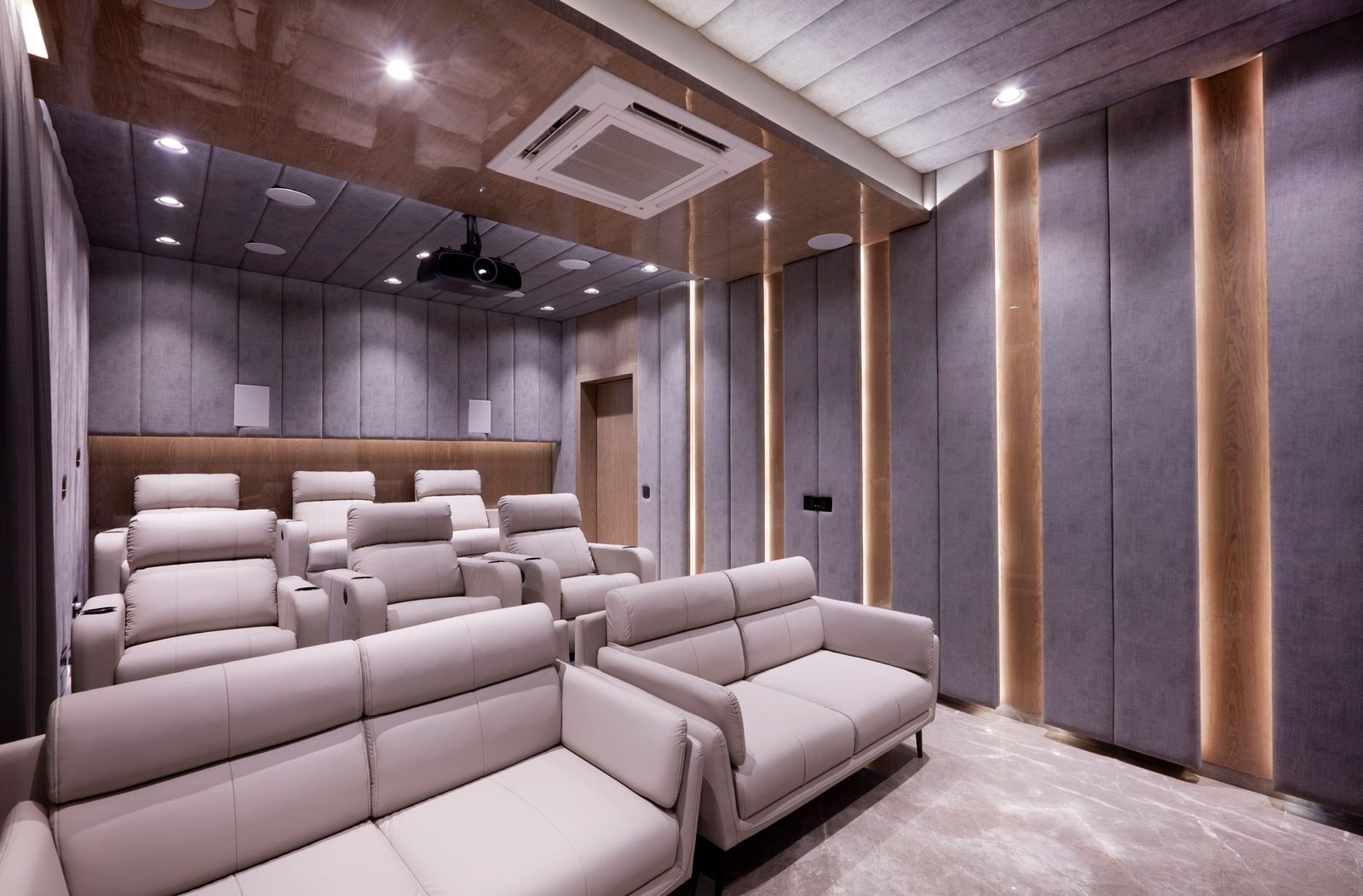
Selected work by Greenbox Design Studio. Tap any image to enlarge.
Frequently asked questions
Is it better to buy laminates, doors and flooring from one company?+
On a large fit-out, often yes — the shades and textures are designed to work together and there is one approval conversation rather than three. On a single room it makes little difference, and buying the best item in each category usually gives a better result.
Are factory-finished doors worth the extra cost?+
On a renovation with six or more doors, usually. You avoid site polishing, dust and colour variation between leaves, and the machined frames mean doors that actually close. The saving is in programme and consistency, not in the invoice total.
Is Greenbox affiliated with Greenlam?+
No. We hold no dealership, distributorship or channel arrangement with Greenlam or with any other manufacturer named on this site. We specify on merit, buy on the open market and pass through invoices where we procure.
Should I use laminate flooring in a Mumbai flat?+
In dry, upper-floor bedrooms, yes. In kitchens, bathrooms, balconies or any flat with damp issues, no — the HDF core swells irreversibly when it gets wet. In this city SPC is usually the better choice for the same look at a modest premium.
What is the difference between laminate and compact?+
Thickness and self-support. Decorative laminate is a 0.8–1 mm sheet bonded to board; compact is the same material pressed to 6–12 mm and needs no substrate at all. Compact belongs in wet areas and cubicles; laminate belongs on dry joinery.