
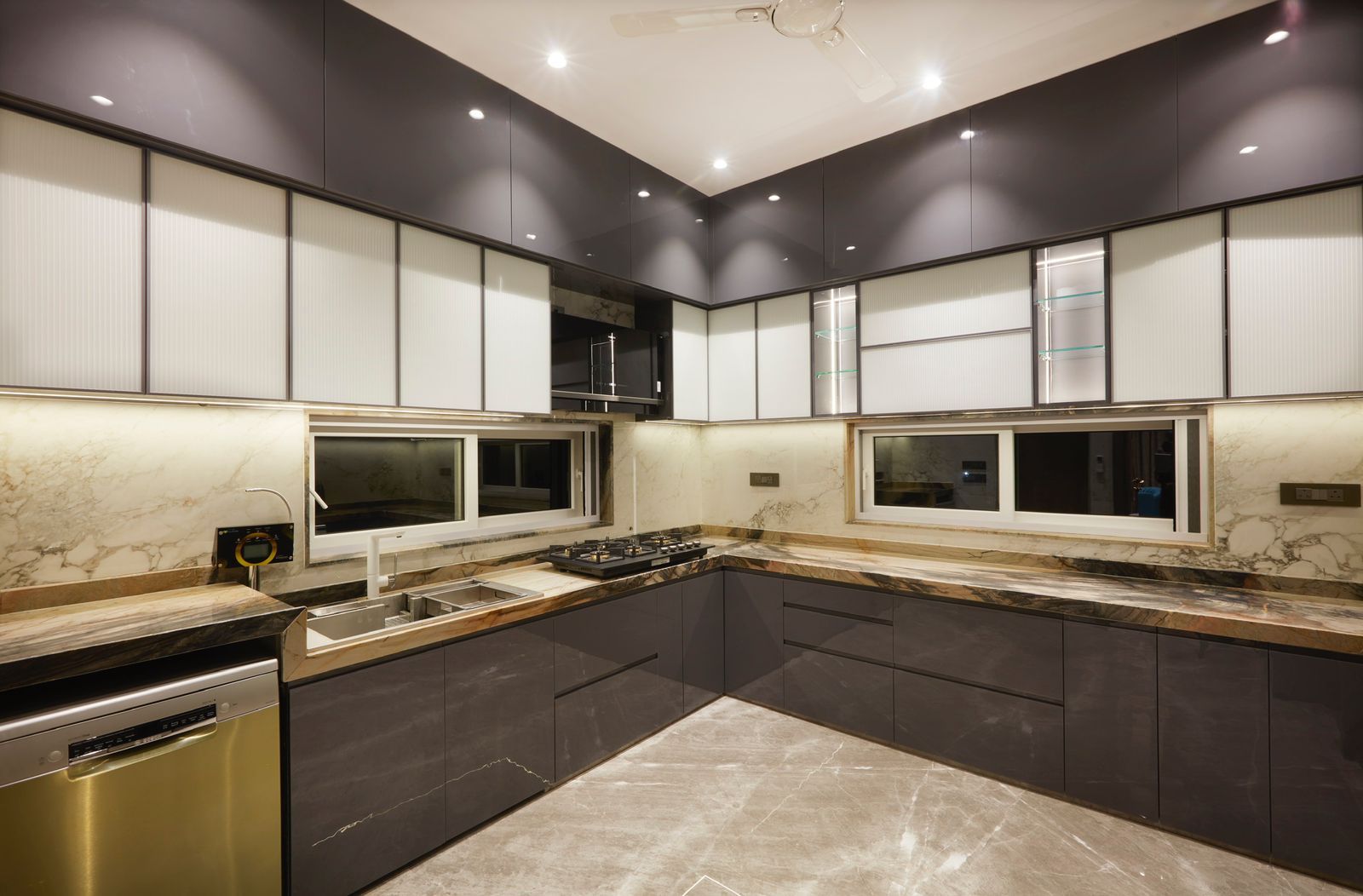
Side by side
| Criterion | 1 mm laminate | 1 mm cast acrylic |
|---|---|---|
| Installed rate | ₹190 – 390 per sq ft | ₹520 – 920 per sq ft |
| Visual depth | Flat — the print sits on the surface | Deep, reflective, dimensional |
| Scratch resistance | High | High, but scratches show more on gloss |
| Light scuff repair | Not possible | Polish out with a plastic polish |
| Fingerprints on gloss | Noticeable | Very noticeable |
| Fingerprints on matte | Barely visible | Barely visible with anti-fingerprint layer |
| Heat tolerance | About 120°C briefly | Softens around 80–90°C |
| Colour range | Very wide, including woodgrains | Narrower, mostly solid colours |
| Profiled shutters | No | No |
Costed on a 10-foot kitchen
Same BWP carcass, same hardware, same countertop. Only the shutter face changes across 118 sq ft of shutter elevation.
| Line | Matte laminate | Matte acrylic | Difference |
|---|---|---|---|
| Shutter faces, 118 sq ft | ₹29,500 | ₹82,600 | +₹53,100 |
| Edge banding, 2 mm matched | ₹6,200 | ₹11,800 | +₹5,600 |
| Carcass, hardware, countertop | ₹3,05,000 | ₹3,05,000 | — |
| Total, ex-GST | ₹3,40,700 | ₹3,99,400 | +₹58,700 |
On a larger kitchen with tall units the delta widens to ₹90,000–1,10,000. Note that the shutter face is only about 9% of a laminate kitchen and 21% of an acrylic one.

Design and build under one accountable roof
Where the money actually shows
- In solid dark colours. A charcoal or deep blue acrylic shutter has a depth that a laminate of the same colour cannot match. This is where the premium is visible.
- In flatness. Acrylic on HDHMR reads perfectly flat under a downlight. A pressed laminate shutter has minute waviness that gloss reveals.
- Not in woodgrains. If your scheme is a timber tone, laminate does it better and cheaper — acrylic woodgrains are rare and unconvincing.
- Not from across the room. In matte, at four feet, in ordinary lighting, most people cannot tell them apart. If your kitchen is a galley seen briefly, the money may be better spent elsewhere.
- In resale perception. An acrylic kitchen photographs better, for whatever that is worth.
Living with each one in an Indian kitchen
Both materials meet the same enemy in this country: hot oil aerosol from daily frying, which settles on every vertical surface within two metres of the hob and hardens into a film if it is not wiped.
- On gloss, in either material, that film shows as a haze within a week. Anyone who cooks Indian food daily and wants a gloss kitchen is committing to wiping the fronts twice a week.
- On matte with an anti-fingerprint layer, the same soiling is invisible until it is thick, and it comes off with a damp cloth. This is why we specify matte in nine kitchens out of ten regardless of material.
- Acrylic rewards a microfibre and a plastic polish twice a year; the surface comes back to new. Laminate does not respond to polishing and should simply be kept clean.
- Neither tolerates scouring pads, thinner or alkaline cleaners. On laminate these burnish the print; on acrylic they craze the surface.
- Handles change the equation. A kitchen with handles keeps fingers off the face entirely, and on a handled kitchen the fingerprint argument for acrylic largely disappears.
Where laminate is the correct choice
- Wardrobe interiors, utility joinery and anything the budget has to reach a long way around.
- Woodgrain and textured schemes, which laminate does better.
- Kitchens with any profiled, shaker or fluted element, because neither material can do those — and once PU is in the scheme for the profiles, a laminate flat panel matches more easily than acrylic.
- Households with small children, where a shutter will be replaced rather than polished.
- Any project where choosing laminate lets you upgrade the carcass from BWR to BWP, or the base drawers from value to premium. Both of those are better investments than the face material.
Verdict by budget
| Kitchen budget | Shutter specification we would use |
|---|---|
| Under ₹2.5 lakh | Matte laminate throughout; spend the difference on BWP carcass |
| ₹2.5 – 3.5 lakh | Matte laminate, with premium drawer systems in the base run |
| ₹3.5 – 5 lakh | Matte acrylic on base and wall units, laminate on tall unit interiors |
| Above ₹5 lakh | Acrylic or PU by design intent; the material is no longer the constraint |
What we specify most often: matte acrylic on the base and wall units where hands and light fall, matte laminate inside and on the utility run, and PU anywhere a profile is required. Nobody has ever noticed the mix.


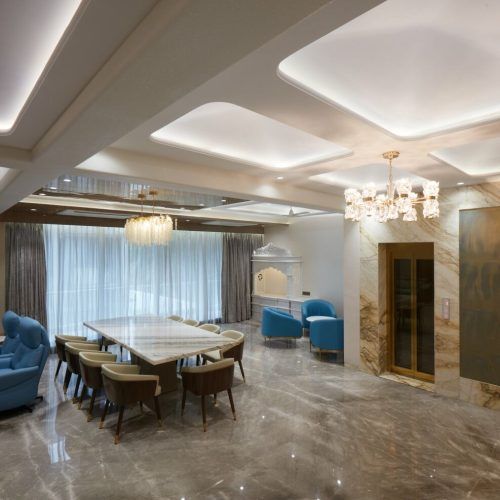
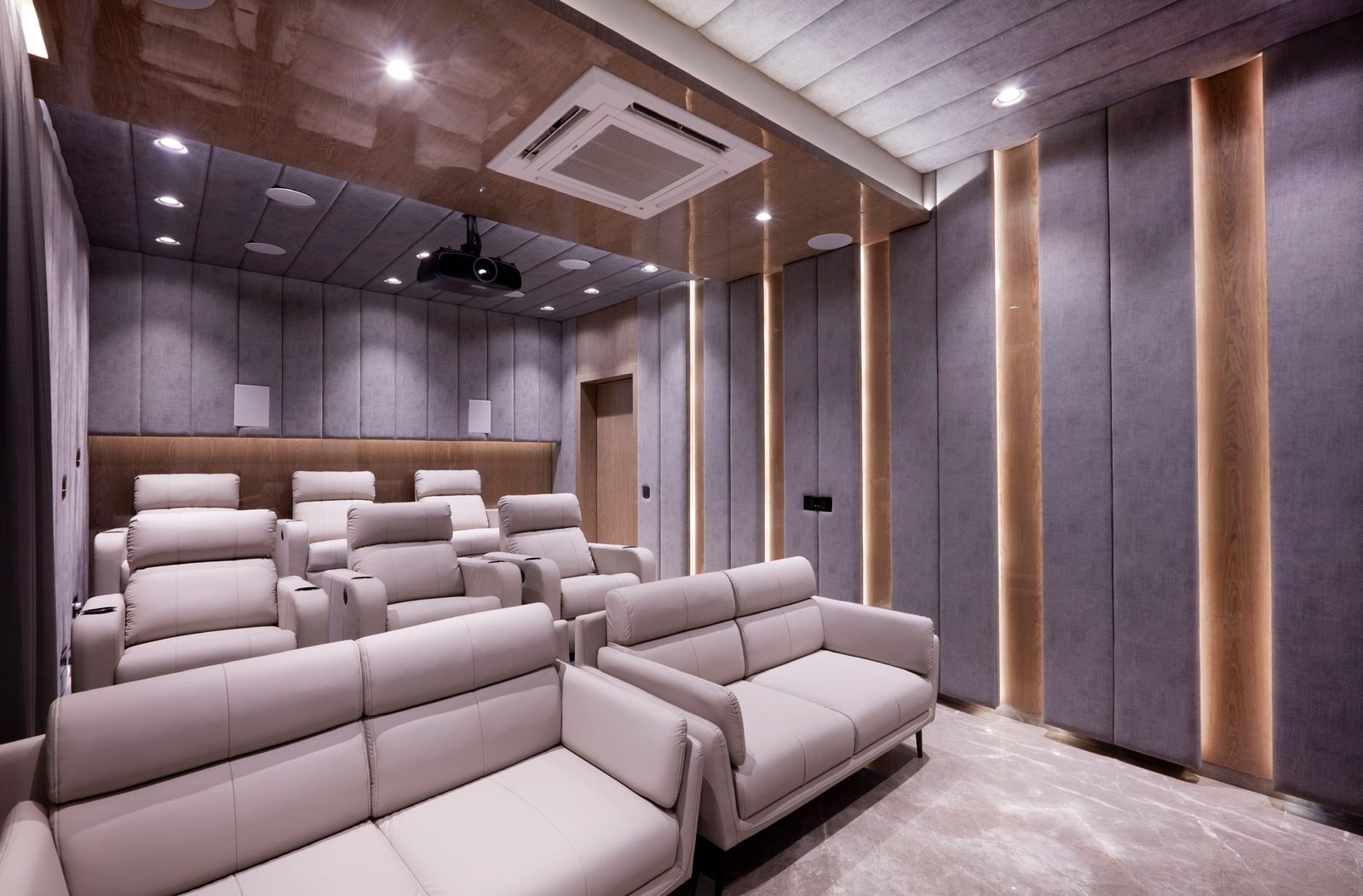
Selected work by Greenbox Design Studio. Tap any image to enlarge.
Frequently asked questions
Is acrylic scratch proof?+
No, but light scuffs can be polished out with a plastic polish, which laminate cannot. Deep scratches mean replacing the panel in either material. On high gloss, scratches are more visible than on laminate; on matte, less so.
Which is better for a dark-coloured kitchen?+
Acrylic, clearly. Dark solid colours are where acrylic’s depth is most visible and where flat laminate looks flattest. If your scheme is charcoal, navy or deep green in a flat-slab door, this is the strongest case for spending the premium.
Can acrylic be used on shaker or fluted doors?+
No. It is a flat sheet bonded to a flat board; it cannot follow a profile. Profiled doors are made in sprayed PU or vacuum-pressed membrane. If your scheme has both flat and profiled elements, PU on the profiles and either material on the flats is the usual solution.
How much more does an acrylic kitchen cost overall?+
On a 10 ft kitchen, roughly ₹55,000–70,000 more; on a larger kitchen with tall units, ₹90,000–1,10,000. As a share of the whole kitchen it is 15–20%, because shutters are a minority of the cost.
Does acrylic yellow or fade?+
Cast acrylic is UV stable and holds its colour well — better than a white PU film. What ages is the surface rather than the colour: micro-scratching gradually dulls gloss. Matte finishes age more gracefully in this respect.