
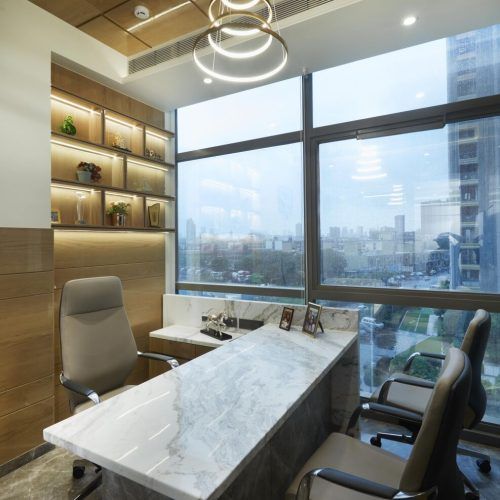
A contract built around four decision sessions
The failure mode on a renovation where the client is unavailable is not bad workmanship, it is drift: a laminate choice that takes eleven days, a handle selection that takes a fortnight, and a programme that loses three weeks without a single bad decision being made. We front-load it. Every choice in the project is grouped into four sessions, scheduled at the start, each about two hours, each with physical samples brought to you.
- Session one, week zero — layout and scopePlan, elevations, what is being built and what is not. Signed before anything is ordered.
- Session two, week one — materialsCarcass grade, laminates, veneers, counter stone, flooring, tiles. Physical samples, decided in the room.
- Session three, week three — services and fittingsLight fittings, switch plates, sanitaryware, taps, hardware and handles, appliance models.
- Session four, week seven — soft goodsPaint shades against the built joinery, curtains, blinds, loose furniture. Deliberately late, because the room is now real.
After session four there are no outstanding decisions. Anything that arises is handled by the project manager within a written variation protocol, and the client's involvement drops to reading a daily photo log and approving any variation over an agreed value.
Worked example: 1,100 sq ft two-and-a-half bedroom, Evershine Nagar
A 2004 flat in a gated layout. Both owners work on Link Road; the flat is empty on weekdays. Full renovation including a study conversion, with the family living in rented accommodation nearby for the duration.
| Scope | ₹ lakh | Note |
|---|---|---|
| Design, samples and the approval calendar | 0.97 | Full drawing set; four scheduled decision sessions |
| Civil work and plumbing | 1.46 | Kitchen sink relocated; one bathroom drain re-laid |
| Joinery | 11.20 | Wardrobes, TV unit, study conversion, crockery, entry |
| Modular kitchen | 3.77 | 12 running feet, dishwasher-ready, quartz counter |
| False ceiling and lighting | 2.37 | Full ceiling in living and dining, cove in bedrooms |
| Electrical | 1.34 | New DB, 32 points, dimmable living circuits |
| Painting and wall finishes | 1.22 | Full flat with panelling in the study |
| Two bathrooms | 1.70 | One rebuild, one refresh |
| Soft furnishing and loose pieces | 2.25 | Curtains, blinds, dining, seating — procured and placed |
| Key management, photo log and deep clean | 0.37 | Named key holder, signed register, daily log, handover clean |
| Project management and contingency | 0.12 | Against the drain re-lay |
| Total, ex-GST | 26.77 | ₹2,434 per sq ft carpet |
Add 18% GST. The key management and photo log line is ₹37,000 and it is the item clients here ask for by name after hearing about someone else's renovation. Our rates come from Malad contracts Greenbox has completed and invoiced, held at October 2026.
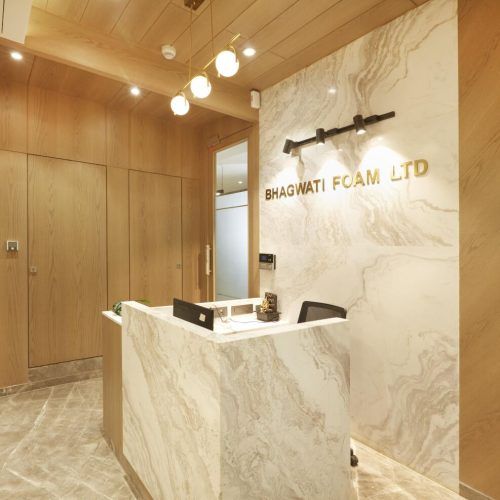
Four sessions, then a daily photo log
Site control when nobody is home
- One named key holder on our side, with a signed key register. Not a set of keys circulating among five trades.
- A battery camera the client controls, placed in the living room for the duration. We encourage it and most clients take it up. It settles questions before they become arguments.
- A dated photo log uploaded at the end of every working day, covering each room whether or not work happened in it.
- Deliveries accepted only by the site supervisor, never by a neighbour, a watchman or a passing trade.
- A weekly written report with progress against the programme, what is coming next week and anything that needs a decision — sent Friday evening, when a working client will actually read it.
What we charge for, and what we do not
The turnkey premium over a self-managed project in Malad is roughly 9 to 12%. What it buys is design, procurement, coordination of six trades, the society and gate interface, debris, protection, snagging, a deep clean and one warranty. What we do not charge separately for and some contractors do: site visits, revisions to drawings within the agreed scope, sample sourcing, the decision sessions, the photo log, and chasing the society for your deposit at the end. If a quotation is cheaper than ours, it is worth checking which of those it excludes, because on a project where the client is never available, they are not optional extras — they are the service.
Payment stages, and why they are tied to work rather than dates
We invoice against completed stages, not against a calendar, and on a project where the client is rarely on site that distinction protects them rather than us. The stages are: booking at signing, materials on delivery of the ply and hardware to site, first fix on completion of civil, electrical and plumbing rough-in, joinery installation on the carcass being set and verified, and the balance at handover after the snag list is signed off. Each stage is evidenced in the photo log before it is invoiced. A contractor billing on dates has an incentive to start everything and finish nothing, which on a flat nobody visits is remarkably easy to do.
For Malad as a whole, see interior designers in Malad. For the contract structure, payment stages and warranty, see turnkey interior contractors in Mumbai.
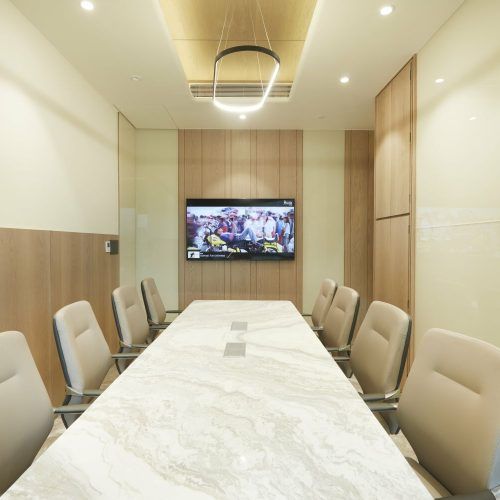
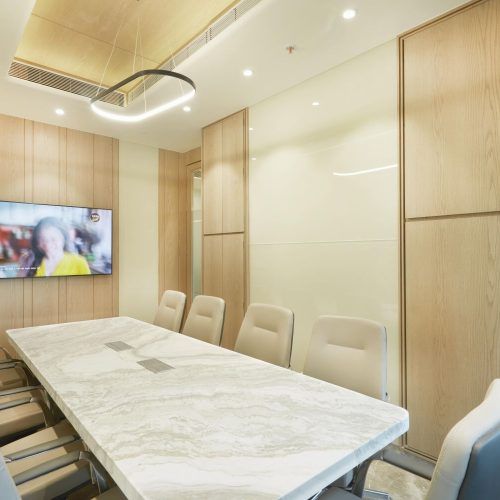
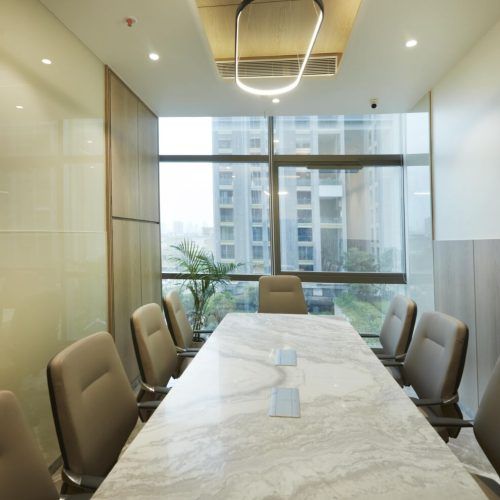
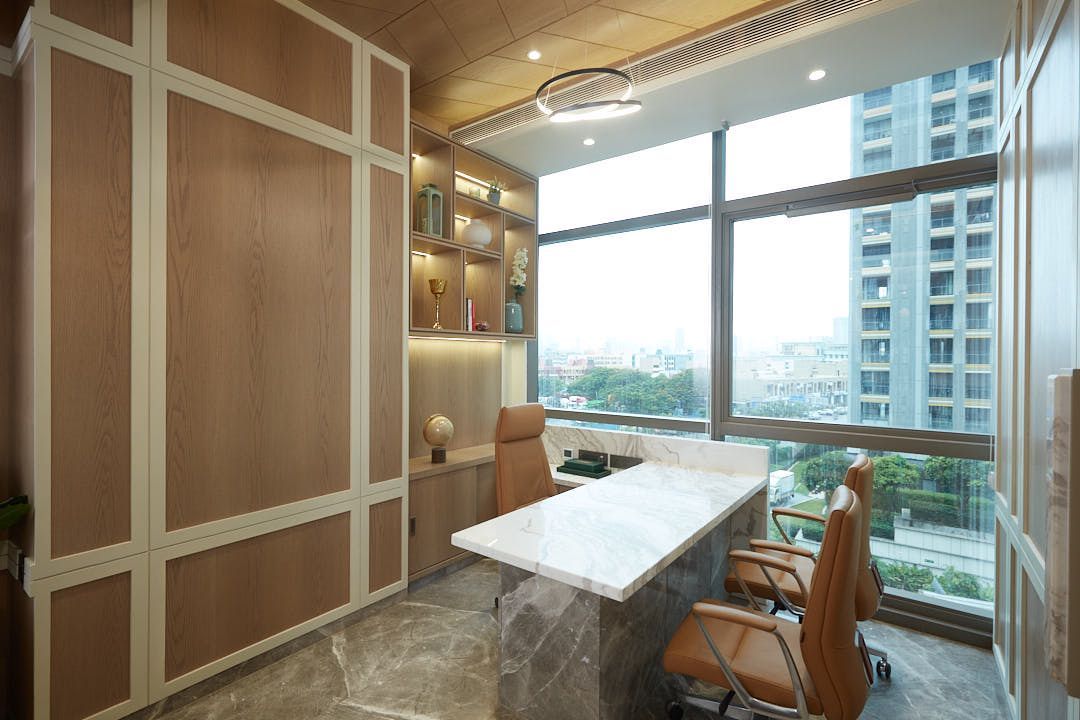
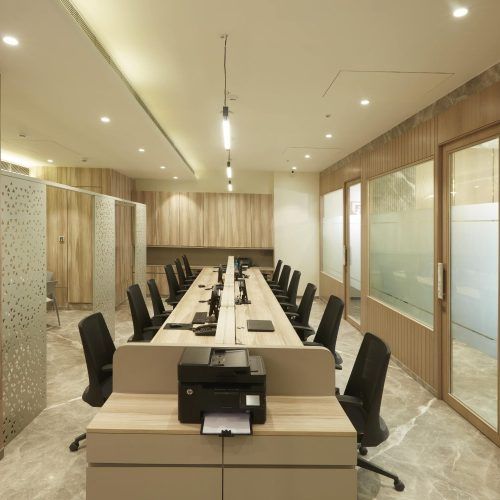
Turnkey delivery by Greenbox Design Studio.
Frequently asked questions
We are both at work all week. How much of our time will this take?+
Four scheduled sessions of about two hours each, spread across the first seven weeks, with samples brought to you. After that, a daily photo log to read and any variation over an agreed value to approve. Total client time on a fourteen-week project is typically under twelve hours.
Who holds the keys?+
One named person on our side, against a signed key register. Not a set circulating among trades. Most clients also place a battery camera they control in the living room for the duration, which we actively encourage — it settles questions before they turn into disagreements.
What happens if we cannot make a decision on time?+
We tell you what it costs. Each decision has a date derived from a procurement lead time, and a slipped date moves the programme by a stated number of days. It is quoted as a risk up front because on projects like these it is the main one, and naming it politely in week one prevents an argument in week ten.
Is turnkey worth 9–12% more than managing it ourselves?+
If you have the time and the inclination, self-managing can work and often lands within a few percent on cost. If you are on calls until eight every evening, it does not — the project stalls on you rather than on the site, and the three weeks lost cost more than the premium.
Can you work while we live in the flat?+
Yes, with a dust barrier, one live bathroom and kitchen, and bedrooms finished first. It adds around two weeks. For a full renovation where both owners work long hours we usually recommend against it, because living in a working site is considerably harder than it sounds when you are getting home at nine.