
Mumbai trade rates by suburb
Two identical 2BHKs, one in Kharghar and one off Carter Road, do not cost the same to build. The difference is truck access, lift availability, labour travel time and what the society permits.
| Area | Carpentry ₹/sq ft shutter | Gypsum ceiling ₹/sq ft | Access reality |
|---|---|---|---|
| Bandra West, Worli, Juhu | ₹2,200 – 3,400 | ₹165 – 230 | Narrow lanes, small loads, heritage lanes off Pali Hill |
| Andheri West, Goregaon, Malad | ₹1,750 – 2,600 | ₹135 – 185 | Reliable service lifts, defined loading windows |
| Powai, Chandivali | ₹1,850 – 2,750 | ₹140 – 195 | Good access, strict Hiranandani society rules |
| BKC and Lower Parel residential | ₹2,400 – 3,400 | ₹175 – 230 | Grade-A towers, booked lift slots, escorted movement |
| Thane, Ghodbunder | ₹1,600 – 2,300 | ₹120 – 165 | Truck access to the podium, larger goods lifts |
| Navi Mumbai — Vashi, Nerul, Kharghar | ₹1,600 – 2,250 | ₹120 – 160 | Planned layouts, easiest logistics in the MMR |
Excluding 18% GST. Carpentry includes BWP carcass, laminate shutter, 2 mm edge banding and branded soft-close hardware.
The society file, before anything is cut
In Mumbai the first fortnight of a project is administrative. We treat it as a programme item with a named owner, because a society that feels ambushed can stop a site for a week over a form.
- Written NOC from the managing committee, naming the flat, the scope and the expected completion date. Some societies want the architect's drawing attached.
- Refundable damage deposit — commonly ₹25,000 in older Andheri and Thane buildings, ₹50,000–₹1,00,000 in Powai and Goregaon towers, and up to ₹2,00,000 in BKC and Worli Grade-A stock.
- Worker list with photo ID, and in several buildings police verification for anyone staying on site overnight — which is separately prohibited in most societies.
- Non-refundable lift and common-area usage charge, typically ₹5,000–₹20,000 depending on the building.
- Debris undertaking — bagged, removed on named days, and disposed of at a BMC-approved site rather than left at the compound gate.
Our project managers file this before mobilisation. Clients who have done it themselves usually discover the deposit cheque has to be a society-favoured instrument drawn a week in advance. The detail is trivial; the week is not. There is more on this in our guide to society rules for renovation in Mumbai.

Design and build under one accountable roof
Working hours are the real constraint
A contractor in an independent house gets sixty working hours a week. In a Mumbai society, permitted noisy work is typically 10am to 6pm on weekdays and Saturdays, with a lunch stand-down in some buildings and a complete Sunday and public-holiday ban. Net productive time lands near thirty-eight hours.
| Activity | Society position | How we schedule it |
|---|---|---|
| Core cutting, chiselling, breaking | Usually 10am – 6pm, never Sunday | Front-loaded into week one and two, all of it |
| Carpentry assembly on site | Permitted, noise-limited | Carcass pre-cut in the factory, assembled quietly on site |
| Painting, polishing, finishing | Often permitted to 8pm | Pushed into the evening window to recover the day |
| Material movement | Booked lift slots, often before 11am | Delivered in scheduled loads, never ad hoc |
| Debris removal | Named days only in most buildings | Bagged daily, removed on the society's day |
We do not plan a Mumbai site by the calendar. We plan it by how many permitted noisy hours the building will actually give us.
Greenbox Mumbai site manager
Monsoon, salt and what they change
From mid-June to late September the city gets its rain and its humidity together. Two rules follow, and we hold them on every project:
- Nothing that must stay dry gets opened in the monsoon. Bathroom demolition, external-wall chasing and terrace waterproofing are scheduled either side of it. A waterproofing membrane needs a dry substrate and a cure window; the monsoon gives neither.
- Board grade is not negotiable. BWP 710 plywood for kitchens, bathrooms, utility areas and any joinery against an external wall. MR-grade board in a Mumbai kitchen swells at the bottom rail within three monsoons — we have replaced enough of it to be certain.
- Within about a kilometre of the sea — Bandstand, Carter Road, Versova, Worli Sea Face, Marine Drive — exposed hardware moves to SS 316. SS 304 pits visibly in two to three years in that air, and the handles are what you touch every day.
- Polishing and PU finishing pause when site humidity climbs above roughly 75%. Forcing a finish coat in a wet week is how a lacquer blooms.
They filed the society NOC and the lift booking before we had even signed the BOQ. The secretary said it was the first clean file he had seen all year.
Started in May, deliberately finished the bathrooms before the rains, and told us honestly the balcony work would wait until October. It did, and it held.
Every payment was against photographs of actual progress. Nothing was released on a date.
Vetting a Mumbai contractor
The city has no shortage of firms and a wide spread of reliability. Five checks, in the order we would make them if we were hiring rather than being hired:
- Ask to visit a running site, not a finished one. A finished flat is photographed; a live site shows you how they store material, protect common areas and treat the lift lobby.
- Ask which societies they have worked in this year. A contractor who can name four buildings and their working-hour rules has the local experience you are paying for.
- Check the GST registration and the office address. A firm that prefers cash and operates from a phone number has no interest in being findable in year three, when a shutter drops.
- Read the exclusions list, not the inclusions. Debris removal, society deposits, making good after chasing and site protection are the four most commonly omitted items in a Mumbai quotation.
- Speak to a client from two years ago, not two months ago. Mumbai humidity reveals specification shortcuts on a two-year cycle, not a two-month one.
The national picture
If you are comparing contracting models and trade rates outside the city, our interior contractors overview covers pricing structures, the national rate card and what to verify in any quotation.
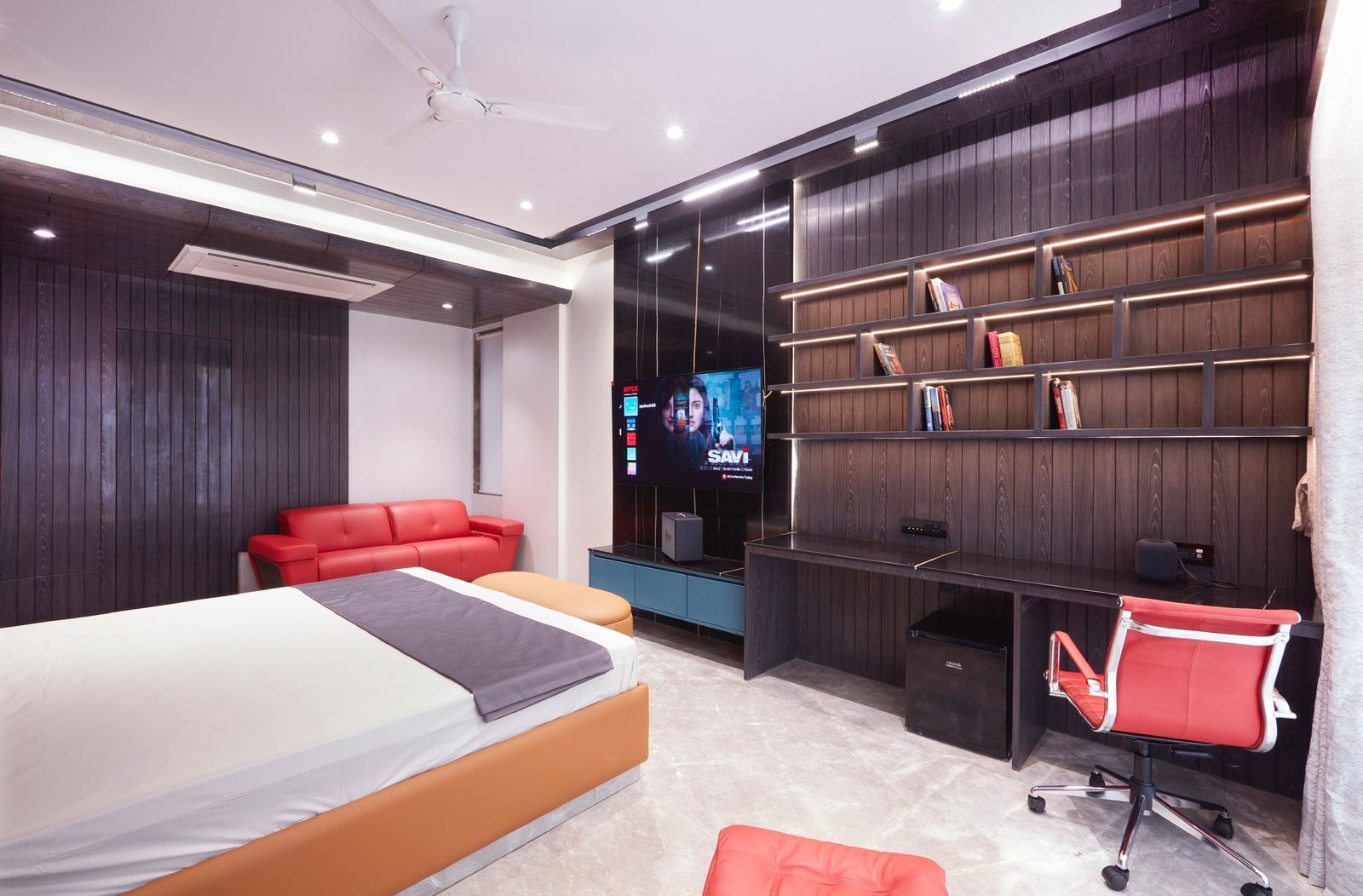


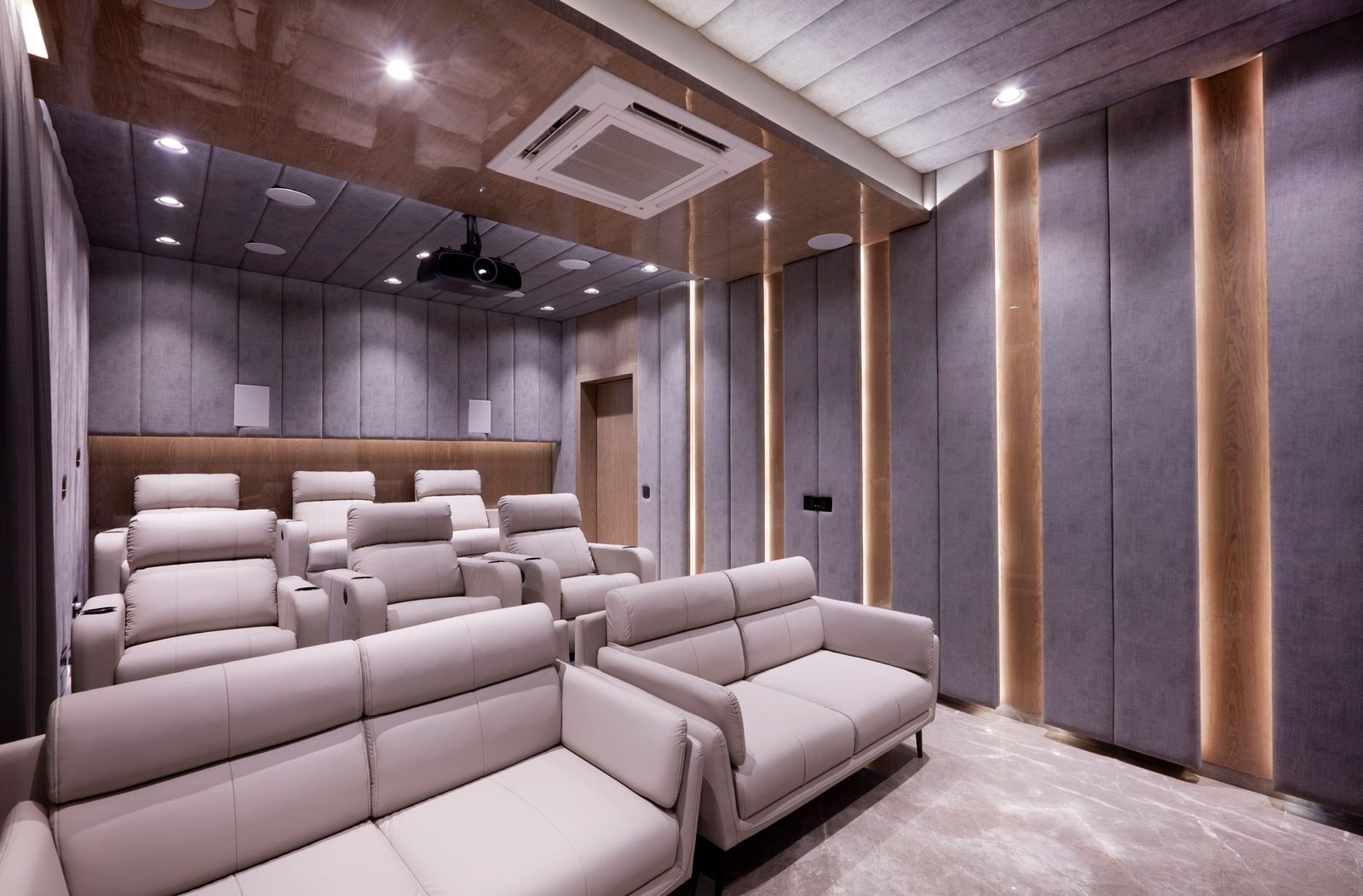
Selected work by Greenbox Design Studio. Tap any image to enlarge.
Frequently asked questions
How much do interior contractors charge in Mumbai?+
Carpentry runs ₹1,600–₹3,400 per sq ft of shutter area and gypsum false ceiling ₹120–₹230 per sq ft, excluding 18% GST. Thane and Navi Mumbai sit at the bottom of those bands, Bandra, Worli and BKC at the top. The spread is access and permitted working hours, not workmanship.
What society approvals do I need before interior work in Mumbai?+
A written NOC from the managing committee, a refundable damage deposit of ₹25,000 to ₹2,00,000 depending on the building, a worker list with photo ID, a lift and common-area usage charge, and a debris removal undertaking. We prepare and file all of it as part of project management.
Can interior work happen during the Mumbai monsoon?+
Internal carpentry, ceiling, electrical and painting continue normally. What we do not schedule between mid-June and late September is bathroom demolition, external-wall chasing and any waterproofing, because membranes need a dry substrate and a cure window. Planning around this costs nothing; ignoring it costs a re-do.
Why are Bandra and Worli more expensive than Thane for the same work?+
Lane width, lift availability and labour travel. In Bandra's older lanes a full truck cannot reach the building, so material arrives in smaller loads with more handling. In Thane a truck reaches the podium and the goods lift takes full-size panels. That is 15–25% on identical specification.
Do you handle debris removal and the BMC requirements?+
Yes. Debris is bagged daily, stored where the society permits, removed on the building's designated days, and disposed of at an approved site. Leaving construction waste at the compound gate is the fastest way to lose your damage deposit and the committee's goodwill.