
Four vocabularies
| Region | Signature elements | Palette | Where it works |
|---|---|---|---|
| Chettinad (Tamil Nadu) | Athangudi tile, Burma teak columns and pillars, lime plaster, high thresholds, brass | Oxide red, mustard, deep green, white lime | Larger homes, courtyards; the tile alone works anywhere |
| Rajasthani | Jharokha, thikri mirror work, sandstone jaali, blue pottery, hand-block textiles | Indigo, ochre, coral, sandstone | Feature walls and pooja rooms; whole-home treatment is overwhelming in a flat |
| Kerala | Rosewood and teak joinery, sloped and exposed timber ceilings, nadumuttam courtyard, brass lamps | Warm timber, white, terracotta, oxide floors | Villas and independent houses; the joinery language adapts to flats well |
| Gujarati and Marwari haveli | Carved timber columns, jaali screens, jharokha, inlaid furniture, silver and brass | Deep wood, cream, red, gold | Formal living and dining; strong as an edited language |
| Bengal and colonial-Indian | Louvred shutters, high ceilings, planter chairs, red oxide floors, cane | White, dark timber, oxide red, green | Apartments with height; the most adaptable of these five |
The materials, and what they cost
| Element | ₹ range | Unit | Lead time |
|---|---|---|---|
| Athangudi handmade tile | ₹190 – 420 | per sq ft, supplied | 6 – 12 weeks; made to order |
| Red oxide flooring, hand-laid | ₹220 – 480 | per sq ft, laid | Applied on site; needs a skilled team |
| Kota stone, honed | ₹95 – 190 | per sq ft, laid | Readily available |
| Carved teak jaali screen | ₹2,800 – 8,000 | per sq ft | 8 – 16 weeks depending on the carver |
| CNC-cut MDF or ply jaali | ₹450 – 1,100 | per sq ft | 2 – 3 weeks; the honest budget alternative |
| Reclaimed teak column | ₹18,000 – 95,000 | each | Sourced; availability decides the design |
| Brass inlay in timber | ₹1,400 – 4,200 | per running foot | 6 – 10 weeks |
| Thikri mirror work | ₹1,800 – 5,500 | per sq ft | Artisan-dependent; 8 – 14 weeks |
| Hand-block printed upholstery | ₹900 – 3,500 | per metre | 4 – 8 weeks for a custom run |
Ex-GST. Craft rates vary enormously with the maker. Two carvers quoting the same jaali can differ by three times, and the cheaper one is not always worse — ask to see finished work.

Four regional vocabularies, not one national style
Editing for a modern home
- Pick one region and one or two elements from it. A Chettinad-referenced home might be athangudi tile in the entrance and dining, teak joinery, and nothing else. That reads as confident; six elements read as a theme restaurant.
- Let the architecture stay plain. Traditional elements need a quiet background. A carved jaali against a plain lime-plastered wall works; the same jaali against a patterned wallpaper does not.
- Modernise the plan, not the vocabulary. Open kitchens, ensuite bathrooms and proper storage are not traditional and should not be made so. Keep the layout contemporary and the materials traditional.
- Use craft where it is seen closely. A hand-carved element at the entrance, in the pooja room or on a dining sideboard earns its cost. The same work on a ceiling twelve feet up does not.
- Scale down the ceiling. Exposed timber rafters need 3.3 metres to work. In a 2.9 metre room, a timber-lined soffit over the dining area gives the reference without compressing the space.
- Keep one modern thing in every room. A contemporary light, a plain sofa, a clean-lined kitchen. It is what tells the eye this is a home in 2026 rather than a period reproduction.
The pooja room
In most traditional schemes this is where the craft concentrates, and it is the one place where a fully traditional treatment reads correctly in a modern home. Orientation, ventilation and material all matter here; the detailed planning rules are on pooja room design. As a cost guide, a designed pooja space runs ₹85,000–₹2.4 lakh at a craft specification, with the carved unit or the jaali screen accounting for most of it.
Timber, which is most of this style
- Burma teak is the reference material and it is now largely reclaimed rather than new. Expect ₹4,500–₹9,500 per cubic foot for good reclaimed stock, and expect to design around what is available rather than specifying and then sourcing.
- Indian teak at ₹2,800–₹5,200 per cubic foot is the practical choice for most joinery, and the difference is visible mainly in grain density and colour depth.
- Rosewood (sheesham) at ₹2,200–₹4,000 per cubic foot suits Kerala and Bengal vocabularies and takes carving well.
- Teak veneer on BWP ply is the honest way to get the appearance across a large area. It is not a compromise if it is detailed as veneer rather than pretending to be solid.
- Moisture matters more than species. Solid timber for interior joinery should be kiln-dried to 8–12% moisture content and conditioned on site for a week before machining. This is the difference between furniture that lasts a century and furniture that splits in the second summer.
- Finish matters. Traditional Indian timber is oiled or wax-polished, not covered in a high-build PU. An oiled finish ages, can be refreshed in an afternoon, and is what gives old teak its depth.
A family brought us a photograph of their grandmother’s house in Karaikudi and asked for the whole thing in a flat. We used the tile, the door and the brass. Everything else would have been costume.
Greenbox principal designer
What a traditional scheme costs
There is no single rate, because the craft content varies so widely. As a shape, a traditional-referenced home in India runs ₹2,310–₹5,840 per sq ft of carpet area at 2026 rates, ex-GST. A lightly referenced scheme — one tile, one timber, brass hardware — sits near the bottom of that. A scheme with carved jaali, inlay and reclaimed columns sits at the top or above it. The variable is not the number of rooms; it is the number of square feet of hand work. That range comes from traditionally referenced homes we have completed and billed rather than from a market survey, and it is held at October 2026.
Where we work
We deliver traditionally referenced homes across India and build them in Mumbai, where the client base is genuinely multi-regional. See traditional Indian interior designers in Mumbai for local sourcing, rates and how these languages fit a city flat. For the contemporary end of the same warmth, see bohemian interior design.


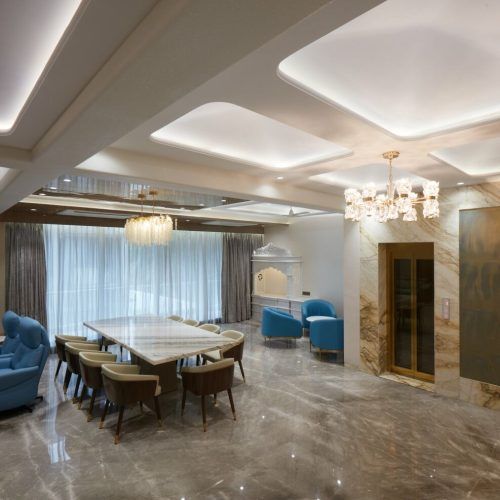
Selected work by Greenbox Design Studio. Tap any image to enlarge.
Frequently asked questions
Is there one traditional Indian style?+
No. Chettinad, Rajasthani, Kerala, Gujarati haveli and colonial-Indian are distinct vocabularies with different materials, different palettes and different architectural logic. Choosing one and working within it produces a coherent home; combining three produces something that reads as a hotel lobby rather than a house.
What does a carved jaali cost?+
₹2,800–₹8,000 per sq ft for hand-carved teak, with a lead time of eight to sixteen weeks depending on the carver. A CNC-cut MDF or plywood jaali at ₹450–₹1,100 per sq ft and two to three weeks is the honest budget alternative, and it is better than a thin hand-carved panel bought on price.
Can traditional Indian design work in an apartment?+
Yes, edited. Keep the plan contemporary — open kitchen, ensuite bathrooms, real storage — and make the materials traditional. Use two or three elements from one region rather than six from three, keep the background plain, and concentrate the craft where it is seen closely: the entrance, the dining sideboard and the pooja room.
What is athangudi tile and what does it cost?+
A handmade cement tile from the Chettinad region, coloured with oxide pigments and cast individually in glass moulds, which is why no two are identical. ₹190–₹420 per sq ft supplied, made to order with a six to twelve week lead time. It is the single most recognisable element of the Chettinad vocabulary and it works in a modern room on its own.
Should traditional timber be polished with PU?+
No. Traditional Indian timber is oiled or wax-polished, which lets the grain show, ages well and can be refreshed in an afternoon. A high-build PU coat gives a plastic surface that cannot be locally repaired and removes exactly the depth that makes old teak worth using.
What does a traditional Indian interior cost?+
₹2,310–₹5,840 per sq ft of carpet area, ex-GST, and the spread is almost entirely the quantity of hand work. A lightly referenced scheme with one tile, one timber and brass hardware sits near the bottom; carved jaali, brass inlay and reclaimed teak columns take it to the top of the range or beyond it.