
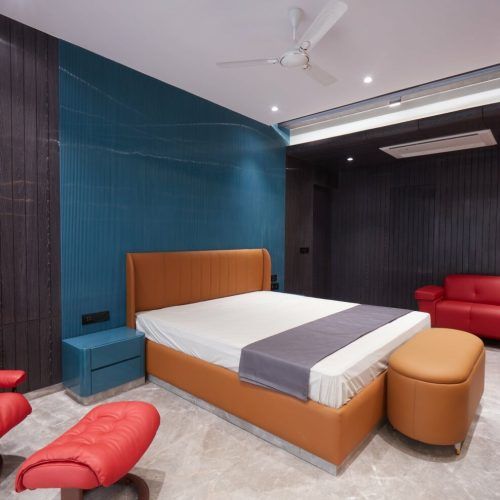
The quiet shell
Everything that makes this style work depends on the architecture staying out of the way. A boho layer over a busy shell produces a room nobody can rest their eyes in.
- Plain walls, warm white or a soft earth tone. No panelling, no feature wallpaper, no textured paint. The walls are a background for textiles and art.
- One floor material, warm and matte. Terracotta, a mid-tone timber-look tile or a plain concrete-effect. Patterned floor tile fights every rug you will put on it.
- Simple joinery, minimal. Plain shutters with a simple handle, in a single tone. The style needs open shelving, not a wall of cabinetry.
- Keep the ceiling plain. A flat ceiling with a simple cove. Anything designed in the ceiling competes with everything below it.
- Plenty of open shelving. This is the one place the style spends on built work, because the objects need somewhere to live.
- Good hooks and rails. Textiles, baskets, plants and instruments all get hung in this style. Blocking in the wall at the design stage is worth more than it sounds.
Pattern mixing, to a rule
- One large, one medium, one small. A large-scale rug or throw, a medium ikat or block print, and a small geometric or stripe. Three scales in one grouping reads as composed; three of the same scale reads as noise.
- Share two colours across every pattern. The patterns can be from completely different traditions — a Turkish kilim, a Gujarati block print and a Moroccan weave — and they will sit together if two colours run through all three.
- Add one solid for every two patterns. A plain cushion, a plain throw, a plain wall. The solids are what let the eye rest and therefore what makes the patterns readable.
- Repeat a pattern at least twice in a room. A single appearance of anything reads as accidental; the second appearance makes both look deliberate.
- Keep the large-scale item on the floor. The rug is the anchor and it should be the boldest thing in the room; pattern above eye level is tiring.
- Buy the rug first. Everything else is chosen against it, and it is the one item worth spending on.
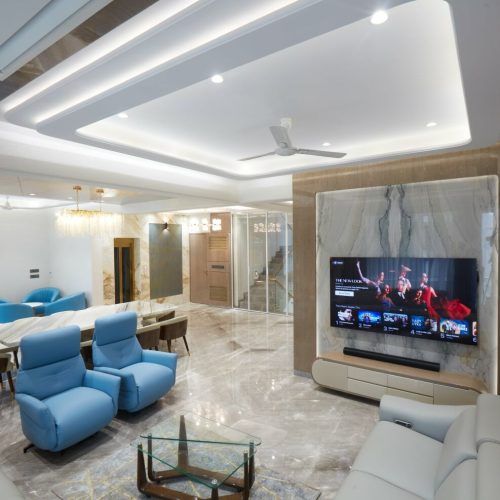
Collected over years, not bought in an afternoon
The palette
| Role | Value | Where |
|---|---|---|
| Base | #F1EADF | Walls; warm white with a hint of sand |
| Earth | #B0745A | Terracotta; floor, ceramics, one textile |
| Deep | #47504A | Olive-green; upholstery, a painted niche, plant foliage |
| Accent | #2B4C6F | Indigo; the recurring colour in the pattern mix |
| Natural | #C6B392 | Jute, cane, rattan, undyed cotton, raw timber |
Materials and where they come from
| Material | ₹ guide | Note |
|---|---|---|
| Hand-knotted wool rug, 5 × 8 ft | ₹28,000 – 1,80,000 | The anchor of the room; buy the best you can and buy it first |
| Flat-weave dhurrie or kilim, 5 × 8 ft | ₹6,500 – 32,000 | Washable, cooler, better in a humid climate |
| Jute rug | ₹3,500 – 14,000 | Texture at a low price; scratchy underfoot and honest about it |
| Hand-block printed cotton | ₹450 – 1,400 per metre | Jaipur, Bagru and Sanganer; pre-shrink before making up |
| Cane and rattan furniture | ₹8,000 – 65,000 per piece | Specify treated cane on a re-tensionable frame |
| Macramé and woven wall hanging | ₹2,500 – 22,000 | One per room at most; this is the most over-used element in the style |
| Unglazed and studio ceramic | ₹600 – 12,000 per piece | The Indian studio pottery scene is strong and better value than imports |
| Open shelving, timber on brackets | ₹1,100 – 2,800 per running foot | The one piece of built work this style genuinely needs |
Ex-GST. Most of this is bought over years rather than in one order, which is both the point of the style and the reason it suits a modest budget.
A client asked us to make her flat look collected. We told her that takes fifteen years, and then we designed the shelves, the hooks and the lighting so that the collecting would have somewhere to go.
Greenbox principal designer
Plants, properly
- Fewer, larger plants beat many small ones. Three large specimens in a room read as considered; eleven small pots read as a windowsill.
- Match the plant to the light, honestly. A fiddle-leaf fig in a north-facing corner will die slowly and look bad doing it. Pothos, ZZ and snake plant for low light; monstera, rubber plant and bird of paradise for bright indirect.
- Design the positions. A floor position with a water-safe finish under it, a 300 mm ledge with a drip tray, a ceiling hook rated for a hanging planter. Retrofitting these is why so many plants end up in the wrong place.
- Vary the height. Floor, table, shelf and hanging. A single level of greenery reads as a row rather than as planting.
- Real or nothing. Artificial plants are visible at two metres and they undo the whole premise of a natural-material style.
- Plan for watering. A plant that is hard to reach is a plant that dies. This sounds obvious and it is the commonest reason a planted scheme fails in year two.
What it costs, and why it is different
This is the only style on our list where the base build is cheaper than a conventional fit-out — typically 5 to 15% less, because there is less joinery, no feature walls, plain finishes and a simple ceiling. What replaces that spend is the layer, and the layer is bought over years rather than in one contract. A realistic approach is to budget the base build normally, allow ₹1.5–₹4 lakh for a first layer of rug, textiles, lighting and plants that makes the home liveable on day one, and then let it accumulate. A boho scheme delivered complete on handover day is the one version of this style that never quite convinces.
Where we work
We deliver this style across India and build it in Mumbai, where humidity, rentals and balcony planting all change the answer. See bohemian interior designers in Mumbai. For a related warmth with more structure, see traditional Indian interior design.
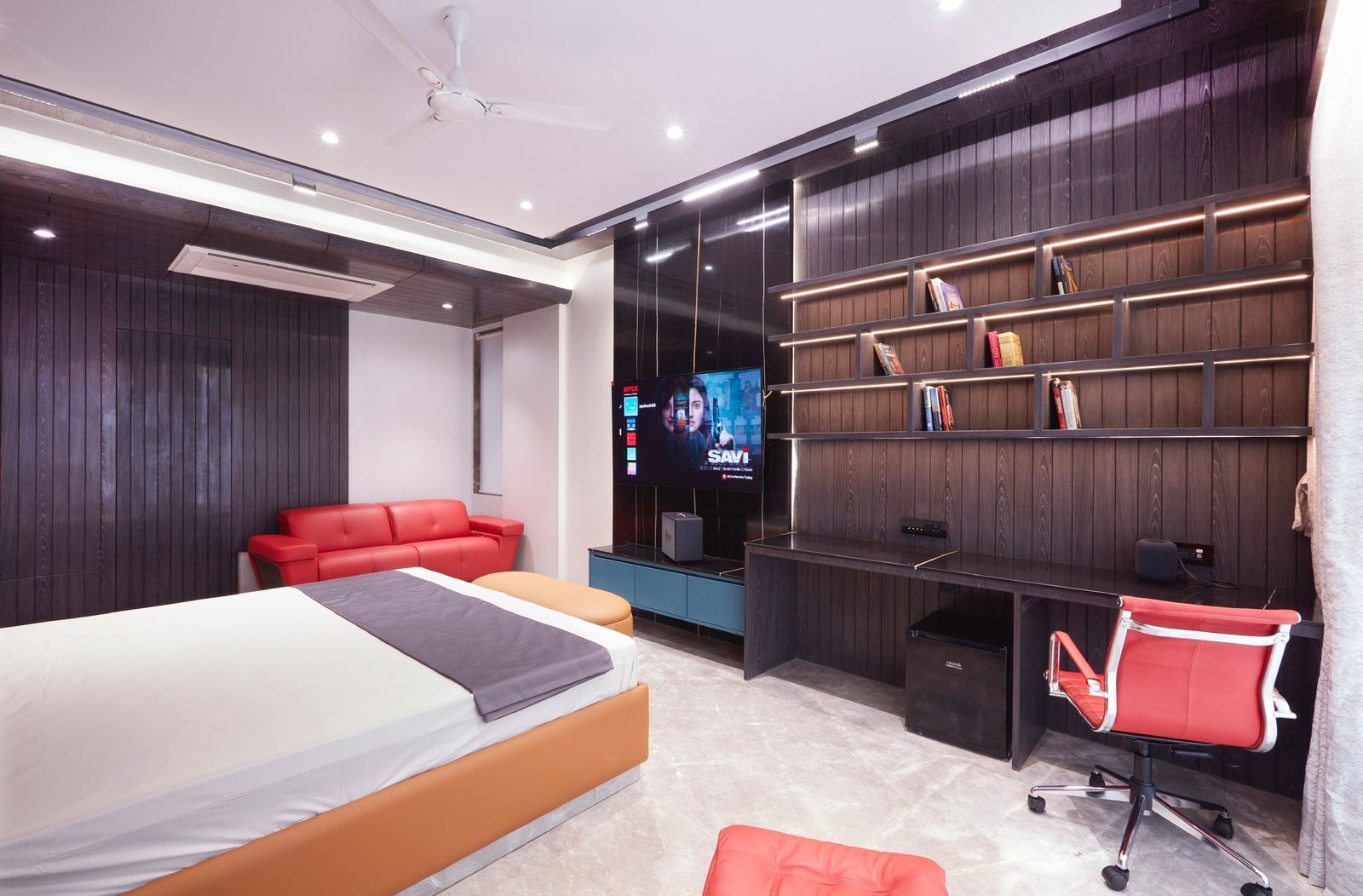
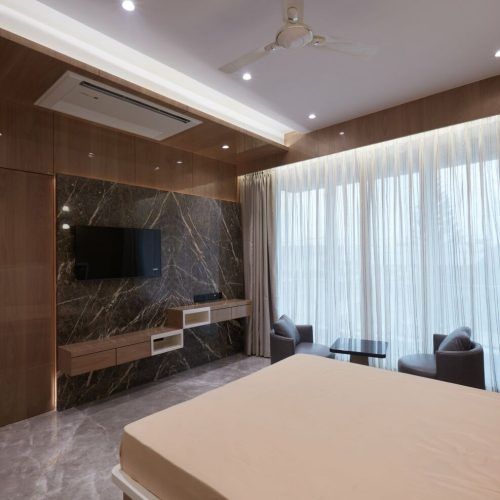
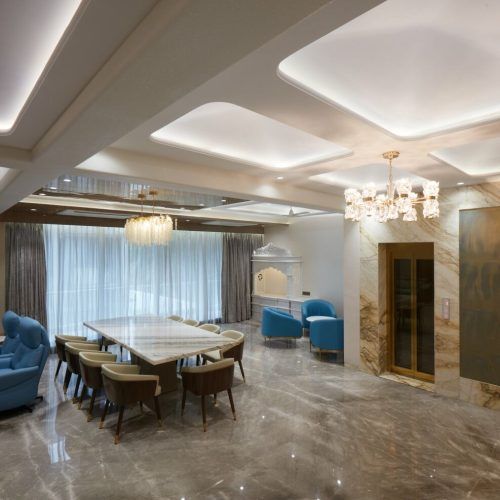
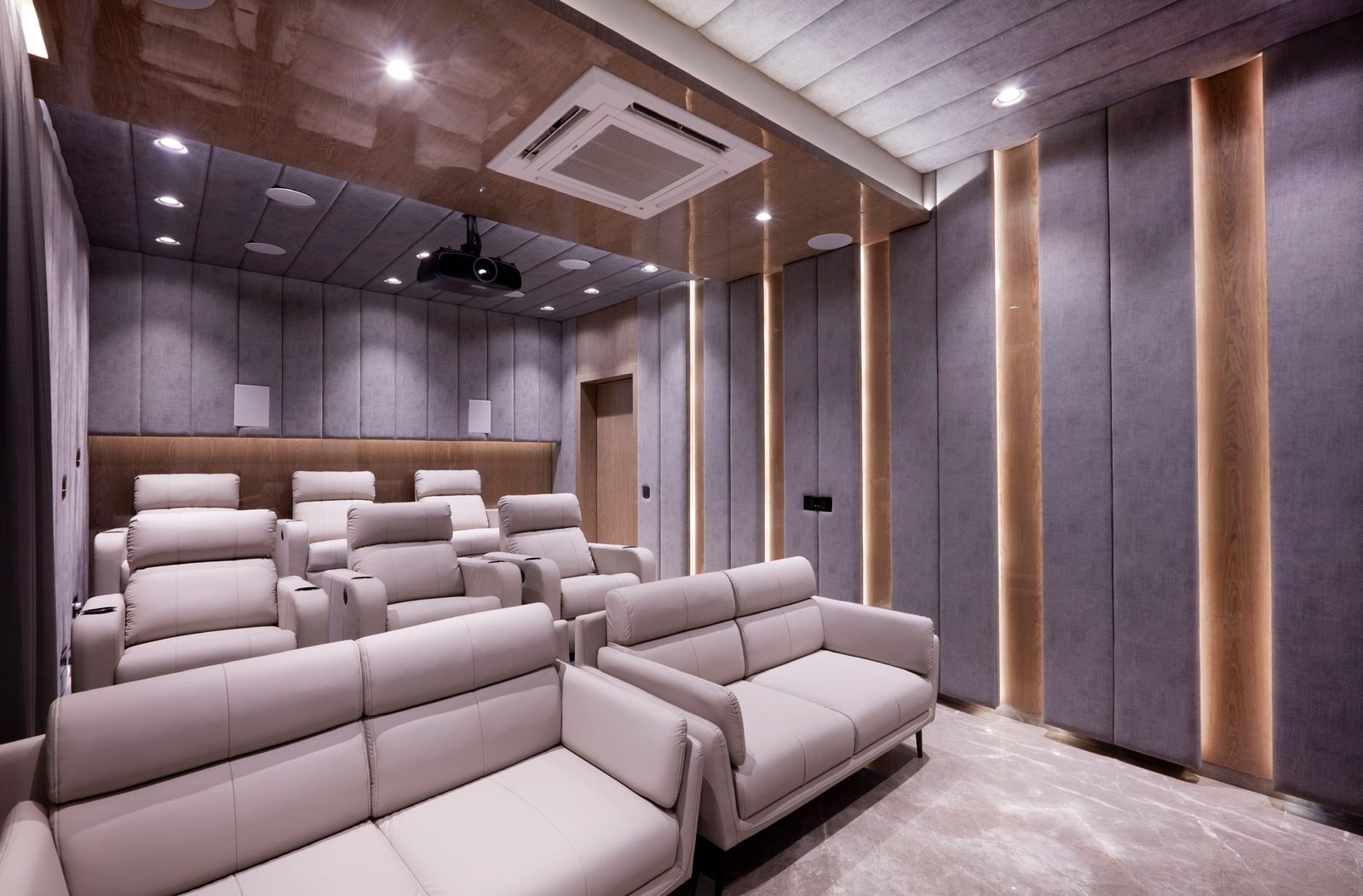
Selected work by Greenbox Design Studio. Tap any image to enlarge.
Frequently asked questions
How do you stop a bohemian room looking cluttered?+
Keep the shell completely plain — warm white walls, one matte floor material, minimal joinery, a flat ceiling — so the layer has somewhere to sit. Then mix pattern to a rule: one large, one medium and one small scale, all sharing two colours, with one solid for every two patterns.
Is bohemian design cheap?+
The base build is 5–15% cheaper than a conventional fit-out because there is less joinery, no feature walls and a simple ceiling. The layer of rugs, textiles, ceramics and plants is bought over years rather than in one order. Budget ₹1.5–₹4 lakh for a first layer that makes the home liveable on day one and let the rest accumulate.
How do I mix patterns without it going wrong?+
Use three scales — one large, one medium, one small — with two colours running through all three, and add one solid for every two patterns. The traditions can be completely different; a Turkish kilim, a Gujarati block print and a Moroccan weave sit together happily if the shared colours are there. Repeat each pattern at least twice.
What should I buy first?+
The rug. It is the anchor of the room, it should be the boldest thing in it, and everything else is chosen against it. A hand-knotted wool rug at 5 × 8 ft runs ₹28,000–₹1,80,000; a flat-weave dhurrie or kilim at ₹6,500–₹32,000 is cooler, washable and better in a humid climate.
How many plants should a bohemian room have?+
Three large specimens rather than eleven small pots, at varied heights — floor, table, shelf and hanging. Match each one honestly to the light it will get, design the positions into the scheme with drip trays and rated ceiling hooks, and make sure every plant is easy to reach, because one that is not will die in year two.
Is bohemian good for a rented home?+
The best of any style, because almost none of it is fixed. Rugs, textiles, plants, lighting on plugs, freestanding shelving and hung art all move with you. If you can paint, one warm white is worth doing; if you cannot, the layer carries the room on its own.