

Work out your wallpaper roll count
One feature wall or a whole room — enter the wall, then the pattern.
How this calculator works
- Gross area = width × height × number of walls. Measure the widest point, floor to ceiling, and ignore skirting — paper is trimmed to it.
- Net area = gross − openings. Enter the combined square footage of doors and large windows. A standard flush door is about 21 sq ft; a typical Mumbai bedroom window is 12–18 sq ft.
- Wastage factor. ×1.10 free match, ×1.15 small repeat, ×1.22 medium, ×1.30 large. This is straight pattern-matching loss, not fitter carelessness.
- Rolls = ceiling(net × factor ÷ roll coverage). Always rounded up to a whole roll, because you cannot buy part of one.
- Adhesive = one 1 kg pack per four rolls, minimum one pack. Pre-pasted and self-adhesive papers need none.
- Cost = rolls × price + net area × ₹35 installation, with 18% GST shown separately.
| Roll type | Size | Coverage | Where you see it |
|---|---|---|---|
| European standard | 53 cm × 10.05 m | 57 sq ft | Most imported and branded Indian papers |
| Indian standard | 53 cm × 10 m | 53 sq ft | Domestic budget ranges |
| Wide-width | 1 m × 10 m | 108 sq ft | Commercial vinyl, some textures |
| Custom mural | Printed to size | Per sq ft | Priced by area, no roll maths |
Coverage figures are nominal roll area. Real usable coverage is lower once the pattern repeat is applied, which is exactly what the wastage factor in this calculator accounts for.

Design and build under one accountable roof
Worked example — the default feature wall
A single 12 ft × 10 ft feature wall behind a bed, no openings, in a paper with a 16-inch repeat, using European rolls at ₹3,200 each.
| Step | Arithmetic | Result |
|---|---|---|
| Gross area | 12 × 10 × 1 | 120 sq ft |
| Openings deducted | none | 0 sq ft |
| Net area | 120 − 0 | 120 sq ft |
| Medium repeat wastage | 120 × 1.22 | 146.4 sq ft |
| Rolls | ceiling(146.4 ÷ 57) | 3 rolls |
| Material | 3 × ₹3,200 | ₹9,600 |
| Installation | 120 × ₹35 | ₹4,200 |
| Supplied and fixed | material + labour | ₹13,800 |
Five things that waste wallpaper
- Buying across two batches. Batch numbers are printed on the wrapper. Two batches on one wall will show a tonal step under raking light, every time.
- Ignoring the repeat on a tall wall. A 10 ft drop with a 24-inch repeat wastes up to 22 inches per drop. On a five-drop wall that is most of a roll.
- Papering over damp or fresh putty. In Mumbai the common failure is a shared wall that takes monsoon moisture. Test the wall, seal it, and use a fungicidal primer.
- Skipping the primer. Bare putty absorbs adhesive unevenly, which shows as blistering within weeks and makes future removal tear the surface.
- Cutting all the drops before hanging. Ceilings are rarely level. Cut two drops ahead, not twelve.
Where wallpaper beats paint, and where it does not
Wallpaper earns its place on one or two walls, not on all four. On a single feature wall it gives you pattern, texture and depth that no paint can, for less than a hand-applied textured finish costs once you count the labour. On all four walls of a small Mumbai bedroom it closes the room down and makes any future change a strip-out rather than a repaint.
The honest cost comparison at our default 120 sq ft wall: three rolls at ₹3,200 plus ₹35 per sq ft of fitting comes to about ₹13,800 supplied and fixed, or ₹115 per sq ft. Two coats of emulsion on the same wall is ₹42 per sq ft, or ₹52 where it needs a coat of putty first. A hand-applied wall texture lands at ₹170–250. So wallpaper sits in the middle, and the question is not price but permanence — paint is a weekend, wallpaper is a decade.
There is one place we recommend it without hesitation, which is a wall you want to protect. A washable vinyl behind a dining table or in a child's room takes wiping that emulsion does not, and it can be replaced panel by panel if one section is damaged. That is a practical argument, not a decorative one, and it usually convinces the person paying.
Roll sizes, repeats and roll prices belong to the paper, not to us, and we have left them as the market sets them. The ₹35 per sq ft to hang a standard paper is our own Mumbai labour; the audited card does not carry a wallpaper line, so read it as our current rate rather than a figure reconciled against billed projects. The paint and texture figures this page compares against are audited and held at October 2026 — ₹42 per sq ft to repaint, ₹52 with putty, ₹170–250 for hand-applied texture. Treat the output as a planning figure: accurate enough to brief a landlord, a bank or a family, and not accurate enough to sign a contract against.
What this tool does not cover
- Wall preparation. Putty over a sound wall is about ₹10 per sq ft — the gap between our ₹42 repaint rate and the ₹52 putty-and-repaint one — and a wall that needs POP punning first runs ₹35–55 per sq ft.
- Removal and disposal of existing wallpaper, ₹18–25 per sq ft.
- Grasscloth, foil, flock and hand-printed papers, where installation is ₹60–120 per sq ft and wastage is higher.
- Custom murals, which are printed to your wall dimensions and priced per sq ft rather than per roll.
- Ceilings, curved walls and stair wells, all of which need scaffolding and a higher labour rate.
- 18% GST, shown separately in the breakdown.

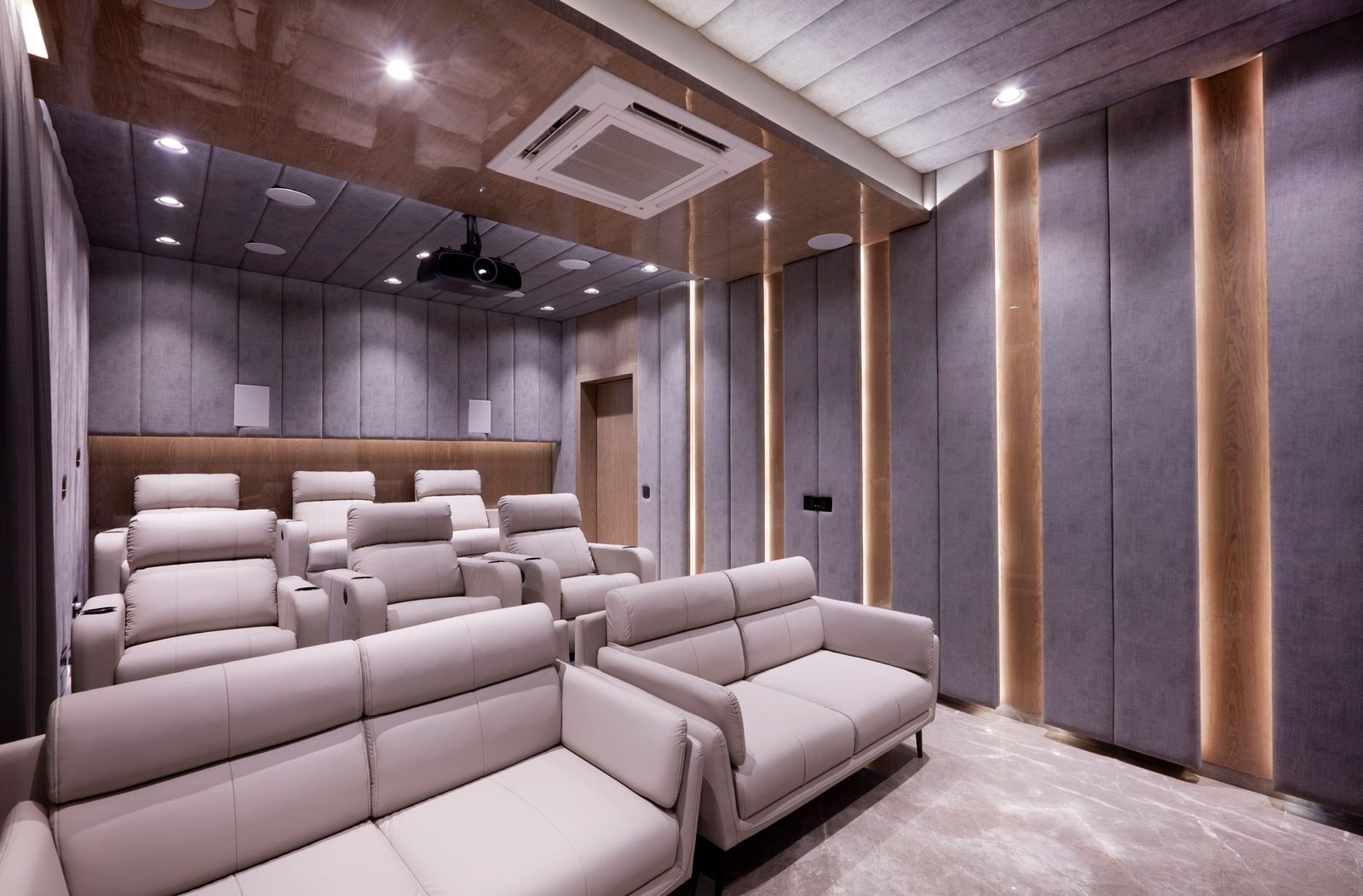
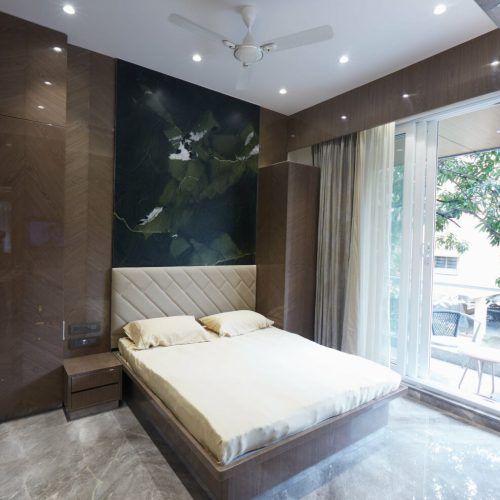

Selected work by Greenbox Design Studio. Tap any image to enlarge.
Frequently asked questions
How many rolls of wallpaper for a 12 × 10 ft wall?+
Three standard European rolls. The wall is 120 sq ft, a medium pattern repeat takes that to about 146 sq ft of paper bought, and each roll covers 57 sq ft. Buy all three from one batch number.
Should I deduct windows and doors?+
Deduct anything over about 20 sq ft. Leave small windows in the calculation — the paper you would have saved is the paper you will waste around the reveal, so it evens out and gives you a margin.
What does wallpaper installation cost in Mumbai?+
₹35 per sq ft of finished wall for a standard paper on a prepared surface. Grasscloth, foil and murals run ₹60–120 per sq ft because they are sequenced, heavier and unforgiving of a misaligned drop. Surface preparation is charged separately.
Why does the pattern repeat matter so much?+
Because every drop must start at the same point in the pattern. With a 24-inch repeat and a 10 ft wall, you lose up to 22 inches at the top of each drop. That is why a large-repeat paper is costed at ×1.30 and a plain texture at ×1.10.
Is wallpaper a bad idea in a Mumbai monsoon?+
Only on walls that take water. An internal partition is fine. An external or shared wall that shows monsoon damp will lift any paper within two seasons — seal and treat the wall first, or use a washable vinyl, or paint it instead.