
Count your plumbing points
Room counts give the points. The rate and the concealment give the cost.
How this estimator works
- Bathroom = 9 points: WC inlet, health faucet, basin hot and cold, shower mixer hot and cold, shower outlet, floor trap and a spare for a future bidet or washing machine.
- Kitchen = 5 points: sink hot and cold, waste, water purifier feed and a dishwasher or washing-machine cock.
- Utility = 3 points: washing-machine inlet, waste and a floor trap.
- Cost = points × pipe system rate × concealment factor, plus geyser points at ₹4,200 each and chasing at ₹320 per point where the walls are existing.
- Rates are installed — pipe, fittings, clamps, labour and testing — but not the fixtures themselves.
| Room | Points | What they are |
|---|---|---|
| Bathroom | 9 | WC, health faucet, basin hot + cold, shower mixer hot + cold, shower outlet, floor trap, spare |
| Kitchen | 5 | Sink hot + cold, waste, purifier feed, appliance cock |
| Utility / balcony | 3 | Washing-machine inlet, waste, floor trap |
| Geyser point | ₹4,200 each | Hot and cold connections plus safety valve |
| CPVC | ₹1,250 / point | The volume standard; good for hot and cold |
| UPVC + CPVC hot | ₹1,650 / point | UPVC cold lines with CPVC on hot — the common Mumbai spec |
| PPR / composite | ₹2,400 / point | Fusion welded, no chemical joints, longest life |
Design and build under one accountable roof
Worked example — a standard 2BHK
| Line | Quantity | Amount |
|---|---|---|
| Bathrooms | 2 × 9 | 18 points |
| Kitchen | 1 × 5 | 5 points |
| Utility | 1 × 3 | 3 points |
| Total points | — | 26 points |
| UPVC with CPVC hot, concealed | 26 × ₹1,650 × 1.18 | ₹50,622 |
| Two geyser points | 2 × ₹4,200 | ₹8,400 |
| Chasing and making good | 26 × ₹320 | ₹8,320 |
| Total | sum | ₹67,342 |
The rules that prevent a leak behind tile
Pressure test before closing. Every concealed line gets charged to 6 bar and held for two hours with the gauge visible, and somebody photographs the start and end reading. A joint that weeps a drop an hour is invisible on the day and shows as a damp patch on the neighbour's ceiling eight months later, by which time the tile has been laid over it and the repair costs twenty times the test.
Second, keep concealed joints to a minimum and never put one behind a fixed fitting. Run continuous lengths wherever possible and place any unavoidable joint where an inspection panel or a removable vanity gives access. A CPVC solvent joint properly made is extremely reliable; the failures we see are almost always a joint made in a hurry in a cramped chase.
Third, respect the slope on waste lines. A 110 mm soil line needs a fall of at least 1 in 60 and a 40 mm waste 1 in 40. In a Mumbai flat with a shallow sunken slab there is often only just enough depth to achieve it, and an inspector's tape on the finished screed is worth more than a contractor's assurance. A waste line laid flat will block, repeatedly, for the life of the bathroom.
One more thing to specify in writing: isolation valves. Every bathroom and the kitchen should have its own isolating valve on the incoming line, so that a leak or a tap change ten years from now does not mean shutting off the whole flat. Angle valves at each fixture do the same job at fixture level. Between them they cost a few thousand rupees during the project and save a plumber cutting into a wall on a Sunday afternoon.
Plumbing sits outside the audited residential rate card, which excludes plumbing and sanitary work altogether, so the point rates here are our own current Mumbai pricing for pipework rather than a figure reconciled against completed-project billing. They move with copper and CPVC prices, so treat them as current rather than fixed. Treat the output as a planning figure: accurate enough to brief a landlord, a bank or a family, and not accurate enough to sign a contract against.
What this tool does not cover
- Sanitaryware, taps, mixers, showers and the geyser itself.
- Soil and waste stack modification, which in an apartment usually needs society permission and coordination with the flats above and below.
- Waterproofing, which follows the plumbing — see the waterproofing area calculator.
- Water tanks, pumps, filtration and softeners.
- Drainage surveys and camera inspection of existing lines, which are worth doing in any building over 25 years old.
- For the electrical side of the same rooms, see the electrical points estimator.
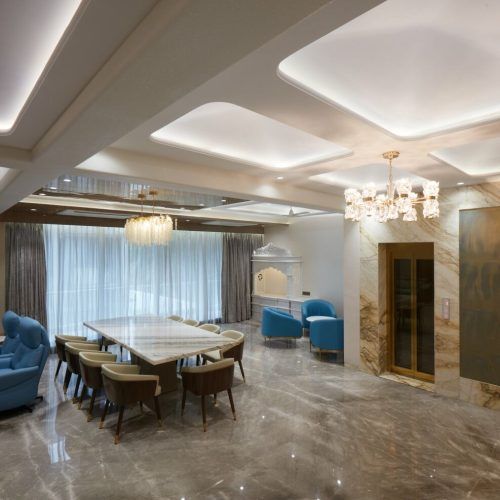
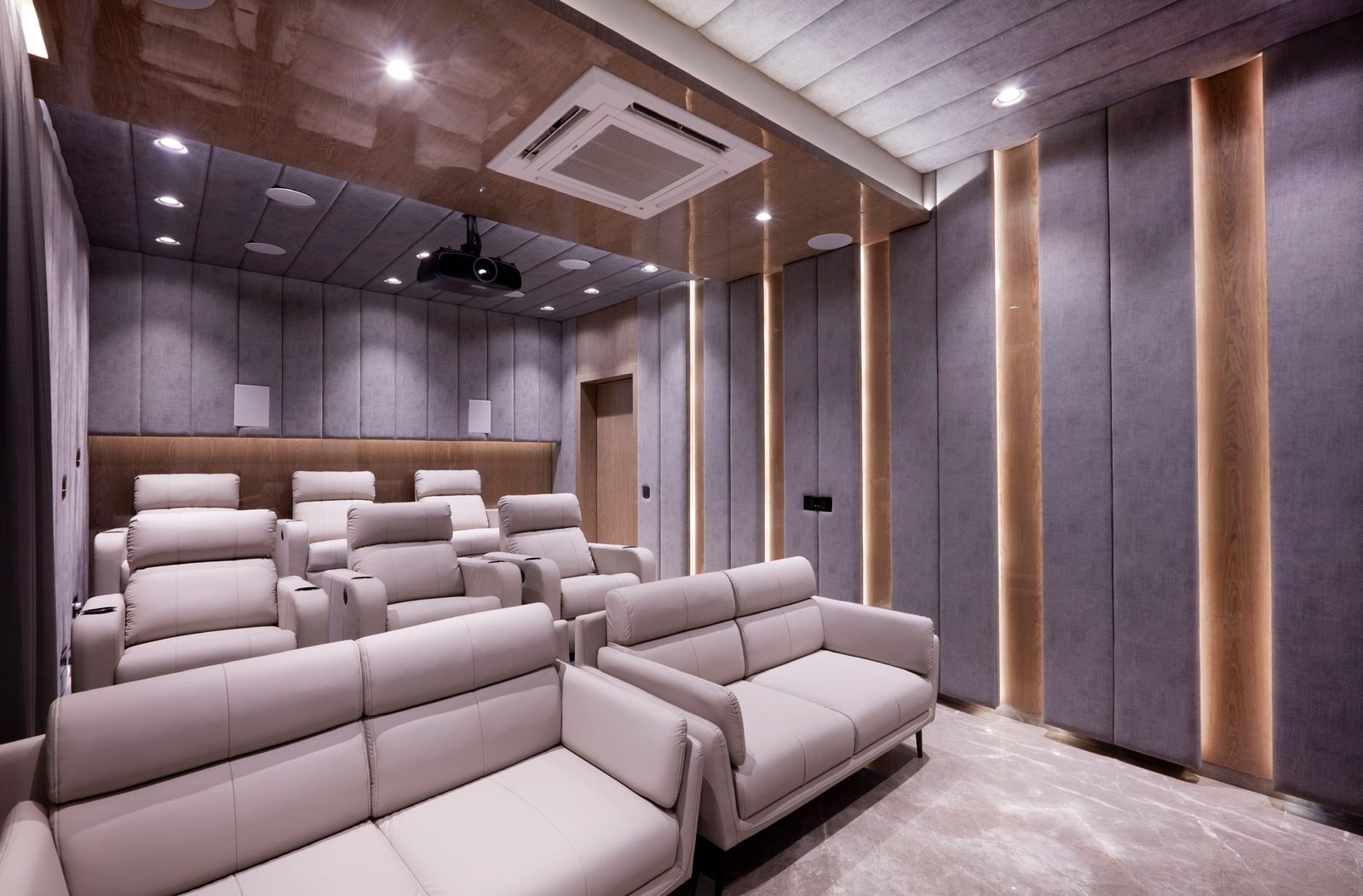
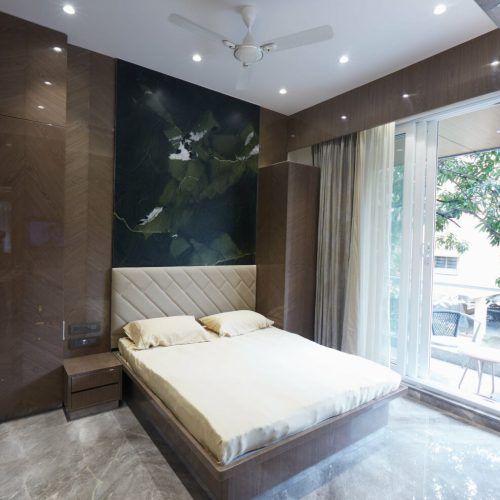
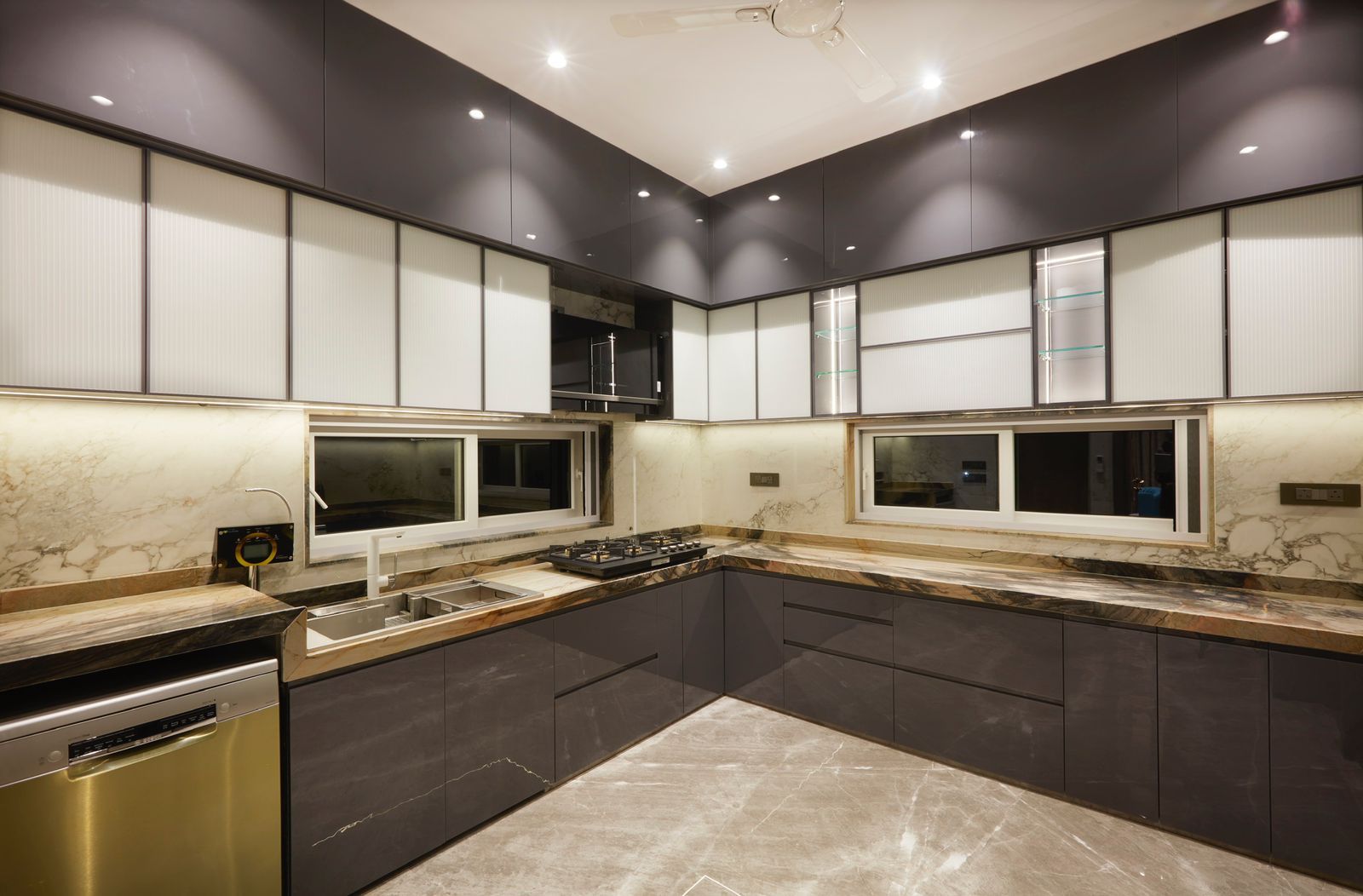
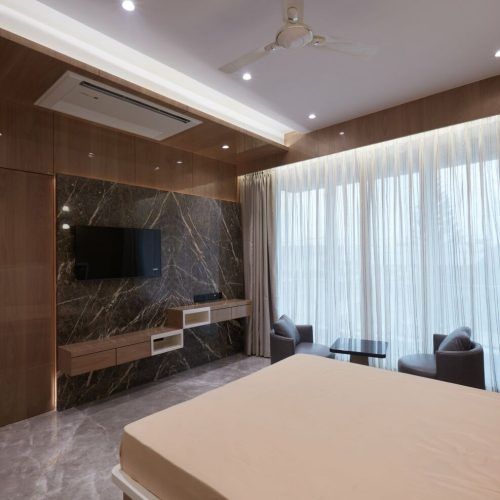
Selected work by Greenbox Design Studio. Tap any image to enlarge.
Frequently asked questions
What is a plumbing point?+
One inlet or one outlet wired back to the supply or the stack — a tap, one leg of a mixer, a WC feed, a floor trap. A wall-mounted mixer with hot and cold is two points. Quotations priced per fixture and per point are not comparable, so always confirm which you have been given.
How many plumbing points does a bathroom need?+
Nine: WC inlet, health faucet, basin hot and cold, shower mixer hot and cold, shower outlet, floor trap and one spare. The spare is worth having — a future bidet, a washing machine or a second floor trap all become simple if the point exists.
What does plumbing cost per point in Mumbai?+
₹1,250 per point in CPVC, ₹1,650 for UPVC cold with CPVC hot lines, and ₹2,400 for PPR or composite. Concealed installation adds 18%, chasing into existing walls another ₹320 per point, and a geyser point is ₹4,200.
Should plumbing be concealed or exposed?+
Concealed looks better and costs 18% more, and it makes any future repair a wall-opening exercise. Exposed pipework in a service duct or behind a removable panel is what we specify wherever it can be hidden without being buried — it costs less and it can be fixed.
Why does a plumbing line need pressure testing?+
Because a joint that weeps one drop an hour is invisible on the day and shows as a damp ceiling in the flat below eight months later — after the tile has been laid over it. Test at 6 bar for two hours, photograph the gauge, and only then close the chase.