
Price your marble floor
The slab is priced on its own line and the laying and polishing on theirs, because only the laying half is a Greenbox rate.
How this calculator works
- Marble to buy = floor area × wastage factor. Slabs are irregular and marble is cut to fit, so wastage is higher than tile.
- Material = area to buy × slab rate.
- Laying = floor area × laying rate. Cement mortar is cheaper and slower; adhesive on a levelled base is more expensive and gives a flatter floor with less lippage.
- Polishing = floor area × polish rate, nil where the marble is factory pre-polished and laid without grinding.
- Skirting material = run × height ÷ 12 × slab rate × 1.1, the 1.1 covering the higher wastage on narrow strips. Fixing is ₹120 per running foot.
- All-in rate = total ÷ floor area, which is the number to compare against any quotation you receive.
| Marble | Material rate | Typical all-in laid rate | Where it is used |
|---|---|---|---|
| Indian green | ₹180 / sq ft | ₹530 – 580 | Utility, servant areas, budget flooring |
| Makrana white | ₹220 / sq ft | ₹575 – 630 | Pooja rooms, traditional flooring |
| Italian Botticino | ₹480 / sq ft | ₹880 – 950 | Living and dining in premium flats |
| Statuario | ₹1,250 / sq ft | ₹1,770 – 1,900 | Feature floors, luxury apartments |
| Laying, mortar bed | ₹190 / sq ft | — | Traditional, tolerant of an uneven base |
| Laying, adhesive | ₹230 / sq ft | — | Flatter result, needs a levelled screed |
| Seven-step polish | ₹85 / sq ft | — | The mirror finish |
Design and build under one accountable roof
Worked example — 400 sq ft in Italian Botticino
| Line | Arithmetic | Amount |
|---|---|---|
| Marble to buy | 400 × 1.12 | 448.0 sq ft |
| Material | 448.0 × ₹480 | ₹2.15 L |
| Adhesive laying | 400 × ₹230 | ₹92,000 |
| Seven-step polish | 400 × ₹85 | ₹34,000 |
| Skirting material | 80 ft × 4 in × ₹480 × 1.1 | ₹14,080 |
| Skirting fixing | 80 × ₹120 | ₹9,600 |
| Total | sum | ₹3.65 L |
| All-in rate | ₹3.65 L ÷ 400 | ₹912 |
Living with marble in Mumbai
Marble is a limestone and it reacts with acid. Lemon, tamarind, vinegar, cola and most household cleaners will etch a polished surface — a dull patch rather than a stain, which cannot be wiped away and needs re-polishing. In a living room that almost never matters. In a dining area or an open kitchen it matters within a month, and the practical answer is a honed rather than a mirror finish, because a honed surface has nothing to lose its shine.
Sealing is the other half. A penetrating impregnator applied on installation and refreshed every two years stops oil and turmeric from soaking in, which is the failure that is genuinely permanent. Budget ₹18–25 per sq ft for it. Ask for the product name — an ordinary wax polish is not a sealer and wears off in weeks.
On the practical side of installation: marble needs a level base and a dry one. Laying over a fresh screed that has not cured traps moisture under an impermeable slab, and the result is a pale bloom that comes through the stone months later. In Mumbai, allow the screed 21 days before laying, longer in monsoon, and insist on a moisture reading rather than a site opinion.
One buying note. Marble is sold by the slab from a yard, and the slab you are shown is not always the slab that arrives. Mark every slab you select with chalk, photograph the marks and the lot number, and have the delivery checked against those photographs before any of it is cut. Vein and tone vary enough between lots that a substituted slab in the middle of a living room floor is visible from the doorway, and once it is laid and polished nothing can be done about it.
The laying, polishing and skirting-fixing rates on this page are the ones Greenbox measured and invoiced on marble floors it has actually laid, held at October 2026; the slab prices beside them are yard prices and are not ours to audit. We publish the working so the arithmetic can be checked rather than trusted. Treat the output as a planning figure: accurate enough to brief a landlord, a bank or a family, and not accurate enough to sign a contract against.
What this tool does not cover
- Breaking out the existing floor, at ₹35–50 per sq ft, plus ₹3,650–5,500 for compliant debris removal.
- Screed and levelling, which is civil work — see the civil work cost estimator.
- Sealing and impregnation, ₹18–25 per sq ft, which we recommend on every marble floor.
- Inlay, borders, medallions and any pattern work, priced per piece.
- Staircase treads and risers, which carry a nosing charge and higher wastage.
- For a cheaper hard floor, see the vitrified tile calculator; for a warmer one, the wooden flooring calculator.
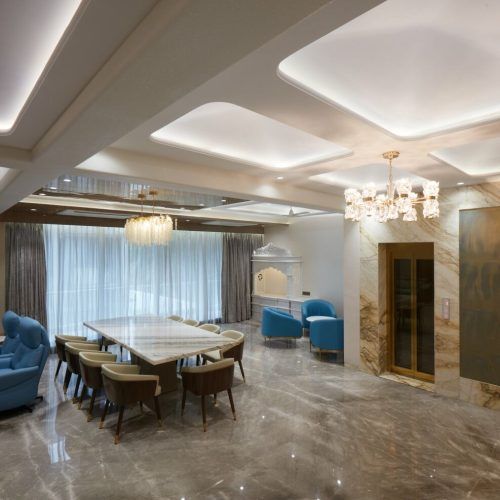
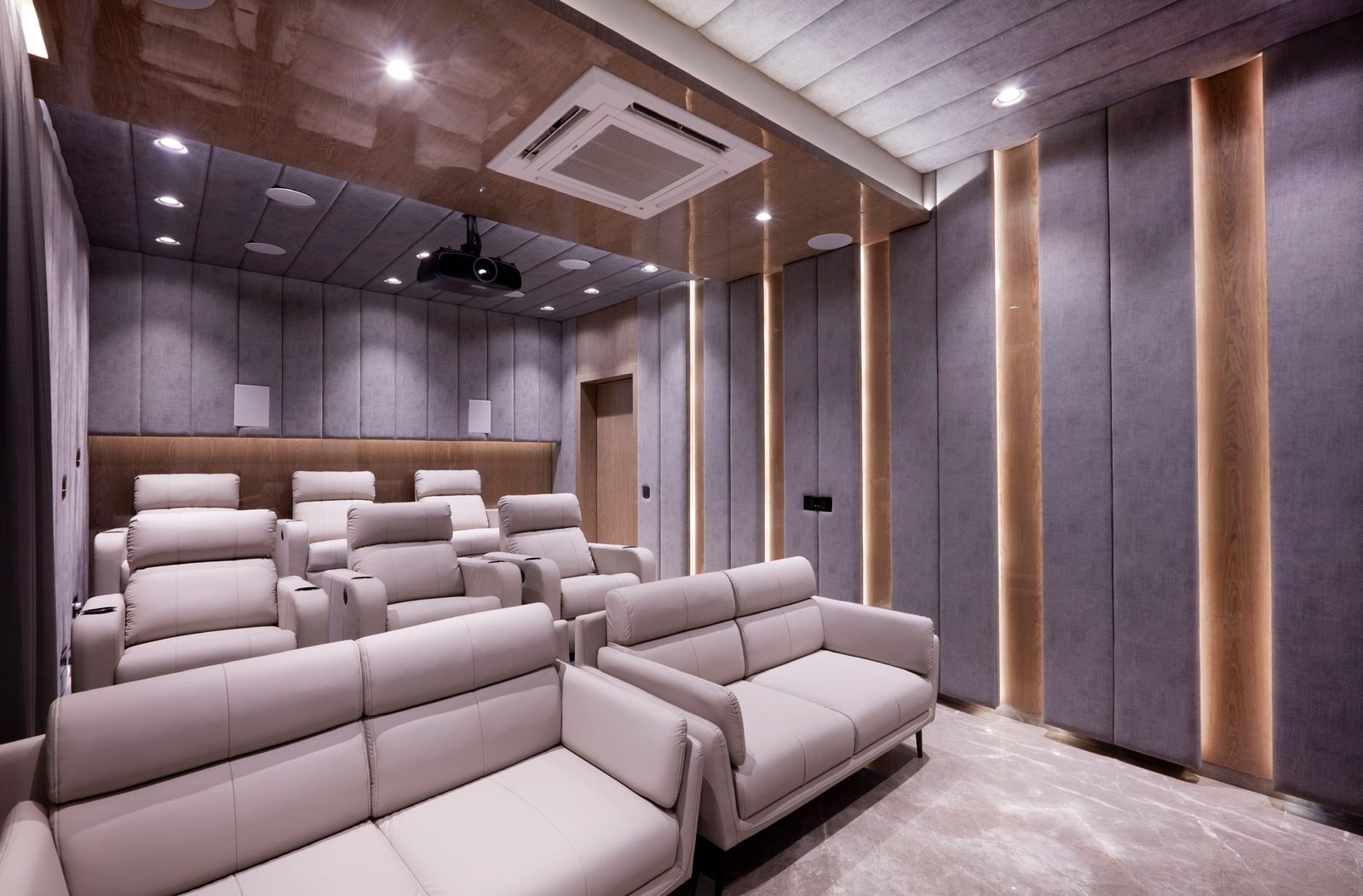
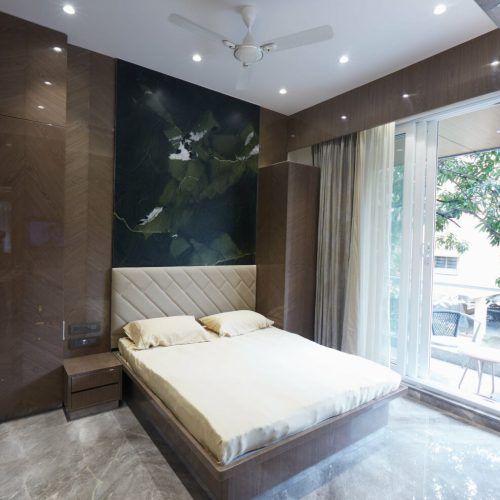
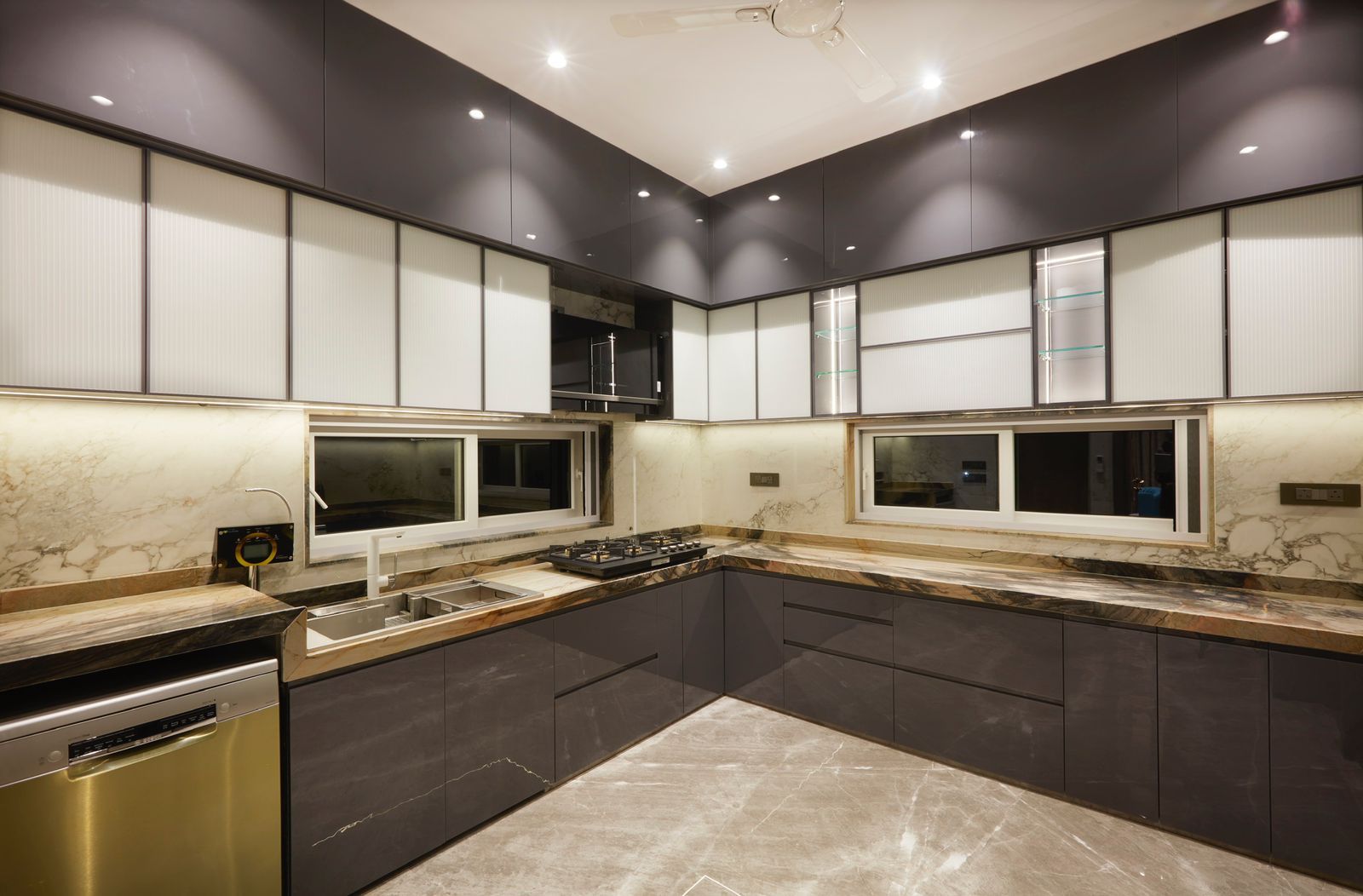
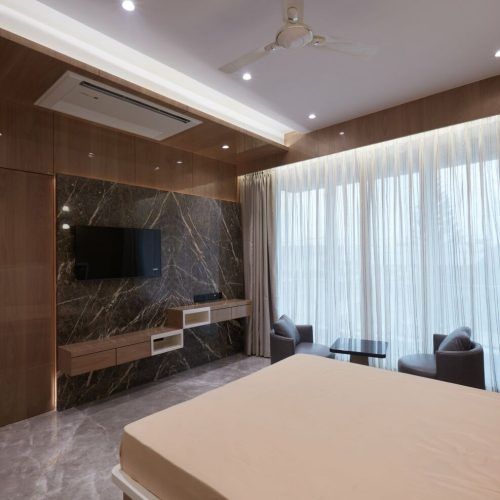
Selected work by Greenbox Design Studio. Tap any image to enlarge.
Frequently asked questions
How much does marble flooring cost per square foot in India?+
₹530 to ₹580 all-in for Indian green, ₹880 to ₹950 for Italian Botticino and ₹1,770 upward for Statuario — supplied, laid, polished and skirted, before GST. The slab rate is only about 53% of that.
Is Italian marble better than Indian marble?+
It is generally whiter, finer grained and more consistent, and it is two to three times the price. Indian marble is harder and takes daily use better. For a living room where appearance dominates, Italian earns its money; for a passage or a utility area it does not.
How much wastage should I allow for marble?+
Twelve per cent for a plain lay in a rectangular room. Twenty-five where the vein is matched or the floor is patterned, because the offcuts from a book-matched floor cannot be used anywhere else — the vein will not line up.
Does marble flooring need polishing after installation?+
Yes, unless it was laid pre-polished and perfectly level. On-site grinding and polishing is what removes lippage between slabs and gives a continuous surface. A three-step machine polish is a working shine at ₹55 per sq ft; a seven-step diamond polish at ₹85 is the mirror finish.
Will marble stain in an Indian kitchen?+
Unsealed, yes — turmeric and oil soak in and do not come out. Acid from lemon and tamarind also etches the polish, which is a dull patch rather than a stain. Seal it on installation and every two years, or specify a honed finish which has no shine to lose.