
Size your blinds
Measure the opening, choose the mount, and the tool gives the order size.
How this calculator works
- Inside mount deducts 0.5 in from the width — a quarter inch each side for bracket clearance — and 0.5 in from the height so the bottom rail does not foul the sill.
- Outside mount adds 6 in to width (3 in overlap each side) and 8 in to height (4 in above for the headrail, 4 in below for overlap).
- Recess depth is checked against the blind type on an inside mount only. Roller 2.5 in, venetian 2, zebra 3, wooden venetian 3, roman 3.5, vertical 3.5.
- Stack height is estimated per type: roller and zebra roll to about 6% of width plus 2 in, roman folds to 18% of height, vertical stacks to 22% of width, venetian to 12% of height.
- Cost = area × rate × number of blinds, supplied and fitted, with GST shown separately.
| Blind type | Minimum recess | Rate | Best for |
|---|---|---|---|
| Roller | 2.5 in | ₹95 / sq ft | The default — simple, shallow, cheap to replace |
| Zebra / dual roller | 3.0 in | ₹145 / sq ft | Daytime privacy with a view; a Mumbai favourite |
| Aluminium venetian | 2.0 in | ₹110 / sq ft | Kitchens and utilities — wipeable, shallowest |
| Wooden venetian | 3.0 in | ₹260 / sq ft | Studies and bedrooms where warmth matters |
| Roman | 3.5 in | ₹185 / sq ft | Softest look; behaves like a curtain |
| Vertical | 3.5 in | ₹85 / sq ft | Wide openings and sliding doors |
Design and build under one accountable roof
Worked example — the default window
| Step | Arithmetic | Result |
|---|---|---|
| Opening | as measured | 48 × 60 in |
| Inside mount width | 48 − 0.5 | 47.5 in |
| Inside mount height | 60 − 0.5 | 59.5 in |
| Area per blind | 47.5 × 59.5 ÷ 144 | 19.6 sq ft |
| Recess needed for a roller | 2.5 in | 4 in available — passes |
| Stack height raised | (47.5 × 0.06) + 2 | ≈ 5 in |
| Supplied and fitted | 19.7 × ₹95 | ₹1,865 |
Measuring without getting it wrong
Use a steel tape, never a cloth one. Measure the width at the top of the opening, at the middle and at the bottom, and take the smallest of the three — that is the dimension the blind has to pass through. Do the same vertically at the left, centre and right. In Mumbai buildings from the 1980s and 1990s a 15 mm difference across a window reveal is entirely normal, and a blind ordered to the largest reading simply will not go in.
Then check what is inside the reveal. A window handle, a mosquito-mesh frame, a grille or an air-conditioner sleeve all reduce the usable depth, and the depth that matters is the clear depth in front of the obstruction, not to the glass. This is the single most common reason a blind arrives and cannot be fitted as ordered.
Finally, decide the mount before measuring rather than after. An inside mount looks neater and is what most people want; an outside mount blocks edge light far better, hides an out-of-square reveal and is the only option where the recess is shallow. In a bedroom where blackout matters, outside mount wins on performance every time, and the 3-inch overlap each side is what does the work.
One more thing worth deciding before ordering: whether the blinds are a light-control product or a privacy product, because they are not always the same. A light-filtering roller gives daytime privacy from the outside and none at all after dark, when the lit room becomes the brighter side of the fabric. In a bedroom or a ground-floor flat facing a walkway, that is the difference between a blind that works and one that gets a curtain hung over it six months later.
The sizing rules on this page are ours, off windows we have measured and blinds we have hung. The per-sq-ft rates are not: a blind is a bought product with fitting included in the maker’s price, so it sits outside our audited trade rates and moves with the fabric, the mechanism and the brand. Treat the money here as a supplier guide and the dimensions as the part to trust. Treat the output as a planning figure: accurate enough to brief a landlord, a bank or a family, and not accurate enough to sign a contract against.
What this tool does not cover
- Motorisation, which needs a power point at one end of the headrail and adds ₹6,000–18,000 per blind.
- Blackout linings and coated fabrics, which add 25–60% to the fabric rate.
- Pelmets and headrail covers, which are joinery rather than soft furnishing.
- Chain safety devices, which should be specified in any home with small children.
- Very wide openings, which above about 8 ft usually need two blinds on one headrail rather than one heavy roll.
- For curtains rather than blinds, use the curtain fabric calculator.
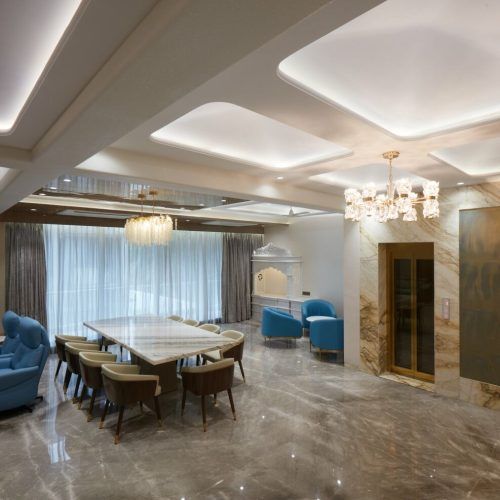
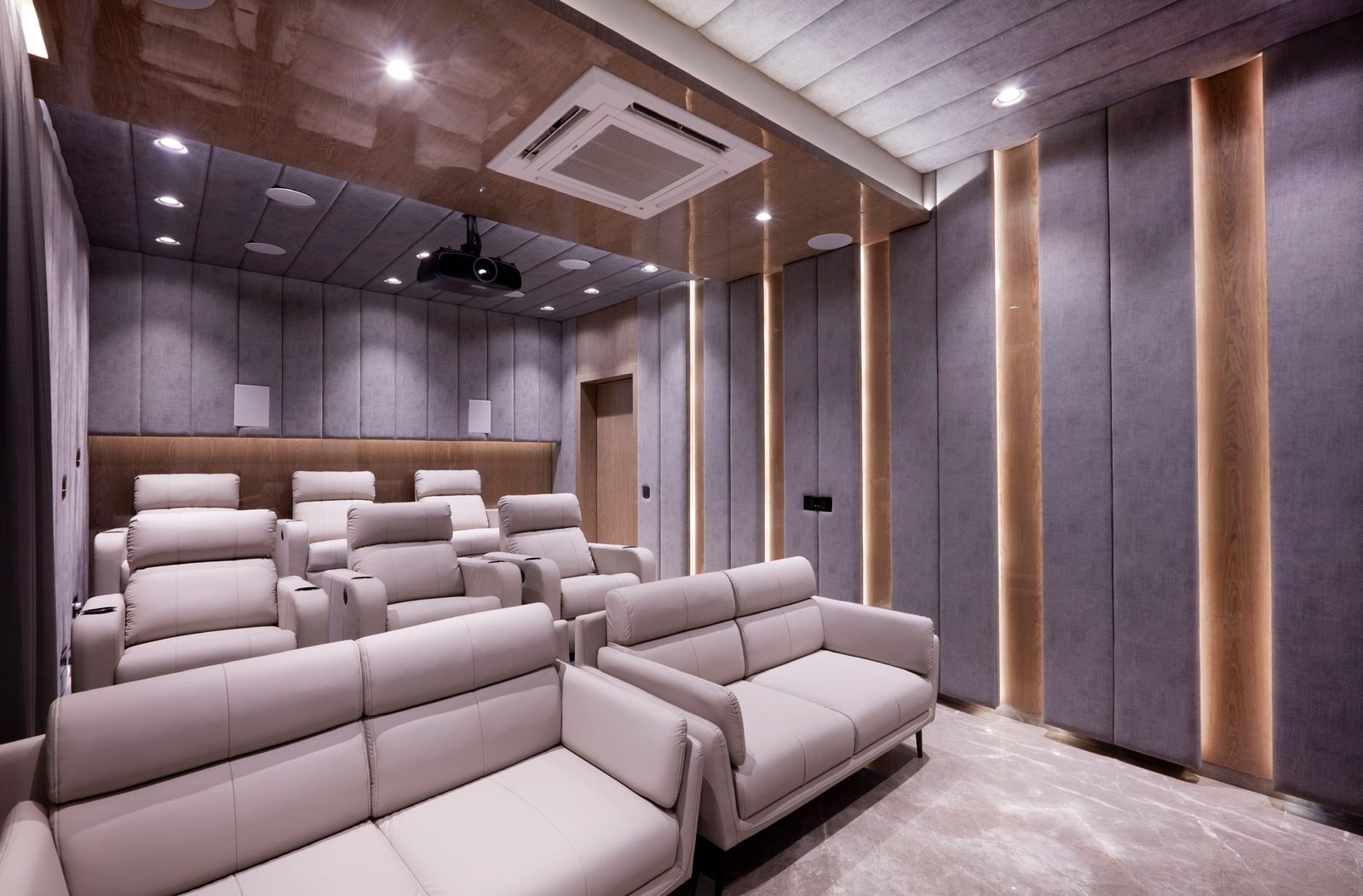
Selected work by Greenbox Design Studio. Tap any image to enlarge.
Frequently asked questions
How do I measure a window for blinds?+
With a steel tape, three times across and three times down, using the smallest reading each way. For an inside mount deduct half an inch from both the width and the height; for an outside mount add six inches to the width and eight to the height.
Should blinds be inside or outside the window recess?+
Inside looks neater and is what most people choose. Outside blocks edge light far better, hides an out-of-square reveal and is the only option when the recess is too shallow. In a bedroom where you want darkness, outside mount wins.
How deep does a window recess need to be for blinds?+
Two inches for an aluminium venetian, 2.5 for a roller, 3 for a zebra or wooden venetian and 3.5 for a roman or vertical. Measure the clear depth in front of the handle or mesh frame, not to the glass.
What do blinds cost in Mumbai?+
₹85 per sq ft for vertical, ₹95 for roller, ₹110 for aluminium venetian, ₹145 for zebra, ₹185 for roman and ₹260 for wooden venetian — supplied and fitted, before GST. A standard 48 × 60 in window in a roller blind is about ₹1,900.
What is stack height on a blind?+
How much of the window the blind still covers when it is fully raised. A roller is the best at about five inches; a roman blind folds up to roughly 18% of the window height, so on a 60-inch window it takes nearly 11 inches of your view permanently.