

The five hallmarks
- Flat, unornamented planes. No moulding, no beading, no applied profile. A shutter is a plane; a wall is a plane; a ceiling is a plane. Anything applied to a surface for its own sake is outside the style.
- Horizontal emphasis. Long low runs, continuous lines, joinery that reads as one band rather than a stack of boxes. This is the single most recognisable modern move and the easiest to get right.
- Material shown as itself. Timber that reads as timber, stone as stone, metal as metal. Not timber-look laminate printed to imitate a species that does not exist.
- A restrained palette. Two neutrals, one timber, one accent. Modern rooms with four colours are not modern rooms.
- Furniture chosen for structure. Legs visible, frames visible, upholstery sitting on a structure rather than concealing one. This is why mid-century furniture reads as modern and a heavily skirted sofa does not.
The palette
A modern palette is narrow on purpose. These are values we use repeatedly, and they work because the contrast between them is controlled rather than dramatic.
| Role | Value | Where it goes | Why |
|---|---|---|---|
| Primary neutral | #EFEDE8 | Walls, ceilings | Warm off-white; pure white reads cold under Indian daylight |
| Secondary neutral | #4A4E4C | One wall, joinery frames, metalwork | Deep warm grey; carries shadow without reading black |
| Timber | #B08153 | Joinery faces, floor | Mid-tone walnut or teak; keeps the room from being clinical |
| Stone | #D6D2C7 | Counters, one feature plane | Quartz, travertine or a honed light granite |
| Accent | #7C6A46 | Hardware, a single object, lighting | Antique brass or bronze, used once per room |

Flat planes, honest materials, nothing applied
Materials that actually deliver it
- Matte laminate or matte acrylic, not gloss. Gloss adds a reflection that breaks the plane, which is the thing the style is built on.
- Veneer with a straight or rift-cut grain, laid so the grain runs consistently across a whole elevation. Crown-cut veneer with a strong cathedral figure reads decorative rather than modern.
- Large-format floor tiles or wide-plank timber. Fewer joints; a 800 × 1,600 mm porcelain reads as a plane where a 600 × 600 reads as a grid.
- Shadow gaps instead of skirting. A 12–18 mm recessed shadow gap at floor and ceiling replaces trim entirely. It costs about ₹280–₹450 a running foot and it is the detail that makes a modern room look built rather than decorated.
- Linear lighting, concealed. Profile light in a cove or a channel, not a chandelier and not a grid of downlights.
- Metal in one finish only. Choose brass or blackened steel or brushed stainless, and use one of them throughout. Three metals in a modern room is a contemporary room.
What modern costs
Modern is not expensive as a style. It is unforgiving as a specification, and that is where the money goes.
| Element | Conventional fit-out | Modern fit-out | Delta |
|---|---|---|---|
| Shutter finish | Laminate with a 2 mm PVC edge | Matte laminate or acrylic, same construction | 0% |
| Skirting and trim | 75 mm timber or PVC skirting | Shadow gap, ₹280–₹450 per running foot | +2 – 4% |
| Joinery tolerance | 3–4 mm reveals, adjusted on site | 1–2 mm consistent reveals, requires shop precision | +4 – 7% |
| Hardware | Standard handles | Handleless J-profile or push-to-open | +3 – 6% |
| Lighting | Downlights and a decorative fitting | Concealed linear profile and one object | +1 – 3% |
| Decoration and mouldings | Cornice, beading, panelling | None | −4 – 8% |
Net effect is roughly neutral to +8%. The budget shifts from applied decoration to precision and hardware.
Furniture and the lighting that goes with it
Half of a modern room is bought rather than built, and the pieces have to agree with the architecture or the scheme reads as two ideas in one space.
- Legs, always. A sofa, a bed and a sideboard on visible legs let the floor plane run under them. A skirted piece sitting on the floor stops it, which is why a single skirted sofa can undo a whole room.
- One low horizontal piece per room. A long low sideboard or media unit anchors the space and reinforces the horizontal emphasis better than any amount of joinery.
- Upholstery in a flat weave. Bouclé, heavy textures and buttoning all belong to other styles. A plain or subtly textured flat weave in the secondary neutral is the correct answer.
- One decorative light, at most. A single well-chosen pendant over a dining table, with everything else concealed. Two decorative fittings in one sightline is a contemporary room.
- 3000K throughout, dimmable. Modern rooms rely on a controlled palette, and mixing colour temperatures across a continuous space breaks it visibly.
- Art large and singular. One large piece per wall rather than a gallery arrangement, hung so its centre is at 1,500 mm.
A modern room forgives nothing. There is no cornice to hide the ceiling junction and no beading to cover the shutter gap, so both of them have to be right.
Greenbox principal designer
Where modern goes wrong
- Tolerance. Handleless shutters with a 2 mm gap that varies to 5 mm across a run is the single commonest failure. It requires shop-made carcasses and a wall that has been scribed to, not a carpenter adjusting on site.
- Too much white. Modern is restrained, not colourless. A room in four shades of white reads as unfinished rather than disciplined.
- Storage that has nowhere to go. Removing ornament does not remove possessions. A modern room needs more concealed storage than a conventional one, not less, and it has to be planned at the start.
- Furniture that fights the architecture. A heavily upholstered, skirted sofa in a modern room cancels the whole scheme. Legs, frames and visible structure are not optional.
- Mistaking modern for empty. Restraint means fewer things chosen more carefully, not fewer things.
Modern is not contemporary
The two words are used interchangeably and they mean different things. Modern is a fixed historical position with an identifiable vocabulary. Contemporary is whatever is current, which in 2026 means curves, fluting, warm minimalism and a broader material range. A modern room from 1958 and a modern room from 2026 look closely related; a contemporary room from 2010 and one from 2026 do not. If you want a scheme that reads as current rather than as a position, see contemporary interior design services.
Where we work
We deliver modern schemes across India and build them ourselves in Mumbai. For how the style behaves in a small city flat — handleless in humidity, shadow gaps on an out-of-square wall, and local rates — see modern interior designers in Mumbai. Related positions: minimalist and Japandi.

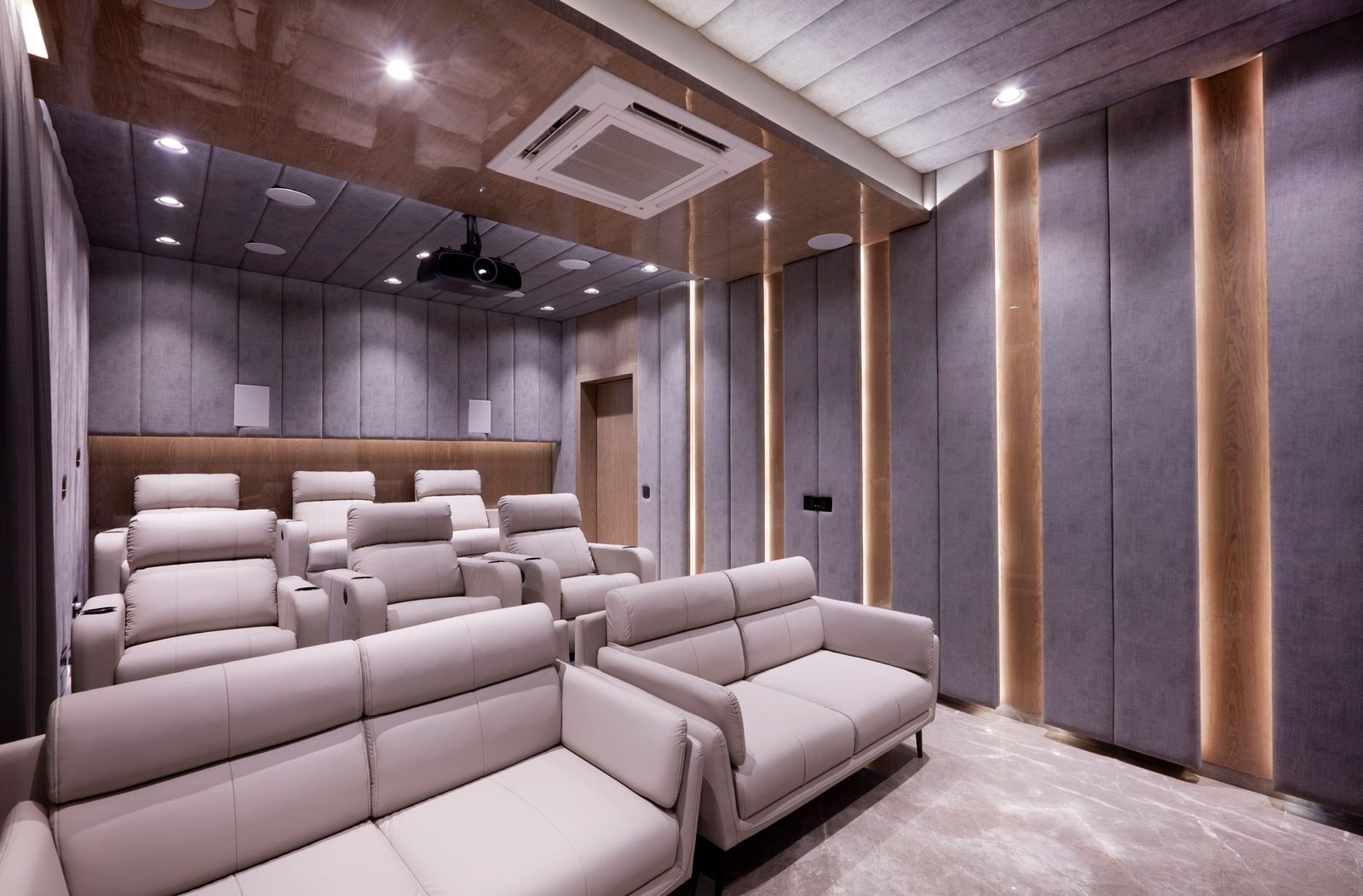
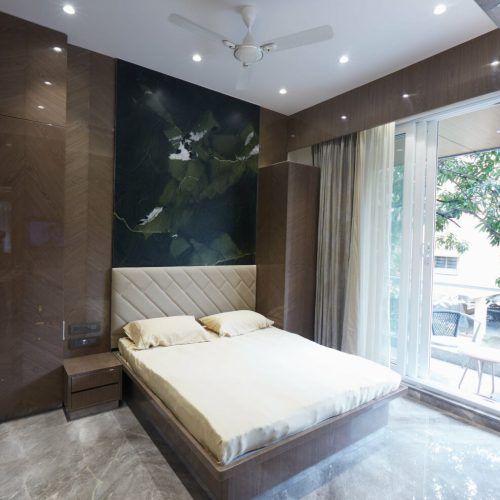

Selected work by Greenbox Design Studio. Tap any image to enlarge.
Frequently asked questions
What is the difference between modern and contemporary interior design?+
Modern is a fixed historical style from the early-to-mid twentieth century with an identifiable vocabulary: flat planes, expressed structure, no ornament, a restrained palette. Contemporary is whatever is current, so it changes. A modern room from 1958 and one from 2026 look related; a contemporary room from 2010 and one from 2026 do not.
Does modern interior design cost more?+
Roughly neutral to eight per cent more than a conventional fit-out of the same quality. You save four to eight per cent by removing cornices, beading and panelling, and spend it again on tighter joinery tolerance, handleless hardware and shadow gaps in place of skirting.
What colours work in a modern interior?+
Two neutrals, one timber and one accent. A warm off-white such as #EFEDE8 for walls, a deep warm grey around #4A4E4C for one plane and the metalwork, a mid-tone timber, and a single accent — antique brass or bronze — used once per room. Four colours is one too many for the style.
Why do handleless kitchens look wrong sometimes?+
Because the gap varies. A handleless run needs a consistent reveal of one to two millimetres across its whole length, which requires shop-made carcasses, a scribed fit to an out-of-square wall and proper levelling feet. Where the gap drifts from two to five millimetres, the eye reads it immediately even if it cannot name what is wrong.
Is modern design suitable for a small home?+
Yes, and often better than the alternatives, because horizontal continuity and the absence of trim make a small room read as larger. The caveat is storage: removing ornament does not remove possessions, so a modern small home needs more concealed storage than a conventional one and it has to be planned from the first layout.
What flooring suits a modern interior?+
Large-format porcelain at 800 × 1,600 mm or wider, or a wide-plank engineered timber. Both reduce the number of joints, so the floor reads as a plane rather than a grid. A 600 × 600 tile is not wrong, but it draws a pattern across the floor that works against the style.