
The 2026 vocabulary, item by item
| Element | What it looks like now | Cost against the plain version | How long before it dates |
|---|---|---|---|
| Curved corners and arched openings | Softened plan geometry, arch reveals, rounded joinery ends | +40 – 90% on that element | 8 – 12 years, and it is built in |
| Fluted and reeded surfaces | Vertical ribbing on joinery faces, island fronts, wall panels | +25 – 55% on that face | 5 – 8 years; heavily used since 2021 |
| Warm off-white and greige | Replacing the cool greys of 2012–2019 | 0% | Neutral enough to survive |
| Mixed metals | Brass with blackened steel in one room | 0 – 5% | Currently confident; may read dated |
| Plaster-effect and micro-cement walls | Mottled, hand-applied, matte | ₹380 – 900 per sq ft against ₹40 for paint | 6 – 10 years |
| Bouclé and heavy texture upholstery | Sofas, dining chairs, bed headboards | +15 – 30% on the fabric | 4 – 7 years; easy to change |
| Statement stone | Book-matched marble or quartzite on an island or a TV wall | ₹900 – 4,500 per sq ft | Stone rarely dates; the way it is framed does |
| Integrated linear lighting | Profile in a reveal, backlit niches | +8 – 15% on the lighting package | Durable |
Layering, which is the whole strategy
Every scheme has three layers with three different lifespans, and a contemporary scheme survives by putting the fashionable things in the shortest one.
- The fabric — 20 years plus. Layout, flooring, carcasses, ceilings, electrical. This layer should be neutral, well made and as close to timeless as you can afford. Nothing fashionable belongs here.
- The surface layer — 8 to 12 years. Shutter finishes, wall treatments, tile, counters. This is where curves and fluting live, and where the cost of change is real but survivable.
- The soft layer — 3 to 6 years. Upholstery, cushions, rugs, curtains, lighting shades, art, objects. Anything genuinely of the moment belongs here, because replacing it costs a fraction of the scheme.
- The test. Before you commit to a fashionable element, ask which layer it is in. A bouclé sofa is a soft-layer decision. An arched doorway is a fabric decision that will be with you for thirty years.
- The exception worth making. One built-in fashionable move per home, done properly, is what stops a neutral scheme feeling like a rental. Choose it deliberately and spend on it.

Current, and therefore dated in eight years unless you plan for it
The current palette
| Role | Value | Use |
|---|---|---|
| Base | #F2EEE6 | Walls; a warm off-white, the defining shift away from the grey decade |
| Mid | #C9BCA8 | Greige joinery, plaster-effect walls, large upholstery |
| Depth | #3E4139 | One dark plane per room; a deep olive-charcoal reads warmer than black |
| Warmth | #A9633F | Terracotta or burnt sienna as the current accent |
| Metal | #8C7853 | Antique brass, used with blackened steel rather than alone |
Curves, honestly costed
Curved work is the defining element of the current moment and it is genuinely expensive. Knowing the numbers lets you choose where to spend.
- A curved joinery end — a rounded return on an island or a wardrobe — is made from laminated bendable ply or a stacked and shaped MDF core, and costs 40–90% more than the equivalent square return. Roughly ₹4,500–₹12,000 per curved corner.
- An arched opening in a partition costs ₹12,000–₹30,000 depending on the radius and whether it is plastered or lined in board, plus the design time to get the proportion right.
- A curved wall in gypsum or blockwork runs ₹450–₹1,100 per sq ft against ₹180–₹320 straight, and it complicates every service that crosses it.
- Curved glass or a curved stone counter is a specialist item. Budget ₹18,000–₹65,000 for a curved counter nose and expect a lead time of three to five weeks.
- The cheap version. A 25 mm radius on every joinery edge, a rounded mirror, an arched niche in an existing wall and curved furniture legs deliver most of the visual effect for a fraction of the cost.
Everyone wants the arch. What they actually remember two years later is the warm off-white and the fact that the lighting was on scenes. The arch is a photograph; the rest is the room.
Greenbox principal designer
What dates a contemporary scheme fastest
- A single dominant trend applied everywhere. Fluting on every joinery face in the home will read as 2023 forever. One or two fluted elements will read as considered.
- Tile with a strong pattern. Patterned floor and wall tile is the single most dating decision available, and it is in the surface layer where change is expensive.
- Matching everything. A room where the rug, the cushions, the art and the accent wall are all the same accent colour dates the moment the colour does.
- Built-in furniture in a fashionable shape. A curved built-in banquette is charming and permanent. A curved loose sofa is charming and movable.
- Lighting in a strongly of-the-moment form. Keep the ambient lighting architectural and concealed, and let the decorative fitting — which is replaceable — carry the fashion.
What a contemporary scheme costs
Contemporary is not a price bracket; it is a set of choices that can be made at any level. As a guide, a contemporary scheme at the same quality of construction sits about 8–18% above a plain fit-out, and the whole of that increase is in curved elements, specialist wall finishes and statement stone. Removing those three and keeping the palette, the lighting strategy and the furniture selection gets you most of the effect at close to baseline cost.
Lighting a contemporary room
The current look depends far more on lighting than on any finish, and it is the part of the budget most often left to the electrician. Six decisions cover it.
- Four scenes, not one switch. Day, evening, dining and late. A contemporary room is defined by the ability to change its mood, and a single circuit cannot do it at any material cost.
- Concealed ambient, visible decorative. Profile light in a cove or a reveal doing the work, and one decorative fitting doing the talking. The reverse — a bright decorative fitting and no ambient — is what makes a room feel like a showroom.
- Backlight one thing. A niche, a mirror, a headboard or the underside of a floating unit. One backlit element per room is the current signature and it costs ₹2,500–₹7,000.
- 2700K in living and bedrooms, 3000K in kitchens. Warm light is central to the warm-neutral palette; 4000K in a greige room turns it grey again.
- CRI 90 minimum. Terracotta, brass and timber all depend on the red end of the spectrum, and a cheap LED renders all three as mud.
- Dim everything that can be dimmed, on trailing-edge dimmers matched to the driver. A contemporary scheme at full output in the evening looks like an office.
Where we work
We deliver contemporary schemes nationally and build them in Mumbai. For how this vocabulary behaves in a city flat — curves in a 9′6″ slab, plaster finishes in humidity and local rates — see contemporary interior designers in Mumbai. For the fixed historical position this is often confused with, modern interior design services.
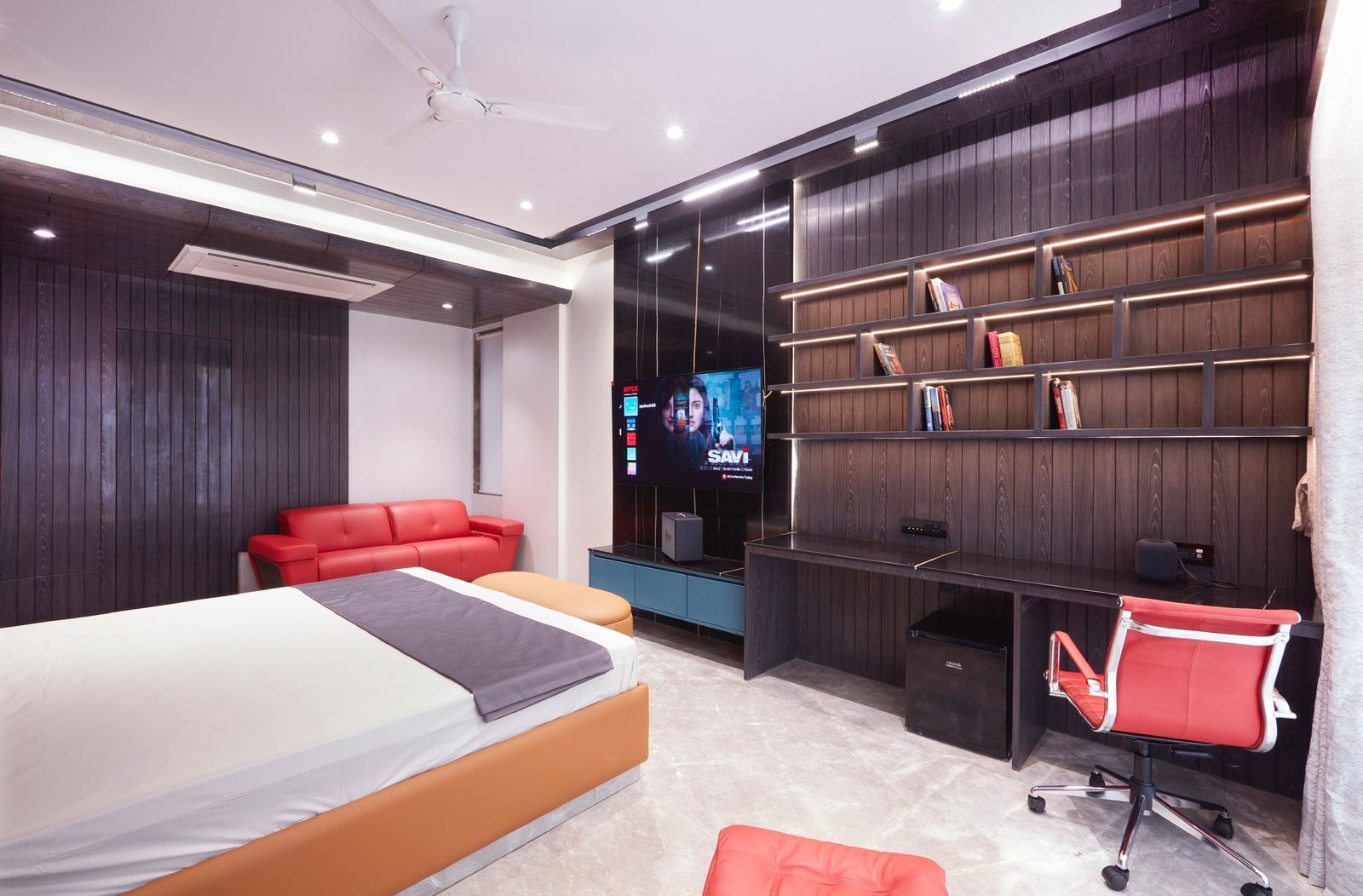


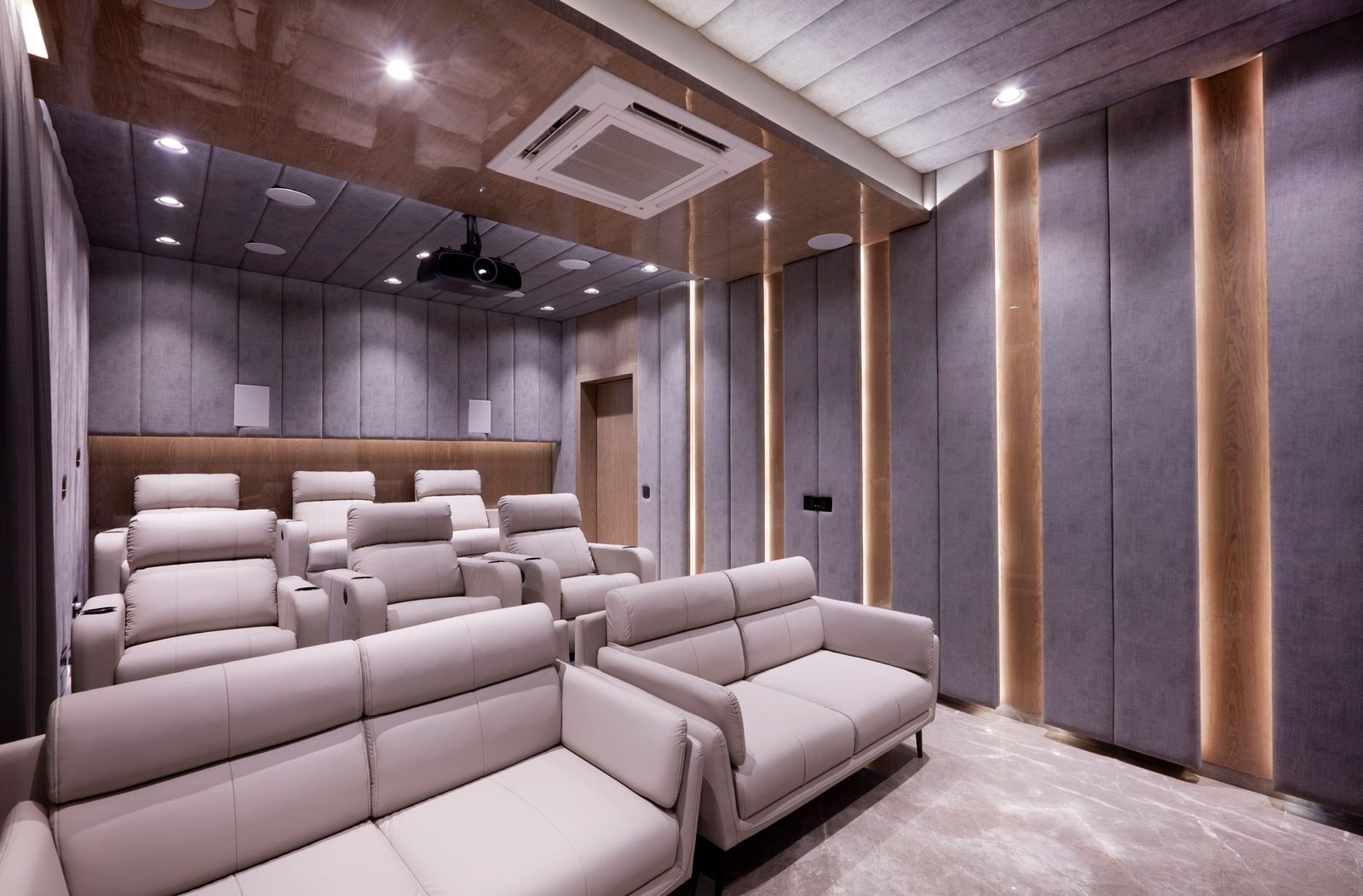
Selected work by Greenbox Design Studio. Tap any image to enlarge.
Frequently asked questions
What is the difference between contemporary and modern?+
Modern is a fixed historical style with a defined vocabulary that does not change. Contemporary means current, so it moves. In 2026 contemporary means curved geometry, fluted surfaces, warm off-whites replacing grey, mixed metals and plaster-effect finishes — none of which were the contemporary vocabulary in 2014.
How much more do curves cost?+
A curved joinery return is 40–90% more than a square one, roughly ₹4,500–₹12,000 per corner. An arched opening in a partition is ₹12,000–₹30,000. A genuinely curved wall runs ₹450–₹1,100 per sq ft against ₹180–₹320 straight. A 25 mm radius on joinery edges plus a rounded mirror delivers much of the effect for very little.
How do I stop a contemporary scheme dating badly?+
Put fashionable decisions in the layer where change is cheap. Keep the fabric — layout, flooring, carcasses, electrical — neutral and well made for twenty years; use the surface layer of finishes and counters for eight to twelve; and let upholstery, rugs, curtains and decorative lighting carry the actual trend, because those are replaceable in an afternoon.
Is fluting overused?+
It has been heavily used since about 2021, so applying it to every joinery face will date a home firmly to this period. One or two fluted elements — an island front, a single wall panel — read as considered rather than as a phase. It costs 25–55% more than a plain face on that element.
What colours are contemporary in 2026?+
Warm off-whites around #F2EEE6 replacing the cool greys of the 2010s, greige in the #C9BCA8 range for joinery and large upholstery, a deep olive-charcoal such as #3E4139 for one plane per room, terracotta as the accent, and antique brass used alongside blackened steel rather than on its own.
Does a contemporary scheme cost more than a plain one?+
About 8–18% at the same construction quality, and essentially all of that sits in three items: curved elements, specialist plaster or micro-cement wall finishes, and statement stone. Drop those three and keep the palette, the lighting strategy and the furniture selection and you get most of the effect at close to baseline cost.