
Where the two traditions agree, and where they do not
| Japanese | Scandinavian | Japandi takes | |
|---|---|---|---|
| Timber | Hinoki, cedar, oak — pale, fine-grained, often unfinished | Ash, birch, pine — pale, oiled | Both — pale to mid timber, oiled, never lacquered |
| Colour | Ink, charcoal, natural, one strong accent | Off-white, soft grey, muted pastel | Japanese depth with Scandinavian light — a dark grounding tone in a light room |
| Furniture height | Low — floor-based living | Standard Western height | Japanese — low sofas, low tables, low beds |
| Ornament | Almost none; one object, changed seasonally | Modest; a few cherished things | Japanese — fewer objects, better ones |
| Imperfection | Wabi-sabi — actively valued | Tolerated, not sought | Japanese — this is the defining move |
| Comfort | Restrained | Central; hygge | Scandinavian — it has to be a home, not a temple |
| Storage | Concealed, built in | Visible and modest | Japanese — concealed, so the surfaces stay clear |
Proportion, which is the real discipline
- Lower everything. Sofa seat at 380–400 mm rather than 450. Coffee table at 300–350 mm. Bed platform at 300–380 mm including the mattress. Dining chair at 430 mm. The room feels larger and calmer immediately.
- Keep the horizontal line unbroken. Joinery at one height across a wall, a continuous shelf, a low sideboard running past a doorway. Vertical emphasis is not part of this language.
- Leave floor empty. At least a third of the visible floor with nothing on it. This is the single hardest instruction to follow and the one that makes the difference.
- Work to a module. The tatami proportion of roughly 1:2 is a useful discipline for shelving bays, screen panels and joinery divisions. It is why Japanese rooms feel resolved.
- Hang art low. Centre at 1,350–1,450 mm rather than 1,500, so it relates to seated eye level rather than standing.
- One empty wall per room. Not a blank wall — a wall with nothing on it, which the rest of the room is measured against.
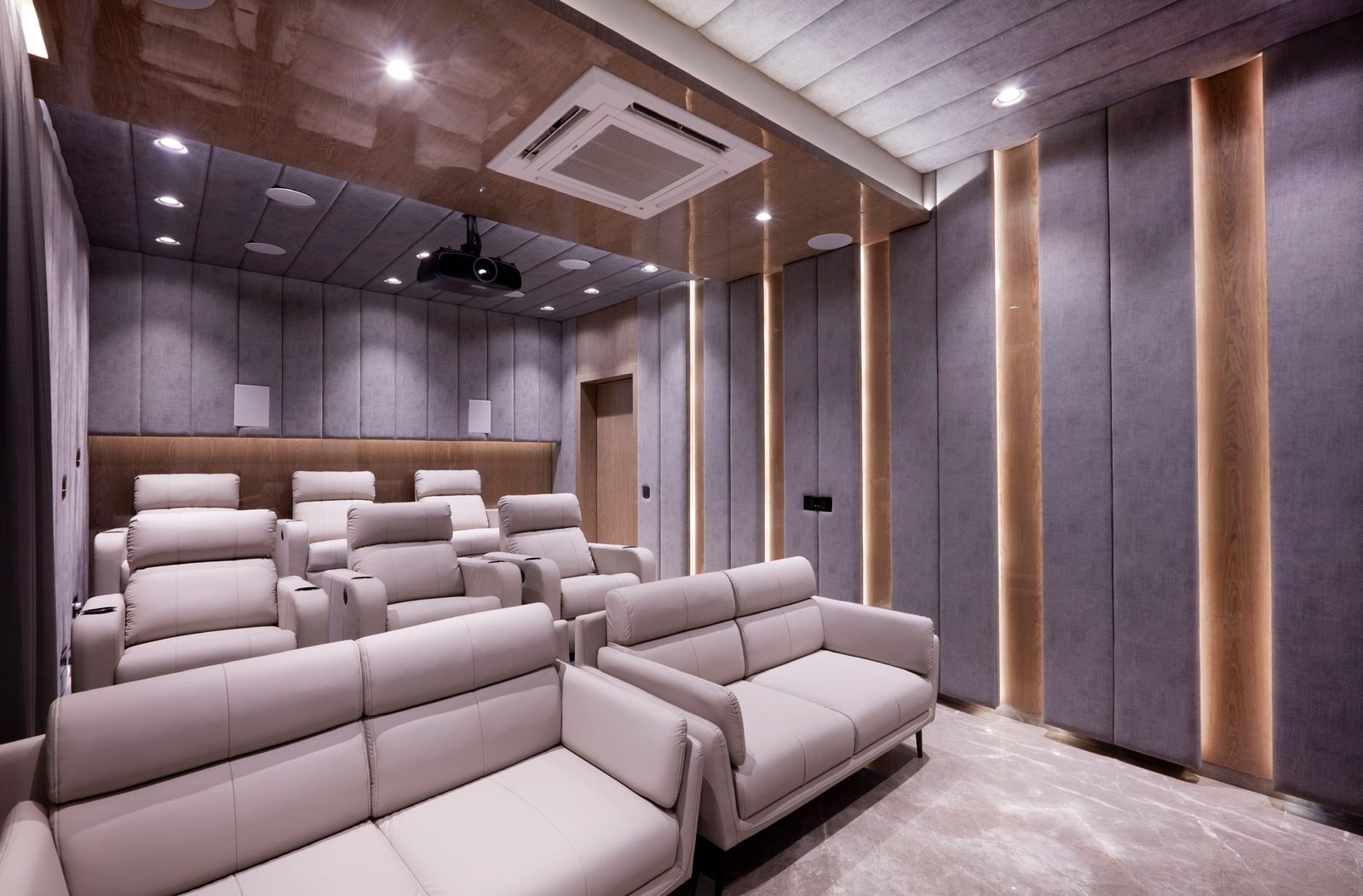
Two traditions that agree about almost everything
The palette
| Role | Value | Where |
|---|---|---|
| Base | #EDE8DE | Walls; a warm paper-white with a hint of ochre |
| Timber, light | #D4B896 | Oak, ash or the Indian equivalent; joinery and floors |
| Timber, dark | #5A4632 | One element per room — a table, a frame, a shelf run |
| Grounding | #2E2E2B | Sumi ink black; joinery frames, a screen, hardware |
| Texture | #B9B2A3 | Linen, paper, lime plaster, unglazed ceramic |
The joinery is the style
- Frame-and-panel, not flush boxes. The expressed frame is what makes joinery read as craft rather than as cabinetry. A 30–45 mm frame around a recessed panel, in solid timber or a good veneer.
- Visible, honest joints. A finger joint, a through-tenon or a housed shelf shown rather than hidden. This is the single most Japandi thing you can specify.
- No handles, or a recessed finger pull cut into the timber. Metal hardware, where it appears at all, is blackened and small.
- Slatted screens and shoji-referenced panels. Vertical timber slats at 25–40 mm spacing, or a frame with rice paper or a translucent acrylic. ₹1,400–₹3,800 per sq ft depending on material and jointing.
- Oil, never gloss. A matte hardwax oil that lets the grain be felt. The whole language depends on the surface being touchable.
- Design for age. Timber that will darken, linen that will soften, ceramic that will craze. Materials that improve are the point; materials that only degrade are not.
Lighting and the objects
A Japandi room has very little in it, so the few things that are there carry the whole scheme. Both the light and the objects are chosen rather than accumulated.
- 2700K, low, and never from the centre of the ceiling. A single central fitting flattens a room built on quiet shadow. Use a paper or linen pendant low over the dining table, a floor lamp beside the sofa and concealed light washing one timber surface.
- Light the material, not the room. A timber slat screen grazed from 150 mm away, or a lime-plastered wall washed from a ceiling recess, is the whole lighting design in most Japandi rooms.
- One object per surface, changed occasionally. A ceramic, a branch, a stone, a book. The Japanese tradition of changing the single displayed object with the season is the most useful habit in this style.
- Buy handmade where you can see it. A thrown bowl or a hand-forged handle has an irregularity that a moulded object does not, and in a room this quiet that irregularity is the interest.
- No collections on display. Three of anything is a collection and collections belong behind a door in this language.
- Leave one shelf empty. It sounds precious and it is the thing that stops a Japandi room drifting into an ordinary one.
A client asked us to hide the joints. We had spent four weeks designing them to be seen. That conversation is the whole difference between this style and a minimalist one.
Greenbox principal designer
What it costs
Japandi is a joinery-led style and the joinery is where it costs more. Against a conventional fit-out of the same scope, expect +10 to +22%, concentrated in three places: frame-and-panel construction instead of flush shutters, solid timber or good veneer instead of laminate, and an oiled finish instead of a pressed one. Everything else — the palette, the restraint, the low furniture, the empty floor — costs nothing at all, which is why a modest Japandi scheme done well beats an expensive one done loosely.
Where it goes wrong
- Buying the objects without the discipline. A room with a ceramic vase, a paper lamp and a low table, and everything else unchanged, is a room with three props in it.
- Too many timbers. Two tones, related. Four different timbers in one room is not wabi-sabi, it is inconsistency.
- Confusing wabi-sabi with poor making. Imperfection in this tradition means a hand-thrown bowl with an irregular rim, not a cupboard door that does not close. The craft standard is higher, not lower.
- Filling the empty floor. Within a year of handover the empty third is usually occupied. If the storage is insufficient, it always will be.
- Cold light. 4000K destroys this palette completely. 2700K, dimmable, low and layered.
- Applying it to a home with no storage. Like minimalism, this style requires everything to be put away. Count the volume first.
Where we work
We deliver Japandi schemes across India and build them in Mumbai, where humidity and timber movement need particular attention. See Japandi interior designers in Mumbai. For the two parent traditions in their own right, see Scandinavian interior design and minimalist interior design.
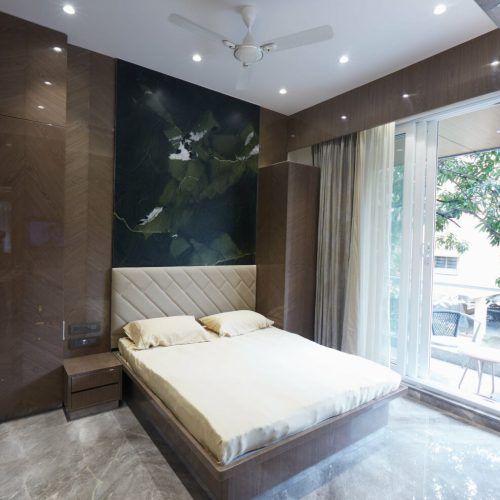



Selected work by Greenbox Design Studio. Tap any image to enlarge.
Frequently asked questions
What is the difference between Japandi and minimalism?+
Warmth and imperfection. Minimalism removes visual information and demands precision everywhere; Japandi welcomes texture, ageing and the visible mark of the hand that made something. A minimalist room hides the joint; a Japandi room designs the joint to be seen.
Does Japandi cost more?+
Ten to twenty-two per cent above a conventional fit-out of the same scope, concentrated in frame-and-panel joinery instead of flush shutters, solid timber or good veneer instead of laminate, and an oiled finish instead of a pressed one. The palette, the restraint, the low furniture and the empty floor cost nothing.
How low should Japandi furniture be?+
Sofa seat at 380–400 mm rather than the usual 450, coffee table at 300–350, bed platform at 300–380 including the mattress and dining chairs at 430. Lowering the furniture is the single cheapest move in the style and it makes a room feel both larger and calmer immediately.
What does wabi-sabi actually mean in a specification?+
Materials that age visibly and improve doing so: oiled timber that darkens, linen that softens, unglazed ceramic that crazes, lime plaster that marks. It does not mean lower craft standards. A hand-thrown bowl with an irregular rim is wabi-sabi; a cupboard door that does not close is a defect.
What timber suits Japandi in India?+
A light to mid tone, oiled rather than lacquered — oak or ash veneer on plywood for built-in joinery, and rubberwood, mango or teak for solid pieces. Use two related tones at most, with one darker element per room for grounding, and keep the finish matte so the grain can be felt.
Can Japandi work with a family?+
Yes, better than strict minimalism, because the style tolerates a mark, a scuff and an object left out. What it still needs is enough concealed storage to keep the surfaces clear and a third of the floor empty. Count the storage volume before the scheme, not after.