
Three kinds of Mumbai industrial project
| Building | Where | What is genuinely exposable | ₹ per sq ft |
|---|---|---|---|
| Mill and warehouse conversion | Lower Parel, Sewri, Wadala, Bhiwandi | Timber trusses, brick, cast-iron columns, the real thing | ₹2,920 – 4,620 |
| Loft-format new build | Lower Parel, Worli, Andheri East | RCC soffit, services, tall glazing — built with exposure in mind | ₹2,680 – 4,140 |
| Society flat, language borrowed | Anywhere | Micro-cement, MS detailing, one brick-slip wall; not the slab | ₹2,310 – 3,530 |
| Café or restaurant fit-out | Bandra, Khar, Lower Parel, Andheri | Depends entirely on the landlord and the fire strategy | ₹2,600 – 4,600 |
| Office or studio floor | Andheri East, Goregaon, Vikhroli | Soffit and services, subject to the landlord’s fit-out manual | ₹2,100 – 3,200 |
Ex-GST, carpet area basis. Café and office figures are commercial fit-out rates and include MEP coordination. The three residential bands are our own, taken from industrial-language homes we have built and billed, held at October 2026.
What a society will and will not permit
- Exposing the RCC soffit is usually allowed, because it is your flat and nothing is being removed. What is not allowed is grinding into the slab to correct it, which reduces cover to the reinforcement.
- Re-routing services for effect is generally refused. Fire detection, sprinkler drops and the building’s common conduit are not yours to move, and a committee will say so.
- Anything touching a beam or column is off limits. No chasing, no drilling for a heavy suspended element without a structural engineer’s letter.
- Heavy suspended items need calculation. A steel and glass partition, a suspended metal shelf run or a heavy pendant all load the slab from below; get the fixing method approved.
- Exposed ceiling means exposed AC pipework, and the condensate drain has to be designed rather than left. This is the detail that most often fails in a borrowed-language flat.
- Debris and noise rules apply as always. Grinding a soffit is loud, dusty work and it belongs in the first week of a 10am–6pm programme.
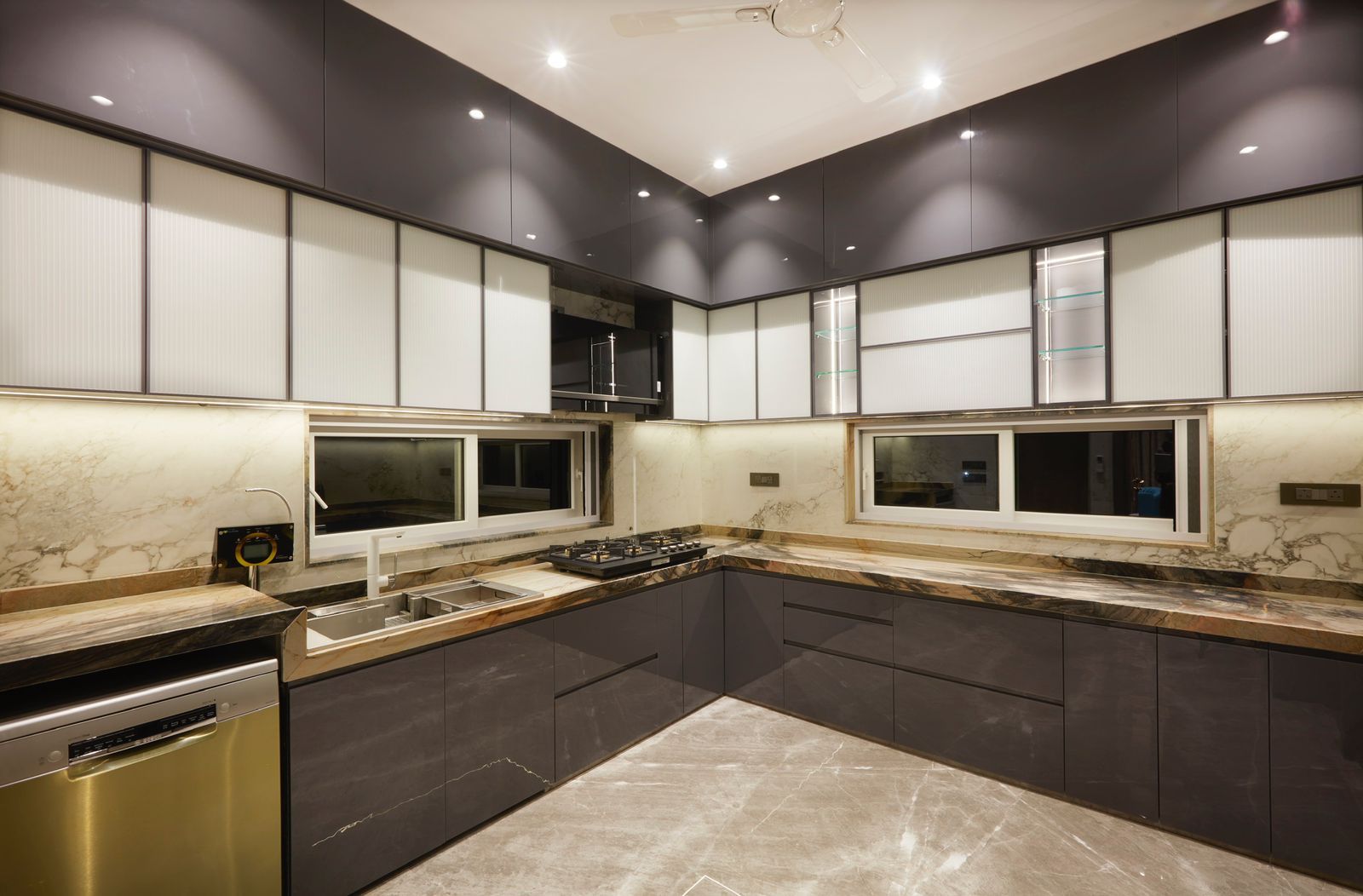
The mill lands gave this style its Indian accent
Metal in this climate
| Treatment | Life in Mumbai | Where to use it |
|---|---|---|
| Raw mild steel, unsealed | Visible rust in 6 – 12 months | Nowhere, unless rust is the intention and it is away from anything it can stain |
| Blackened MS with a clear lacquer | 3 – 5 years before touch-up | Internal frames, shelf brackets, joinery legs — the workhorse of the style |
| Powder-coated MS, matte black | 7 – 12 years internally | Anything structural or frequently touched; less characterful, far more durable |
| Hot-dip galvanised then painted | 12 years plus | Anything on a balcony or an external wall |
| SS 304 with a blackened PVD finish | Indefinite internally | Premium; the correct answer in a seafront flat |
| Corten or intentionally rusted steel | Stains everything below it | Only outdoors with a drip detail, and not within 2 km of the sea |
Micro-cement, which is the practical answer here
In a city where you usually cannot expose the real structure, micro-cement is the honest substitute: a genuine cementitious finish, seamless, applied over almost any sound substrate at ₹420–₹1,000 per sq ft in Mumbai. It behaves well in this climate provided three conditions are met. The substrate has to be dry and moisture-tested, because applying over a damp wall causes the finish to lift within a season. It has to be applied between October and May, or in a dehumidified room, because the cure depends on an even drying rate. And the sealer matters more than the finish — a two-pack polyurethane sealer in wet areas and a penetrating sealer elsewhere, reapplied every four to six years. Done properly it is the most durable surface in this whole vocabulary.
A client in Sewri had a genuine 1920s mill floor with cast-iron columns and a timber truss roof. We cleaned, repaired and lit it, and added almost nothing. That is the only industrial project where doing less actually cost less.
Greenbox principal designer
Making it work in a Mumbai flat
- Pick two industrial materials, not six. Micro-cement and blackened metal is enough. Adding brick slips, corrugated sheet, cage lights and reclaimed timber to the same 600 sq ft produces a theme, not a room.
- Warm the light and keep it low. 2700K, dimmable, several sources. Grey concrete under 4000K in a monsoon month is genuinely depressing.
- Treat the acoustics from the start. A hard-surfaced Mumbai flat with a road outside is loud twice over. Rugs, heavy curtains and a dark acoustic raft over the living area.
- Use the balcony. Corten or galvanised planters, a metal-framed bench and a hard-wearing outdoor floor give the language somewhere to be emphatic without making the living room harsh.
- Keep the bedroom out of it. Almost nobody sleeps well in a concrete room. Timber, textile and warm light in the bedrooms, and let the living space carry the style.
- Mind the humidity behind everything. Exposed masonry and micro-cement on an external wall both need the wall to be dry first. A protimeter reading above 18% in September means treatment before finish.
Where the material comes from here
- Fabricated metalwork — Kurla, Bhandup and the Andheri East MIDC sheds. A large, competent fabrication base. Take a dimensioned drawing, specify the section size and the finish, and inspect before blackening; corrections after lacquering are visible.
- Reclaimed timber and old doors — Kurla, Bhiwandi, Panvel yards. Genuine mill-era teak and shipping timber, sold by the piece. Availability decides the design; select physically.
- Micro-cement systems are supplied by a handful of importers and applied by a small group of trained applicators in the MMR. Book the applicator, not just the material — six to eight weeks ahead is normal.
- Concrete-effect porcelain is widely available and is the practical floor in a flat where a real polished concrete slab is not achievable. ₹140–₹320 per sq ft laid.
- Industrial lighting — track, spots and linear profile — from the Lamington Road and Fort electrical markets, or from the trade suppliers in Andheri. Check the CRI before you buy on price.
The style itself
Honest against applied, what exposing costs, setting out services and the acoustic strategy are set out on industrial interior design services. For the commercial applications in this city see restaurant interior designers in Mumbai and coworking interior designers in Mumbai.
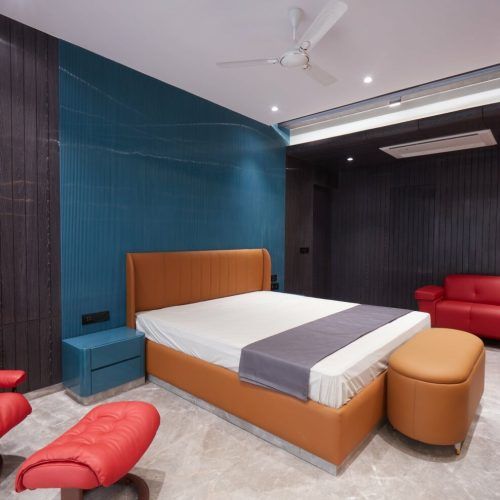
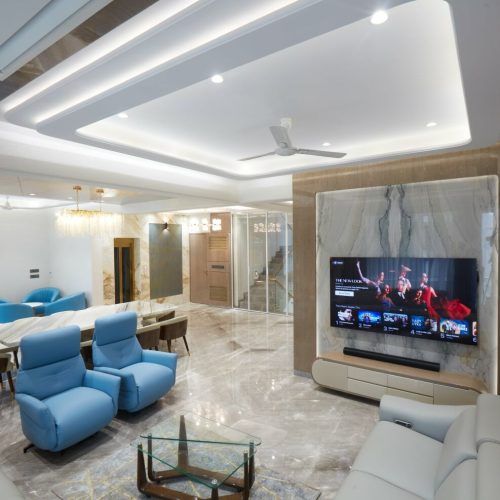
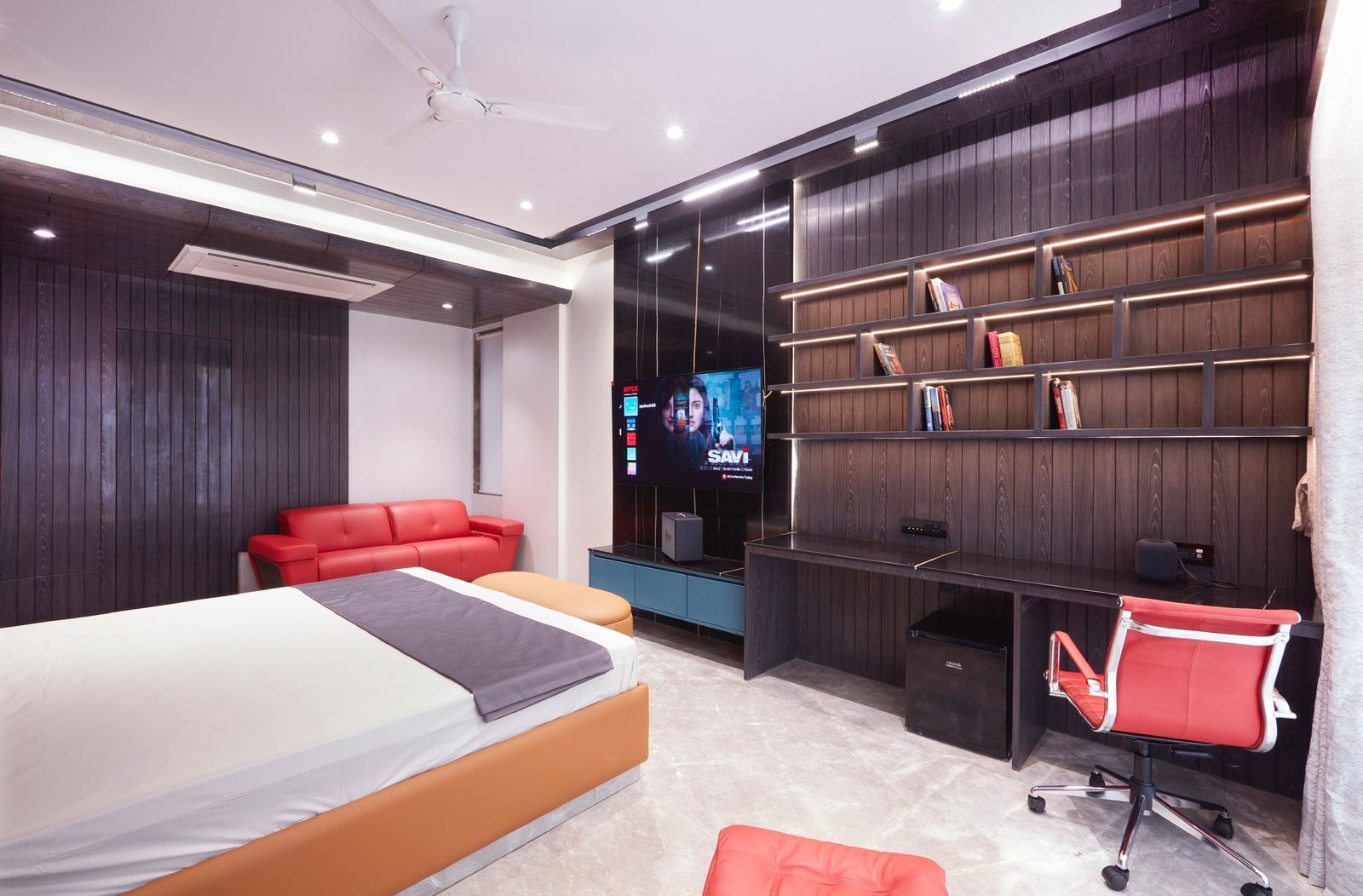
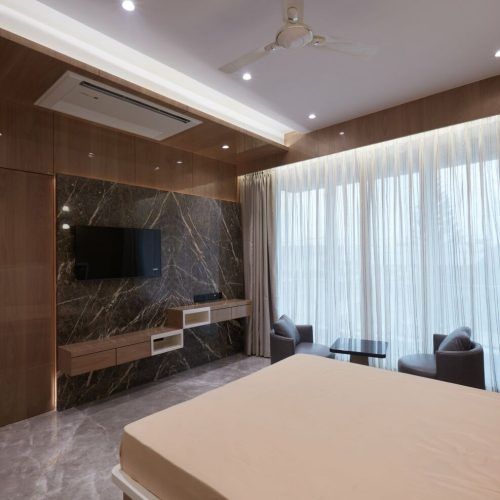
Selected work by Greenbox Design Studio. Tap any image to enlarge.
Frequently asked questions
What does an industrial interior cost in Mumbai?+
₹2,310–₹3,530 per sq ft of carpet area in a society flat borrowing the language, ₹2,680–₹4,140 in a loft-format new build and ₹2,920–₹4,620 in a genuine mill or warehouse conversion. Café fit-outs run ₹2,600–₹4,600 and office floors ₹2,100–₹3,200. All ex-GST.
Will my society let me expose the ceiling slab?+
Usually yes, because nothing is being removed. What will be refused is grinding into the slab to correct it, which reduces cover to the reinforcement, and re-routing the building's fire detection, sprinkler drops or common conduit for an aesthetic. Anything suspended from the slab needs an approved fixing method.
Does exposed metal rust in Mumbai?+
Unsealed mild steel shows visible rust within six to twelve months here. Blackened MS with a clear lacquer lasts three to five years before touch-up, powder-coated matte black seven to twelve internally, hot-dip galvanised and painted over twelve, and blackened PVD stainless indefinitely — which is the correct specification in a seafront flat.
Is micro-cement reliable in Mumbai?+
Yes, with three conditions: a dry, moisture-tested substrate, application between October and May or in a dehumidified room, and the right sealer — two-pack polyurethane in wet areas, penetrating elsewhere, reapplied every four to six years. It costs ₹420–₹1,000 per sq ft here and is the most durable surface in the whole industrial vocabulary.
Can an industrial flat be comfortable to live in?+
With two industrial materials rather than six, 2700K dimmable lighting rather than cool white, a real acoustic strategy of rugs, heavy curtains and a dark raft over the living area, and bedrooms kept out of it entirely. Let the living space carry the language and keep timber, textile and warm light where people sleep.
Are there real industrial buildings in Mumbai?+
Yes — Lower Parel, Sewri, Wadala and parts of Bhiwandi still hold mill and warehouse stock with timber trusses, brick walls and cast-iron columns. In those buildings the style is genuine and cleaning, repairing and lighting what is there is both the best approach and the only case where doing less actually costs less.