
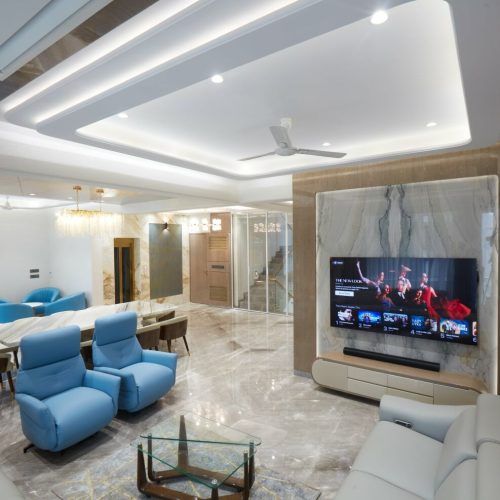
Material and construction
| System | ₹ per sq ft | Height loss | Behaviour in Mumbai | Best for |
|---|---|---|---|---|
| Peripheral gypsum cove | ₹65–₹95 | 75–100 mm | Stable | Most rooms, low ceilings |
| Full gypsum on GI frame | ₹85–₹130 | 100–150 mm | Stable; joints taped and sanded | Where services are concealed |
| POP on chicken mesh | ₹75–₹110 | 100–150 mm | Prone to hairline cracking | Complex curved profiles |
| Multi-level gypsum with coves | ₹120–₹180 | 150–250 mm | Stable if framed properly | Living rooms with height |
| Grid ceiling, mineral fibre | ₹90–₹160 | 150–250 mm | Fully accessible | Offices, utility |
| Wooden / veneer rafters | ₹320–₹780 | 80–200 mm | Movement in humidity | Feature areas only |
| PVC panel | ₹55–₹110 | 60–100 mm | Moisture-proof, looks cheap | Balconies, utility, bathrooms |
POP or gypsum — which is better?+
Gypsum board on a GI frame, for most Mumbai work. It is a factory-made board with predictable behaviour, it is fixed to a galvanised frame that does not rust, and it cracks far less than POP. POP is applied wet over chicken mesh, dries on site and is more prone to hairline cracking as it and the building move, but it handles complex curves that board cannot.
Why does my false ceiling have cracks?+
Most commonly at board joints where the taping and jointing compound was applied too thin or the boards were butted too tightly, or in POP where drying shrinkage exceeded what the mesh could absorb. Structural movement in a new building also causes it. Hairline cracks at joints are repairable; a crack that reopens after repair indicates a framing problem.
Does a false ceiling need a GI frame?+
Yes. Wooden battens are still used by some contractors and they are a false economy in Mumbai — they move with humidity, they are vulnerable to borer, and they are a fire consideration. Galvanised steel sections cost ₹10–₹18 per sq ft more and behave predictably for the life of the ceiling.
What can a false ceiling carry?+
A properly framed gypsum ceiling carries its own weight plus light fittings and small fans. It does not carry a ceiling fan, a chandelier above about 8 kg, or a projector. Those must be hung from the structural slab through the false ceiling on a dedicated hook or a suspended plate, and the detail has to be planned before boarding.
Height, proportion and when not to have one
How much height will I lose?+
75–100 mm for a peripheral cove, 100–150 mm for a full flat ceiling, and 200–300 mm where an AC duct or a drainage pipe has to be concealed. Measure your existing finished floor-to-ceiling height first; below 2,750 mm a full ceiling starts to feel oppressive and a peripheral cove is the better answer.
Do I need a false ceiling at all?+
Only where it is doing a job: concealing ducting or pipework, carrying concealed or cove lighting, or improving acoustics. A flat ceiling with no services above it and no lighting in it is decoration that costs height. Many of the best rooms we build have a peripheral cove in the living areas and nothing at all in the bedrooms.
Can a false ceiling be added later?+
Yes, and it is one of the few items that retrofits cleanly, because it is fixed below everything else. The cost is the same, plus protection of the finished floor and furniture and a full repaint of the walls afterwards, because the junction has to be made good. Budget an extra 15–20% for a retrofit.
Design and build under one accountable roof
Services, lighting and access
How many downlights should a ceiling have?+
Enough to deliver the target lux, not a symmetrical grid for its own sake. A 150 sq ft bedroom needs 300–400 lux at floor level, which is four to six 9 W COB downlights, plus cove lighting if fitted. Our downlights calculator works it from your room area and target.
Where do access panels go?+
Above every concealed AC unit's filter and drain, at every plumbing junction or valve, and at any electrical junction box. A 450 x 450 mm panel costs ₹1,800–₹4,500 and is the difference between a fifteen-minute service call and cutting a hole in a finished ceiling. Mark them on the reflected ceiling plan at design stage.
Can a false ceiling hide AC ducting?+
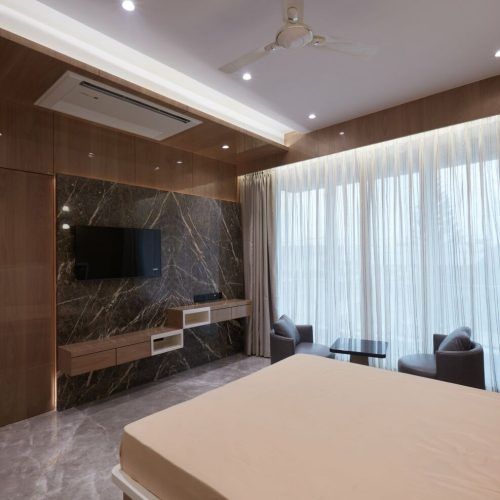
Yes, and that is its most common structural purpose. A ducted split or a VRV indoor unit needs 250–350 mm of ceiling void including the drain fall, which is why ducted systems demand more height than cassette or wall-mounted units. Plan the AC before the ceiling; the reverse is how ceilings end up at 2,550 mm.
What about the drain pipe from the AC?+
It needs a continuous fall of at least 1:100 to the discharge point and an accessible trap, both of which have to be planned within the ceiling void. A blocked or reverse-falling condensate drain is the single commonest cause of a water stain appearing on a new false ceiling in the first summer.
Monsoon, maintenance and life
Will a false ceiling be damaged by leaks from above?+
Gypsum board is destroyed by sustained wetting and will need replacing in the affected area; POP is similarly affected. This is why a top-floor flat or a flat under a terrace should have its slab checked for seepage before boarding. A stain that appears each monsoon and dries out is a slab problem, not a ceiling problem.
How long does a false ceiling last?+
Twelve to twenty years for gypsum on a GI frame, less for POP, and effectively indefinitely for a grid ceiling whose tiles can be replaced individually. What ends its life is usually water damage or a change of layout rather than material failure.
How long does installation take?+
Five to nine days for a 2BHK: two to three days for framing, one to two for boarding, two to three for jointing, sanding and finishing, and then painting after the surface has cured. It must be complete before final painting and before joinery installation, which is why it sits early in the programme.
Can I repair a damaged section?+
Yes. A gypsum board ceiling can be cut back to the nearest framing members, a new piece fitted, and the joint taped and finished. Matching the paint across a large ceiling is the harder part, which is why we keep the shade code in the handover pack. POP repairs are more visible because the texture rarely matches exactly.
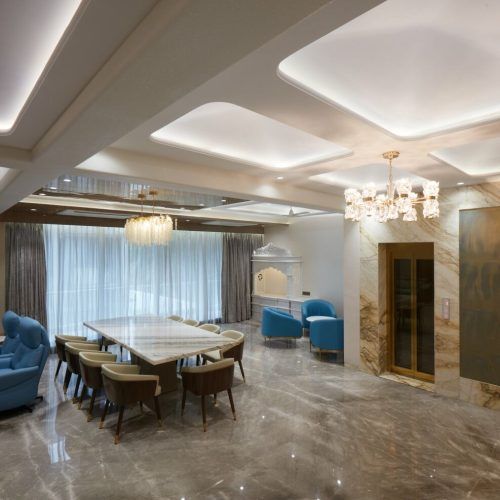
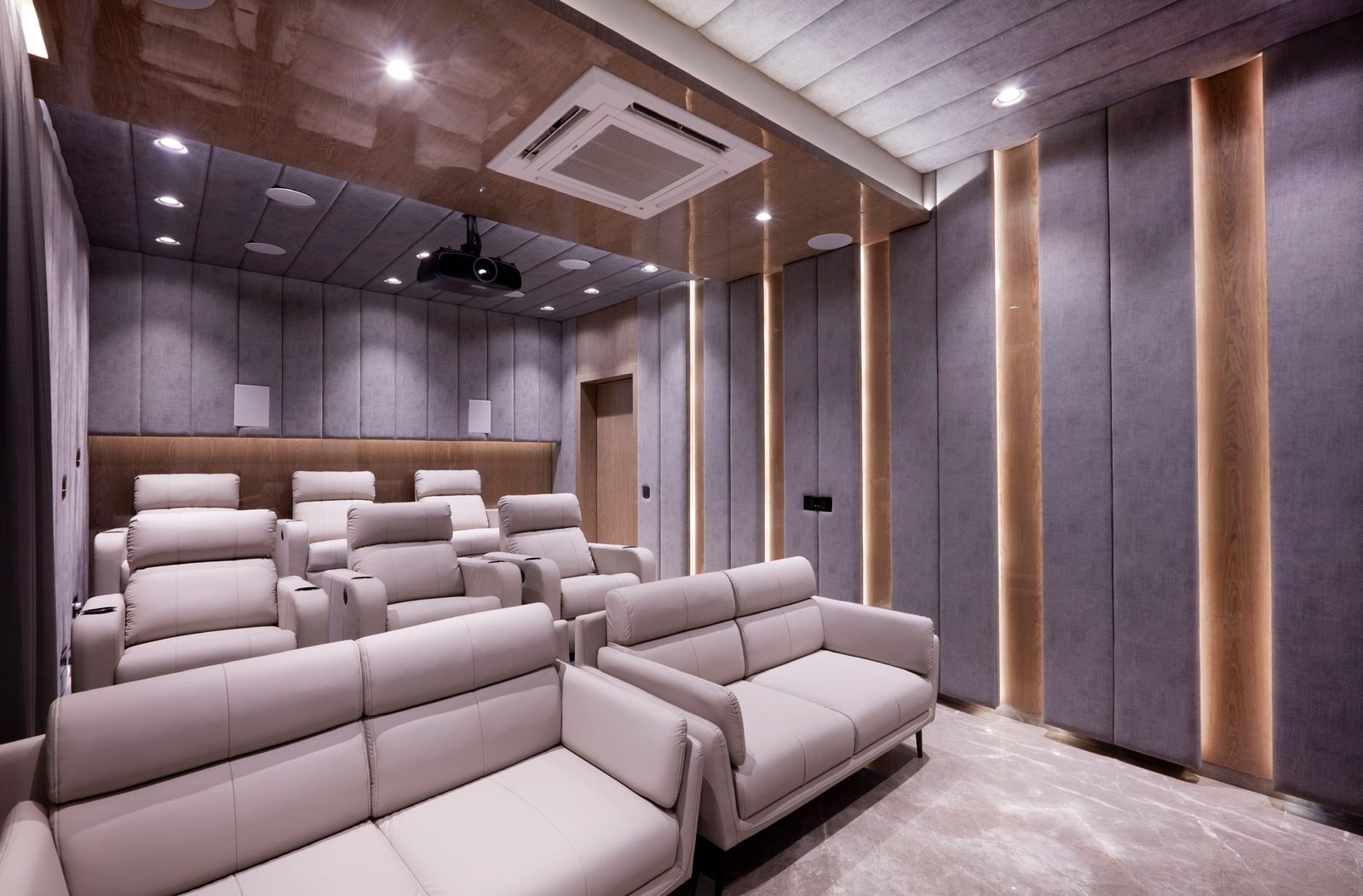
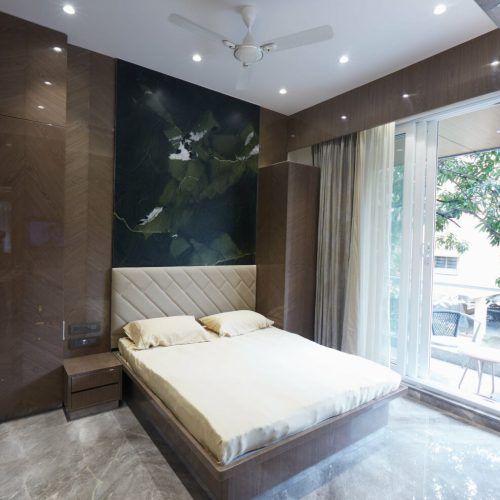
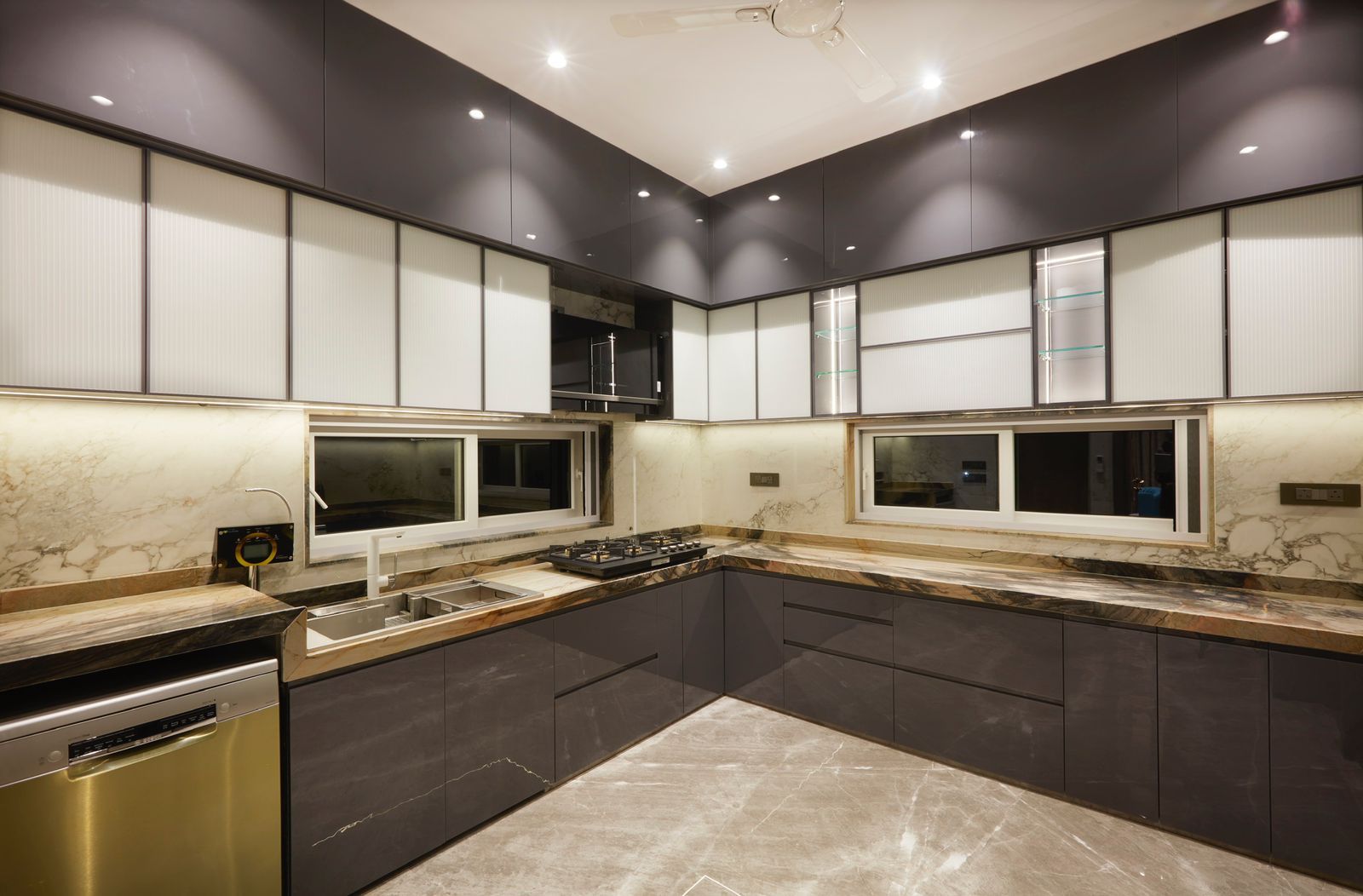
Selected work by Greenbox Design Studio. Tap any image to enlarge.
Frequently asked questions
What does a false ceiling cost per sq ft?+
₹65–₹95 for a peripheral gypsum cove, ₹85–₹130 for a full gypsum ceiling on a GI frame and ₹120–₹180 for a multi-level design, ex-GST at 2026 Mumbai rates. PVC panelling is cheaper at ₹55–₹110 and appropriate only in balconies and utility areas.
How much height does a false ceiling take?+
75–100 mm for a peripheral cove, 100–150 mm for a full flat ceiling, and 200–300 mm where AC ducting or drainage has to be concealed. Below a finished height of 2,750 mm, restrict yourself to a peripheral cove or the room will feel compressed.
Is POP or gypsum better?+
Gypsum board on a galvanised steel frame for most Mumbai work: factory-made, predictable and far less prone to hairline cracking than POP, which is applied wet and shrinks as it dries. POP remains the better choice where the design calls for complex curves that board cannot form.
Can a ceiling fan hang from a false ceiling?+
No. A fan, a heavy chandelier or a projector must hang from the structural slab, passing through the false ceiling on a dedicated hook or suspended plate. The false ceiling itself carries only its own weight plus light fittings, and the hanging detail has to be planned before boarding starts.
Why does a false ceiling crack?+
Usually a joint problem — jointing compound applied too thin, boards butted too tightly, or a wooden batten frame that has moved with humidity. Structural movement in a new building also causes it. Hairline cracks at joints can be repaired; one that reopens after repair points to the framing.
Where should access panels be located?+
Above every concealed AC filter and drain, at every plumbing valve or junction, and at any electrical junction box. A 450 x 450 mm panel is ₹1,800–₹4,500 and saves cutting a hole in a finished ceiling later. Mark them on the reflected ceiling plan at design stage.