
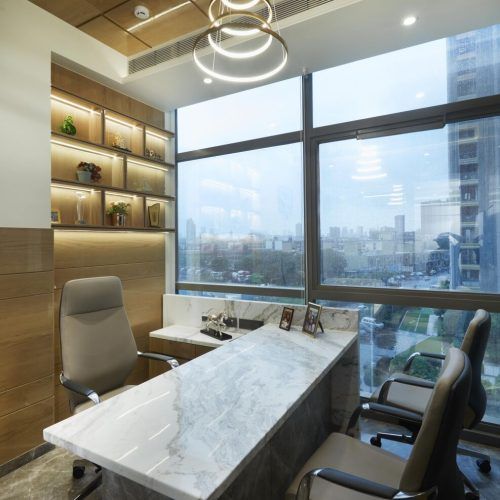
What is actually here
| Category | Typical size | ₹ per sq ft | Note |
|---|---|---|---|
| Restaurant and casual dining | 700 – 1,800 sq ft | ₹1,500 – 2,000 | Check drainage and exhaust before signing |
| Clinic, dental and diagnostics | 350 – 1,200 sq ft | ₹1,450 – 1,950 | Regulated finishes; strongest non-food category |
| Coaching and tuition | 800 – 3,000 sq ft | ₹1,150 – 1,550 | Acoustic separation and occupant density |
| Pharmacy, grocery and services | 250 – 800 sq ft | ₹1,150 – 1,500 | Counter, shelving, cold chain where relevant |
| Salon and grooming | 400 – 1,200 sq ft | ₹1,400 – 1,850 | Wash stations, water heating, extraction |
Ex-GST. Excludes equipment and licences. Access here is easy, which is why these rates are the lowest in the set.
Worked example: 1,100 sq ft neighbourhood restaurant, sector market
A ground-floor unit in a sector shopping row, fifty covers, a full kitchen, no bar. Bare shell with water and a three-phase supply, drainage available at the rear.
| Scope | ₹ lakh | Note |
|---|---|---|
| Strip-out and protection | 0.55 | Shell cleaned; frontage hoarded |
| Civil and drainage | 1.85 | Kitchen falls, interceptor, waterproofing to wet areas |
| Kitchen — civil, exhaust and gas | 6.20 | Exhaust routed to roof level; gas bank and manifold |
| Joinery, seating and counter | 4.10 | Bench seating, tables, service counter, till point |
| Flooring | 1.05 | Porcelain to the dining area, non-slip to the kitchen |
| Ceiling and lighting | 1.95 | Simple ceiling with a dimmable dining scheme |
| Electrical, DB and small power | 1.10 | Sub-DB, kitchen load, dining circuits |
| Ventilation and cooling | 0.90 | Split cooling; make-up air balanced against the extract |
| Fire detection and suppression | 0.35 | Hood suppression and extinguishers |
| Shopfront and signage | 0.55 | Glazed front, illuminated fascia |
| Project management | 0.10 | Local supervisor; short programme |
| Total, ex-GST | 18.70 | ₹1,700 per sq ft carpet |
Add 18% GST. The same restaurant on Chembur's Central Avenue would be roughly ₹4.5 lakh higher, almost entirely in handling, restricted working hours and society consents.
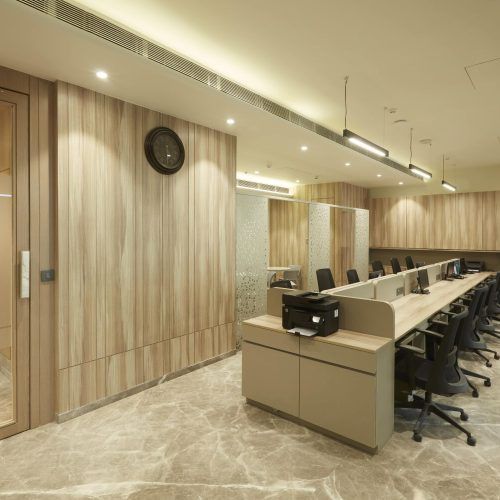
Neighbourhood trade, easy access, weekend peaks
Three things to settle before you sign
- Permitted trade on the unit. CIDCO sector shop units carry conditions, and food and clinical uses are not automatic. Check the documentation rather than the landlord's assurance — it is the issue that surfaces at the next transfer or when a licence application is scrutinised.
- Drainage and exhaust for any food use. Many sector units were built for dry retail. A kitchen needs adequate drainage falls to a stack, an interceptor, and an exhaust route that can reach roof level with the building's consent. Retrofitting the first two costs ₹2–4 lakh; the third can be impossible.
- Know the trading rhythm before you plan the seats. Kharghar empties on weekday mornings — a large share of the working population commutes to Belapur, Vashi and Mumbai — and fills again from Friday evening through Sunday, with Central Park drawing families at weekends. Design for a weekend peak and a quiet Tuesday lunch, and staff accordingly.
Where Kharghar is genuinely good
For a business serving the node's residents, this is an easy place to build. There is room to park and unload, no restricted working window, no barricade charges, no goods-lift rationing, and the trade base is local. A 1,000 square foot fit-out runs five to seven weeks and costs 20 to 25% less than the same unit in Chembur or Borivali. What it will not give you is footfall from outside the node or a destination catchment, so a format that depends on drawing customers from three suburbs away belongs somewhere else, and we will say so before quoting rather than after.
For the node overall, see interior designers in Kharghar. For our commercial process and the larger projects we run across the region, see commercial interior designers in Mumbai.
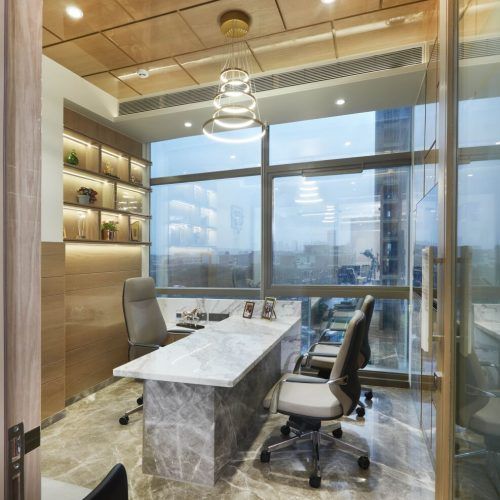
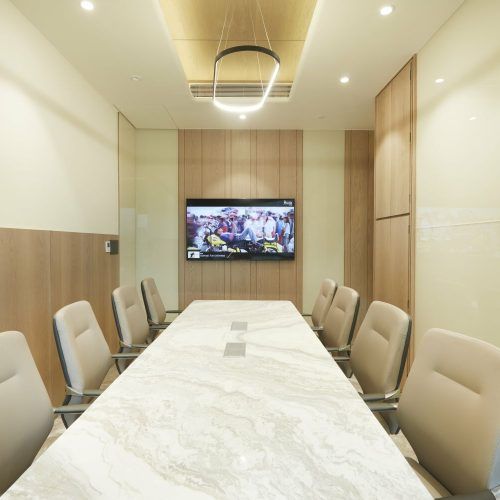
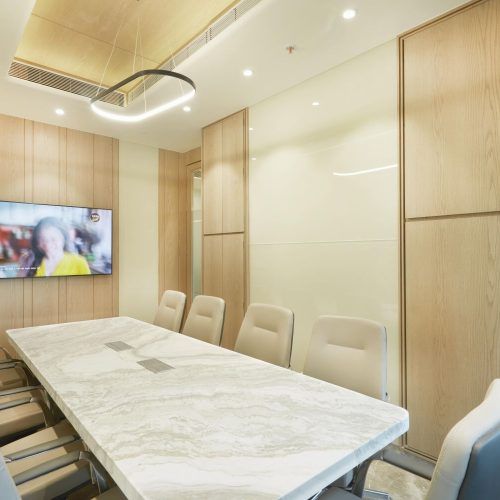
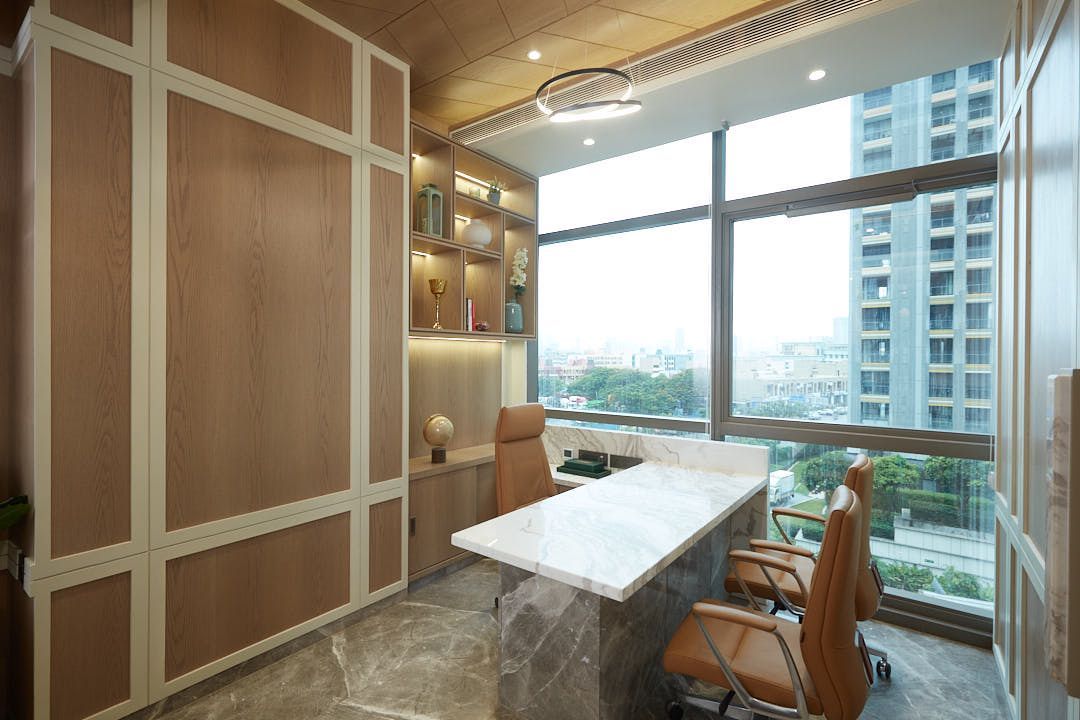
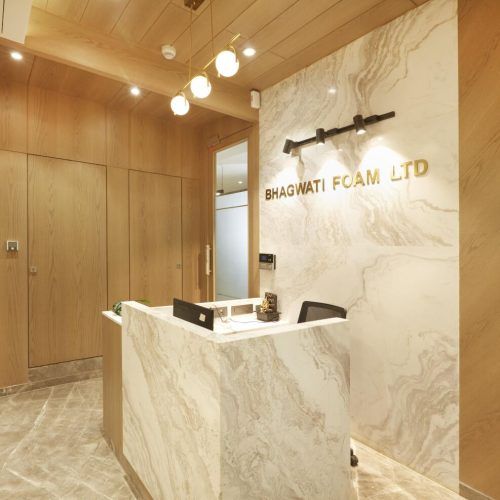
Neighbourhood commercial work by Greenbox Design Studio.
Frequently asked questions
Can I open a restaurant in any Kharghar sector shop?+
No. The unit needs a permitted trade that covers food use, adequate drainage falls to a stack, an interceptor and an exhaust route to roof level with the building's consent. Many sector units were built for dry retail and lack the first three. It is a twenty-minute check that has saved several clients from a bad lease.
Why is fit-out here cheaper than in the Mumbai suburbs?+
Access and working hours. There is parking, no barricade regime, no lift rationing, no restricted noisy-work window and a local trade base. That is 20–25% against Chembur or Borivali for the same specification and the same materials. Nothing about the build quality is different.
Is coaching a good use for a larger unit?+
It is the strongest large-unit category in the node. The design requirement is acoustic separation between rooms — partitions to the slab with insulation, not to a ceiling grid — plus ventilation and exit provision calculated on occupancy rather than floor area. Both are routinely underestimated and both are cheap to get right at the start.
What is the trading pattern here?+
Weekday mornings are quiet because much of the working population commutes out. Evenings are steady, and Friday through Sunday is the peak, helped by Central Park drawing families at weekends. Plan seating, staffing and kitchen capacity for the weekend peak rather than an average week.
Should a brand open here to reach Navi Mumbai?+
Not for reach — Kharghar serves Kharghar. For a catchment across the nodes, Vashi or Belapur is the right location, and the sector-market rollout model works well from there. We would rather say that at the first meeting than build a unit that waits for footfall which does not come.