

The decision that has to happen before the wiring
Indian switch boxes traditionally carry only the live and the switched live — no neutral. Almost every smart switch and smart dimmer needs a neutral to power its own electronics. If your flat is being rewired, adding a neutral to every switch box costs almost nothing at that moment and is close to impossible later without chasing walls again. This is the single decision that determines whether automation is a ₹30,000 retrofit or a ₹90,000 one in three years' time.
Ask for it explicitly on the electrical drawing: 'neutral to be drawn to every switch box'. Contractors do not do it by default because it uses more cable and takes longer, and most clients do not ask. The cost difference on a 2BHK is roughly ₹4,000–₹8,000 of additional wire and labour.
Three levels of automation
| Level | What it does | Wiring needed | 2BHK cost | Suits |
|---|---|---|---|---|
| Retrofit modules | Smart modules behind existing switches | Neutral at the box | ₹22,000–₹55,000 | Rented or finished flats |
| Smart switch plates | Replaces switch plates with touch panels | Neutral at the box | ₹55,000–₹1.3 lakh | Interior projects in progress |
| Wired automation with hub | Central controller, all loads on a bus | Full rewire to a panel | ₹1.8–₹3.8 lakh | New flats, full renovations |
| Point-level add-ons | Smart plugs, bulbs, IR blasters | None | ₹4,000–₹18,000 | Testing the idea first |
Wired automation prices assume 3–4 scene panels, curtain motors in two rooms and AC integration. Excludes security and AV.
Design and build under one accountable roof
Protocols, and why it matters
The protocol decides whether your system still works in five years. Wi-Fi devices talk to a manufacturer's cloud server; if the company stops supporting the product or your broadband goes down, the device becomes a manual switch at best. Zigbee and Z-Wave devices talk to a local hub in your flat and keep working without internet. Matter, running over Thread, is the current convergence standard and is the safest specification for anything being installed new in 2026.
- Wi-Fi: cheapest, no hub, worst resilience. Fine for a single smart plug, poor as the basis of a flat.
- Zigbee: mature, local, mesh-networked, wide device choice in India. The pragmatic default.
- Z-Wave: reliable and local but a narrower Indian device range and higher cost.
- Matter over Thread: the standard worth specifying for new installations; cross-brand and local-first.
- Proprietary wired bus (KNX and similar): the most robust and the most expensive, appropriate for whole-home automation in larger flats.
- Avoid mixing three ecosystems. Two apps is an irritation; four is why families stop using the automation altogether.
What is worth automating, in order
- Lighting scenes. The highest-value automation in any home. Four scenes — morning, working, evening, night — do more for how a flat feels than every other device combined.
- Curtains and blinds. Motorised tracks at ₹14,000–₹38,000 per window. In a west-facing Mumbai flat, closing the blinds automatically at 2 pm measurably reduces the AC load.
- Air conditioning. An IR controller per unit at ₹3,000–₹7,000 lets you pre-cool a bedroom and, more usefully, ensures the AC is off when nobody is home.
- Geyser and water heater. A ₹2,500 smart switch with a schedule is the fastest-paying automation in the house; most Indian geysers are left on far longer than needed.
- Door lock. Useful for households with domestic help and deliveries. Specify one with a mechanical key override and local Bluetooth unlocking.
- Cameras and sensors. Worth it for a flat that is empty for long periods; consider local storage rather than cloud subscriptions.
- Voice assistants. Genuinely convenient, and the least important item on this list. Do not design the system around them.
Designing for failure
This is the part Indian installations most often get wrong. Mumbai flats experience power cuts, brownouts and broadband outages, and a household includes people — parents, guests, domestic staff — who did not install the system and should not need an app. Every automated point must therefore have a physical control that works on its own: a real switch, a wall button, or at minimum a scene panel that operates locally without the hub.
The test we apply before handover is simple. Unplug the router, switch off the hub, and walk the flat with the client. Every light, fan and curtain should still be operable by hand within a few seconds. If anything cannot be, it is redesigned. A flat where the guest bedroom light cannot be turned on because the Wi-Fi is down is not a smart home; it is a fragile one.
A costed 2BHK, three ways
| Scope | Entry retrofit | Mid: smart plates | Full wired |
|---|---|---|---|
| Lighting control | 8 modules, ₹16,000 | 14 plates, ₹68,000 | Central dimming, ₹1,15,000 |
| Curtains | — | 1 window, ₹18,000 | 3 windows, ₹62,000 |
| AC control | 2 IR blasters, ₹8,000 | 2 units integrated, ₹14,000 | Integrated, ₹24,000 |
| Geyser / utility | 1 switch, ₹2,500 | 2 switches, ₹5,000 | Panel-level, ₹12,000 |
| Door lock | — | ₹22,000 | ₹34,000 |
| Hub and configuration | ₹6,000 | ₹18,000 | ₹48,000 |
| Total, ex-GST | ₹32,500 | ₹1,45,000 | ₹2,95,000 |
Add 18% GST. The entry column assumes neutral wiring already exists at the switch boxes; if not, add ₹18,000–₹35,000 for chasing.
Specify the manual override first and the app second. Every family has someone who will never open the app.
Greenbox principal designer
Who maintains it in year three
Automation is the only part of an interior that has software, and software needs an owner. Three years after handover the hub needs a firmware update, a device has dropped off the network, the installer's company has changed its app, and the family member who configured it has stopped being interested. This is the most common way a smart home stops being smart, and it has nothing to do with the hardware.
Two things reduce the risk. First, keep the system documentation — a one-page sheet listing every device, its room, its protocol and the hub it pairs to, plus the admin login. We hand this over laminated with the warranty pack, and it is the document clients most often lose and most often need. Second, prefer widely supported standards over an installer's proprietary ecosystem, so that any competent technician can take over if your original installer disappears. A system built on Zigbee or Matter can be adopted by someone else; a system built on a bespoke controller from a company that has stopped trading cannot.
- Ask what happens if you stop paying a subscription. Cameras and locks are the usual offenders.
- Ask for the admin credentials at handover, not the installer-managed account. Clients who do not have these cannot change installers.
- Keep spare modules. Two spare smart switch modules at handover costs ₹3,000 and avoids a mismatched plate in year four.
- Budget an annual service visit of ₹3,000–₹6,000 for firmware, re-pairing and battery replacement in sensors.
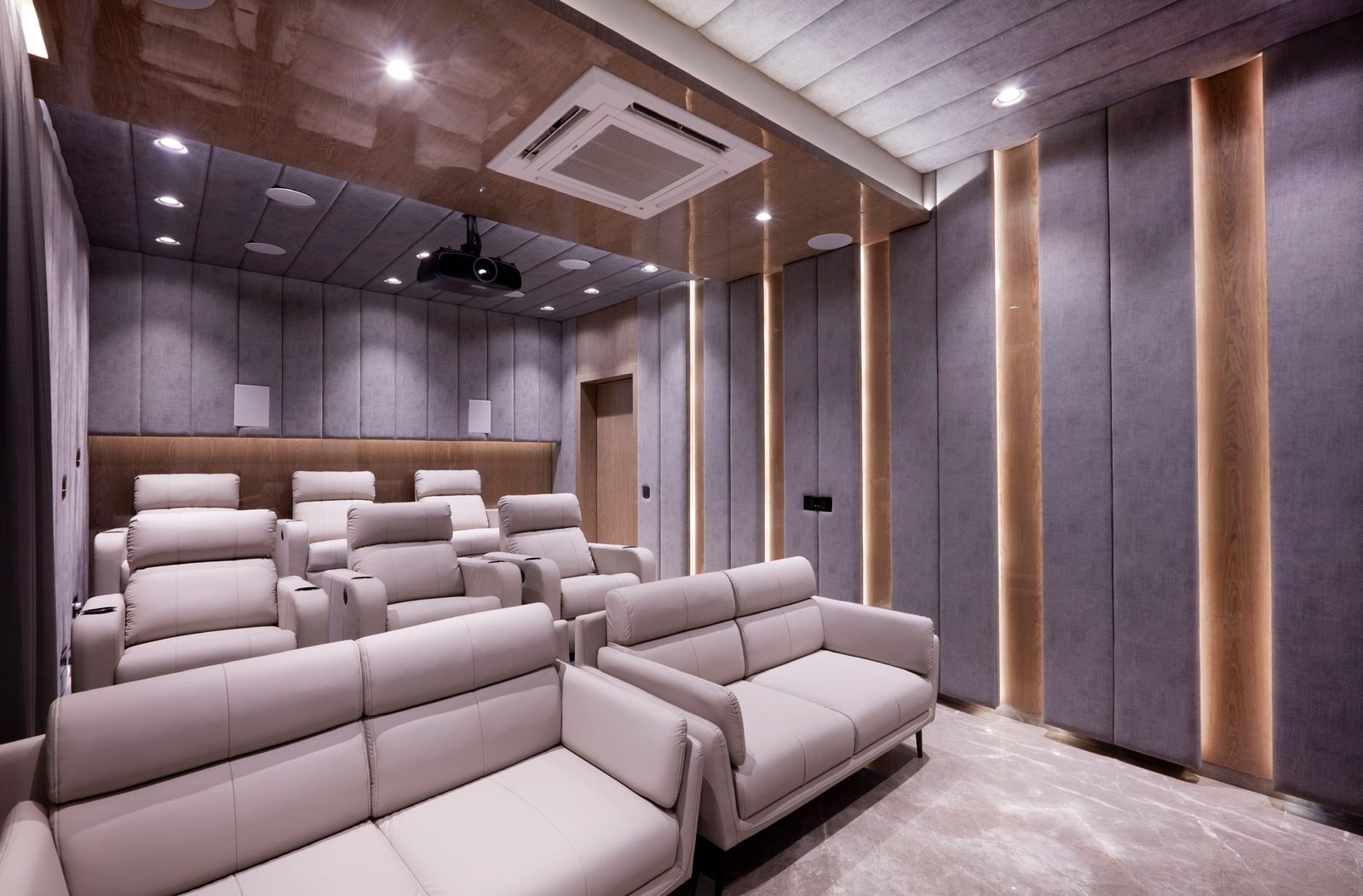
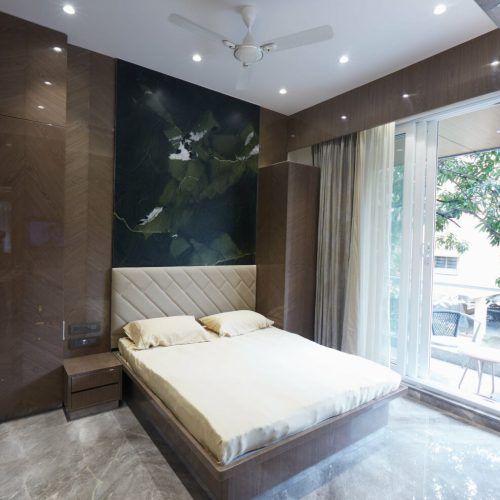
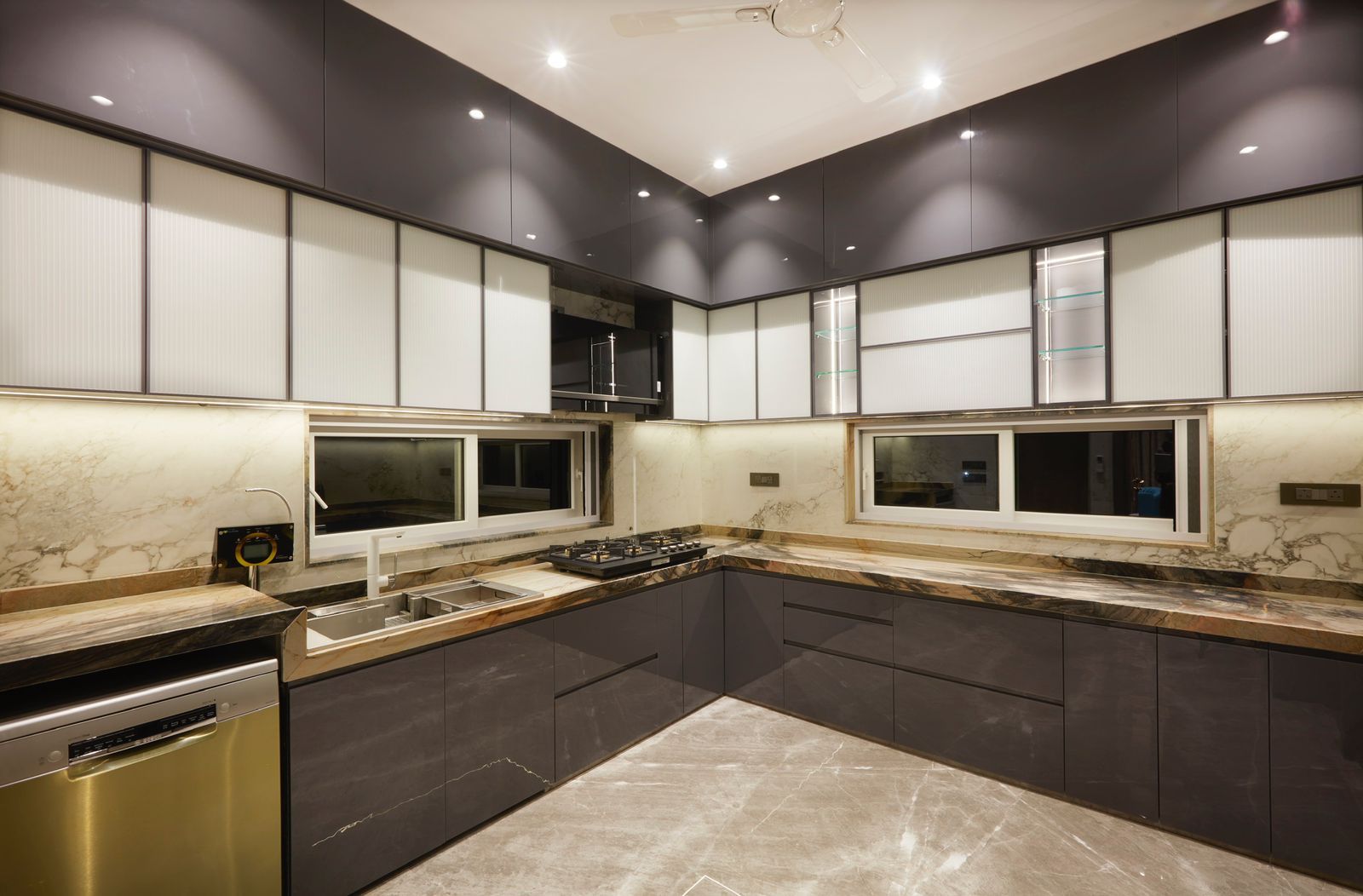
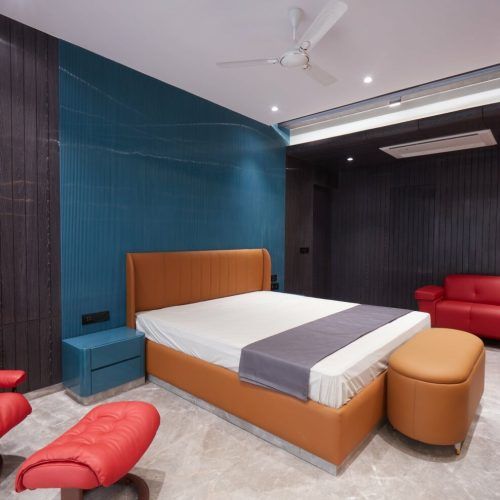
Selected work by Greenbox Design Studio. Tap any image to enlarge.
Frequently asked questions
Do I need to rewire for a smart home?+
Not for a retrofit layer, provided your switch boxes have a neutral wire. Most older Indian wiring does not, which forces either a battery-powered wireless switch layer or chasing walls to draw neutrals. If any electrical work is happening, adding neutrals then costs ₹4,000–₹8,000 on a 2BHK and saves far more later.
What happens to smart devices when the internet is down?+
Cloud-dependent Wi-Fi devices stop responding to app and voice control, though many keep their last state. Zigbee, Z-Wave and Matter-over-Thread devices continue working through a local hub, including schedules and scenes. This is the main reason to specify a local-first protocol rather than the cheapest available device.
Is home automation worth it in India?+
The lighting-scene and climate-scheduling layers are, in our experience, used daily and change how a flat feels. The rest — smart mirrors, automated wardrobes, voice-controlled everything — is used for about six weeks. Spend on the first ₹50,000 of automation carefully and treat the rest as optional.
What is Matter and should I wait for it?+
Matter is a cross-brand standard that lets devices from different manufacturers work together locally. Devices supporting it are widely available in India in 2026 and there is no reason to wait. If you are installing new, specify Matter or Zigbee compatibility as a requirement in the BOQ rather than accepting whatever the installer stocks.
Can smart switches be added to a finished flat?+
Yes, if there is a neutral at the box — modules fit behind the existing plate in about fifteen minutes per point. Without a neutral, options are battery-powered wireless scene switches paired with smart bulbs, or chasing the wall to draw a neutral, which is disruptive in a finished flat.
How much does full home automation cost?+
₹1.8–₹3.8 lakh ex-GST for a 2BHK with central lighting control, motorised curtains in three rooms, AC integration and a smart lock, in Mumbai in 2026. A 3BHK with the same specification runs ₹3.2–₹6.5 lakh. Entry-level retrofit automation starts around ₹32,000.