
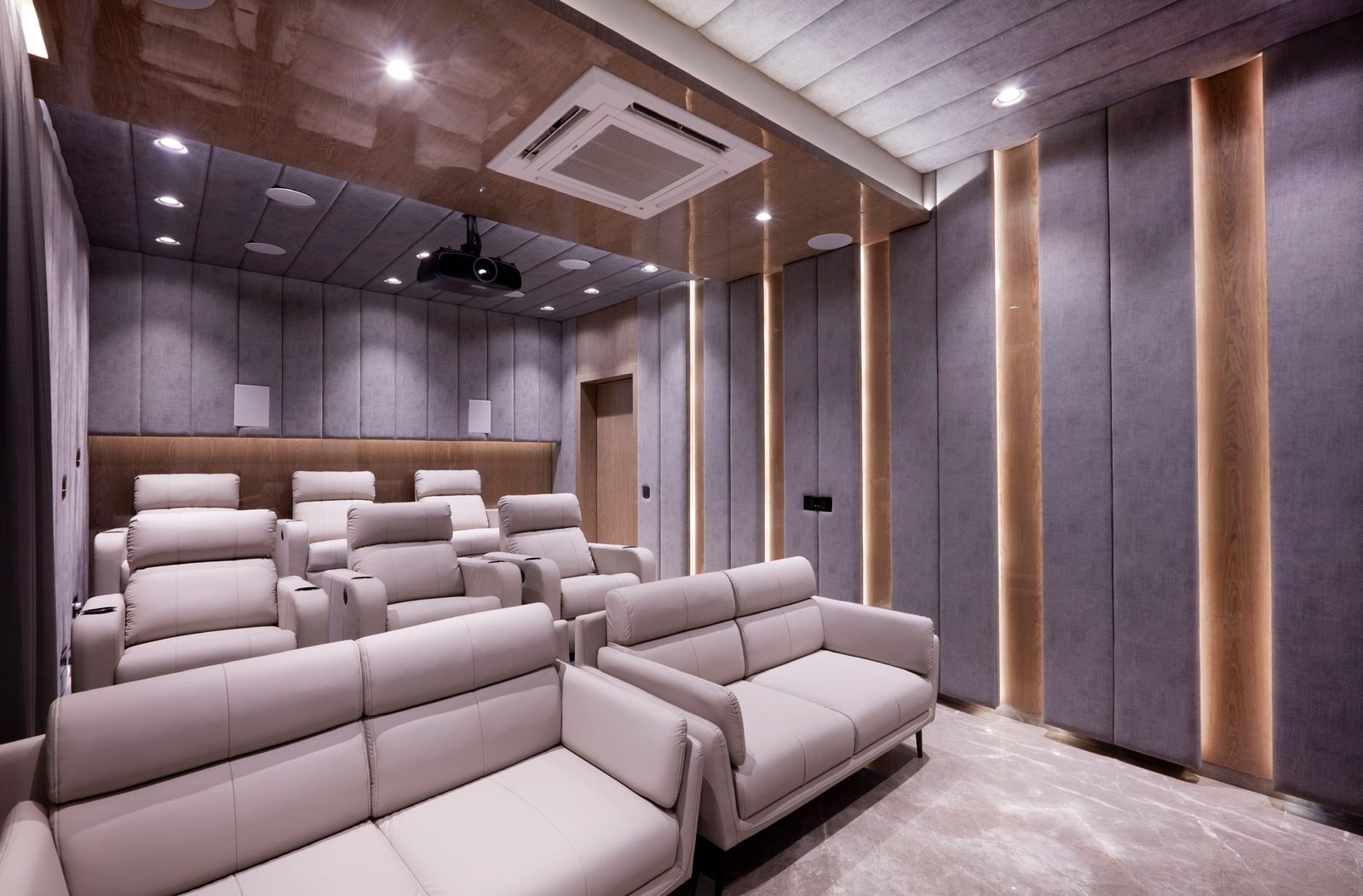
The three layers
The idea is simple and the execution is where homes fail. Ambient light sets the general level of the room and should be adjustable, because the level you want at 8am is not the level you want at 10pm. Task light serves a specific activity at a specific place — chopping, reading, applying make-up, working — and needs to be brighter, positioned so your own body does not shade it, and usually cooler in temperature. Accent light picks out objects, textures and surfaces: a painting, a stone panel, the back of a display niche, the underside of a floating vanity.
Most Indian homes have one layer, sometimes one and a half. The result is a room that is uniformly lit, which sounds desirable and reads as flat, institutional and slightly unflattering. Adding the second and third layers to a 130 sq ft bedroom costs ₹12,000–₹28,000 during construction and changes the room more than another ₹1 lakh of joinery would.
Lumen targets by room
| Space | Ambient target | Task target | Typical fittings |
|---|---|---|---|
| Living room | 100 – 150 lm / sq ft | 300 lm at a reading chair | Cove plus 4–6 spots plus a floor lamp |
| Dining | 120 – 160 lm / sq ft | 400 lm on the table | Pendant at 750–800 mm above the table |
| Kitchen general | 150 – 200 lm / sq ft | — | Ceiling spots on a grid |
| Kitchen counter | — | 250 – 350 lm / sq ft | Under-cabinet LED profile |
| Bedroom | 80 – 120 lm / sq ft | 200 lm at the bedside | Cove plus 2 bedside, separately switched |
| Study | 120 – 160 lm / sq ft | 400 – 500 lm on the desk | Ceiling plus a dedicated task lamp |
| Bathroom general | 120 – 160 lm / sq ft | — | Ceiling, moisture-rated |
| Bathroom mirror | — | 350 – 450 lm at face height | Vertical fittings either side, not above |
A 10 W LED spot delivers roughly 800–900 lumens; a 1 m LED strip at 14 W/m delivers roughly 1,200.
Design and build under one accountable roof
A worked living room
Take a 16 × 12 foot living room, 192 sq ft, with a sofa, a television wall and a dining table at one end. At 120 lumens per sq ft the ambient requirement is about 23,000 lumens — which sounds enormous until you realise that is capacity at full output, and the room will almost never be run at full output. This is what we would specify.
- Circuit 1 — ambient. 14 m of LED strip at 14 W/m inside a peripheral cove, warm white 3000 K, on a dimmer. About 16,800 lumens, and it is the layer you run at 30% most evenings.
- Circuit 2 — general downlights. Six 10 W spots at 3000 K on a separate switch, positioned 900 mm off the walls rather than in a decorative pattern in the middle of the ceiling. About 5,000 lumens, for when the room genuinely needs to be bright.
- Circuit 3 — accent. Three 6 W adjustable spots aimed at the art wall and the TV panel, plus a 1.2 m strip grazing the stone. Around 3,200 lumens, and this is the circuit that does the most visual work for the least money.
- Circuit 4 — dining pendant. Separately switched and dimmed, hung 750–800 mm above the tabletop.
- Plus one floor lamp on a switched 5A socket, which is the cheapest task light there is and the one people actually use.
| Circuit | Fittings | Load | Cost (2026) |
|---|---|---|---|
| Cove strip, dimmable | 14 m at 14 W/m | 196 W | ₹18,000 – ₹31,000 |
| Downlights | 6 × 10 W spots | 60 W | ₹7,200 – ₹15,000 |
| Accent | 3 × 6 W adjustable plus 1.2 m strip | 35 W | ₹6,500 – ₹13,500 |
| Dining pendant | 1 fitting | 12 – 40 W | ₹4,000 – ₹45,000 |
| Dimmers and switching | 3 dimmers, 4 circuits | — | ₹6,000 – ₹14,000 |
| Total | ₹41,700 – ₹1,18,500 |
Circuits, not fittings
The most common mistake is buying good fittings and putting them all on one switch. Three layers on one circuit is not layered lighting; it is a bright room. The circuits have to be planned before the ceiling is boarded and the walls are chased, because adding one afterwards means opening the ceiling, chasing a wall and repainting — ₹8,000 to ₹20,000 for something that cost ₹1,200 during first fix.
- Minimum per living room: three circuits, two of them dimmable.
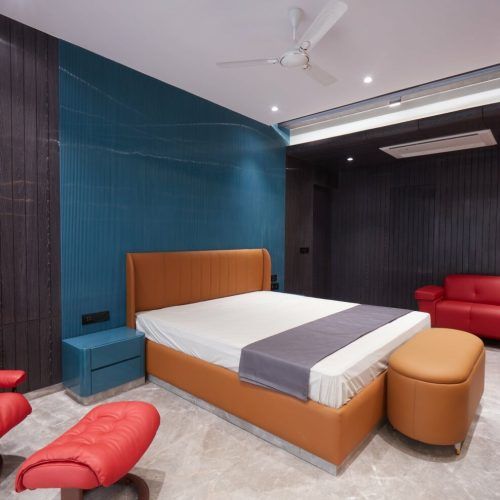
- Minimum per bedroom: three — ambient, bedside left, bedside right — with two-way switching from the door and the bed.
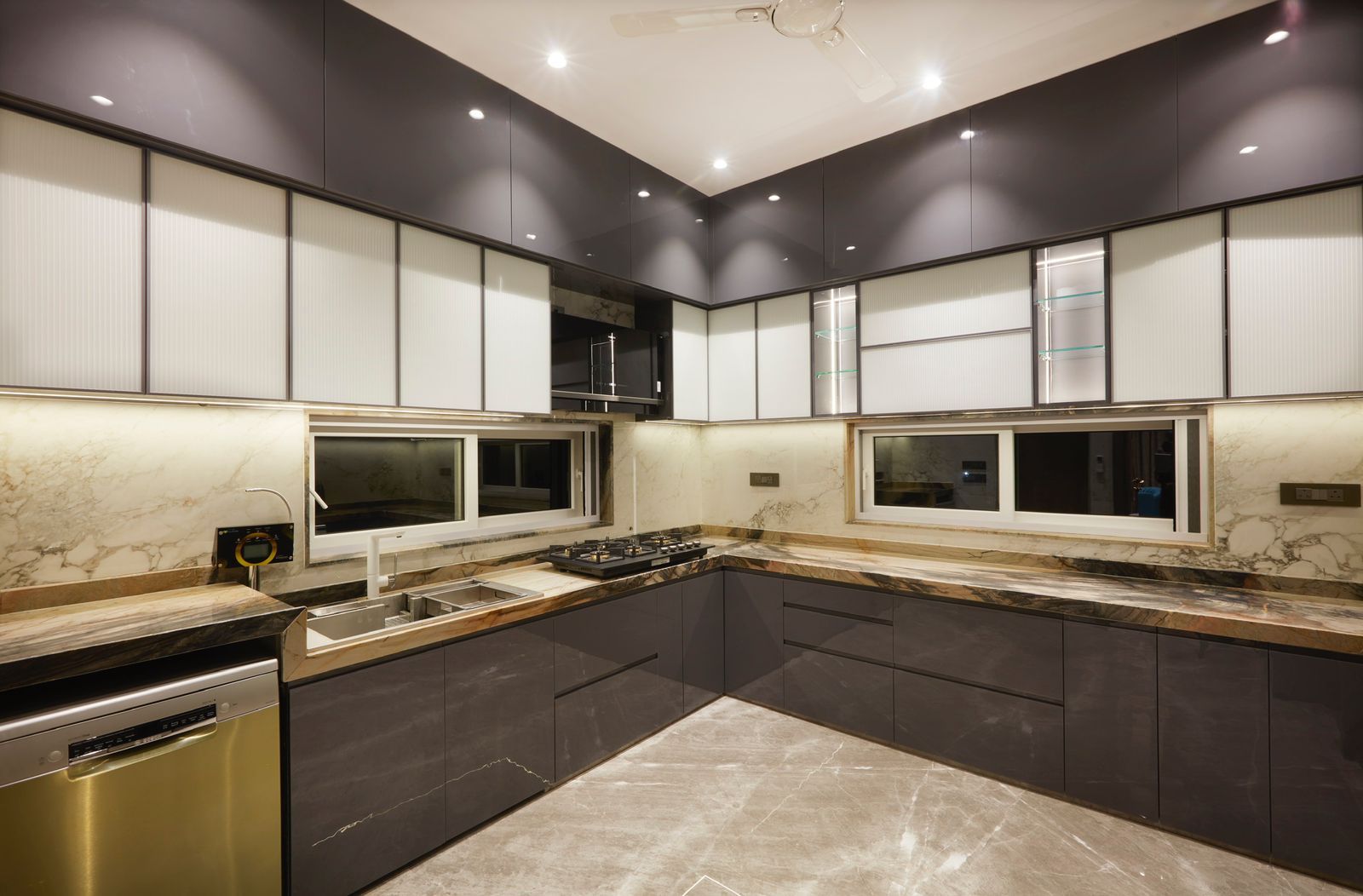
- Kitchen: two, with the under-cabinet task light on its own switch near the counter, not by the door.
- Bathroom: two, with the mirror light separate from the ceiling.
- Put a 5A switched socket in every room for a lamp; it is the cheapest flexibility you can buy.
- Dimmers must match the driver. A trailing-edge dimmer on a non-dimmable LED driver produces flicker and a short life; specify dimmable drivers explicitly.
Buy fewer, better fittings on more circuits. Nobody has ever walked into a room and admired the number of downlights.
Greenbox principal designer
What to avoid
Three habits undo otherwise good schemes. Downlights arranged in a symmetrical grid across the middle of the ceiling, which lights the floor and leaves the walls dark, making the room feel smaller — pushing them to 900 mm off the wall and washing the vertical surfaces does the opposite. Too many fittings at too low a wattage, which is expensive, produces a spotty ceiling and still fails to reach the lumen target. And mixing colour temperatures within one open space, which is immediately visible and impossible to un-notice.



Selected work by Greenbox Design Studio. Tap any image to enlarge.
Frequently asked questions
How many lumens does a living room need?+
Roughly 100–150 lumens per square foot for the ambient layer, so about 19,000–29,000 lumens in a 192 sq ft room at full output. That is a target for capacity, not for how you will run it — most evenings the dimmed cove alone is enough.
What are the three lighting layers?+
Ambient sets the room's general level and should be dimmable; task lights a specific activity at a specific place and is brighter; accent picks out objects, art and textured surfaces. Each needs its own circuit and switch, which is the part most homes skip.
Can I add lighting circuits after the ceiling is done?+
You can, at roughly four times the cost. Adding a circuit during first fix costs ₹1,200–₹2,000; doing it afterwards means opening the ceiling, chasing a wall, making good and repainting, at ₹8,000–₹20,000 per circuit. Plan lighting before the ceiling is framed.
How high should a dining pendant hang?+
750–800 mm from the tabletop to the bottom of the fitting. Higher and it stops defining the table; lower and it blocks the sightline across it. Put it on its own dimmed switch — the dining table is the one place in a home where light level genuinely changes the occasion.
Is cove lighting worth the cost?+
Usually yes, as the ambient layer. Fourteen metres of dimmable strip in a peripheral cove costs ₹18,000–₹31,000 and gives a soft, adjustable base level that no arrangement of downlights matches. It also justifies a shallow 100–150 mm ceiling drop rather than a full-drop ceiling.