
What you are actually buying into
Flats built in Mumbai between roughly 1975 and 2000 share a set of conditions. Aluminium or undersized copper wiring on a two-way board with no earth leakage protection. Galvanised iron water lines that have narrowed with scale. Cement flooring or mosaic over an uneven screed. Brick partitions plastered thickly enough to hide their own irregularity. And, on the sea-facing side of the building, chloride ingress into the RCC that shows as rust staining below a window.
None of this makes the flat a bad purchase. It makes the renovation a different exercise from a new-tower fit-out, one where the first three weeks are investigation rather than construction, and where a BOQ priced from a floor plan is close to fiction.
The cost and time premium, itemised
| Item | New tower | Old flat (25–50 yrs) | Premium |
|---|---|---|---|
| Electrical | Points and fittings only | Full rewire, new DB, earthing | ₹85,000 – ₹1,60,000 |
| Plumbing | Fixtures in place | CPVC replacement, new angle valves | ₹45,000 – ₹1,10,000 |
| Flooring | Lay over existing | Break, level, screed, lay | ₹180 – ₹320 / sq ft |
| Walls | Putty and paint | Hack, replaster, putty, paint | ₹95 – ₹180 / sq ft |
| Bathrooms | Cosmetic | Strip, waterproof, re-tile | ₹95,000 – ₹2,20,000 each |
| Windows | Retain | Replace to aluminium or uPVC | ₹650 – ₹1,400 / sq ft |
| Debris | 2 – 3 trips | 5 – 8 trips | ₹18,000 – ₹55,000 |
| Programme | 12 – 16 wks | 16 – 22 wks | +3 – 5 wks |
Design and build under one accountable roof
Open up before you price
The single most useful thing you can do is spend ₹15,000–₹35,000 on a destructive survey before the BOQ is finalised. Three or four small openings answer questions that otherwise become variations at three times the price.
- One wall chase, 300 mm, near the distribution board. Tells you the conductor material, the cable size, whether there is an earth, and whether the conduit is reusable.
- One floor opening, 300 × 300 mm. Tells you the screed thickness, whether there is a screed at all, and the true slab level — which decides whether your new flooring raises the floor above the door threshold.
- One bathroom wall opening at the shaft side. Tells you the pipe material, the state of the waterproofing and whether the damp on the bedroom side is coming from your bathroom or your neighbour's.
- One ceiling probe under a wet area above. Tells you whether you have a leak to resolve with the flat above before you build anything underneath it.
- A level survey with a laser across every room. Free, takes an hour, and it is what stops a 3,000 mm wardrobe from ending up with a 22 mm gap at one end.
Damp: find the source or do not bother
Damp in an old Mumbai flat has four usual sources, and surface treatment fixes none of them. External wall pointing that has failed, so rain drives through during the monsoon. A leaking plumbing shaft, often shared. The bathroom of the flat above. And rising damp at the plinth in ground-floor flats. Identify which one you have, resolve it — sometimes with the society, sometimes with a neighbour — and only then close the wall. Putting waterproof putty and a coat of paint over an active source buys eight months and costs the whole wall later.
Old buildings, old neighbours
A renovation in a forty-year-old building is a social project as much as a technical one. The flats are closer, the walls transmit more, the residents have usually lived there for decades, and the society committee has seen enough badly run renovations to be sceptical of yours. Managing this well shortens the programme more than any site efficiency.
- Meet the immediate neighbours before you start, not after the first complaint. Tell them the dates, the hours and who to call. It costs an evening and prevents most of the friction.
- Expect stricter hours than a new tower. Many older societies restrict hacking and drilling to a narrower window than 10am–6pm, and some disallow it entirely on certain days.
- Protect the lift properly. Old lifts are small, slow and precious to the building. Plywood and blanket protection, plus a written agreement on debris movement, buys goodwill worth weeks.
- Assume shared services. Water lines, drainage shafts and sometimes electrical risers are common. Any work touching them is a society matter, not a private one.
- Keep the staircase clear every evening. A stack of plywood on a common landing overnight is how a cooperative committee becomes an adversarial one.
What to keep
Old flats often contain things worth more than their replacement. Resisting the urge to strip everything is both cheaper and usually better.
Original mosaic or terrazzo
If it is sound, polishing at ₹85–₹160 per sq ft beats ₹280–₹450 per sq ft of new tile, and it looks better than anything you can buy now.
Teak window frames
1970s Burma teak frames are frequently in better condition than the glass in them. Reglaze and polish rather than replace.
Slab height
Older buildings often have 10 ft to 10 ft 6 in floor-to-slab. That is a gift — do not spend it on a full false ceiling.
Solid brick partitions
9-inch brick gives real acoustic separation that a modern block wall does not. Keep it where you can.
Original door shutters
Solid panel doors of the period can be stripped, repaired and repolished for roughly half the cost of a good replacement.
Cross ventilation
Old plans were designed before air-conditioning. Do not block a through-draught with a new partition.
In an old flat, the drawing is the easy part. The survey is the project.
Greenbox project manager
Sequence for an old-flat renovation
- Survey and open upTwo weeks. Destructive survey, level survey, damp diagnosis, society circular read.
- Resolve sourcesAnything involving the society, the flat above or the external wall starts now, because it moves slowly.
- Design against measured realityLayouts drawn on the surveyed dimensions and levels, not the builder's plan.
- Strip out and civilDemolition, hacking, replastering, levelling, waterproofing. The dirtiest six weeks.
- ServicesFull rewire, new DB with RCCB, CPVC plumbing, AC routing.
- Build and finishCeiling, flooring, joinery, painting — in that order, and none of it before the civil work has dried.
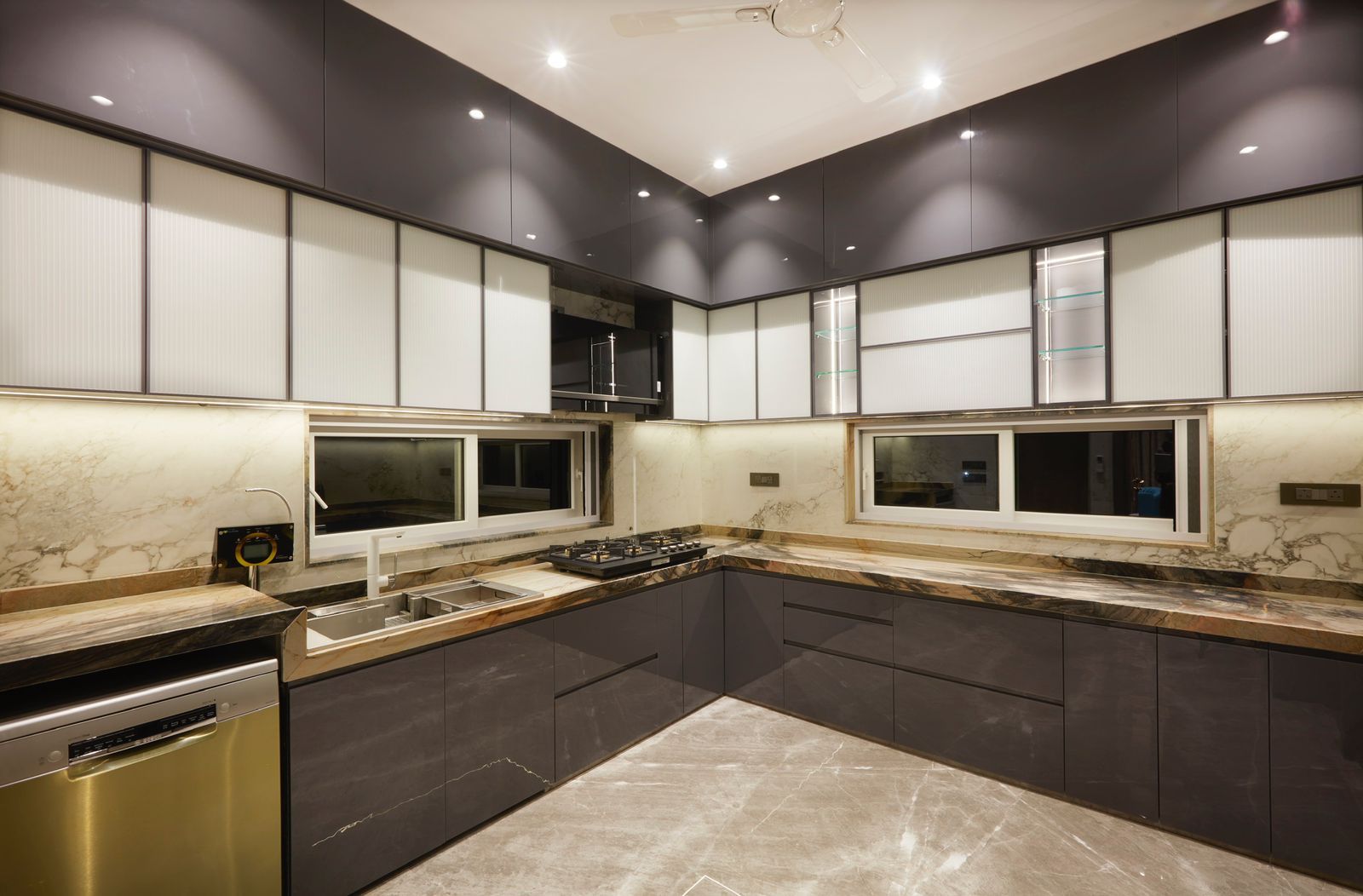
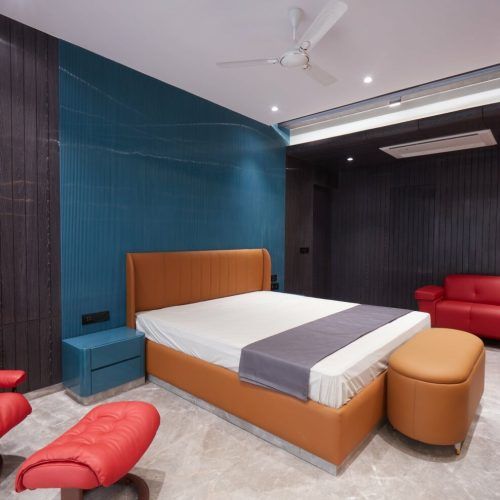
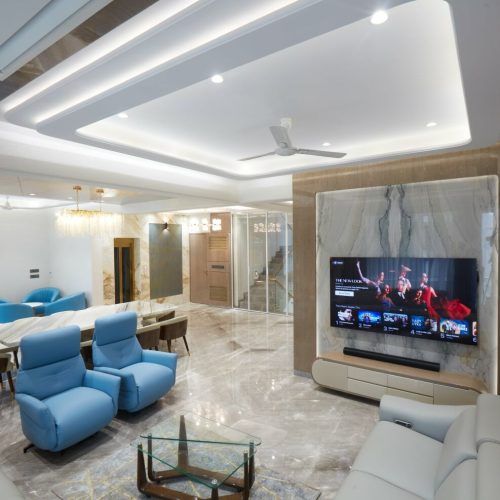
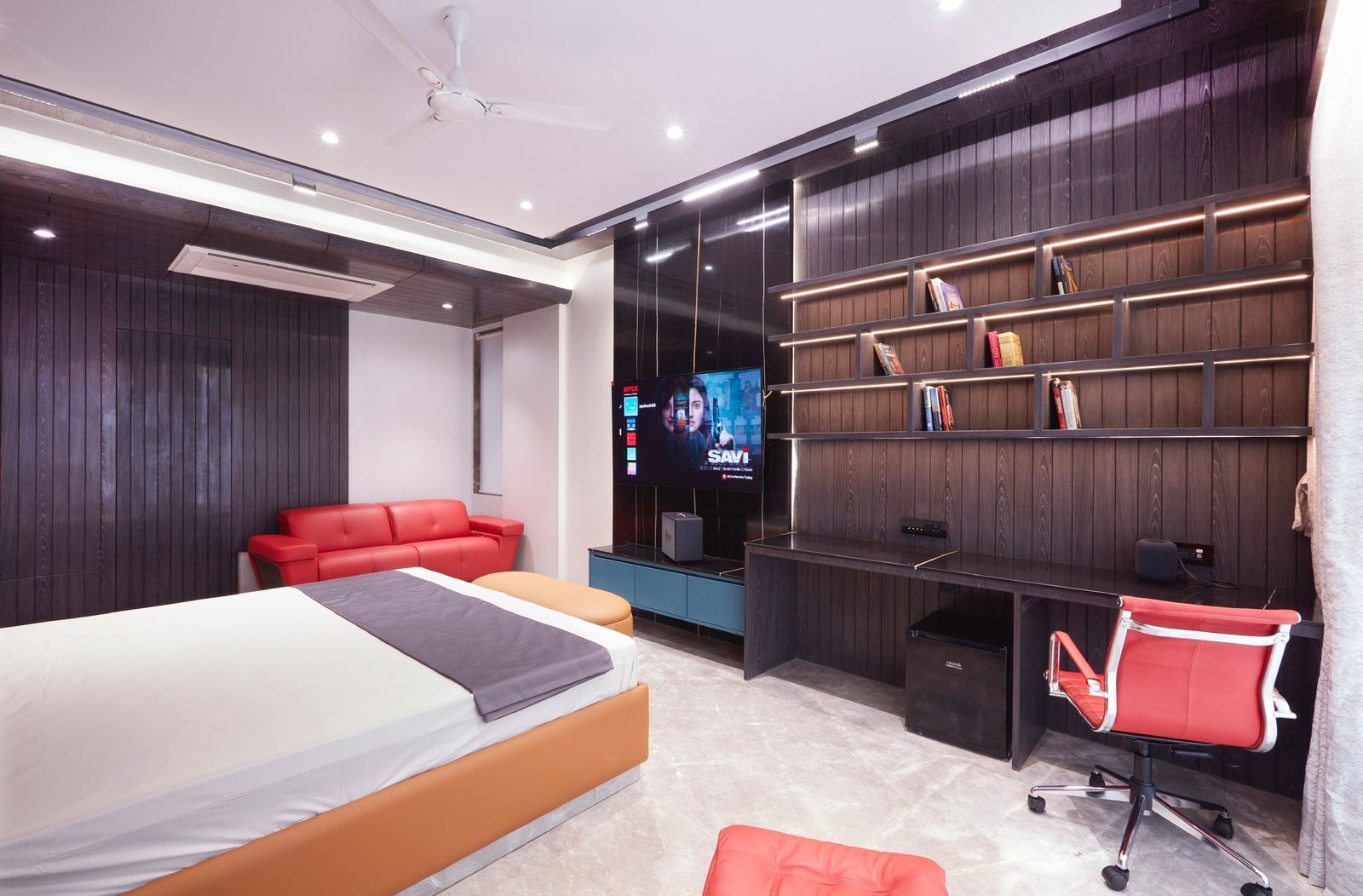
Selected work by Greenbox Design Studio. Tap any image to enlarge.
Frequently asked questions
How much more does it cost to renovate an old Mumbai flat?+
Fifteen to twenty-five per cent above the same scope in a new tower, driven by rewiring, plumbing replacement, floor levelling, plaster repair and extra debris. On a ₹16 lakh scope that is ₹2.4–₹4 lakh, most of which is civil and services rather than joinery.
Do I need to rewire a 30-year-old flat?+
Almost always. Wiring of that age is usually undersized for modern loads, frequently lacks a proper earth, and sits on a board without earth leakage protection. A full rewire with a new distribution board and RCCB costs ₹85,000–₹1,60,000 for a 2BHK and is not a place to economise.
Can I keep the old mosaic flooring?+
If it is sound and level, yes — and it is often the best floor in the building. Grinding and polishing costs ₹85–₹160 per sq ft against ₹280–₹450 per sq ft for breaking, levelling and laying new tile, and the result is a material nobody manufactures at that quality any more.
How do I deal with damp before renovating?+
Find the source first: failed external pointing, a leaking shaft, the bathroom above, or rising damp at the plinth. Each has a different remedy and most involve the society or a neighbour, so start those conversations in week one. Surface treatments applied over an active source fail within a year.
How long does an old-flat renovation take?+
Sixteen to twenty-two weeks for a 2BHK including civil work, against twelve to sixteen for a comparable new flat. The extra time is strip-out, replastering and drying, none of which can be compressed without causing finish defects later.