
Why chips lie
A 50 mm paint chip is viewed against a white card, under a showroom's 5000 K spotlights, surrounded by forty other colours. Your wall is 30 square feet, lit at 3000 K in the evening and by whatever daylight your orientation gives you, next to a walnut wardrobe and a beige floor. These are not the same conditions, and the colour will not behave the same way. A colour also intensifies dramatically with area — a beige that is almost imperceptible on a chip can read as distinctly yellow across a whole wall.
The method that works costs about ₹900 in tester pots and two days. Paint two patches of at least 600 × 600 mm — one on the wall that gets most light, one on the wall that gets least. Look at them at 9am, 4pm and 9pm. If a colour survives all three viewings on both walls, it will work. Most shortlists lose half their candidates at this stage, which is the point.
Light reflectance value
LRV is a number from 0 (absolute black) to 100 (pure white) describing how much light a colour reflects. Most Indian paint brands publish it, and it predicts a colour's behaviour in a room far more reliably than its name. A colour called 'Sandstone' tells you nothing; an LRV of 68 tells you it will brighten a room and will not read as dark in the evening.
| LRV | Behaviour | Use for | Caution |
|---|---|---|---|
| 85 – 95 | Bright, can feel clinical | Ceilings, small dark bathrooms | Shows every wall imperfection |
| 70 – 85 | Light, forgiving | Main walls in north-facing rooms | Can read cold if the undertone is blue |
| 55 – 70 | Mid-light, the safest band | Main walls almost anywhere | — |
| 35 – 55 | Distinctly coloured | Accent walls, studies, dining | Needs good lighting to work at night |
| 15 – 35 | Deep | One wall, or a small room done fully | Absorbs light; increase lumens by 30% |
| Below 15 | Very dark | Feature niches, a media room | Shows dust and scuffs readily |
Design and build under one accountable roof
Room by room
These are the defaults we start from and then adjust for orientation, floor colour and the joinery finish. They are starting points, not prescriptions.
| Room | Suggested LRV | Direction | Sheen |
|---|---|---|---|
| Living room | 62 – 75 | Warm neutral; cooler if south-facing | Matte or low sheen |
| Master bedroom | 55 – 70 | Warm, slightly deeper than living | Matte |
| Child's bedroom | 65 – 80 | Light, one saturated accent wall | Washable matte |
| Kitchen | 70 – 85 | Light, cool-neutral works here | Satin, washable |
| Bathroom | 75 – 90 | Light; tile does most of the work | Satin, anti-fungal |
| Corridor | 70 – 85 | Lightest in the home, no daylight | Satin — hands touch these walls |
| Study | 45 – 65 | Deeper is good; reduces screen glare | Matte |
| Ceilings | 85 – 95 | 5–10% lighter than the walls | Matte, always |
Orientation matters in Mumbai
A north-facing room in Mumbai receives no direct sun and a consistent, slightly cool light all day. Cool greys and blues that look sophisticated on a chip go flat and grey in that light, so north rooms want warmer colours than instinct suggests — a beige with a yellow undertone rather than a grey with a blue one. South and west-facing rooms get strong, warm, sometimes harsh light, and can carry cooler colours that would fall flat elsewhere. East-facing bedrooms get bright morning light and dim evenings, which argues for a mid-LRV colour that holds up under artificial light.
Sheen, and why it is not just about shine
- Matte: hides wall imperfections better than anything else, which matters in an old flat. Cannot be scrubbed. Bedrooms, living rooms, ceilings.
- Low sheen / eggshell: slight lustre, wipeable with a damp cloth. A good compromise for living areas with children.
- Satin: properly washable, mild sheen that shows wall defects. Kitchens, bathrooms, corridors, skirting.
- Semi-gloss and gloss: doors, frames, grilles and metalwork only. On a wall it reveals every undulation.
- Anti-fungal grades: worth it in Mumbai bathrooms and on the shaft-side kitchen wall, where humidity is highest.
- Washability claims: a 'washable' paint is washable with a damp cloth, not with a scrubbing brush. Set expectations accordingly.
What it costs
| Product level | Rate / sq ft of wall | Coats | Repaint interval |
|---|---|---|---|
| Distemper | ₹12 – ₹20 | 2 | 2 – 3 yrs |
| Economy emulsion | ₹22 – ₹32 | 2 over primer | 3 – 4 yrs |
| Premium emulsion | ₹32 – ₹48 | 2 over primer | 5 – 7 yrs |
| Luxury emulsion / low-VOC | ₹48 – ₹75 | 2 over primer | 7 – 10 yrs |
| Texture or special finish | ₹120 – ₹450 | Varies | 8 – 12 yrs |
| Putty, 2 coats, where needed | ₹18 – ₹28 | 2 | — |
Wall area is roughly 3.2–3.6 times the carpet area, so a 720 sq ft flat has around 2,400 sq ft to paint.
Take the two-day test. It is the cheapest insurance in the whole project, and it has changed almost every client's mind at least once.
Greenbox principal designer
A method that works
- Fix the fixed things firstFloor, joinery finish, stone and the big fabric. Paint is the most flexible element and should be chosen last, against the things that cannot change.
- Choose one base colour for the whole flatA single warm neutral across all main walls makes a flat read as one home. Variation comes from accents, not from a different colour per room.
- Shortlist three, not thirtyMore than three candidates makes the comparison impossible. Pick three within a 10-point LRV range.
- Test at 600 mm on two wallsLightest wall and darkest wall, two coats, allowed to dry fully. Wet paint is not the colour.
- Look at 9am, 4pm and 9pmUnder daylight, under late afternoon light, and under the artificial light you will actually have.
- Then pick the accentOne or two walls at a lower LRV, chosen against the base you have just confirmed, not in isolation.
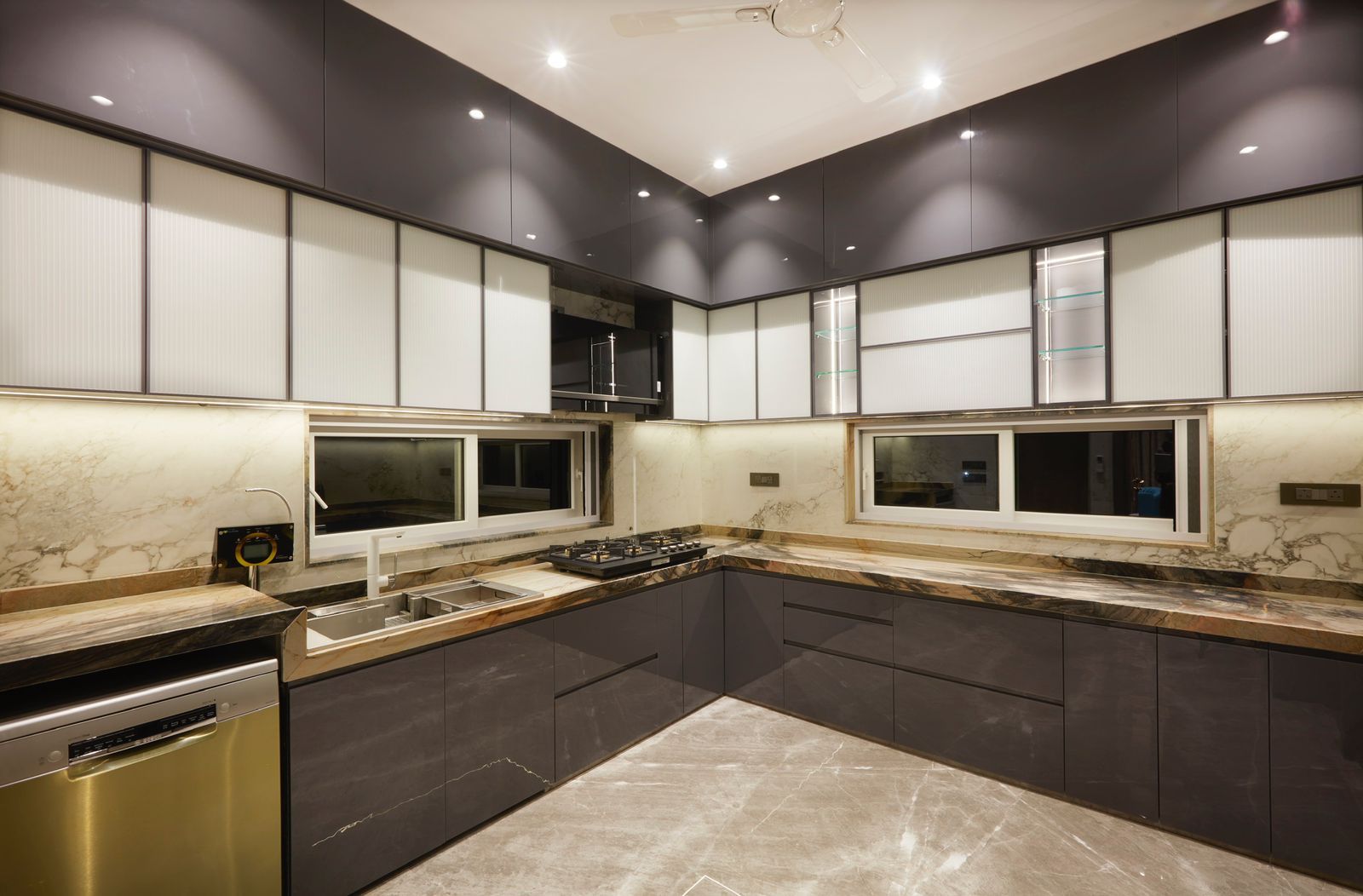
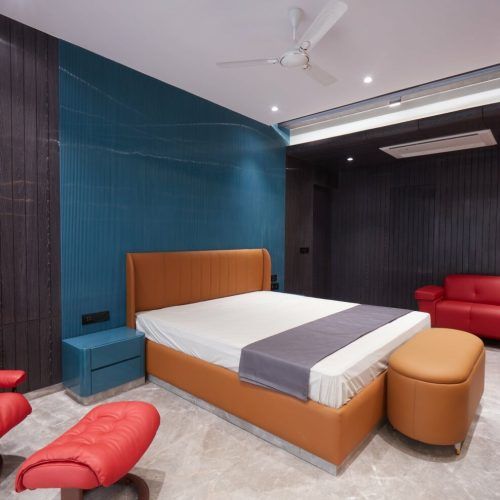
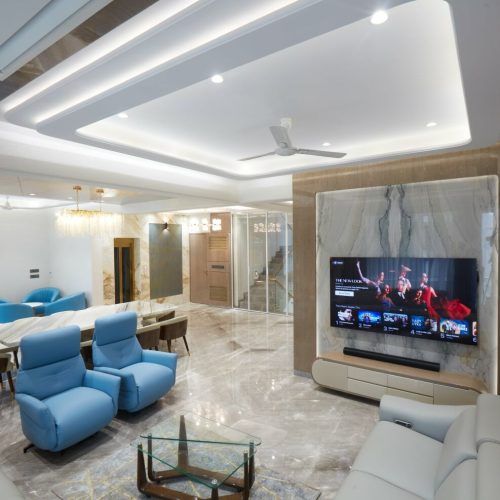
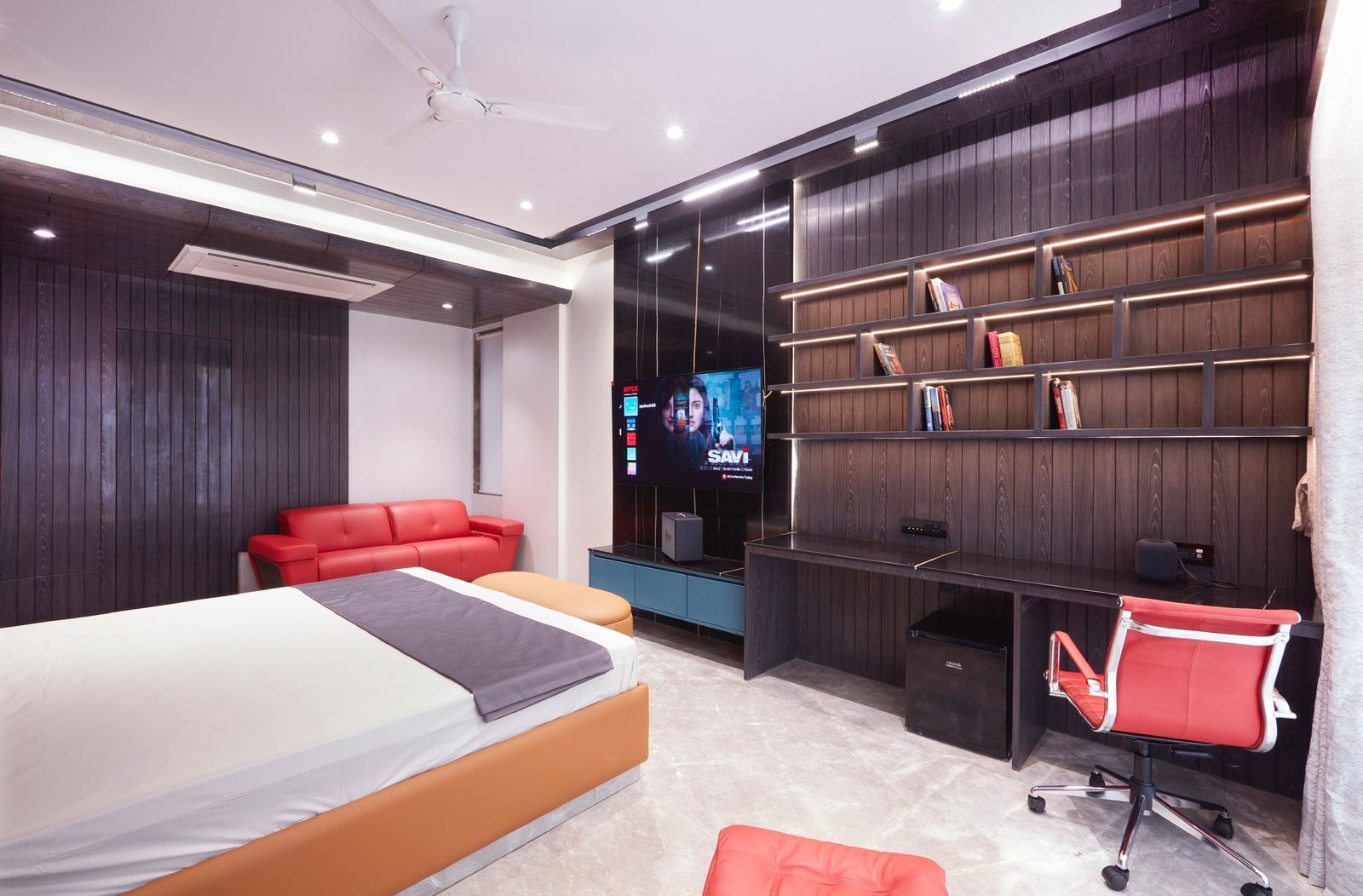
Selected work by Greenbox Design Studio. Tap any image to enlarge.
Frequently asked questions
How do I test a paint colour properly?+
Paint two patches of at least 600 × 600 mm — one on the wall that gets most light and one on the wall that gets least — with two coats, allowed to dry fully. Look at both at 9am, 4pm and 9pm. A colour that survives all six viewings will work; most shortlists lose half their candidates here.
What is LRV and how do I use it?+
Light reflectance value runs from 0 for black to 100 for pure white and tells you how much light a colour returns. For main walls, 60–75 is the reliable band; ceilings should be 5–10% lighter than the walls. It predicts how a colour will behave far better than its name does.
Should every room be a different colour?+
Generally no. One warm neutral across all main walls makes a flat read as a single home, with variation coming from one or two accent walls and from the joinery. Different colours in every room makes a flat read as a series of separate boxes, which works against you in a Mumbai-sized space.
What sheen should I use in a kitchen?+
Satin, which is genuinely washable and tolerates the oil film that reaches walls beyond the splashback. Matte is easier on imperfect walls but cannot be cleaned without burnishing. Use an anti-fungal grade on the shaft-side wall, where humidity is highest.
How much does painting a flat cost?+
For a 720 sq ft carpet flat with roughly 2,400 sq ft of wall and ceiling, ₹53,000–₹1,15,000 depending on product level, plus putty where walls need it. Premium emulsion at ₹32–₹48 per sq ft is the band most homes land in, and it repaints every five to seven years.
Do dark colours make a room look smaller?+
Less than people assume, and a deep colour on one wall can make a room feel deeper rather than smaller. What dark colours do reliably is absorb light — a room at LRV 25 needs about 30% more lumens than the same room at LRV 70 to feel equally bright, so plan the lighting alongside the colour.