
A note on what this page is
This is a plain-language explanation of how GST usually applies to interior work in India, written in September 2026 and reflecting the position as we understand it at that date. Tax law changes, notifications are issued, and the correct treatment depends on facts specific to your contract. Nothing here is tax advice and a web page is not a substitute for your chartered accountant — please treat this as a way to ask them better questions.
The three ways interior work can be supplied
Almost every dispute about GST on interiors comes from not distinguishing these three. They are taxed differently, they are invoiced differently, and the choice between them is usually made — often without discussion — when the contract is drafted.
| Supply type | What it is | Typical 2026 GST treatment | Common in |
|---|---|---|---|
| Works contract | A single composite supply of materials and labour, executed at site, resulting in immovable or permanently affixed property | 18% on the whole contract value | Turnkey residential and commercial fit-outs |
| Composite supply of goods with installation | Predominantly goods — e.g. a modular kitchen supplied and installed | Rate of the principal supply, generally 18% for modular furniture | Modular kitchen and wardrobe suppliers |
| Pure services — design and consultancy | Drawings, 3D, specification, project management, no materials | 18% as a professional service | Design-only appointments |
| Goods supplied separately | You buy the plywood, tiles or appliances directly | Each item at its own rate — often 18%, some items differ | Client-procured materials |
| Pure labour contract | Labour only, materials supplied by the client | 18%; certain construction-related labour supplies have specific treatments | Small renovation jobs |
Classification is fact-specific and rates are subject to change by notification. Confirm both with your CA before signing.

Design and build under one accountable roof
Why the structure changes the number
Consider a ₹20,00,000 interior project quoted two ways. As a single turnkey works contract at 18%, the tax is ₹3,60,000 and the invoice is straightforward. Split into ₹13,00,000 of goods you procure yourself and ₹7,00,000 of labour and design, you pay GST on each element at its own rate — and because most interior goods also attract 18%, the total often lands close to the same figure, while you have taken on the procurement risk, the delivery coordination and any defective-material disputes yourself.
| Structure | Value | GST | Total | What you also take on |
|---|---|---|---|---|
| Single turnkey works contract | ₹20,00,000 | ₹3,60,000 @ 18% | ₹23,60,000 | Nothing; one accountable party |
| Goods self-procured + labour contract | ₹13 L goods + ₹7 L labour | ₹2,34,000 + ₹1,26,000 | ₹23,60,000 | Procurement, storage, wastage, defect disputes |
| Design fee only, then separate build | ₹1.6 L design + ₹18.4 L build | ₹28,800 + ₹3,31,200 | ₹23,60,000 | Coordination between two parties |
Illustrative only, and it assumes 18% throughout. Real projects contain items at other rates. Your CA should price your actual mix.
The honest conclusion from that table is that restructuring a contract to reduce GST usually does not work as well as people hope, because the dominant materials in an interior project are themselves taxed at 18%. Where structuring genuinely matters is for a business claiming input tax credit, not for a homeowner.
Input tax credit — who can and cannot claim
- A homeowner cannot claim input tax credit. You are the final consumer. The 18% is a real cost to you.
- A GST-registered business fitting out its own premises may be able to claim credit on some elements, but the position on works contract services and on goods used in construction of immovable property is restricted under Section 17(5) of the CGST Act. Movable furniture and equipment are treated differently from permanently affixed works.
- The distinction between movable and immovable is where most commercial fit-out credit questions turn — and it is genuinely contested territory with a body of rulings behind it. This is precisely the question to put to your CA before the contract is drafted, not after the invoices are raised.
- Invoicing matters. Where credit may be available, the vendor's invoice must show the correct HSN or SAC code, your GSTIN and a proper description. An invoice that lumps everything into one line makes the claim harder to defend.
- Keep the contract and the BOQ with the invoices. Classification arguments are won with documents.
Practical things to get right
- Ask for GST to be shown separatelyEvery quotation should state the ex-GST value and the tax as a separate line. A quotation that says 'inclusive of all taxes' is impossible to compare and impossible to verify.
- Check the vendor's GSTINVerify it on the GST portal before the first payment. An unregistered vendor charging GST is a problem you do not want to discover at year end.
- Get the HSN or SAC codes on the invoiceIt tells you how the supply has been classified, which is the only way to know whether the rate applied is the right one.
- Do not pay tax in cash against a non-tax invoiceIf GST is charged, it must appear on a tax invoice with the vendor's GSTIN.
- Ask your CA before signing, not afterThe contract structure determines the treatment, and the contract is signed once.
- Keep everythingContract, BOQ, variations, invoices, payment records. If a classification is ever questioned, these are the answer.
Every quotation we issue shows the ex-GST value and the tax as a separate line. If a quote does not, you cannot compare it with one that does.
Greenbox principal designer
Questions worth taking to your chartered accountant
- Is my project a works contract, a composite supply of goods, or a mix — and does the contract as drafted say so clearly?
- If I am a business, which elements of this fit-out are eligible for input tax credit and which are blocked under Section 17(5)?
- Does anything in my scope attract a rate other than 18% as of the current date?
- Am I liable for GST under reverse charge on any part of this — for instance, services from an unregistered supplier?
- What documentation do I need to retain, and for how long?
- Has anything changed by notification since this contract was priced?
Rates and classifications are set by law and amended by notification, and the position described here is as at September 2026. Ask your CA to confirm the current position before you sign anything.
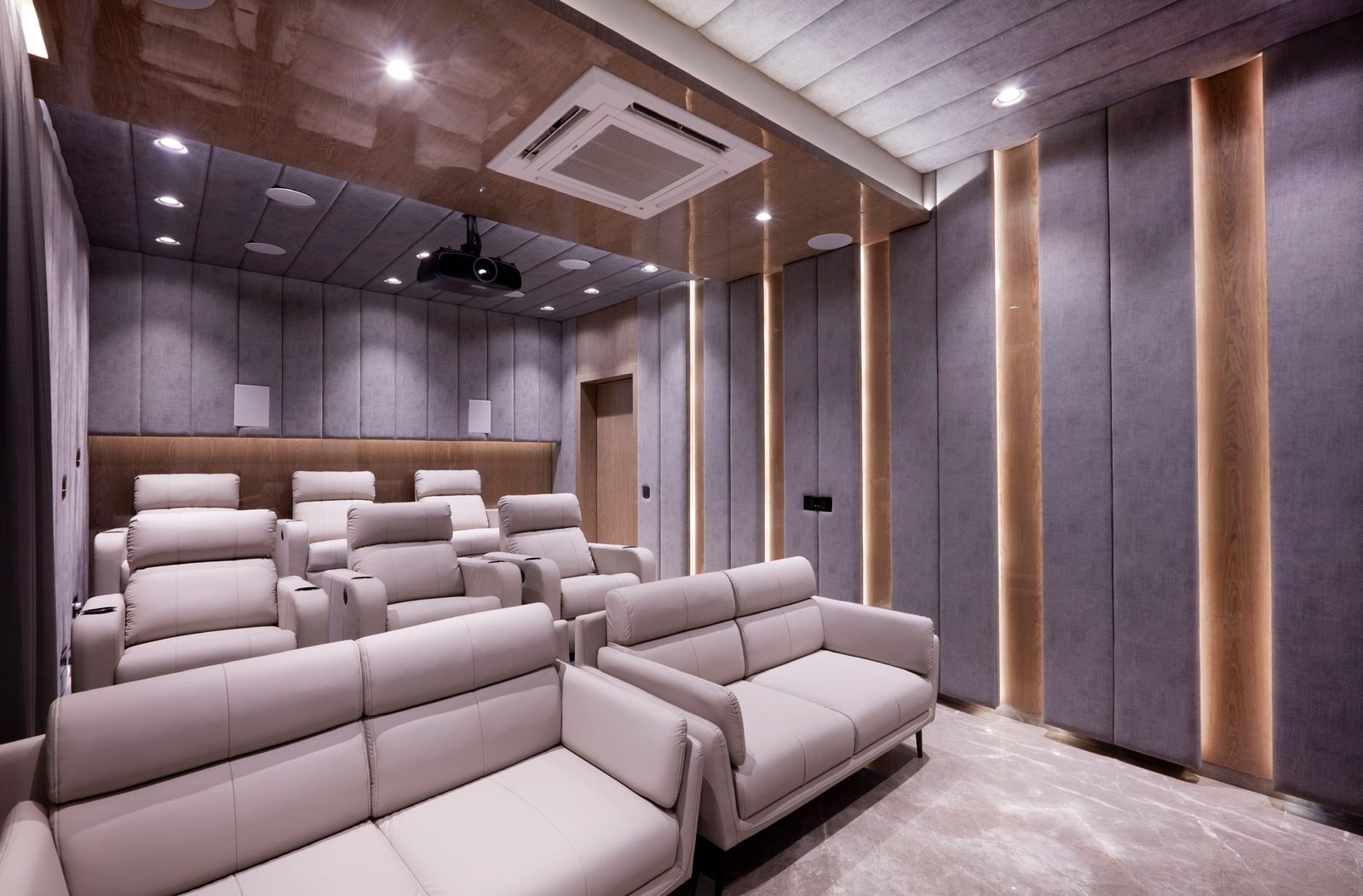


Selected work by Greenbox Design Studio. Tap any image to enlarge.
Frequently asked questions
What is the GST rate on interior design services in India?+
As at 2026, pure interior design and consultancy services are taxed at 18% as a professional service, and most turnkey residential interior contracts are treated as works contracts and also taxed at 18% on the full contract value. Rates are set by notification and can change, and classification depends on your specific contract — confirm both with your chartered accountant.
Is GST included in an interior design quotation?+
It should be shown as a separate line, not folded into the total. Ask every studio for the ex-GST value and the tax stated separately, because a quotation marked 'inclusive of all taxes' cannot be compared against one that is not, and you cannot verify what rate has been applied to which element.
Can I save GST by buying materials myself?+
Usually much less than people expect. Most interior goods — plywood, laminate, modular furniture, sanitaryware — attract 18% in their own right, so splitting a works contract into self-procured goods plus a labour contract often produces a similar total while transferring procurement, wastage and defect risk to you. Ask your CA to model your actual mix before assuming a saving.
Can a business claim input tax credit on an office fit-out?+
Partly, and it is fact-specific. Section 17(5) of the CGST Act restricts credit on works contract services and goods used in the construction of immovable property, while movable furniture and equipment are treated differently. The movable-versus-immovable distinction is where most fit-out credit questions turn, and it should be settled with your CA before the contract is drafted.
What GST documents should I keep from an interior project?+
The signed contract and BOQ, every tax invoice showing the vendor's GSTIN and the HSN or SAC code, all signed variation notes, and the payment records against each invoice. If a classification is ever questioned — by you or by the department — those documents are the answer, and they are impossible to reconstruct afterwards.
Is this page tax advice?+
No. It is a general explanation of how GST commonly applies to interior work in India, written in September 2026, to help you ask your chartered accountant better questions. Tax law changes by notification, and the correct treatment depends on facts specific to your contract. Please take the specifics to a qualified professional.