

Build your payment schedule
Contract value and schedule type. The milestones and percentages are published below.
How this calculator works
- Each schedule type carries fixed milestone percentages, published in the table below. The tool applies them to your contract value.
- The five-stage plan is our standard: 15 / 25 / 25 / 25 / 10.
- The four-stage plan — 20 / 35 / 30 / 15 — suits smaller projects where drawings and procurement happen together.
- The six-stage plan — 10 / 15 / 20 / 25 / 20 / 10 — suits turnkey work with civil and MEP packages that complete before joinery starts.
- Retention is deducted from the final milestone, not added on top, and released 90 days after handover once the snag list is closed.
- GST at 18% is applied to each milestone when you choose to display it, because that is how it is actually invoiced.
| Stage | Standard 5-stage | Simple 4-stage | Turnkey 6-stage |
|---|---|---|---|
| On signing | 15% | 20% | 10% |
| On drawing and BOQ sign-off | 25% | — | 15% |
| On civil and MEP completion | — | — | 20% |
| On material procurement | — | 35% | — |
| On joinery delivery to site | 25% | — | 25% |
| At 75–85% completion | 25% | 30% | 20% |
| On handover | 10% | 15% | 10% |
| Paid before material on site | 40% | 55% | 45% |
The last row is the number to look at. The four-stage schedule front-loads more because procurement and delivery are combined into one milestone — acceptable on a small job with a known contractor, less so on a large one.

Design and build under one accountable roof
Worked example — a ₹20 lakh contract
| Milestone | Percentage | Amount | Cumulative |
|---|---|---|---|
| On signing | 15% | ₹3 L | ₹3 L |
| On drawing and BOQ sign-off | 25% | ₹5 L | ₹8 L |
| On joinery delivery to site | 25% | ₹5 L | ₹13 L |
| At 80% completion | 25% | ₹5 L | ₹18 L |
| On handover | 10% | ₹2 L | ₹20 L |
| Less 5% retention | −5% | − ₹1 L | ₹19 L |
| Retention released at 90 days | 5% | ₹1 L | ₹20 L |
| GST @18% across the contract | — | ₹3.60 L | ₹23.60 L |
What to insist on, and what to concede
Insist on three things. First, that the drawing sign-off milestone means your sign-off, in writing, on a set of dimensioned drawings and a line-item BOQ — not the contractor's internal approval. Second, that the joinery delivery milestone means material physically at your flat, photographed and counted, not dispatched from a factory. Third, that retention exists and is written into the contract with a release date, not a promise.
Concede on the advance. A contractor who takes on your project stops taking others, orders material and commits carpenters. Fifteen to twenty per cent on signing is legitimate and refusing it will either lose you the good contractors or get you a quietly padded rate. What is not legitimate is 40% on signing, which we see routinely and which shifts the entire risk of the project onto the client before a single drawing exists.
One more practical point: pay by bank transfer against a GST invoice, every time. Cash payments leave you with no proof of payment, no warranty recourse and no input credit if you are a business. If a quotation is materially cheaper for cash, the difference is the GST you are being asked to absorb as risk, and the warranty is worth exactly nothing.
The milestone percentages here are the ones Greenbox writes into its own contracts; they are not a rate card and nothing on this page is re-priced by finish level. The ₹20 lakh the tool opens on is simply a realistic contract for a 700 sq ft Mumbai flat at premium finish on our audited October 2026 rates. Treat the output as a planning figure: accurate enough to brief a landlord, a bank or a family, and not accurate enough to sign a contract against.
What this tool does not cover
- Variations and change orders, which should be priced and signed separately before work starts on them.
- Society deposits, which are paid by you to the society directly and are refundable.
- Any advance for imported or long-lead items, which is sometimes legitimately higher and should be documented against the supplier's own terms.
- Penalty and liquidated damages clauses, which belong in the contract rather than the payment schedule.
- Your own bank's processing, which can take two working days for a large RTGS transfer — plan the milestone dates accordingly.
- For financing the project rather than scheduling it, see the interior EMI calculator.

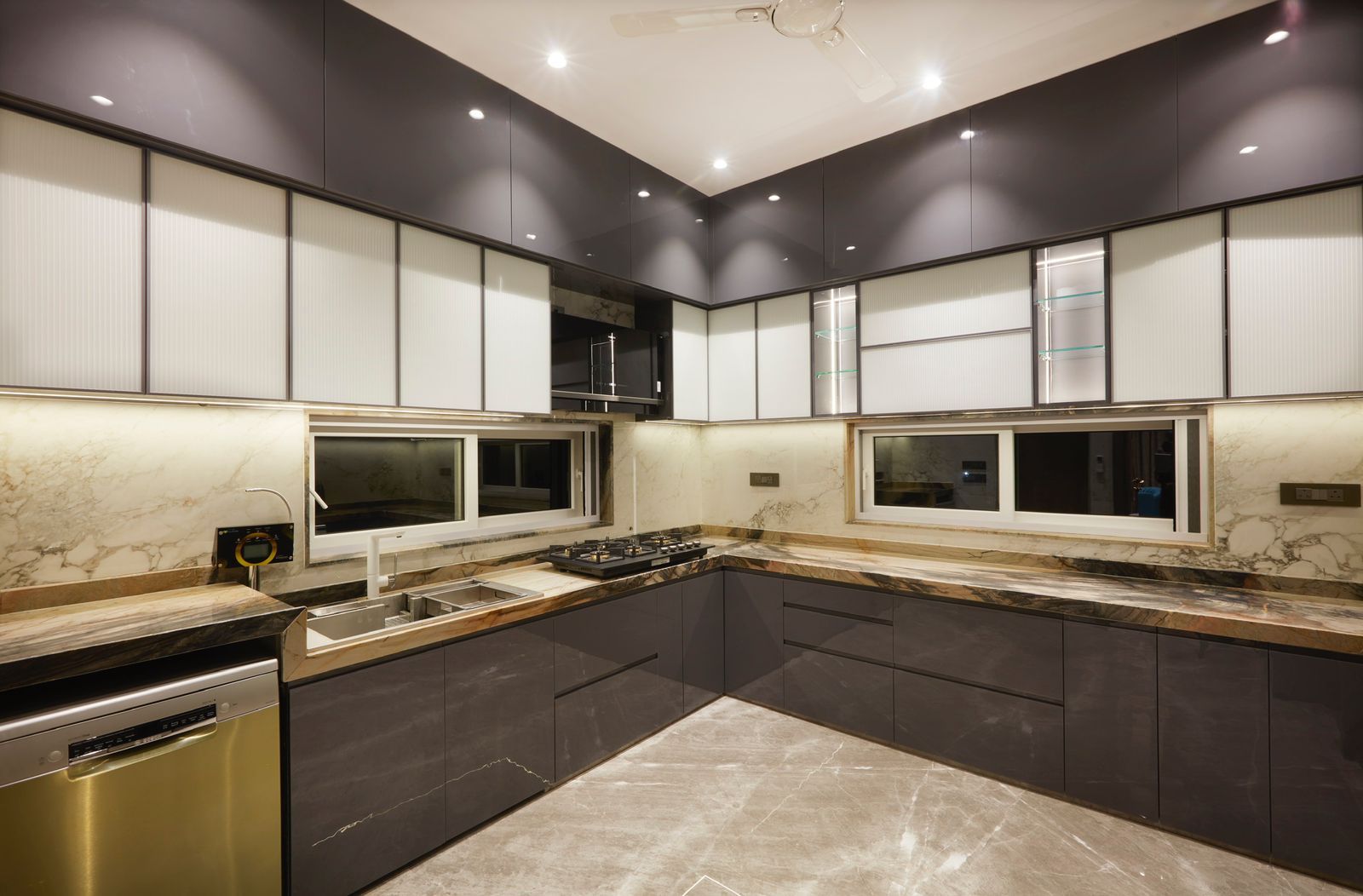
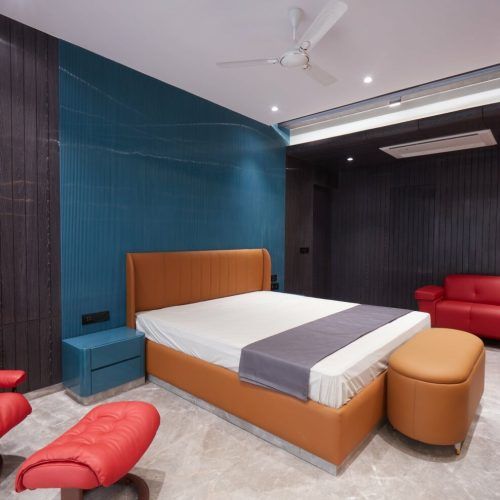
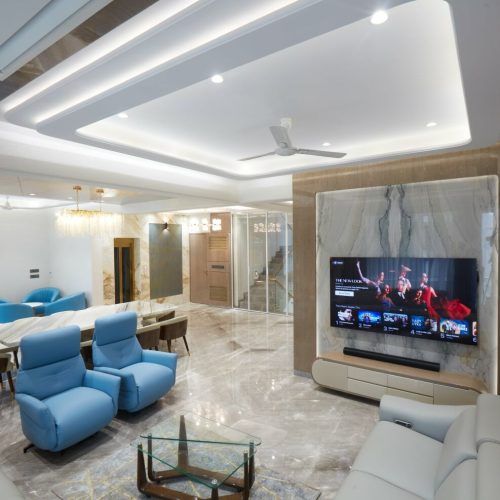
Selected work by Greenbox Design Studio. Tap any image to enlarge.
Frequently asked questions
What is a normal advance for interior work in India?+
Fifteen to twenty per cent of the contract value on signing. That covers mobilisation, drawing work and the first material orders. Anything above 25% before a drawing is signed is the contractor using your money as working capital.
Should I hold retention on an interior contract?+
Yes — 5 to 10% for 90 days after handover. It is the only leverage that exists once the team has left your flat, and it is what gets the snag list closed. A contractor confident in their work will accept it without argument.
How is GST charged on interior work?+
At 18% on the contract value, invoiced with each milestone rather than at the end. Ask for a proper tax invoice each time. If you are a registered business fitting out commercial premises, you may be able to claim input credit — check with your accountant.
What if the contractor asks for payment before the milestone?+
Ask what the money is for. A genuine reason — a supplier demanding payment against a specific order — can be handled by paying the supplier directly. A vague request usually means cash-flow trouble on another project, and paying it moves that risk onto you.
Can I link payments to dates instead of milestones?+
You can, and you should not. A date-linked schedule pays the same amount whether the work happened or not, which removes every incentive to keep to programme. Milestones you can walk in and verify are what make a schedule work.