
Estimate your project programme
Weeks from design kick-off to handover, split by phase.
How this estimator works
- Scope base + area rate. Kitchen only: 3 weeks + 0.0015/sq ft. Partial: 4 + 0.0035. Full home joinery and finishes: 6 + 0.0060. Full home with civil and flooring: 8 + 0.0085.
- Finish allowance added in weeks: laminate and membrane +0, acrylic +0.5, PU / lacquer / veneer +1.5.
- Multipliers. Living in the flat ×1.35; society hours ×1.15, or ×1.28 where a service-lift slot must be booked for every material lift; a monsoon start ×1.10.
- Approvals are added after the multipliers, not multiplied by them — a society NOC does not take longer because you live in the flat.
- Range = −10% to +15%, skewed upward because programmes slip more often than they compress.
| Phase | Share of programme | What is actually happening |
|---|---|---|
| Design, drawings & selections | 18% | Concept, 3D, working drawings, and the client decision that holds everything else |
| Approvals & mobilisation | 7% | Society NOC, deposits, worker list, site handover, temporary power |
| Civil work & demolition | 12% | Breaking, debris, masonry, plaster, waterproofing, floor levelling |
| Electrical & plumbing | 10% | Chasing, conduits, concealed lines, testing before closing walls |
| Factory joinery production | 22% | Cutting, edge banding, pre-assembly — runs parallel with site work |
| Site installation | 17% | Joinery landing, ceilings, hardware, shutters, alignment |
| Painting & finishes | 9% | Putty, primer, two coats, touch-up after joinery scuffs |
| Snagging & handover | 5% | Punch list, deep clean, demonstrations, warranty documents |
These are durations, not a strict sequence. Factory joinery overlaps civil and MEP by design; the headline figure is the realistic end-to-end calendar.

Design and build under one accountable roof
Where interior programmes actually slip
- Client decisions, not contractor speed
Laminate selection, handle finish and tile shade are three decisions that look small and stop a site cold. We build a decision register with dates attached at kick-off, and the projects that hit their dates are almost always the ones where the register was respected. Budget one working day per decision and make them in batches.
- Material lead times nobody checked
Standard laminates and vitrified tiles are off the shelf. Imported tiles run six to ten weeks. Engineered quartz in a specific slab is four to six. A single imported item on a critical path can add a month to a fourteen-week programme, and it is almost always discovered in week six.
- Society working hours
A 10am to 6pm weekday window is roughly 40 hours against a possible 60. That alone is the ×1.15. Buildings that also restrict the service lift to booked slots push it to ×1.28, because every sheet of ply and every debris run queues.
- Living on site
Work stops when the family needs the kitchen, the site is made safe and swept every evening, and no phase can spread across rooms. The ×1.35 is measured from our own completed projects, and if anything it is generous.
Ask a studio for a completion date and you get optimism. Ask for a phase bar chart with client decision dates on it and you find out whether they have ever finished anything.
Greenbox design & build team
Every constant above comes from Greenbox site records — measured drawings, signed BOQs and completion certificates from projects delivered between 2023 and 2026 — rounded to figures an estimator would actually use. We publish them so you can audit the arithmetic instead of trusting a black box. Treat the output as a planning figure: it is accurate enough to brief a landlord, a bank or a spouse, and not accurate enough to sign a contract against.
What this tool does not cover
- Statutory approvals with genuinely unpredictable durations — heritage precinct permissions, MHADA or SRA-related consents, or anything needing a structural consultant's certification.
- Builder handover delays on an under-construction flat. Nothing in this estimator survives possession slipping by a quarter.
- Festival shutdowns. Diwali, Ganpati and Holi typically cost three to eight working days between them, and skilled labour often does not return for a week after.
- Material import delays and port clearance, which are outside any contractor's control.
- Scope added mid-project. The most common single cause of overrun, and it never appears in the original bar chart.
- Costs are not modelled here — use the interior design cost calculator for the money side.

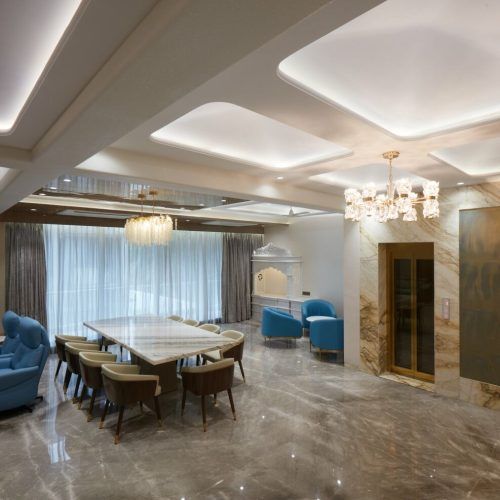
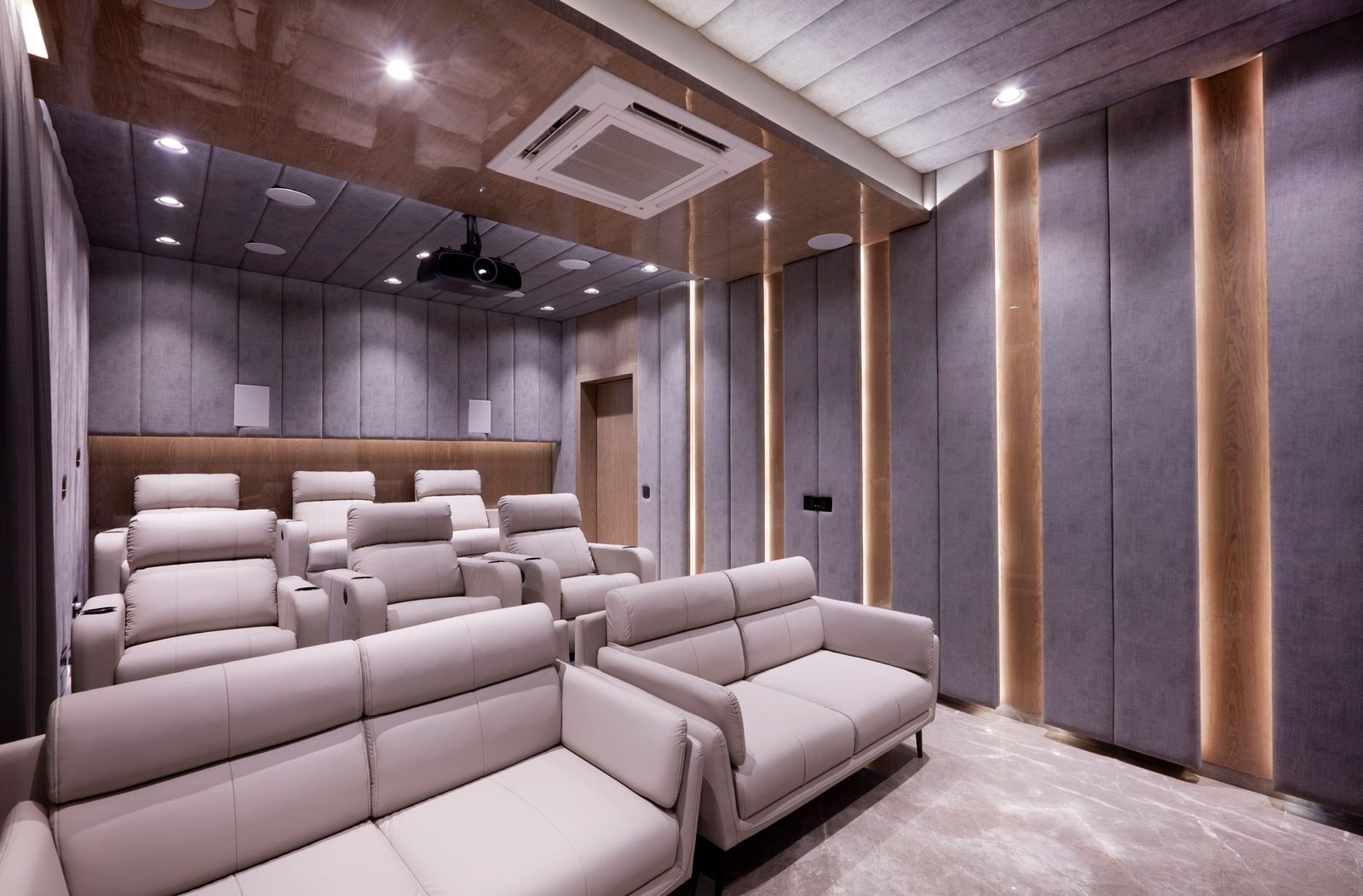
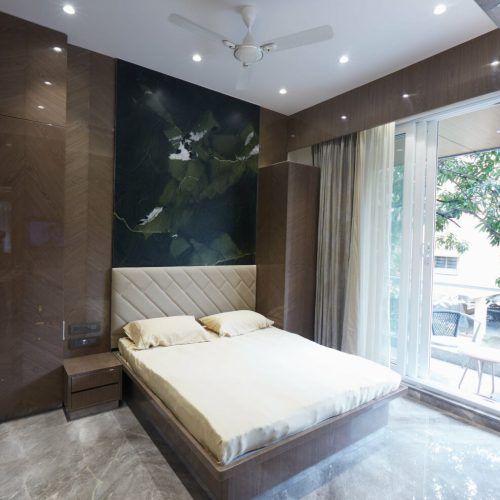
Selected work by Greenbox Design Studio. Tap any image to enlarge.
Frequently asked questions
How long does a full home interior take in India?+
Ten to sixteen weeks for a 600–1,000 sq ft flat with joinery and finishes in an empty property, and sixteen to twenty-four weeks if civil work and flooring are included or you are living in the flat. Kitchen-only work is four to six weeks.
Why does living in the flat make it slower?+
Because work happens around you. Rooms are done one at a time rather than in parallel, the site is made safe and cleaned every evening, dust barriers go up and come down daily, and no trade can spread out. We measure it at about 35% longer across our completed projects.
Does the monsoon delay interior work?+
Internal joinery and painting are largely unaffected, but humidity extends paint and polish drying times, waterproofing needs a dry substrate, and material deliveries in Mumbai slow noticeably during heavy spells. We apply a 10% allowance for a June to September start.
What is the longest lead item in an interior project?+
Usually imported tiles or stone at six to ten weeks, followed by engineered quartz at four to six and specialist glass at three to four. Order these in the first fortnight, before the design is fully frozen if necessary — the deposit is cheaper than the delay.
Can a project be compressed if we pay more?+
Somewhat, and only in specific places. Two joinery shifts, parallel painting crews and expedited material can pull ten to fifteen per cent out of a programme. What cannot be compressed is curing: waterproofing, screed, putty and polish all need the time they need, and forcing them is how a fast project becomes a warranty claim.