

Find the hook height
Artwork dimensions and what sits below it.
How this calculator works
- On an open wall, centre = 57 in. This is the museum and gallery standard, based on average adult eye level.
- Above furniture, centre = furniture top + 8 in + (artwork height ÷ 2). The 8-inch gap is what makes the art and the furniture read as one composition rather than two unrelated objects.
- Bottom edge = centre − (height ÷ 2) and top edge = centre + (height ÷ 2).
- Hook = top edge − wire slack. Slack is the distance from the top of the frame down to the wire when it is pulled taut, and it is the number people forget.
- Composition width = (pieces × width) + ((pieces − 1) × gap), with the first piece starting half that distance left of the wall's centre line.
| Situation | Rule | Why |
|---|---|---|
| Open wall | Centre at 57 in | Average adult eye level; the gallery standard |
| Above a sofa | Bottom edge 8 in above the back | Links the two into one composition |
| Above a console | Bottom edge 8 in above the top | Same rule; the console is usually taller |
| Above a bed | Bottom edge 8 in above the headboard | And never anything heavy or glazed directly over a pillow |
| Gallery wall | 2 – 3 in between pieces | Closer reads as one work; wider reads as unrelated |
| Stairwell | Follow the stair line, 57 in above each nosing | The eye reads the diagonal, not the horizontal |
| Very high ceiling | Still 57 in | Ceiling height does not change eye level |
The last row is the one people resist. A 14 ft ceiling does not make eye level higher, and art hung to 'balance' the wall ends up above the range anyone actually looks at. Hang it at 57 in and fill the wall above with something architectural instead.

Design and build under one accountable roof
Worked example — a 24-inch work over a sofa
| Step | Arithmetic | Result |
|---|---|---|
| Furniture top | sofa back height | 32 in |
| Gap above furniture | standard | 8 in |
| Bottom edge | 32 + 8 | 40 in |
| Centre | 40 + (24 ÷ 2) | 52 in |
| Top edge | 52 + 12 | 64 in |
| Wire slack when taut | measured | 2 in |
| Hook position | 64 − 2 | 62 in from floor |
Why art ends up too high
Three reasons, and all of them are mechanical rather than aesthetic. The first is that people hammer the nail where the top of the frame will be, forgetting that the wire hangs below it — so the picture lands two or three inches lower than the nail, and they compensate by starting higher next time. Measure the slack with the wire taut, and subtract.
The second is that people hang art while standing, looking at the wall from four feet away, and at that distance and that eye height everything looks low. It is not. Hang it, then sit down on the sofa in that room and look again. Almost everyone who does this once stops hanging art high.
The third is the ceiling. In a room with a 10 or 12 ft ceiling there is a strong pull toward centring art on the wall rather than on the human, and the result is a picture nobody looks at. Eye level does not move with the ceiling. Where a tall wall genuinely looks empty above the art, the answer is a taller work, a vertical pair or a lit architectural element — not the same picture raised by eighteen inches.
For a gallery wall, one more practical point: lay the whole arrangement on the floor first, photograph it, and only then transfer it to the wall. Cut paper templates to the frame sizes and tape them up if the composition is complicated. Twenty minutes of paper saves a wall full of filled holes, and putty on a painted wall never quite disappears.
Every constant on this page comes from Greenbox site records — measured drawings, signed BOQs and completion certificates from projects delivered between 2023 and 2026 — rounded to the figures an estimator would actually write down. We publish them so the arithmetic can be audited rather than trusted. Treat the output as a planning figure: accurate enough to brief a landlord, a bank or a family, and not accurate enough to sign a contract against.
What this tool does not cover
- Fixings. A heavy framed work needs a proper wall plug in masonry or a backing plate in drywall, not a picture pin.
- Very large or heavy works, which should hang from a two-point fixing or a French cleat rather than a single hook.
- Lighting. A picture light or an adjustable spot at 30 degrees from vertical avoids glare on glazed work.
- Conservation. Direct sunlight, a damp external wall or a position above a heat source will damage a work over time.
- Anything above a bed, where heavy or glazed work is a genuine hazard in a city that occasionally shakes.
- For the wall itself, see the paint colour visualizer; for the furniture below, the sofa size calculator.

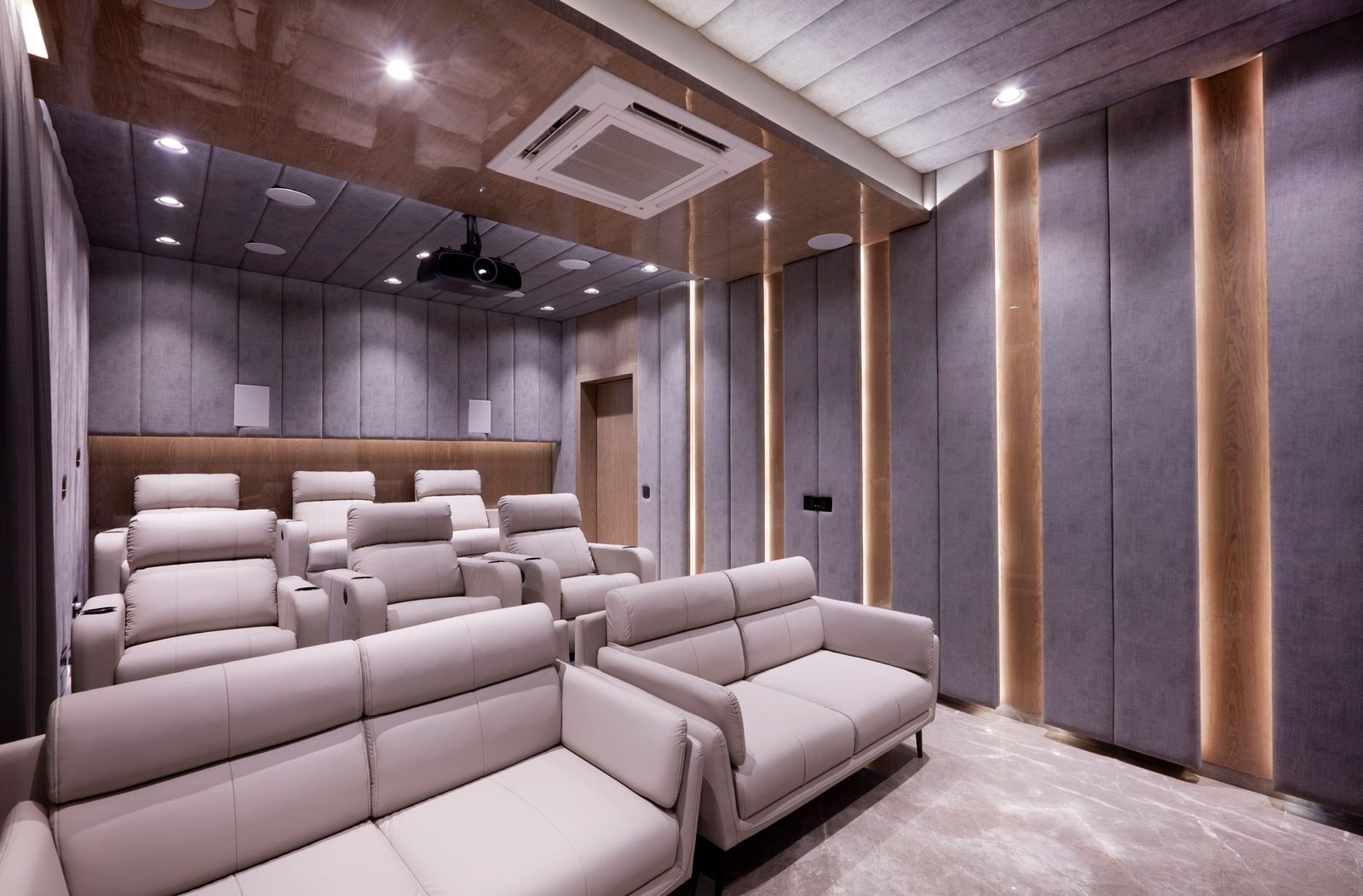
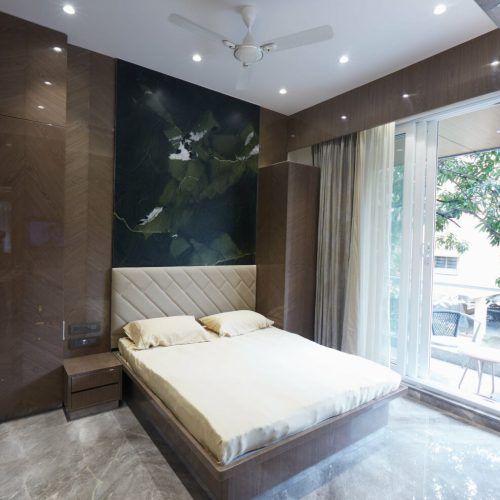

Selected work by Greenbox Design Studio. Tap any image to enlarge.
Frequently asked questions
How high should art be hung?+
With its centre at 57 inches from the floor on an open wall — average adult eye level, and the standard galleries use. Above furniture the rule changes to a bottom edge 8 inches above the furniture top, which links the two visually.
How high above a sofa should a picture hang?+
Bottom edge 8 inches above the back of the sofa. For a 24-inch work over a 32-inch sofa back, that puts the centre at 52 inches and the hook at 62 inches once 2 inches of wire slack is allowed.
Where exactly does the nail go?+
At the top edge of the picture less the wire slack. Pull the hanging wire taut as it will hang, measure from the top of the frame down to the wire, and subtract that from the intended top edge. Forgetting this step is the single most common reason art ends up too low on the first attempt and too high on the second.
How far apart should pictures be in a gallery wall?+
Two to three inches. Closer and the group reads as one work; wider and the pieces stop relating to each other. Align either the tops or the centres of the pieces rather than trying to do both, and treat the whole group as one rectangle centred at 57 inches.
Should art be hung higher in a room with a high ceiling?+
No. Eye level does not change with the ceiling, and art raised to balance a tall wall ends up above the range anyone actually looks at. If the wall looks empty above, use a taller work, a vertical pair or a lit architectural element instead of raising the same piece.