
When bespoke is worth it, and when it is not
| Piece | Bespoke or bought? | Why |
|---|---|---|
| Wardrobes and built-in storage | Bespoke | Full-height fit, loft use, scribed to out-of-square walls; modular wastes 8–14% of the volume |
| Kitchen | Bespoke or a good modular system | Depends on the room; a standard-module kitchen in a non-standard room loses a cabinet |
| TV and media unit | Bespoke | Cable management, equipment ventilation and wall width are all specific to your room |
| Bed with storage | Bespoke | Mattress size, headboard height and hydraulic storage are dimension-driven |
| Dining table | Either | Bespoke only if the room needs an unusual length or a specific top material |
| Dining and occasional chairs | Bought | A well-made production chair is stronger, more comfortable and cheaper than a bespoke one |
| Sofa | Usually bought; bespoke for an odd length | Frame engineering and foam specification are hard to beat at custom volumes |
| Study desk and shelving | Bespoke | Height, depth and cable routing to your body and your equipment |
Board, timber and what each one does
- BWP 710 plywood. The default carcass for anything in an Indian home. Dimensionally stable, holds a screw, survives humidity. ₹165–₹240 per sq ft of board for a good brand.
- MR-grade plywood. Acceptable in a dry bedroom, never in a kitchen, a bathroom or against an external wall. The saving is around 30% and it is the most commonly regretted one.
- WPC and PVC board. Immune to water, weaker in screw-holding. Right for a vanity or a utility carcass, wrong for a full-height wardrobe carrying weight.
- MDF. Excellent for painted and routed shutters because it has no grain to telegraph; poor as a carcass and unacceptable anywhere it may get wet.
- Solid timber. Teak, sheesham, oak, ash. Beautiful, and it moves with humidity — a 600 mm wide solid panel can change 4–7 mm across the grain between January and August in a coastal city. Design with floating panels and breather gaps, never a fully glued wide panel.
- Veneer on ply. The way to get the appearance of solid timber with the stability of board. Book-matched veneer needs the whole run cut from one bundle, ordered at once.
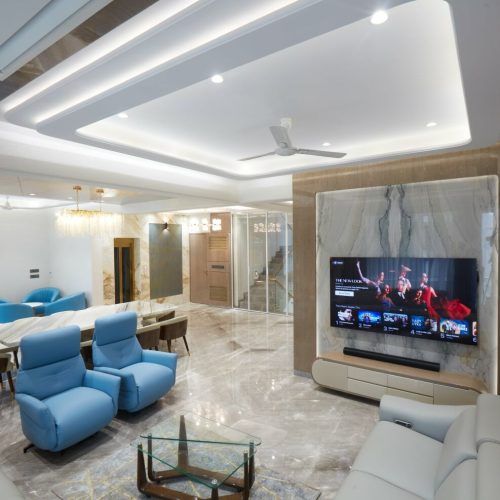
Made for one room, at one dimension, once
Joinery details that decide the lifespan
- Housed and grooved shelves, not just dowels. A shelf sitting in a 6 mm groove in the side panel carries load into the panel; a shelf on four dowels carries it into four holes.
- Back panels in a rebate, not pinned to the rear edge. A grooved-in back squares the carcass and keeps it square; a pinned back racks within a year.
- 2 mm PVC or ABS edge banding on every exposed edge, 0.8 mm internally. The 0.45 mm band that cheap work uses lifts at the corner and then peels.
- Adjustable shelves on a 32 mm drilled pitch. It costs almost nothing at manufacture and it is the difference between furniture that adapts and furniture that does not.
- Levelling feet under every floor-standing unit. No Indian floor is flat, and a unit shimmed with a folded card will move.
- Hardware named in the drawing. Hettich, Hafele, Blum or Ebco, with the series and the load rating. ‘Soft close’ on its own is not a specification.
Upholstery, specified properly
Fabric is the component most often chosen by touch and most often regretted. Three numbers settle it.
| Specification | Domestic light use | Daily use | Heavy or commercial |
|---|---|---|---|
| Martindale rub count | 15,000 – 25,000 | 30,000 – 40,000 | 50,000+ |
| Typical ₹ per metre | ₹650 – 1,400 | ₹1,400 – 3,200 | ₹3,200 – 9,000 |
| Foam density, seat | 32 kg/m³ | 40 kg/m³ | 45 kg/m³ with a reflex layer |
| Foam density, back | 24 kg/m³ | 28 kg/m³ | 32 kg/m³ |
| Suspension | Webbing | Serpentine springs or high-tension webbing | Eight-way hand-tied or serpentine on a hardwood frame |
| Frame | Ply | Seasoned hardwood or 19 mm ply | Kiln-dried hardwood, corner-blocked and glued |
A 32 kg/m³ seat foam in a daily-use sofa will lose its shape within about eighteen months. This is the single most common furniture complaint we hear.
Clients ask how long a sofa should last. It lasts as long as the foam density and the frame you never saw, and both of those were decided by a number in a specification nobody read.
Greenbox principal designer
What bespoke pieces cost
| Piece | ₹ range, ex-GST | Note |
|---|---|---|
| Built-in wardrobe, laminate on BWP | ₹1,450 – 1,800 per sq ft face | 8 ft high, standard internals, soft-close hardware |
| Built-in wardrobe, acrylic or membrane on BWP | ₹1,900 – 2,500 per sq ft face | The commonest mid-market specification |
| Built-in wardrobe, veneer with PU | ₹2,600 – 3,400 per sq ft face | Grain-matched across the run |
| TV and media unit | ₹55,000 – 2,40,000 | By width, finish and whether equipment is concealed |
| Bed with hydraulic storage | ₹48,000 – 1,60,000 | King size; upholstered headboard adds ₹18,000–₹60,000 |
| Dining table, solid timber top | ₹65,000 – 2,20,000 | Six to eight seat; the top material is most of the cost |
| Bespoke sofa, three seat | ₹85,000 – 3,20,000 | Depends almost entirely on fabric and foam specification |
| Study desk with storage | ₹38,000 – 1,20,000 | Includes cable management and a ventilated equipment bay |
| Bookcase wall, floor to ceiling | ₹1,600 – 3,400 per sq ft face | Adjustable shelves, integrated lighting adds ₹400–₹900 per sq ft |
Ex-GST. Carcass rates are per square foot of face area. Loose pieces are priced individually and depend heavily on material.
Lead times and how a bespoke piece is made
Custom work is slower than buying, and the schedule is worth understanding before you commit to a handover date.
- Survey and shop drawing, 1–2 weeksDimensions taken from the actual opening, then an elevation and section for every piece showing internal partitions, shelf positions, hardware and the finish on each face. Nothing is cut until this is signed.
- Material approval, 1 weekPhysical samples of board, laminate or veneer, the hardware series and the upholstery, approved together rather than one at a time. Veneer for a matched run is ordered as a single bundle here.
- Fabrication, 3–5 weeksCarcasses cut, edge-banded and assembled off site. Solid timber components are conditioned in the workshop for at least a week before machining so they move before they are cut, not after.
- Finishing, 1–2 weeksLaminate and acrylic are pressed during fabrication; PU, melamine and polish are separate stages with a cure between coats and a final cure before transport.
- Delivery and installation, 2–5 daysScribed to the wall, levelled, hardware adjusted, soft-close set. A well-made unit is adjusted on site; it is not forced into place.
Where we work
We design and make bespoke furniture as part of our projects and as standalone commissions. For workshop capacity, lift-dimension constraints on knock-down construction and humidity-driven detailing in this city, see custom furniture in Mumbai. Related pages: wardrobe design and modular kitchen design.
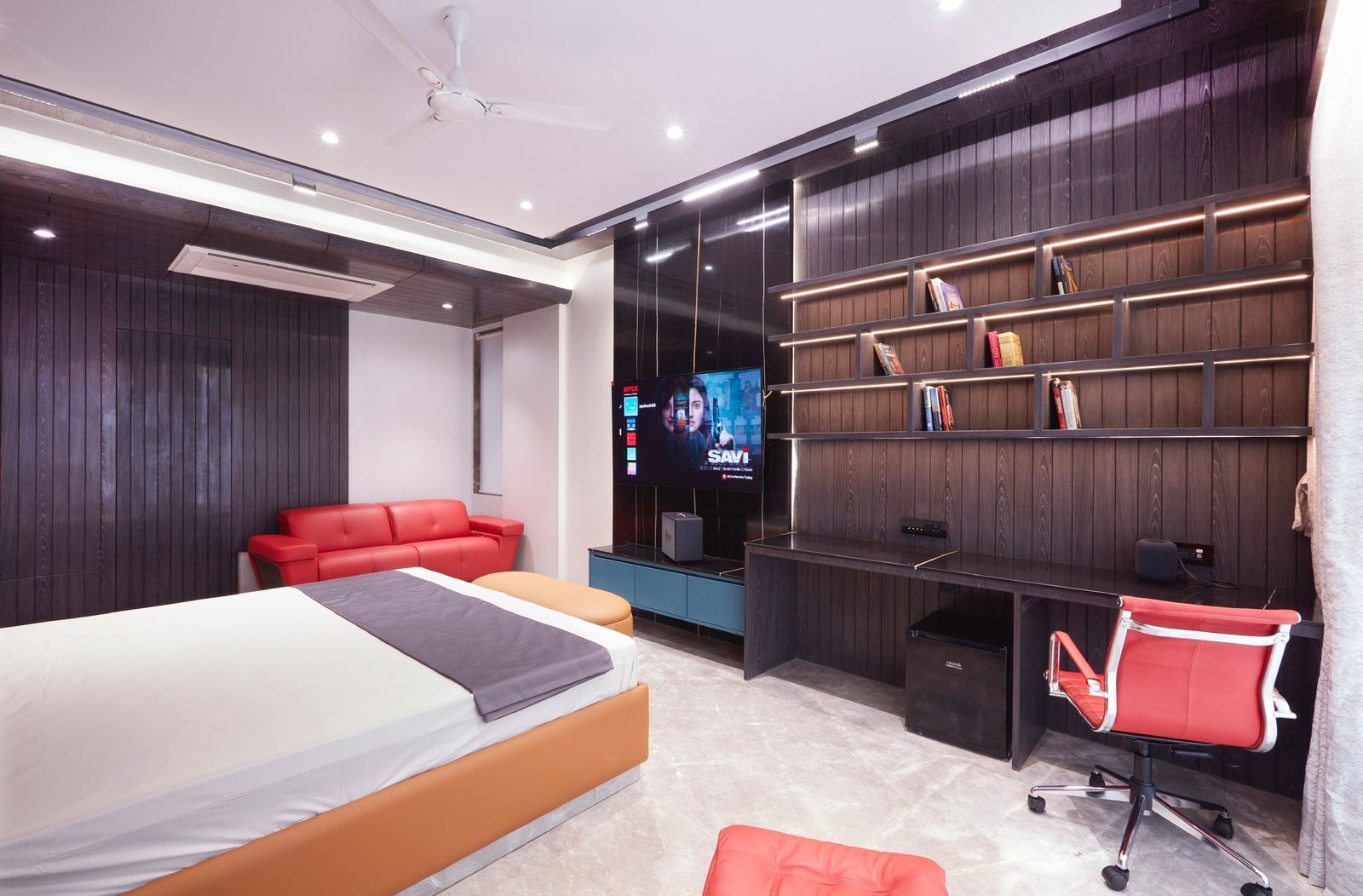
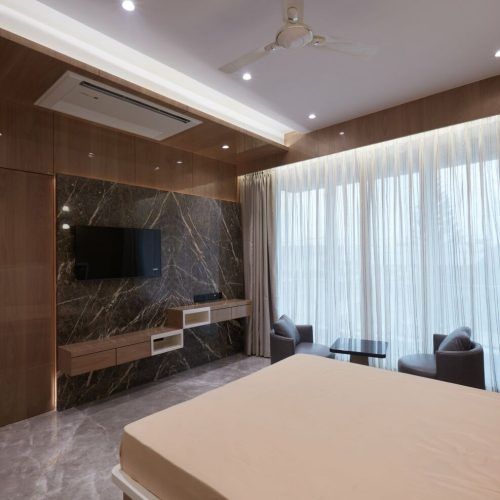
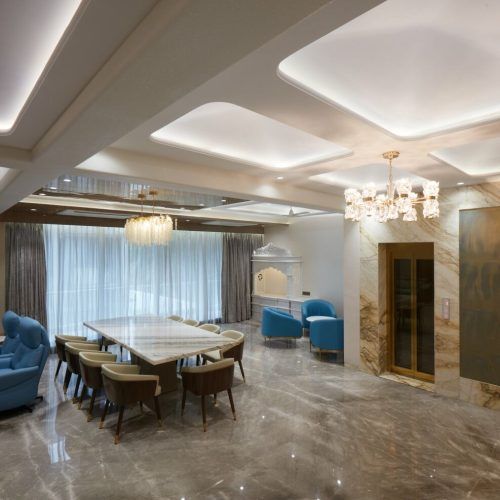
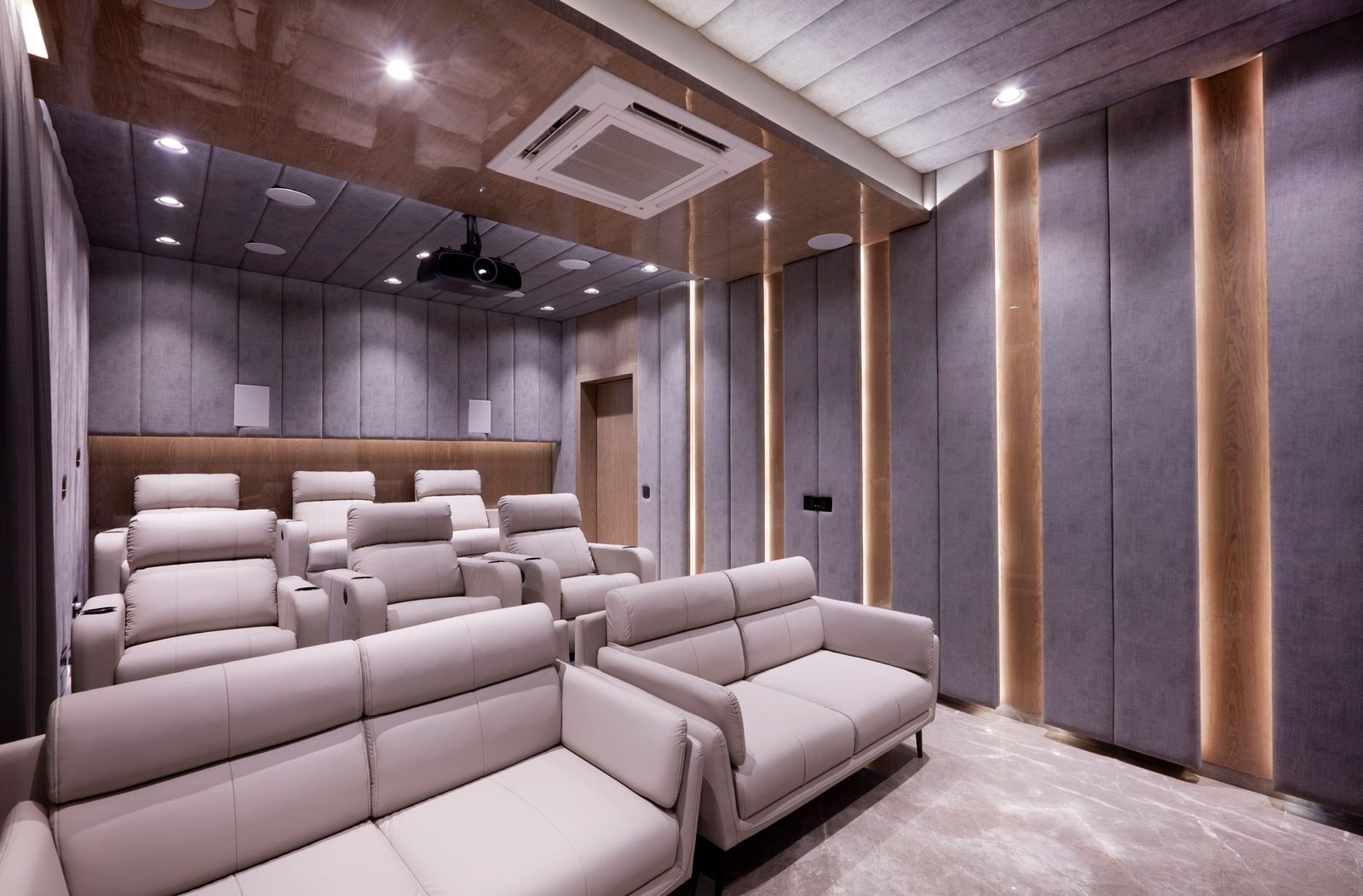
Selected work by Greenbox Design Studio. Tap any image to enlarge.
Frequently asked questions
Is custom furniture more expensive than modular?+
Per piece, usually yes. Per usable cubic foot of storage in a real room, frequently not — a modular system in a non-standard room wastes 8–14% of the available volume in filler panels and lost corners. Bespoke wins on built-in storage and awkward dimensions and loses on chairs and simple tables.
What plywood should custom furniture use?+
BWP 710 grade from a known brand for almost all carcass work, at ₹165–₹240 per sq ft of board. MR grade is acceptable in a dry bedroom only and never in a kitchen, a bathroom or against an external wall. WPC suits vanities and utility carcasses but holds screws less well, so avoid it in tall loaded units.
How do I know if joinery is well made?+
Look at four things: shelves housed into a groove rather than sitting on dowels, the back panel grooved into a rebate rather than pinned to the rear edge, 2 mm edge banding on exposed edges rather than 0.45 mm, and a 32 mm drilled pitch for adjustable shelves. Then check that the hardware is named with its series in the drawing.
What foam density should a sofa use?+
Forty kg/m³ in the seat and 28 in the back for daily use; 32 and 24 only for occasional use. A 32 kg/m³ seat foam in a sofa used every evening loses its shape within about eighteen months, and that is the single most common furniture complaint we hear.
Does solid wood furniture crack in India?+
It moves, and it cracks when it is not designed to. A 600 mm wide solid panel can change 4–7 mm across the grain between January and August in a coastal city. Design with floating panels in grooves, breather gaps and no wide fully glued panels, and it will be fine for decades.
What does a built-in wardrobe cost?+
₹1,450–₹1,800 per sq ft of face area for laminate on BWP with soft-close hardware, ₹1,900–₹2,500 for acrylic or membrane, and ₹2,600–₹3,400 for veneer with a PU finish and grain matched across the run. Those are ex-GST and assume eight-foot height with standard internals; drawers, pull-outs and integrated lighting are added on top.