
The Mumbai hotel corridors
Four distinct markets, four different briefs. The key size and the guest profile change the module more than the star rating does.
| Corridor | Typical product | ₹ per key | The design driver |
|---|---|---|---|
| Andheri East and the airport belt | Business hotels, 120–300 keys | ₹9 – 22 L | Fast turnover, early check-ins, soundproofing against aircraft and highway |
| BKC, Lower Parel, Worli | Upper-upscale and luxury | ₹22 – 45 L | Corporate guests, large banqueting, the highest finish expectation in the city |
| Colaba, Fort, Marine Drive | Boutique and heritage conversions | ₹18 – 40 L | Heritage constraints, small irregular keys, no two rooms alike |
| Powai, Vikhroli, Navi Mumbai | Midscale and extended stay | ₹8 – 16 L | Longer stays, kitchenettes, easier logistics, better loading access |
| Juhu and the western beach front | Leisure and resort-format | ₹16 – 35 L | Salt-air specification throughout; balconies and external areas |
Ex-GST. Per key including pro-rata public and back-of-house areas. Excludes structure, plant, OS&E and pre-opening.
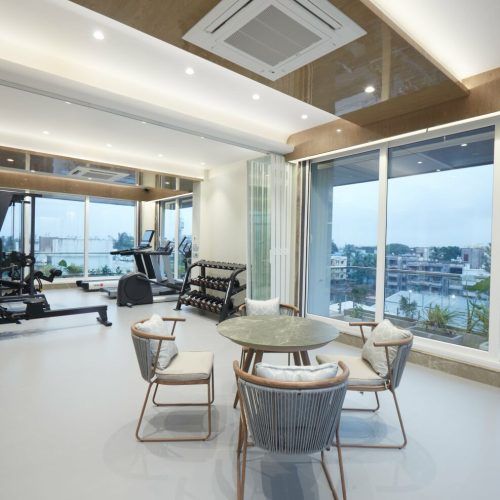
Phasing a refurbishment around an occupancy curve
Designing a compact Mumbai key
- Put the wardrobe in the entry zone, not the sleeping zone. In a 200 sq ft key the entry corridor is dead area; a 600 mm open wardrobe with a luggage shelf below turns it into the storage the room needs.
- Replace the desk with a 450 mm ledge. Business guests in this city work on a laptop for forty minutes, not four hours. A full desk consumes 12 sq ft that the room does not have.
- Glass between the bathroom and the room, with a blind. It is the only move that makes a 190 sq ft key feel larger, and the blind resolves the objection.
- Wall-hung everything in the bathroom. A wall-hung WC and basin make a 48 sq ft bathroom cleanable and visually larger, and they remove the floor junctions housekeeping struggles with.
- Take the headboard wall full width and full height. One upholstered plane with integrated reading lights and sockets replaces four separate items and reads as a deliberate design rather than a small room.
- Soundproof the corridor wall and the door, not the party wall. In a compact hotel the complaint is nearly always corridor noise: a solid-core door with an acoustic drop seal and a proper frame seal is worth more than any wall build-up.
Refurbishing while trading, with Mumbai occupancy
Mumbai business hotels run high occupancy for most of the year, with softer weeks around the monsoon peak and the December holidays. That curve is the programme.
| Decision | Approach | Effect |
|---|---|---|
| When to start | Late June to early September | The softest occupancy in the year in the business corridors |
| How many floors out | One floor at a time, two only in the soft weeks | Protects rate; a hotel visibly under construction discounts |
| Working hours | Noisy work 10am – 4pm, quiet trades to 8pm | Agreed with the operator against check-in and check-out peaks |
| Separation | Double-skin hoarding with a lobby, negative pressure, dedicated lift | Dust in a corridor is a complaint; dust in the restaurant is a closure |
| Material movement | Night deliveries to a sealed staging floor | Mumbai daytime traffic makes daytime delivery unreliable anyway |
| Prototype | One key, completed and sold for a month first | Catches the errors before they repeat across 200 rooms |
What the monsoon and the sea add
- No external works from mid-June to late September. Facade, terrace, pool deck, external painting and landscape all wait. In practice this means a Mumbai hotel refurbishment has a room programme and an envelope programme, and they run in different halves of the year.
- Salt air on the western seafront. Juhu, Bandstand and Marine Drive properties need SS 316 on all external hardware, anodised aluminium at 20 microns or more, and corrosion-protected AC coils. Balcony railings and door hardware are the first failures on a beachfront hotel.
- Humidity affects the finishing trades. PU and melamine polishing bloom above roughly 80% relative humidity. Either dehumidify the working floor or schedule polishing outside the monsoon.
- Water ingress at balcony thresholds. Any room with a balcony needs a drained threshold channel and a 75 mm upstand; the flush-threshold detail that looks good in a render floods the room in July.
- Corridor and lobby flooring gets wet for four months. Specify R11 slip resistance in entrance zones and a recessed mat well of at least 1,800 mm in the direction of travel at every external door.
An operator asked us to save eight lakh by extending the programme by six weeks. Six weeks of forty rooms at a seventy-two per cent occupancy and an eight thousand rupee rate is about ninety-seven lakh. We showed them the arithmetic and we worked nights.
Greenbox commercial fit-out lead
Back of house in a Mumbai hotel
City-centre plots here are small and every square foot given to service areas is a square foot not sold. Four decisions recur, and getting them wrong shows up in the guest reviews rather than the drawings.
- Laundry off site, almost always. Below about 150 keys, an in-house laundry in Mumbai rarely pays for the space it consumes, the water it needs and the extract it demands. Plan a linen store and a soiled hold instead.
- The staff entrance and route matters. A brigade of sixty arriving at 6am through the guest lobby is a service failure. A separate entrance, a changing area and a route to the back of house that never crosses a guest corridor.
- Housekeeping pantries every floor, 60–90 sq ft. Linen, amenities, a sink and a trolley park. Without one, trolleys live in the corridor and the corridor is what guests photograph.
- Waste holding is a licensing item. Segregated wet and dry, ventilated, washable, with a collection route and a slot. On a constrained Mumbai plot this is frequently the last space anyone allocates and the first one an inspector asks about.
Boutique and heritage conversions
Colaba, Fort and parts of Bandra hold buildings that make wonderful small hotels and difficult construction sites. Expect irregular key sizes with no repeating module, heritage approval for anything visible from the street, structural verification before any new wet area is created on an upper floor, and services that have to be threaded through a building that never had them. Budget 20–35% above an equivalent new-build key, and allow twice the design time, because every room is drawn individually.
The hospitality fundamentals
Cost per key by segment, the guest room module, public area ratios and FF&E lead times are the same across India and are set out on hotel and hospitality interior design. Restaurant and bar scope within a hotel is on restaurant interior designers in Mumbai, and the wider commercial picture on commercial interior designers in Mumbai.
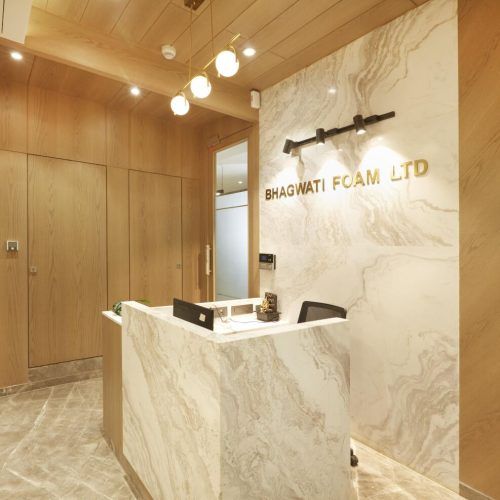
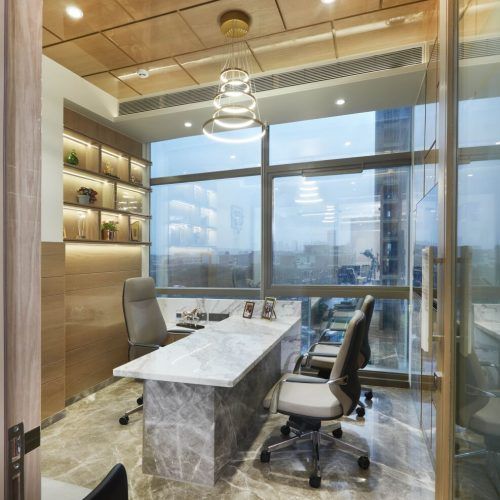
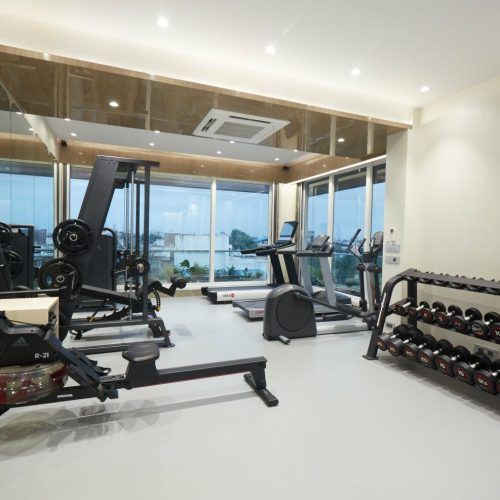
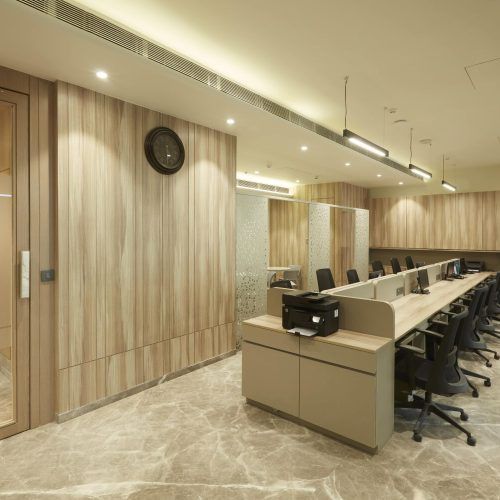
Selected commercial work by Greenbox Design Studio. Tap any image to enlarge.
Frequently asked questions
What does a hotel cost per key in Mumbai?+
₹8–₹16 lakh in Powai, Vikhroli and Navi Mumbai, ₹9–₹22 lakh in the Andheri East airport belt, ₹16–₹35 lakh on the Juhu seafront, ₹18–₹40 lakh for a Colaba or Fort boutique conversion and ₹22–₹45 lakh in BKC, Lower Parel and Worli. All ex-GST, including the pro-rata share of public areas.
How small is a typical Mumbai hotel room?+
180–280 sq ft in the business corridors, which is compact by national standards. That drives specific moves: the wardrobe goes in the entry zone, the desk becomes a 450 mm ledge, the bathroom gets a glazed wall with a blind, and the headboard wall runs full width with integrated lighting and sockets.
Can a hotel be refurbished while it stays open?+
Yes, and in Mumbai it usually has to be. One floor at a time, sealed with a double-skin hoarding and a lobby under negative pressure, a dedicated service lift, noisy work restricted to roughly 10am to 4pm, and night deliveries to a staging floor. Start in the soft occupancy weeks from late June to early September.
Why does lost room revenue matter more than the construction saving?+
Because it is usually larger. Forty rooms out of service for six extra weeks at 72% occupancy and an ₹8,000 rate is roughly ₹97 lakh of revenue. A slower, cheaper programme that saves ₹8 lakh on labour is a poor trade, which is why we cost hotel programmes against room-nights rather than against the BOQ alone.
What does a Juhu or Marine Drive seafront hotel need specifically?+
SS 316 on every external fixing, anodised aluminium at 20 microns or more on balcony framing and railings, corrosion-protected AC coils, and a drained threshold channel with a 75 mm upstand at every balcony door. Standard hardware on a beachfront Mumbai hotel visibly fails within two to three years.
How much more does a heritage hotel conversion cost?+
Twenty to thirty-five per cent above an equivalent new-build key, and roughly double the design time. Every room is a different shape, so there is no repeating module; anything visible from the street needs heritage approval; and services have to be threaded through a building that was never designed to carry them.