
Scope: what turnkey covers
Turnkey is a commercial structure rather than a design style. The turnkey service page sets out our scope; these answers cover how the arrangement behaves in practice.
What is included in a turnkey contract?+
Design and drawings, material procurement, all site trades, project management, statutory and society coordination, snagging and handover, and a single warranty. In our contracts it also includes the 3D views, the BOQ, appliance coordination and the final clean. What it does not automatically include is loose furniture, soft furnishings, appliances and artwork — those are named separately.
What is usually excluded?+
Appliances and white goods, loose furniture and soft furnishings, curtains and blinds unless specified, statutory fees and society deposits, any structural work requiring municipal approval, and works by specialist vendors such as home automation or security if the client appoints them directly. Every exclusion should be a written line, not an assumption.
Is turnkey the same as design-and-build?+
Effectively yes, in the Indian residential market the terms are used interchangeably. Both mean one entity carries design and execution under one contract. In commercial work 'design-and-build' usually implies a more formalised procurement route with an employer's requirements document, but the accountability structure is the same.
Can I supply some materials myself?+
Yes, and it should be written down as a client-supplied item with a delivery date attached. Client-supplied material moves the risk for quality, quantity and timely delivery to you, and it removes that item from the warranty. It works well for tiles, sanitaryware and appliances; it works badly for anything on the critical path.
Cost and comparison
| Route | Cost on a ₹18 L project | Who coordinates | Who carries risk | Warranty |
|---|---|---|---|---|
| Turnkey / design-and-build | ₹18 L | The studio | The studio | Single point |
| Designer + contractor | ₹16–₹16.7 L | You, mostly | Shared, disputed | Split |
| Contractor only, no designer | ₹13–₹15 L | You | You | Contractor only |
| Trade by trade, self-managed | ₹11.5–₹14 L | You entirely | You entirely | None coherent |
The self-managed route looks cheapest and assumes your time has no value and that nothing goes wrong. Our comparison tool models it with time costed.
Why does turnkey cost more?+
Because the studio is carrying risk that otherwise sits with you: material price movement, trade coordination, rework when one trade damages another's work, and the warranty across all of it. The 8–15% premium is the price of that transfer. On a project that runs smoothly you pay it for nothing; on one that does not, it is the cheapest thing in the budget.
How do I compare a turnkey quote to a contractor quote?+
Normalise the scope first. Add design fees, coordination time, the items the contractor has excluded, and a realistic allowance for rework to the contractor figure. Most comparisons that show a 25% gap are comparing a complete scope with an incomplete one rather than two prices for the same thing.
Can turnkey be done to a fixed price?+
Yes, against a fully detailed BOQ and a frozen scope. What cannot be fixed is the price of work that has not been specified yet, or site conditions not visible at survey — concealed damp, old wiring, out-of-plumb walls. Those belong in a provisional sum or a contingency, declared openly rather than buried in the rate.
Design and build under one accountable roof
Variations and change control
How are changes priced mid-project?+
Against a schedule of rates agreed before work starts, so that a change is priced by formula rather than by negotiation while you have no alternative. Every variation should be documented with its cost, its time impact and your written approval before it is executed. A project with verbal variations ends in a disputed final account.
What does a change cost at different stages?+
A change at drawing stage is free or nominal. The same change after fabrication costs material plus labour plus lost time. After installation it costs removal as well. As a rough guide: free at design, 1x at procurement, 2–3x after fabrication, 4–6x after installation.
Who pays when a site discovery changes the work?+
The client, normally, because it is a condition of the property rather than a failure of the contractor — unless the survey should reasonably have found it. This is why the contingency exists and why a proper pre-contract survey is worth insisting on. Concealed damp behind a wardrobe is the classic example.
Payments, programme and handover
What is a fair turnkey payment schedule?+
10–15% on signing, 30–35% material advance against the signed BOQ, 25–30% on delivery of material to site with verified challans, 15–20% on installation, and 5–10% retained until 30–45 days after handover. Tie the tranches to verified progress, not to calendar dates.
What if the project runs late?+
The contract should say. A liquidated damages clause of 0.5–1% of contract value per week beyond an agreed date, capped at 5–10%, is reasonable and focuses attention. It must be paired with an extension-of-time mechanism for delays the contractor does not control — client decisions, society restrictions, force majeure.
What happens at handover?+
A joint walkthrough producing a written snag list with dates against each item, a demonstration of every appliance and mechanism, and the handover pack: BOQ, warranty terms, as-built drawings, pre-plaster wall photographs, appliance manuals and shade codes. Retention is released after the snag list is closed, not before.
Does turnkey work for commercial projects too?+
Yes, and the accountability argument is stronger there because the coordination load is higher — landlord approvals, nominated vendors, services commissioning. See our commercial FAQ for the fit-out-specific questions, and the turnkey contractors page for scope.
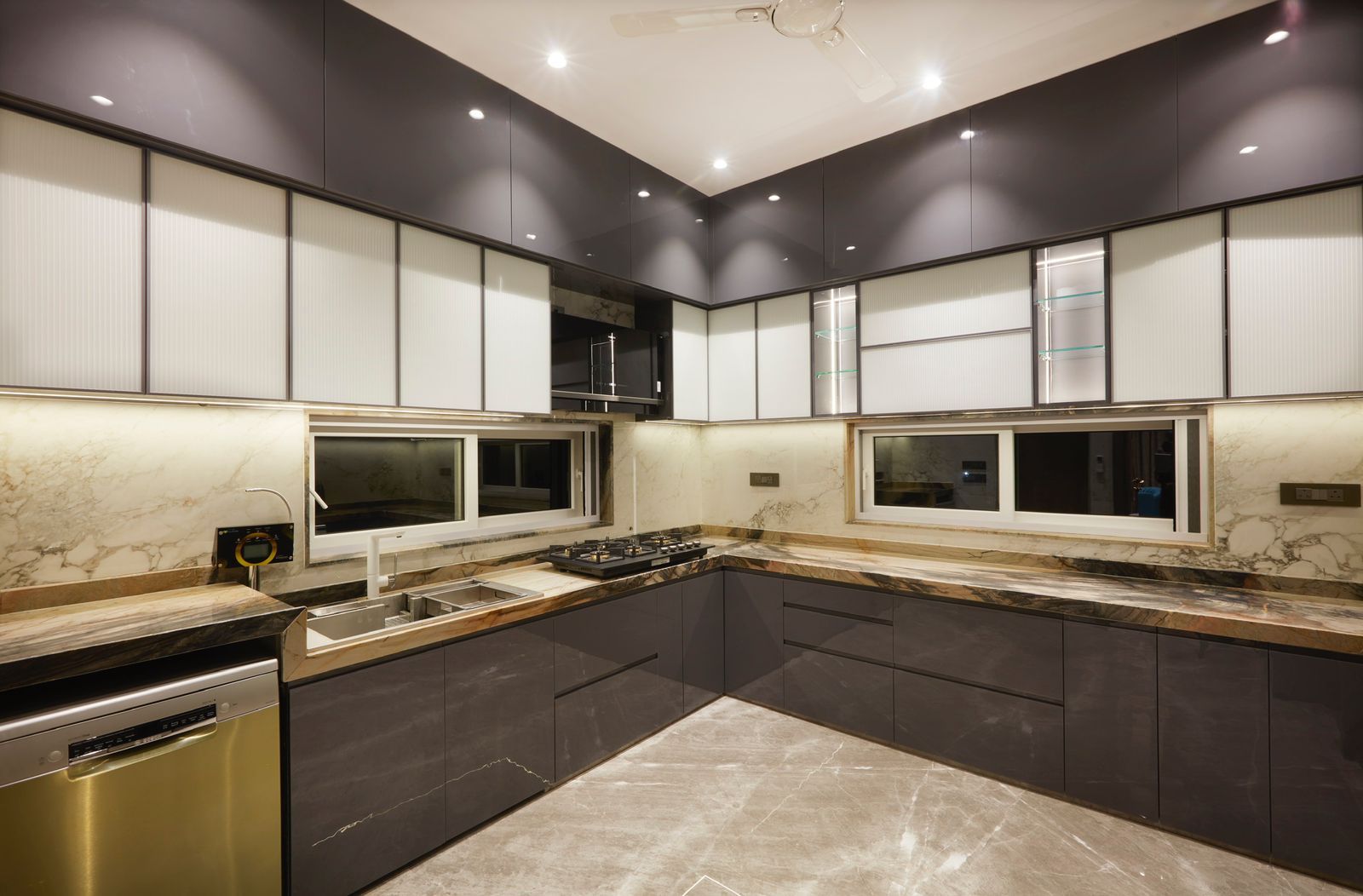
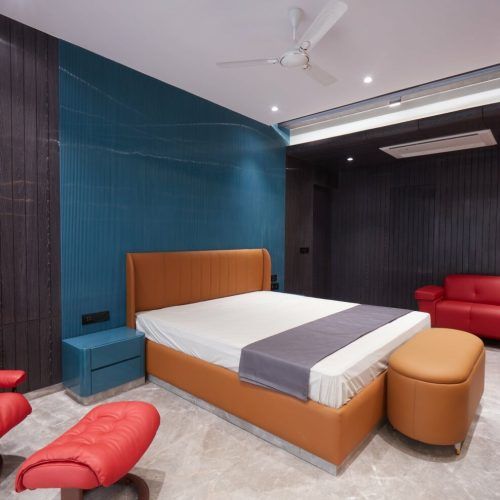
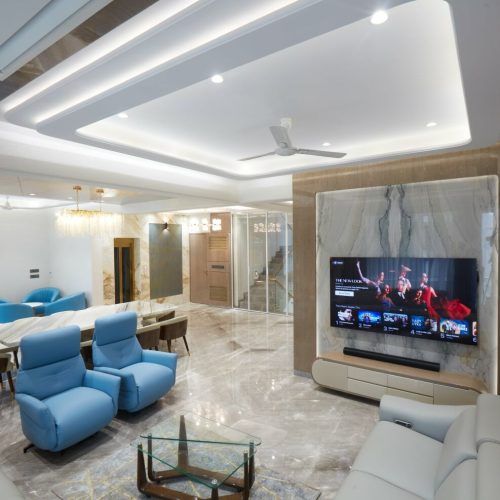
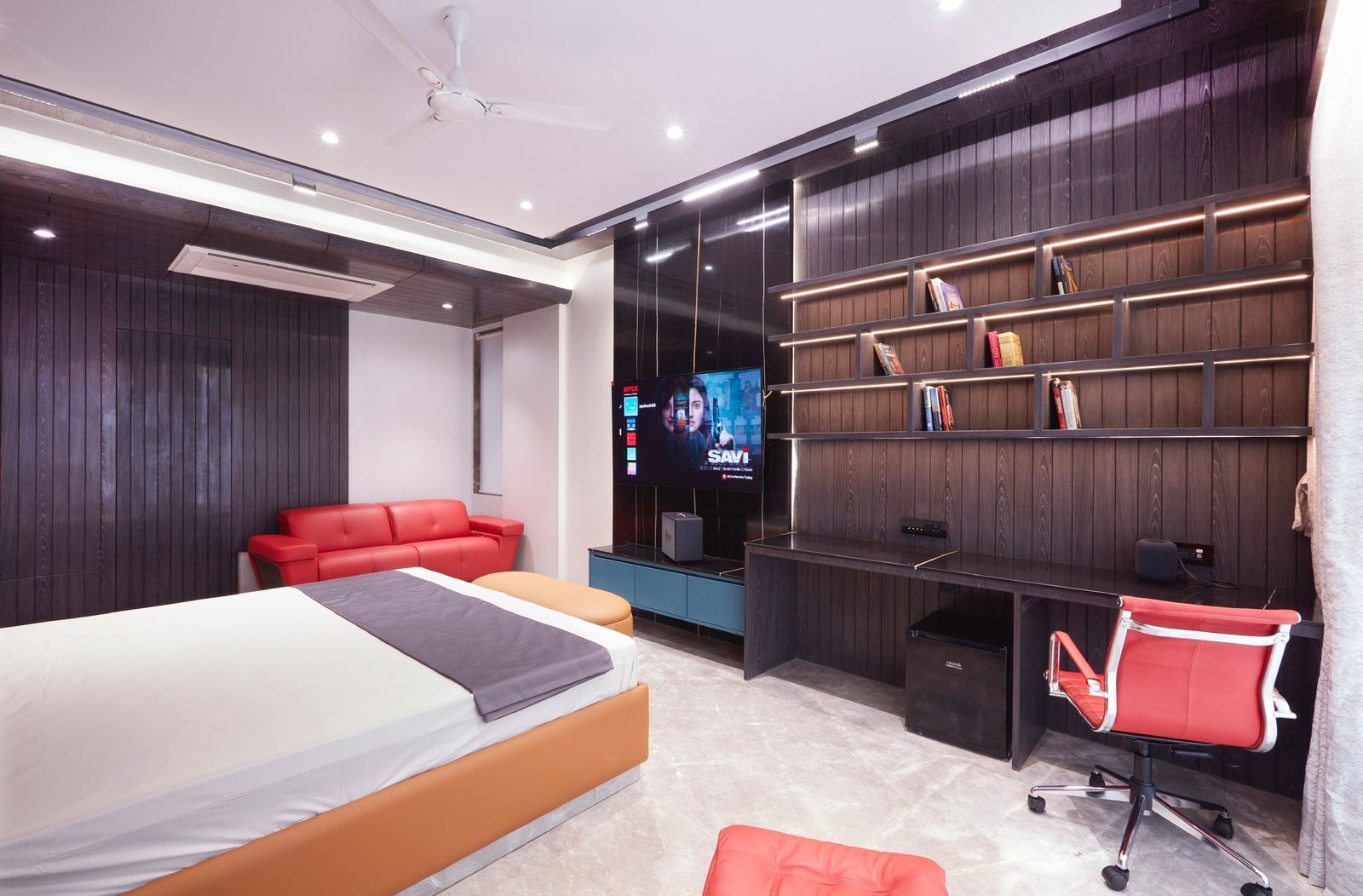
Selected work by Greenbox Design Studio. Tap any image to enlarge.
Frequently asked questions
What is turnkey interior design?+
A single contract under which one party delivers design, procurement, execution, coordination and warranty from concept to handover. You deal with one BOQ, one programme and one warranty holder rather than coordinating a designer, a contractor and several vendors yourself.
Is turnkey more expensive?+
By 8–15% against appointing a designer and contractor separately, on the same scope. The premium buys coordination and single-point liability. Comparisons that show a wider gap are usually comparing a complete turnkey scope against an incomplete contractor scope rather than two prices for the same work.
What is excluded from a turnkey contract?+
Typically appliances, loose furniture, soft furnishings, curtains, statutory fees, society deposits and any structural work needing municipal approval. Every exclusion should appear as a written line in the contract; assumptions about what is included cause more disputes than pricing ever does.
How are variations priced?+
Against a schedule of rates agreed before work starts, with each change documented for cost and time impact and approved in writing before execution. Without that mechanism you are negotiating mid-project with no alternative supplier available, which is the worst possible position to price from.
What payment schedule should a turnkey contract have?+
Roughly 10–15% on signing, 30–35% as a material advance against the signed BOQ, 25–30% on verified delivery, 15–20% on installation and 5–10% retained for 30–45 days past handover. Tranches should be released against verified progress rather than against dates.
Can I supply my own materials in a turnkey project?+
Yes, recorded as client-supplied items with delivery dates. Doing so transfers quality, quantity and delivery risk to you and removes those items from the warranty. It works well for tiles, sanitaryware and appliances, and badly for anything sitting on the critical path.