
What is worth building, and what it costs
| Scope | Where | ₹ per sq ft | Worth doing? |
|---|---|---|---|
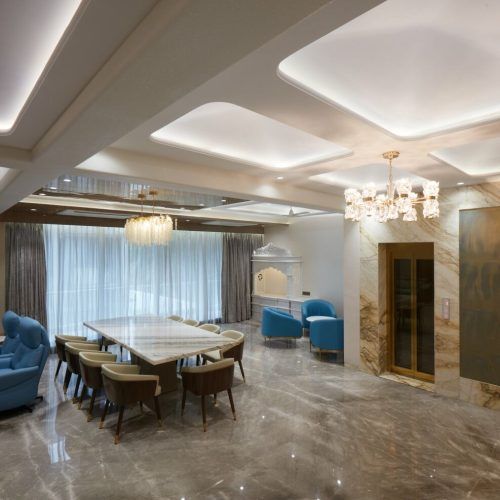
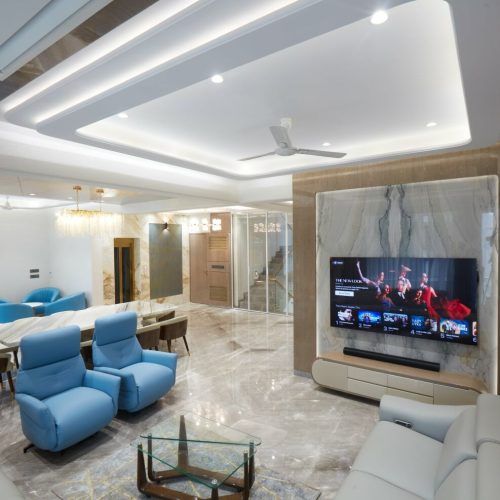
| Peripheral cove, 450 mm | Living and dining | ₹88 – 112 | Yes — the best value in the flat |
| Plain ceiling | Passage | ₹100 – 122 | Yes — invisible height loss, useful light run |
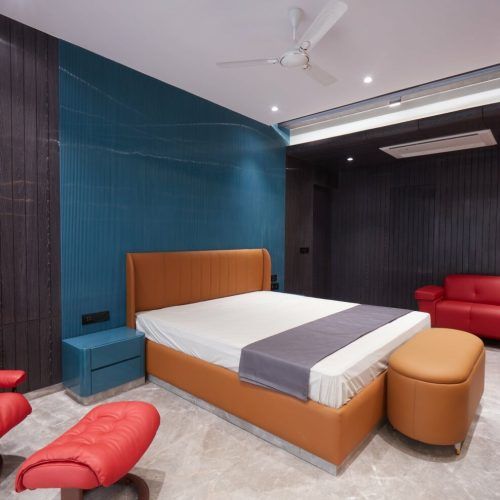
| Cove over the bed head | Master bedroom | ₹95 – 118 | Yes, if the budget allows |
| Full flat ceiling | Living and dining | ₹118 – 140 | Only if the slab measures above 2.8 m |
| Stepped, two levels | Living and dining | ₹135 – 155 | Rarely — it leaves 2.57 m in a standard flat |
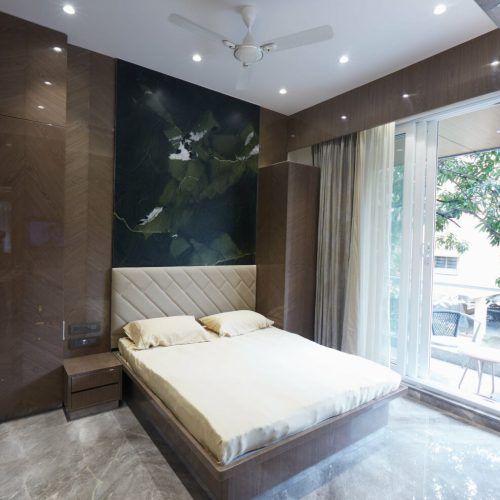
| Ceiling in a bedroom or kitchen | Anywhere | — | No. The drop is felt and the benefit is not |
Ex-GST, per square foot of ceiling area. Excludes light fittings. Measure floor to slab before choosing.
Worked example: 300 sq ft of ceiling in a 680 sq ft flat
A CIDCO sector flat with a 2.75 metre slab. Peripheral cove in the living and dining area, plain ceiling in the passage, nothing elsewhere.
| Scope | ₹ lakh | Note |
|---|---|---|
| Frame and suspension | 0.10 | Painted MS sections at 600 mm centres; inland specification |
| Board and finishing | 0.13 | Standard board; two-coat jointing and sanding |
| Cove detail | 0.06 | Continuous cove around the living and dining area |
| Access panel | 0.02 | At the split unit drain crossing |
| Painting | 0.02 | Two coats over primer |
| Total, ex-GST | 0.33 | ₹110 per sq ft of ceiling |
Add 18% GST. Excludes light fittings. A full flat-wide ceiling on the same flat would have been about ₹78,000 and left every room at 2.62 metres.
A cove where it helps, and nothing where it does not
Dust, and why the ceiling should be plain
Between February and May the hill side of the node is dry and dusty, and horizontal surfaces at ceiling height collect it where nobody can reach. A coffered ceiling, a wide step or a projecting ledge will read as grey by April and be cleaned once a year at best. Shallow planes, narrow steps and a cove that throws light off a plain surface avoid the problem entirely, and in a 2.75 metre room they are the better design anyway. The one place we do build a ledge is the cove itself, which is upward-facing and hidden — and even there we keep it to about 90 millimetres so a cloth on a pole can reach it.
Two things that make this cheap
- Material arrives beside the building. There is somewhere to park, the lift is not rationed and nothing is carried from a lane head. Board is bulky and awkward everywhere else in this set; here it is a twenty-minute unload. That alone is 8 to 12% of the difference against a Borivali or Chembur rate.
- The plan is known. Sector flats repeat, so beam positions, soffit levels and the split unit drain route are usually known before the survey. That removes the design contingency a contractor would otherwise carry, and it means we can tell you on the phone whether a continuous cove will be interrupted by a beam in your living room.
Where the lighting money should go instead
In a flat where the sensible ceiling scope is a cove and a passage, the lighting budget matters more than the ceiling budget. Our advice here is consistent. Put a good LED profile in the cove — ₹280 to ₹480 per running metre including the driver — rather than a cheap strip that shifts colour within two years and cannot be replaced without opening the cove. Use fewer, better recessed spots: six well-placed fittings with a rendering index above 85 beat fourteen cheap ones, and they cost about the same in total. Put task light under the kitchen wall units on its own switch, which is the single most-used light in a small flat. And use pendants over the dining table rather than downlights, because a pendant lights faces and a downlight lights the tops of heads. On a 680 square foot flat the whole scheme is ₹28,000 to ₹55,000.
Programme and sequence
Five to eight days, and its position in the project matters as much as its duration. The ceiling follows the electrical first fix and the air conditioning pipe runs, and it follows a pressure test on anything crossing the void. It precedes flooring, joinery and painting. We photograph the open void before boarding and those images go into the handover file, so that in five years nobody has to guess where a concealed drain or cable runs before drilling.
For the node overall, see interior designers in Kharghar. For board systems, materials and city-wide rates, see false ceiling designers in Mumbai.
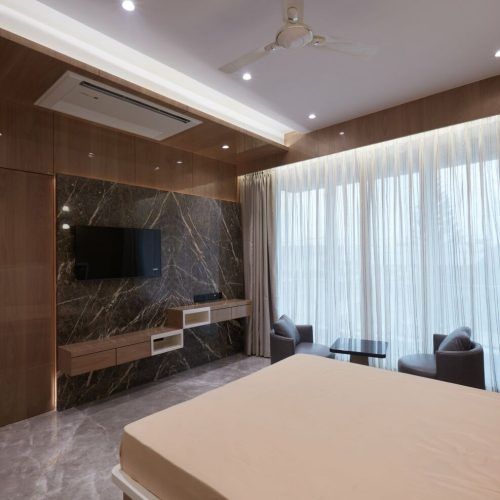
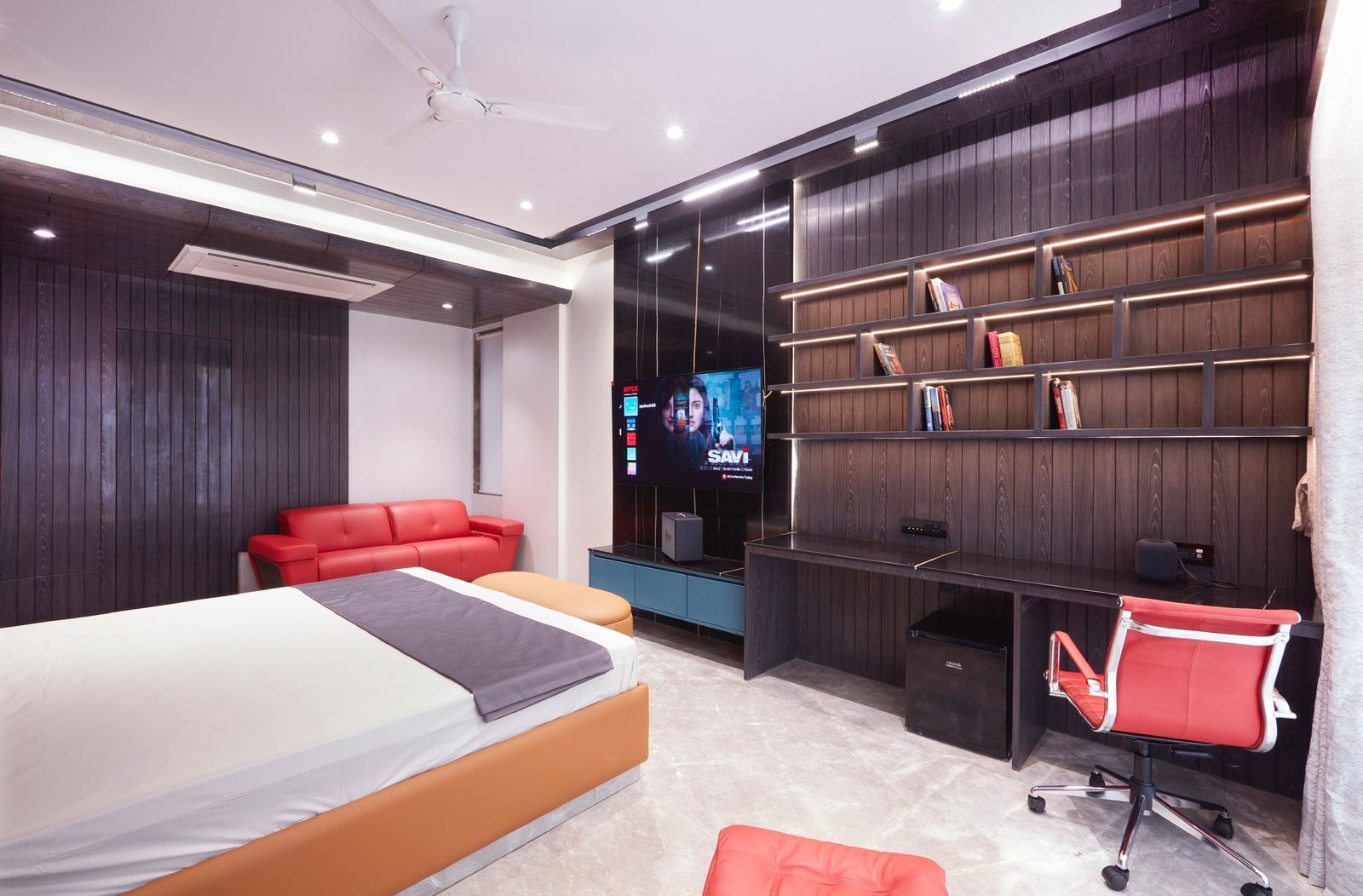
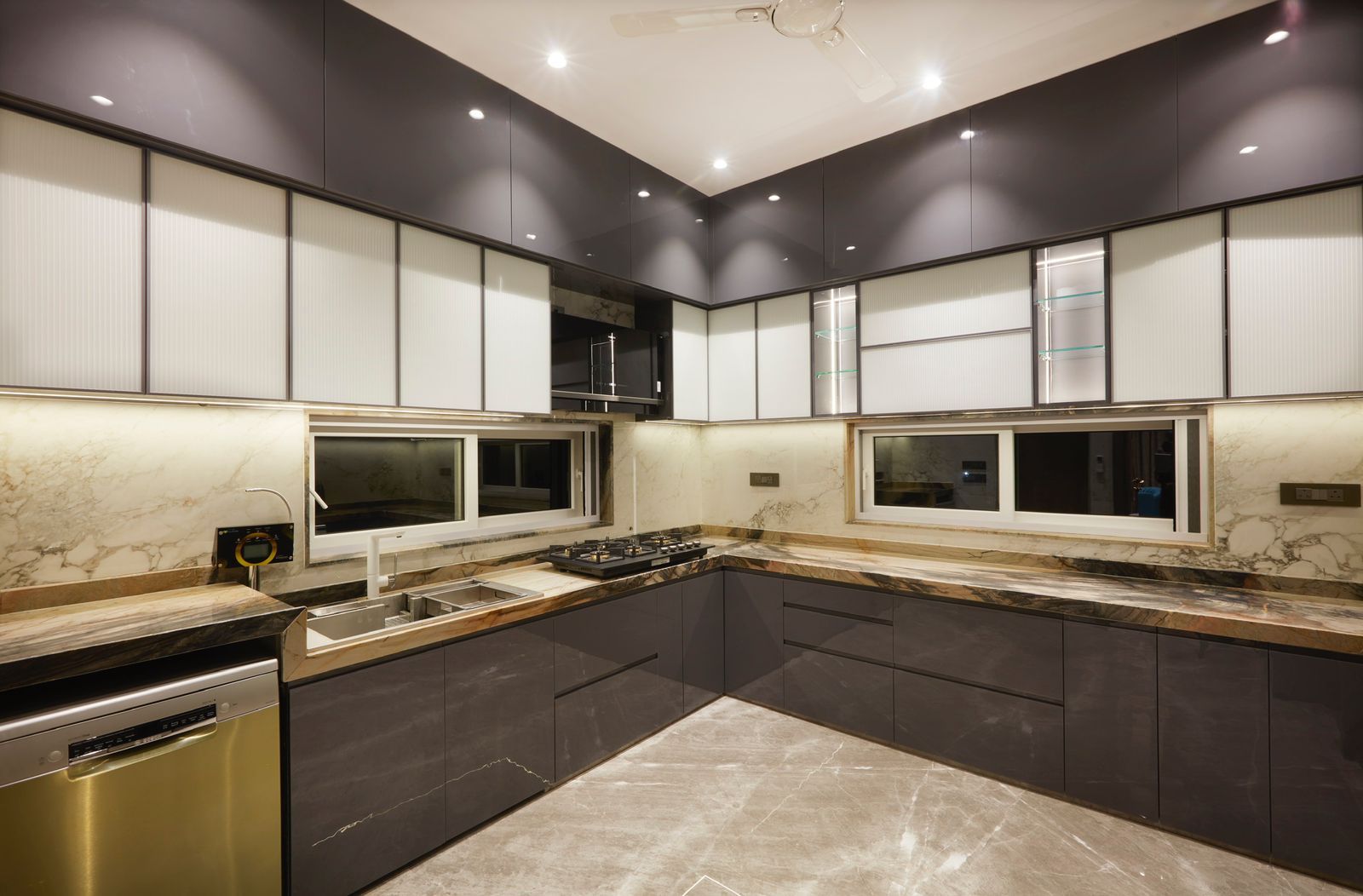
Ceiling and lighting work by Greenbox Design Studio.
Frequently asked questions
Should we do a full ceiling or just a cove?+
A cove, in a standard 2.75 metre sector flat. A full flat-wide ceiling leaves 2.62 metres everywhere and costs roughly two and a half times as much. If your slab measures above 2.8 metres — some of the private towers do — a full ceiling in the living and dining area becomes reasonable.
Why avoid coffers and steps?+
Dust, between February and May. Horizontal surfaces at ceiling height collect it where nobody can reach, and by April they read as grey. Shallow planes and a cove that throws light off a plain surface avoid it, and in a 2.75 metre room they look better than a coffer would anyway.
Why is a Kharghar ceiling cheaper than one in Navi Mumbai's northern nodes?+
Material is unloaded beside the building rather than carried, the lift is not rationed, labour is local, and the plan is known so no design contingency is carried. Around 10–15% below Nerul or Vashi, and 20–25% below Borivali or Chembur, for identical board and frame.
Do you know where our beams are?+
Usually. Sector plans repeat and we hold beam grids and soffit levels for several common building types. We can often tell you on the phone whether a continuous cove will be interrupted in your living room, which is the question that decides the design.
How long does it take?+
Five to eight days, including two days of drying between jointing coats that cannot be rushed. It sits after electrical first fix and before flooring and joinery. Easy delivery and an unrationed lift are why this is a day or two faster than the same ceiling in Mumbai.