
The window, and the three seconds it gets
A pedestrian passing a shopfront at normal walking pace gives the window three to four seconds of attention at most, and is usually looking at a phone for part of it. In that window — both senses — a display can communicate one idea. Not three. Stores that try to show the full range in the window communicate nothing, because the eye has no entry point and moves on.
Structure it as a hero, a support and a message. The hero is one product or one look, placed at 1,400–1,600 mm so it meets the eye of a standing adult. The support is two or three items that make the hero legible as a category. The message is a single line of text or a price point, large enough to read from across the pavement. Everything else is removed.
| Window depth | Type | What it can carry | Refresh cost | Best for |
|---|---|---|---|---|
| Under 600 mm | Shadow box | One hero, one message | ₹3,000–₹9,000 | High-street, narrow frontage |
| 600–1,200 mm | Standard open-back | Hero plus two supports | ₹6,000–₹18,000 | Most Indian high-street stores |
| 1,200–2,000 mm | Walk-in / staged | A full scene, 4–6 pieces | ₹12,000–₹40,000 | Flagship, mall anchor |
| Open to store, no back | Transparent | Hero, plus the store as background | ₹4,000–₹12,000 | Cafés, services, small format |
An open-back window means the whole store is visible from the pavement, which makes the first two metres of the sales floor part of the display.
The vertical bands
Shelf height is the most measurable variable in merchandising. In Indian retail, product placed in the eye-level band at 1,200–1,600 mm typically sells two to three times what the same product sells at 300–600 mm. This is not a subtle effect and it should determine the entire shelf plan: highest-margin and impulse product at eye level, planned-purchase and bulk items low, and slow-moving or reserve stock high.
- Above 1,700 mm — stretch zone. Visible, not reachable by many customers. Display stock, bulk packs, signage.
- 1,200–1,600 mm — eye level, the selling band. Highest margin, new arrivals, the things you want in a basket.
- 900–1,200 mm — touch level. The easiest reach. Second-priority stock; excellent for anything customers want to handle.
- 600–900 mm — the child's eye level. Genuinely important in grocery, toys and confectionery. Plan it deliberately rather than by accident.
- Below 600 mm — stoop zone. Bulk, heavy, refill packs and planned purchases people will bend for.
- Vertical blocking beats horizontal. Run a brand or a colour vertically through the bands rather than horizontally along one shelf; customers scan a fixture the way they read a page.
Planogram discipline
A planogram is a drawing of what sits where on each fixture, and its value is entirely in whether the store team follows it after week three. In small Indian retail it usually does not, because the drawing lives in an email and the staff member replenishing at 8 am has never seen it. The fix is physical: print the planogram at A4, laminate it and fix it to the back of the fixture it describes. Compliance rises sharply the moment the reference is where the work happens.
The related discipline is facing. Every product should present its front label to the customer, and the front row should be pulled forward to the shelf edge at every replenishment. A fixture that is 80% full and fully faced looks better and sells better than one that is 100% full and unfaced. Staff can be taught this in ten minutes and it is the highest-return training in a small store.
Rotation cadence and cost
| Element | Change every | Why | Cost per change, 900 sq ft store |
|---|---|---|---|
| Window display | 2–4 weeks | Regular passers-by stop seeing a static window | ₹6,000–₹18,000 |
| Entry table / hero fixture | 2 weeks | First thing seen inside; drives the visit | ₹2,000–₹6,000 |
| Eye-level band | 4–6 weeks | Follows stock and margin priorities | ₹3,000–₹8,000 |
| Full store re-merchandise | Quarterly | Resets the customer's mental map of the store | ₹18,000–₹55,000 |
| Signage and price communication | With every promotion | Inconsistent pricing kills trust faster than price | ₹1,500–₹5,000 |
| Lighting re-aim | Quarterly | Displays move; the beams do not follow by themselves | ₹2,500–₹7,000 |
An annual VM budget of ₹1.5–₹4 lakh for a 900 sq ft store is normal and returns more reliably than the same money spent on fit-out.
The rules that are worth following
- Rule of three. Odd-numbered groups read as composed; even numbers read as stock. Three heights, three depths, three quantities.
- Pyramid the display. Tallest at the back or centre, descending outwards. The eye resolves a triangle instantly and a flat row not at all.
- Repeat colour across the store. A colour used once is a product; used in three places it becomes the season's story.
- Leave negative space. A fixture at 70–80% capacity reads as curated; at 100% it reads as a warehouse, and premium price points cannot survive that.
- Light the display, not the aisle. Accent at three to five times the ambient level on the hero, re-aimed whenever the display changes.
- Price clearly. Hidden prices reduce conversion in almost every Indian retail category. If the price is the message, make it the largest thing in the window.
The fit-out is done once. The merchandising is the thing you can change on Monday when Saturday disappointed you.
Greenbox commercial fit-out lead
Designing fixtures so merchandising is possible
Most merchandising constraints are built into the fixtures during the fit-out and cannot be undone afterwards. A wall system with fixed shelf brackets at 400 mm centres dictates every future display. A gondola of the wrong depth forces stock to be stacked rather than faced. A window with no power point at the base means every future display is lit from the ceiling, badly. These are ₹2,000 decisions at design stage and ₹40,000 problems at the first seasonal change.
Four specifications keep the store flexible. Use a slotted or continuous-channel wall system so shelf heights can be changed in 32 mm increments rather than at fixed positions. Put a socket in the base of the window and two in the ceiling above it, on their own switched circuit. Use track lighting rather than fixed downlights across the sales floor, so beams can follow displays. And keep at least one fixture on castors, so the entry zone can be reconfigured for a promotion without a carpenter.
- 32 mm adjustable shelf increments, not fixed brackets. This single choice determines whether future merchandising is possible.
- Power at the window base and above it, switched separately from the sales floor so the window can stay lit after closing.
- Track lighting on the sales floor, so accent beams can be re-aimed with each display change.
- One castored fixture in the entry zone for promotional flexibility.
- Spare shelf stock. Order 15% extra shelves at fit-out; matching them two years later is usually impossible.
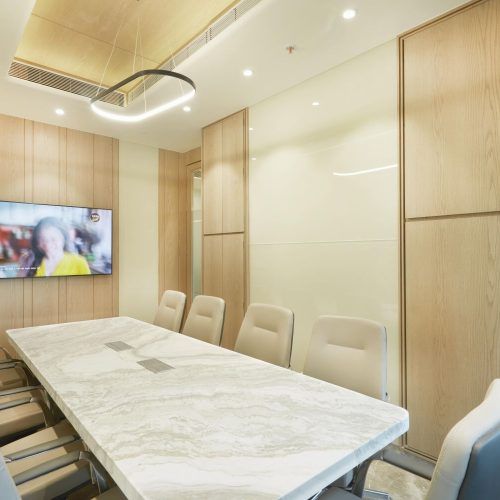
Fixtures designed around how stock will actually be presented
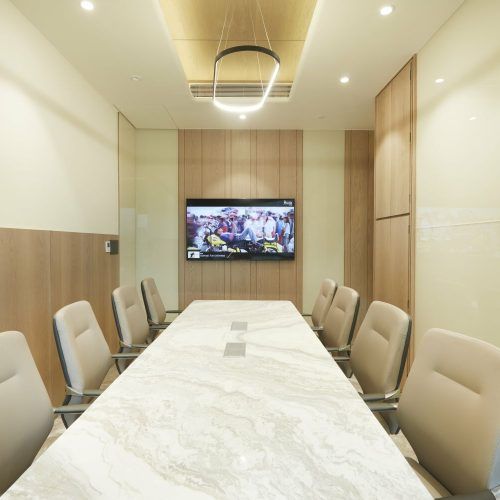
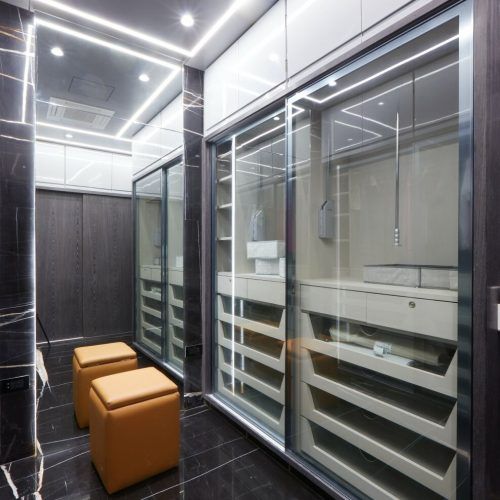
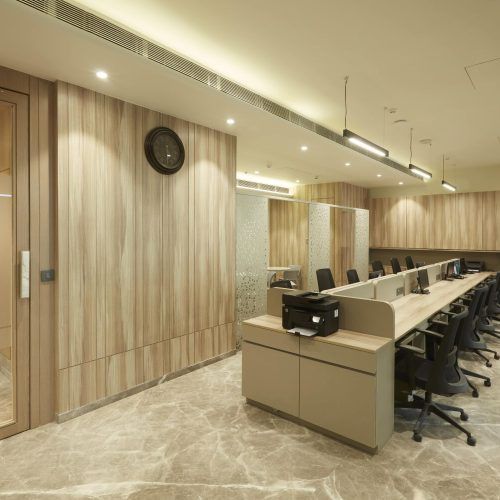
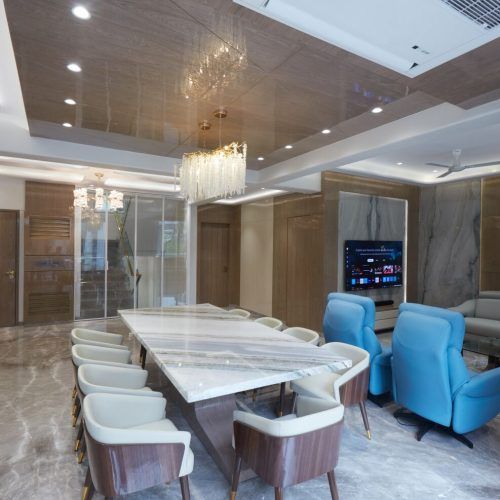
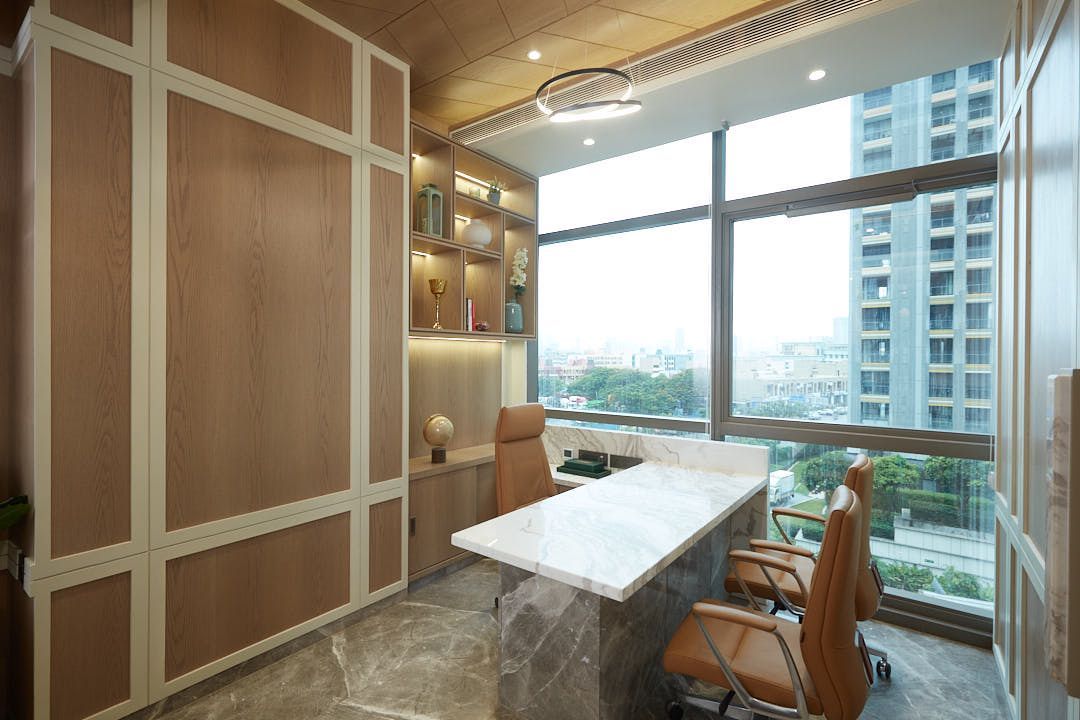
Selected work by Greenbox Design Studio. Tap any image to enlarge.
Frequently asked questions
What is the eye-level zone in retail?+
1,200–1,600 mm above floor level for a standing adult, and it is the highest-selling band on any fixture — typically two to three times the rate of product at 300–600 mm. Put your highest-margin and newest stock there, and reserve the low band for planned, bulky purchases customers will bend for.
How often should a shop window be changed?+
Every two to four weeks. A window that stays the same for a quarter becomes invisible to the regular passers-by who are your most likely customers. Even a partial change — a new hero product and a new message on the same set — restores attention at ₹6,000–₹18,000 per change for a small store.
What is a planogram?+
A drawing showing exactly which product sits on which shelf position of a fixture, with facings and quantities. Its value depends entirely on compliance, so print it, laminate it and fix it to the back of the fixture it describes rather than emailing it to a manager who will not be doing the replenishment.
Should fixtures be full or sparse?+
Seventy to eighty per cent full for most formats. A completely full fixture reads as abundance, which suits value retail, and undermines any premium price point. A sparse fixture reads as curated and as out of stock in equal measure, so the density has to match the positioning the store is claiming.
How much should I budget for visual merchandising?+
₹1.5–₹4 lakh a year for a 900 sq ft store, covering window changes every three weeks, quarterly full re-merchandising, signage and lighting re-aiming. It is a smaller number than most fit-out line items and it is the one that can be adjusted in response to what actually sold last month.
Does lighting matter for merchandising?+
Considerably — accent lighting at three to five times the ambient level is what makes a product read as important. The detail most stores miss is re-aiming: displays move every few weeks and the beams stay where they were, so by the second month the light is on the empty space next to the hero product.