
What genuinely works
- Full-height wardrobes with lofts. The single biggest gain available in any flat.
- Bed storage. Around 25 cubic feet per bed, costing zero floor area.
- Sliding shutters in passages and narrow bedrooms — recovers the swing radius.
- Kitchen corner units. A magic corner converts the most wasted volume in the home.
- A worked entrance zone. Shoes and bags stop migrating into living space.
- Wall-mounted TV with closed storage below. No console footprint.
- Loft storage above doors and passages. Dead volume, easily claimed.
- Extendable or wall-mounted dining. Full table only when needed.
- Mirrors opposite windows. Genuinely changes perceived size.
- Light, consistent flooring throughout. Breaks in flooring visually chop a small home into smaller pieces.

Design and build under one accountable roof
What doesn't
| Idea | Why it disappoints |
|---|---|
| Elaborate convertible furniture | Mechanisms fail, and people stop converting it after a month |
| Open shelving everywhere | Looks good empty; reads as clutter once lived in |
| Glass furniture 'because it disappears' | It does not, and it shows every mark |
| Removing all internal doors | Saves swing space, costs privacy and acoustic separation |
| Very dark accent walls in a small room | Works in photographs, closes the room in reality |
Storage does not make a room feel small. Visible clutter does. Closed, full-height and consistent is the formula.
Greenbox principal designer



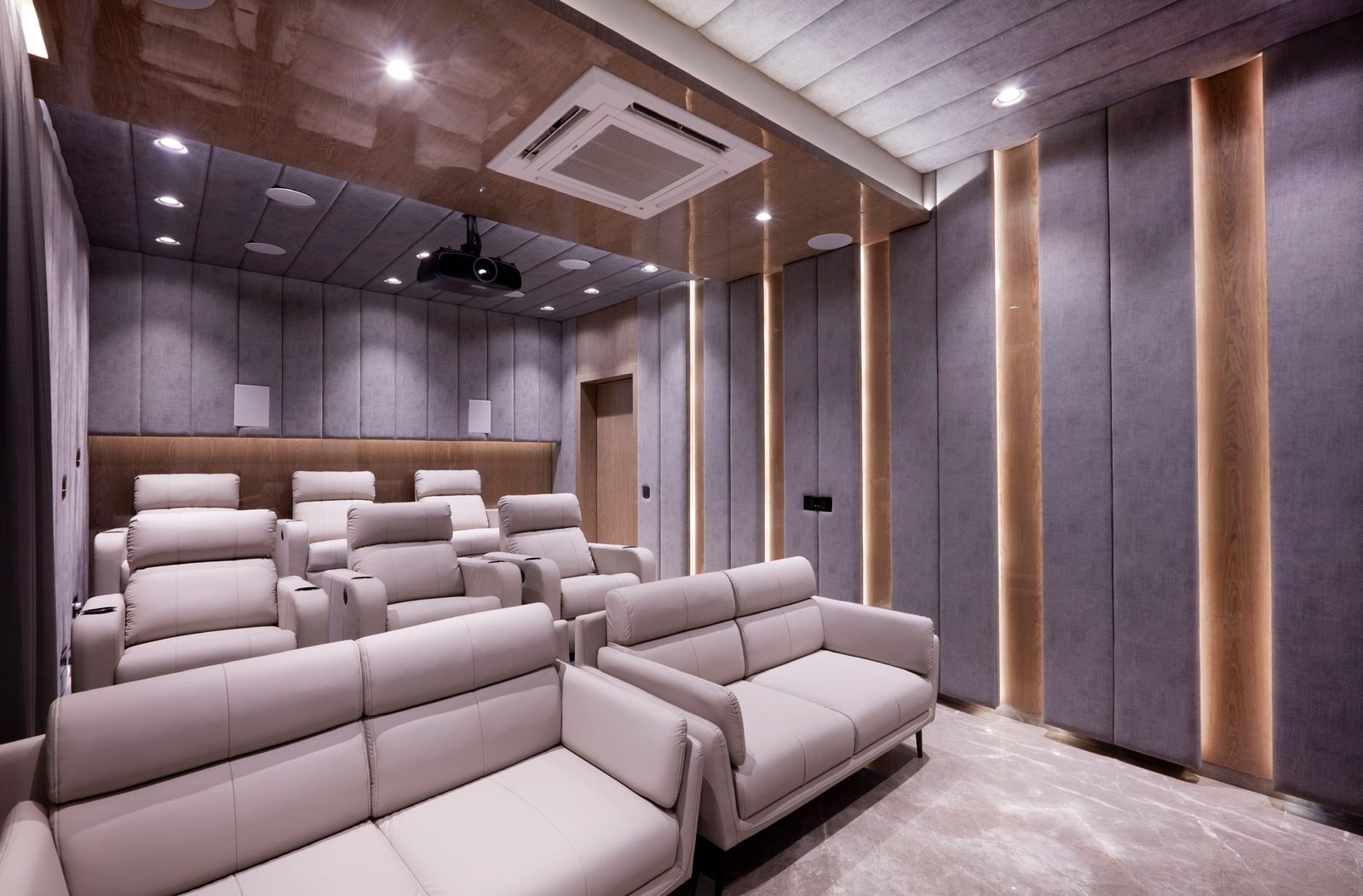
Selected work by Greenbox Design Studio. Tap any image to enlarge.
Frequently asked questions
How can I make a small flat feel bigger?+
Use full-height closed storage along one plane rather than scattered furniture, keep flooring consistent throughout, place mirrors opposite windows, and keep the palette light with a single accent. Visual continuity matters more than actual square footage.
Is bed storage worth it?+
Yes — roughly 25 cubic feet per bed at no cost in floor area. Hydraulic lift-up mechanisms are more usable than drawers in tight bedrooms because you do not need clearance beside the bed to open them.
Do sliding wardrobes save space?+
They save the roughly two feet of clearance a hinged shutter needs to swing, which matters in narrow bedrooms and passages. The trade-off is that you can only ever see half the wardrobe at once, and the tracks need occasional cleaning.