
What the developer has already given you
A redevelopment handover in Mumbai typically includes vitrified flooring, tiled and fitted bathrooms, a basic kitchen platform with a sink, internal painting in a builder-grade emulsion, electrical points to a standard schedule, and windows. What it usually does not include is any joinery at all, adequate electrical points, a usable kitchen beyond the platform, or lighting worth the name.
This changes the economics. In a resale flat you are often redoing work; here you are adding to work that is already done. That is why a redevelopment flat interior lands at ₹1,100–₹1,950 per sq ft on carpet against ₹1,700–₹2,920 for a comparable finish in an older resale flat.
| Element | Usually provided | Usually your scope | Typical spend |
|---|---|---|---|
| Flooring | Vitrified, 600 × 600 | Upgrade only if you want to | ₹0 – ₹280 / sq ft |
| Bathrooms | Tiled, WC, basin, mixer | Mirror, storage, upgraded shower | ₹35,000 – ₹95,000 each |
| Kitchen | Platform, sink, 2 – 4 points | Full modular, chimney, tall units | ₹2.6 L – ₹6.5 L |
| Electrical | Basic schedule, builder-grade switches | Additional points, switch upgrade | ₹75,000 – ₹1.9 L |
| Painting | One coat builder emulsion | Repaint after settlement | ₹28 – ₹55 / sq ft |
| Joinery | Nothing | All of it | ₹6 L – ₹14 L |
| Ceiling and lighting | Nothing | All of it | ₹1.3 L – ₹3.4 L |
Snag before you take possession
This is the part people get wrong, because there is pressure to take possession quickly after years of waiting. Once you sign the possession letter, everything you find becomes your cost. Before signing, walk the flat with a written list and a torch.
- Check every window for operation and sealing. Open and close each sash; pour a mug of water into the external track and see where it goes.
- Run every tap and flush every WC for two minutes. Then check the ceiling of the flat below if you can, and your own bathroom-adjacent bedroom wall the following day.
- Test every electrical point with a socket tester. Reverse polarity and missing earth are the two most common handover defects and both are the developer's to fix.
- Check floor level with a laser or a 2 m straight edge. More than 5 mm deviation over 2 m will show once your joinery goes in.
- Tap the tiles. Hollow sound means poor bedding; those tiles will lift within two years.
- Check door frames for square and shutters for gaps. A 6 mm gap at the top of a door frame means the frame was fixed before the floor level was final.
- Photograph everything, date it, and send the list in writing. A snag list in an email thread is worth ten times one discussed on site.
Design and build under one accountable roof
The first-year timing question
A new building settles. Shrinkage cracks appear at the junction of block walls and RCC, around window openings, and along the line of concealed conduits, usually within the first eight to twelve months. Nothing about this is a defect in the structure; it is what happens as concrete cures and materials move against each other. It is, however, a reason to sequence your interiors thoughtfully.
| Work | When | Reason |
|---|---|---|
| Joinery, kitchen, wardrobes | Any time | Freestanding or fixed with an allowance for movement |
| Electrical additions and ceiling | Any time | Concealed work is unaffected by settlement |
| Painting the whole flat | After 8 – 12 weeks of occupation | Lets the first cracks appear so they can be filled once |
| Wall panelling on external walls | After one monsoon | Confirms no water ingress at the façade |
| Expensive wallpaper | After one monsoon | Same reason, higher cost of being wrong |
| Stone or tile cladding on walls | After 8 – 12 weeks | Movement at the joint is visible and permanent |
Do not transplant the old flat
Most redevelopment flats are 15–30% larger in carpet area than the flat they replaced, and the shape is usually different — a longer living room, a separate utility, sometimes an extra bathroom. The instinct is to reproduce the old layout with more space around it. It is worth resisting. The old layout was a set of compromises made for a plan that no longer exists, and this is the one opportunity to redo them.
- Re-do the storage audit from scratch; the old wardrobes were sized for the old flat's constraints.
- Re-think the kitchen work triangle against the new window and shaft positions rather than copying the old run.
- Decide what the new utility area is for before it becomes the place appliances go to be forgotten.
- Check whether the dining table still needs to be where it was; new plans often move the kitchen door.
- Measure what furniture actually survives the move — sofas and beds often do, wardrobes and TV units almost never.
The developer's snag list closes the day you sign. Everything after that is a favour, and favours take months.
Greenbox project manager
Society rules in a new building
New societies formed after redevelopment are often stricter than old ones, partly because the common areas are new and partly because fifty families are fitting out simultaneously. Expect a fixed fit-out window, a mandatory protection regime for lifts and lobbies, a refundable deposit at the higher end of the range, and a queue for the service lift. Book your slots early; in a building where thirty flats are being fitted out at once, lift access, not carpentry, becomes the critical path.
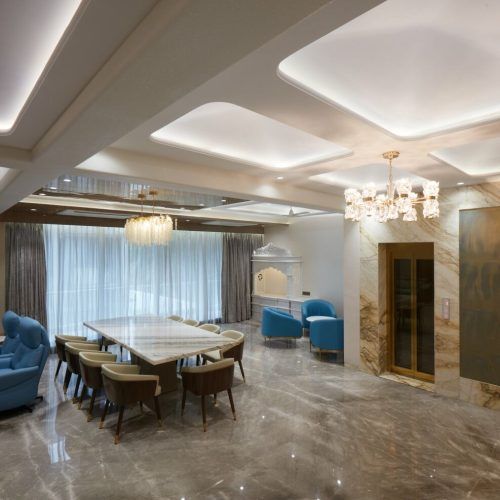
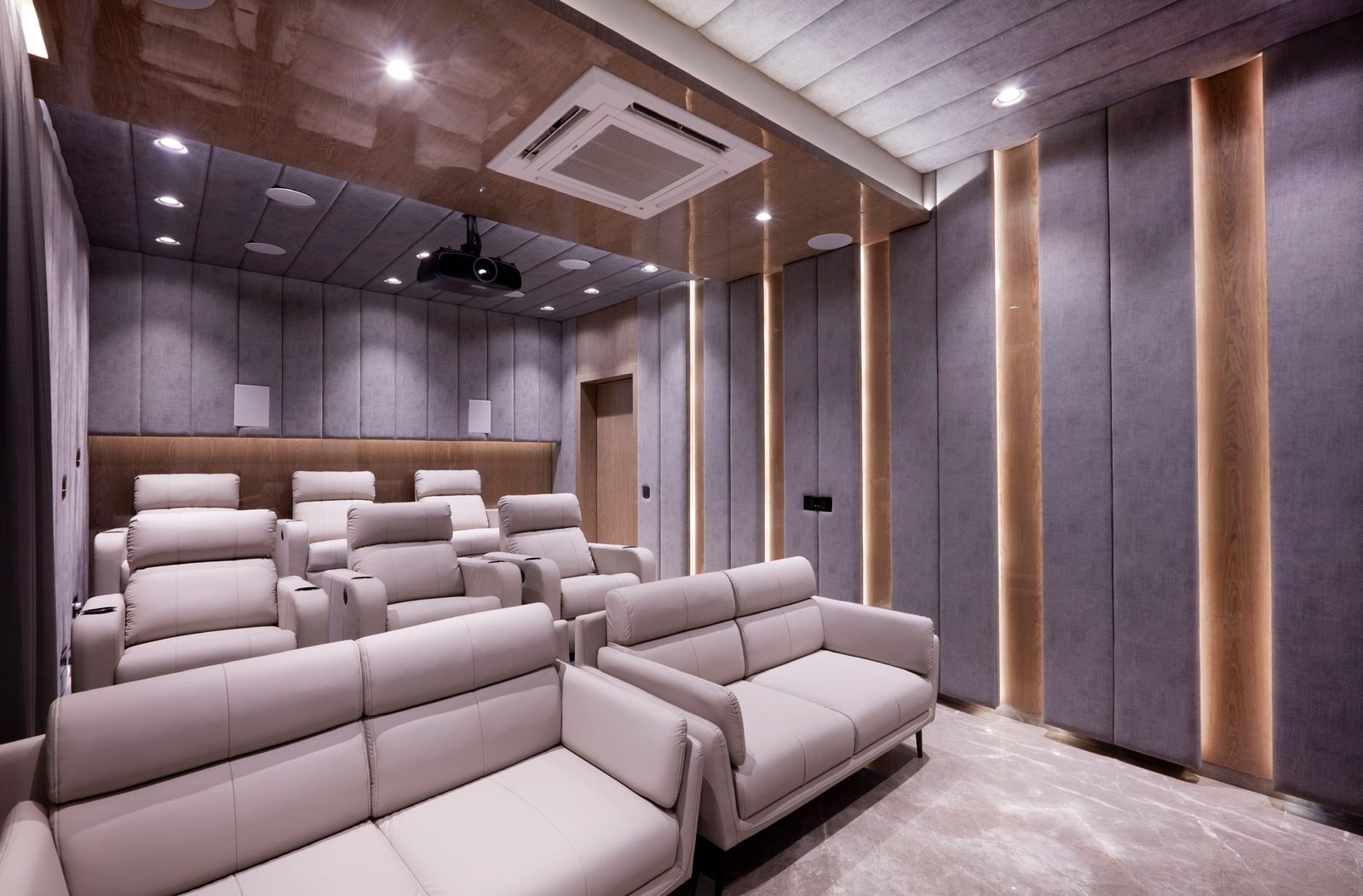
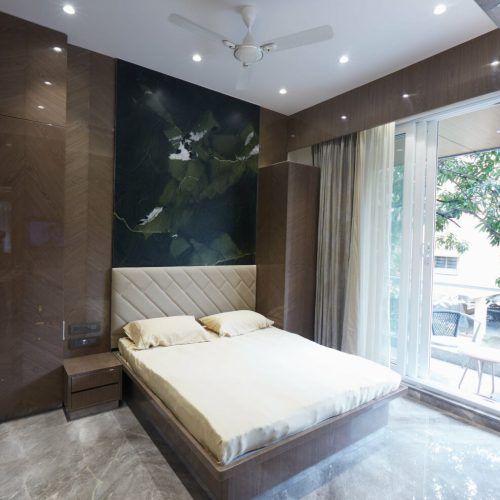
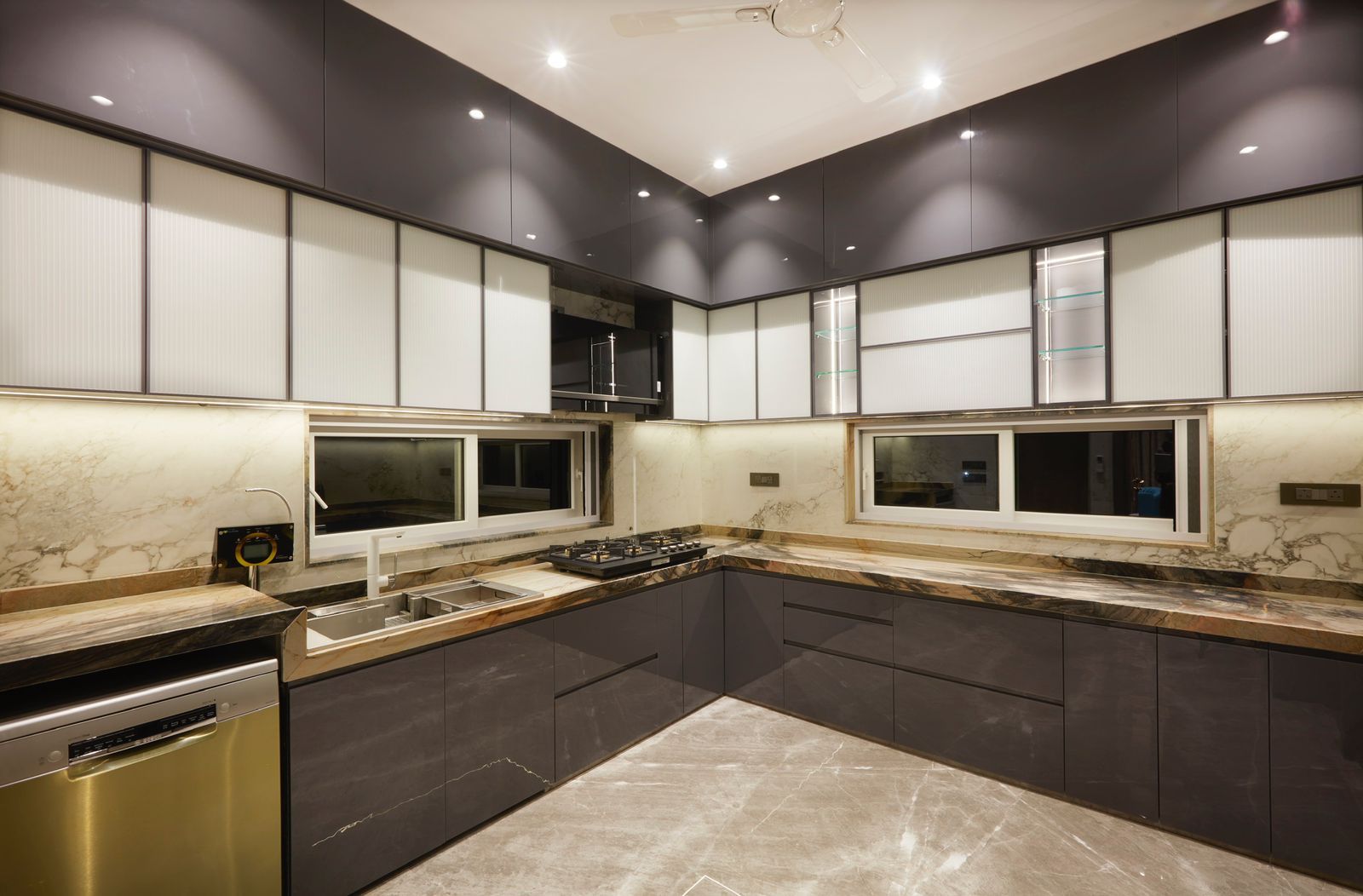
Selected work by Greenbox Design Studio. Tap any image to enlarge.
Frequently asked questions
How much do interiors cost in a redevelopment flat?+
Roughly ₹1,100–₹1,950 per sq ft on carpet area, ex-GST, because flooring, bathrooms and basic electrical are already provided. The same finish level in an older resale flat runs ₹1,700–₹2,920 per sq ft, since that scope includes civil and services work.
Should I snag the flat before taking possession?+
Yes, and it is the single highest-value hour of the whole process. Once the possession letter is signed, every defect becomes your cost and your timeline. Walk the flat with a socket tester, a torch, a 2 m straight edge and a written list, and send the list by email.
When should I paint a new redevelopment flat?+
Eight to twelve weeks after occupation. Shrinkage and settlement cracks appear in the first year at wall-to-RCC junctions and around openings. Painting after the first set has appeared means filling and finishing once, rather than watching hairlines open across fresh paint.
Is the developer's flooring worth replacing?+
Usually not. Standard 600 × 600 vitrified tile in a new building is serviceable for a decade or more, and replacing it costs ₹280–₹450 per sq ft plus three weeks of programme. Spend that money on joinery and lighting, which change how the flat lives far more.
Can I start interior work before possession?+
Design work, yes, and you should — measured survey, layouts and BOQ can all be done during the handover period. Physical work generally cannot begin until possession is formally taken and the society's fit-out formalities are complete.