
Tolerance: the thing you feel before you notice it
Walk into two rooms with identical materials and one will feel better. Nine times out of ten the difference is tolerance — how tightly the trade held its dimensions. A luxury fit-out holds a 2 mm shadow gap to within half a millimetre along a 4 m run. Ordinary work holds 5–8 mm and varies by 3 mm along the same run, and though nobody consciously measures it, everybody sees it.
| Junction | Standard work | Luxury work | What it takes |
|---|---|---|---|
| Shadow gap, wall to joinery | 5–8 mm, variable | 2 mm, ±0.5 mm | Laser-levelled substrate, factory-cut panels |
| Door to frame reveal | 3–5 mm, tapering | 2.5 mm, parallel | Machined frame, adjustable hinges |
| Skirting to floor | Silicone-filled gap | Flush or a 10 mm recessed shadow | Floor laid to a level before skirting |
| Stone joint, counter | 2–3 mm epoxy | 0.8–1 mm mitred and colour-matched | Waterjet cutting, dry-fit before fixing |
| Ceiling to wall | Cornice or a taped joint | 8 mm recessed shadow gap | Gypsum set out from a datum, not the ceiling |
| Switch plate to wall | Plate covers the chase | Plate sits in a machined recess, flush | Point positions set before plaster |
Material depth, not material price
A printed laminate of Italian marble and a 20 mm slab of the same stone can cost ten times apart, but the reason the slab reads differently is not the price — it is that the pattern continues through the edge. Depth is what the eye checks. The practical version of this principle is simple: spend on materials at the places a hand touches and an eye reaches, and use good substitutes everywhere else.
- Solid edges. A 20 mm mitred stone edge over a 6 mm one. A 2 mm PVC edge band matched to the laminate rather than a 0.8 mm generic.
- Honed and matte over gloss. Gloss flatters a showroom under a spotlight and shows every imperfection in a home under daylight.
- Book-matching where the material allows. One dramatic book-matched panel is worth more than four rooms of ordinary marble.
- Real veneer, properly sequenced. A veneer laid in sequence across three wardrobe shutters costs 8–12% more than random-lay and looks like a different product.
- Metal that is metal. Solid brass or SS 316 hardware rather than a brass-coloured coating that wears through at the thumb position in eighteen months.
- Restraint. Three materials in a room, executed properly, reads richer than seven.

Design and build under one accountable roof
Light — four layers, all dimmable
This is the most reliable differentiator and the one clients underinvest in. An ordinary room has one layer: a ceiling light on a switch. A luxury room has four, on separate circuits, at least three of them dimmable — and the fixtures themselves are mostly invisible.
| Layer | Purpose | Typical spec | Cost in a 180 sq ft living room |
|---|---|---|---|
| Ambient | Base level, glare-free | Cove strip, 3000 K, 9 W/m, dimmable driver | ₹14,000–₹26,000 |
| Task | Reading, working | Adjustable spots at 24° on a track or recessed | ₹9,000–₹22,000 |
| Accent | Art, texture, stone | Narrow 15° spots, 2700 K, high CRI (>90) | ₹12,000–₹30,000 |
| Decorative | The thing you look at | Pendant or sconce, the room's one gesture | ₹18,000–₹2,50,000 |
| Control | Scenes rather than switches | 4-scene keypad, Lutron / Wipro / Legrand | ₹22,000–₹85,000 |
CRI above 90 matters more than lumens. Under CRI 80, wood and skin both go grey.
What it actually costs
| Band | Rate per sq ft, ex-GST | What you get |
|---|---|---|
| Standard | ₹1,450–₹1,900 | Laminate joinery, basic false ceiling, standard CP, builder flooring retained |
| Premium | ₹2,000–₹3,100 | Veneer and PU joinery, layered lighting, upgraded sanitaryware, some stone |
| Luxury | ₹3,200–₹4,800 | Tight tolerances, solid materials, full lighting control, imported hardware, stone throughout |
| Bespoke | ₹5,000–₹8,500+ | Custom metalwork, joinery mock-ups, on-site clerk of works, imported stone and veneer |
Add 18% GST. The jump from Premium to Luxury is mostly labour hours and site supervision, not materials.
Note what the table implies. Moving from Premium to Luxury is about a 55% increase in rate, and roughly two-thirds of that increase is time: more supervision, more dry-fitting, more mock-ups, more rework absorbed rather than passed on. That is what you are buying.
Luxury is the absence of things going wrong. It is not a list of brands.
Greenbox principal designer
The three places clients overspend and the three they underspend
Across a few hundred residential projects the pattern is consistent. Money goes in disproportionately at the front door — the entrance foyer, the living room feature wall and the main bedroom's headboard panel — because those are the surfaces guests see and photographs capture. Meanwhile three things that determine the daily experience of the home get squeezed in value engineering: the lighting control, the joinery hardware and the site supervision hours.
The correction is not to spend more overall. It is to move roughly 8–12% of the budget from decorative surface to those three. On a ₹38 L home that is about ₹3.5 L: it buys a four-scene control system across the public rooms, Blum or Hettich motion hardware on every drawer and wardrobe instead of on the kitchen alone, and a further two months of a dedicated site engineer. Every one of those three is felt daily, and none of them photographs at all. That trade — invisible quality bought with visible ornament — is the closest thing we have to a definition of the word.
Six things that cost nothing and read as luxury
- Align everything to one datum. Door heads, wardrobe tops, kitchen wall units and the ceiling shadow gap at the same height. Free at drawing stage, impossible afterwards.
- Conceal the sources of light. No visible diode, no visible strip. A cove that shows its LED is the single fastest way to look cheap.
- Delete one thing from every room. Usually the console table, the second accent wall, or the third pendant.
- Use one handle profile throughout. Repeating a detail is what a designed home does; varying it is what a catalogue does.
- Get the switch plates off the middle of the wall. Group them, align them to a door frame, and use one brand.
- Specify a warm-dim or a fixed 2700–3000 K. Mixed colour temperatures in one room is the most common and most visible error in Indian homes.

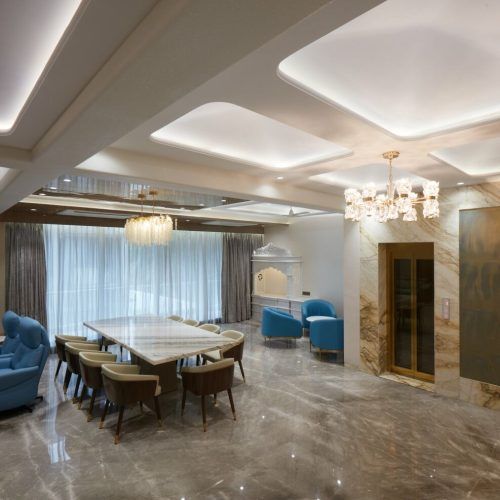
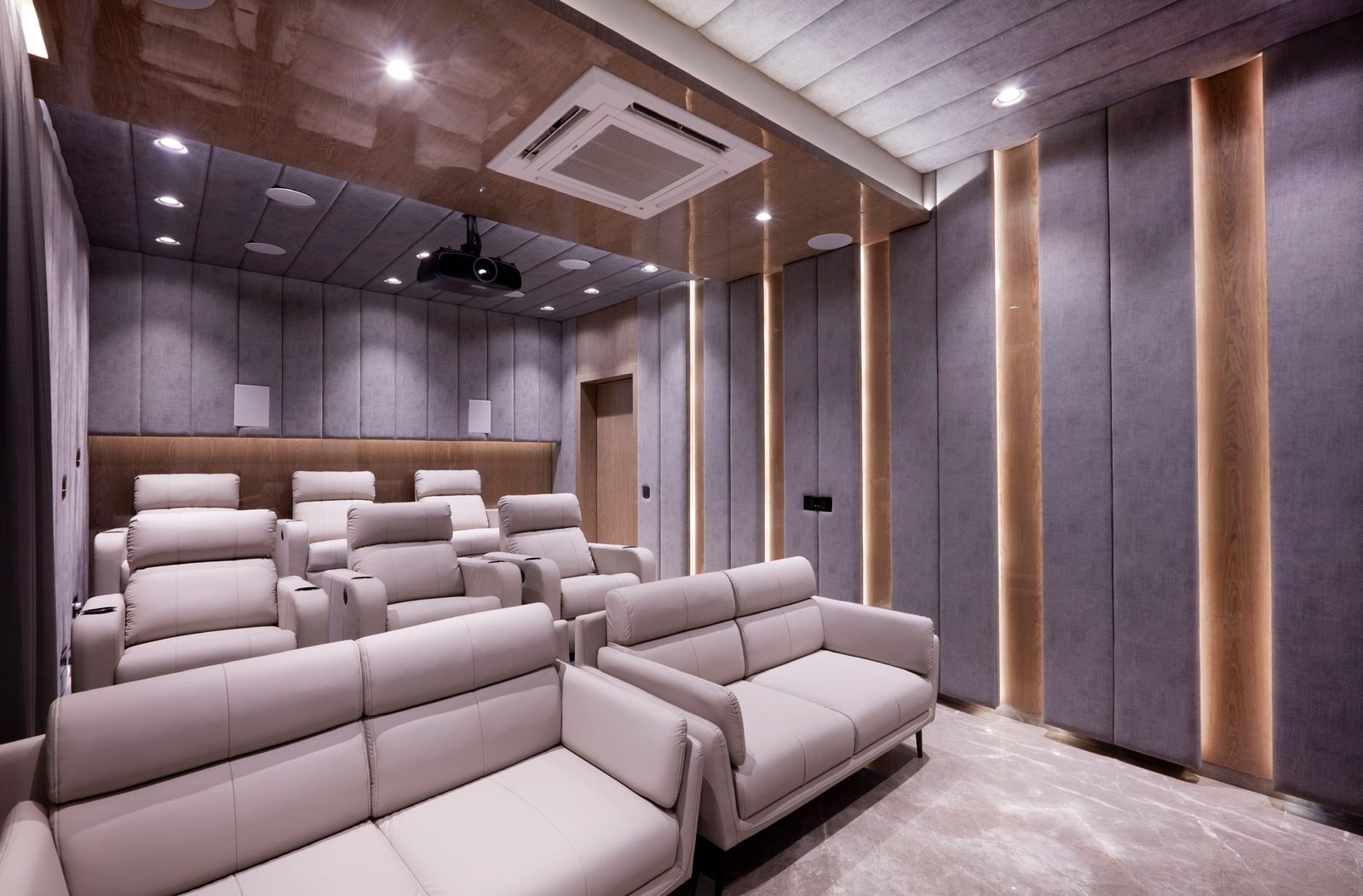
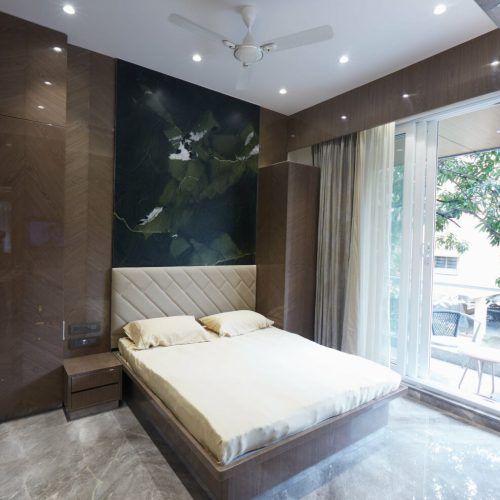
Selected work by Greenbox Design Studio. Tap any image to enlarge.
Frequently asked questions
Is luxury interior design just about expensive materials?+
No. Tolerance, junction detailing and lighting control account for most of the difference, and all three are labour and supervision rather than material cost. A room in laminate and painted gypsum, detailed to 2 mm and lit in four dimmable layers, reads better than a room of imported stone with 8 mm gaps and one ceiling light.
What per square foot rate counts as luxury in Mumbai?+
₹3,200 to ₹4,800 per sq ft on carpet area in 2026, ex-GST, for genuinely luxury residential work, and ₹5,000 to ₹8,500 and above for bespoke work with custom metalwork and joinery mock-ups. The step up from the premium band at ₹2,000 to ₹3,100 is mostly supervision hours, not materials.
What is the single biggest upgrade for the money?+
Lighting. Four separated, dimmable layers with CRI above 90 in a 180 sq ft living room costs roughly ₹55,000 to ₹1,60,000 including control, and it changes how every other material in the room reads. Nothing else at that price affects the whole room.
Do imported brands make an interior luxury?+
They help where the function is genuinely better — Blum or Hettich motion hardware, Grohe or Dornbracht thermostatic mixers, Lutron dimming. They do nothing when the substrate behind them is out of level. Buy imported where the mechanism matters and domestic where the material is the same, and put the difference into site supervision.
How do I tell good work from expensive work on a site visit?+
Look at three things: the shadow gap along a long run, the reveal around a door, and where the light strips are hidden. Then open a wardrobe and look at the edge banding on an internal shelf — the surface nobody photographs is where a studio's real standard shows.