
Surfaces: matte has won
The most visible change in 2026 Indian kitchens is the collapse of high-gloss acrylic as the default premium shutter. The reason is practical rather than aesthetic — gloss shows fingerprints, oil haze and every swirl from a wipe-down, and in a kitchen that cooks twice a day with a tadka it looks tired within a year. Matte acrylic, anti-fingerprint laminates and Fenix NTM have taken the ground.
| Surface | 2026 rate, ex-GST | Fingerprints | Repairable | Verdict |
|---|---|---|---|---|
| High-gloss acrylic | ₹2,150–₹2,600 / sq ft | Shows everything | No | On the way out |
| Matte acrylic | ₹2,050–₹2,450 / sq ft | Good | No | The current default premium |
| Anti-fingerprint laminate | ₹1,650–₹1,950 / sq ft | Very good | Panel replacement | Best value in 2026 |
| Fenix NTM | ₹2,900–₹3,600 / sq ft | Excellent | Thermally repairable | The genuine step up |
| Matte PU | ₹2,400–₹2,950 / sq ft | Good | Yes, site re-spray | For colours no laminate carries |
| Textured / fluted laminate | ₹1,900–₹2,300 / sq ft | Good | Panel replacement | One run only, not the whole kitchen |
Tall units are replacing wall cabinets
The second real shift is structural. A 600 mm-deep tall unit with internal pull-outs holds roughly 2.3 times what the same width of wall cabinet holds, and everything in it is reachable without a stool. In Mumbai kitchens, where the average is 42–65 sq ft, we are increasingly planning one full-height tall run on the shortest wall and keeping the rest of the kitchen to base units and a clear counter.
| Storage type | Volume per running metre | Reach | Cost per rm, ex-GST |
|---|---|---|---|
| Wall cabinet, 350 mm deep, 700 mm high | 0.25 m³ | Top shelf needs a stool | ₹13,500–₹19,000 |
| Tall unit, 600 mm, with shelves | 1.20 m³ | Back of the shelf is dead | ₹32,000–₹46,000 |
| Tall unit, 600 mm, with pull-outs | 1.05 m³ usable | All of it reachable | ₹48,000–₹78,000 |
| Base unit with drawers | 0.42 m³ | All reachable | ₹22,000–₹34,000 |
| Base unit with a shelf | 0.45 m³ | Back half unusable | ₹15,000–₹21,000 |
Usable volume, not gross. A pull-out loses a little to the runner and gains all of it back in access.
Design and build under one accountable roof
Counters: quartz has overtaken granite
In new Mumbai kitchens, engineered quartz is now the default and granite has become the value option rather than the standard. Quartz is non-porous, consistent slab to slab, and available in the quiet warm greys that suit the current palette. Sintered stone — Neolith, Dekton, and the Indian equivalents now coming through — is the premium step, with real heat resistance for a kitchen where pans come straight off the hob.
| Counter | 2026 rate, ex-GST | Heat | Stain | Note |
|---|---|---|---|---|
| Granite, Indian | ₹190–₹480 / sq ft | Excellent | Needs sealing | Still the best value |
| Engineered quartz | ₹480–₹1,250 / sq ft | Moderate — use a trivet | Excellent | The 2026 default |
| Sintered stone, 12 mm | ₹1,400–₹3,200 / sq ft | Excellent | Excellent | Premium; needs a skilled fabricator |
| Marble, Indian | ₹280–₹900 / sq ft | Good | Etches with lemon | Beautiful, high maintenance |
| Stainless steel 304 | ₹850–₹1,600 / sq ft | Excellent | Excellent | Commercial look; scratches patina |
Add 18% GST. Edge profile, sink cut-out and hob cut-out are usually charged separately at ₹1,200–₹4,500 each.
Handleless, and what it really costs
Handleless kitchens looked like a premium in 2020 and now cost about the same as a kitchen with decent handles. There are three systems and they are not interchangeable.
- Gola / G-profile channel. An aluminium channel recessed into the carcass. Cheapest handleless route, ₹380–₹700 per running foot. Collects crumbs; needs a wipe.
- J-profile shutter. The shutter itself is machined with a grip. No channel to clean, ₹550–₹950 per running foot of shutter. Our usual recommendation.
- Push-to-open. Blum Tip-On or Hettich Push to Open, ₹950–₹2,400 per unit. Clean, but every push leaves a mark on a matte shutter and the mechanism is the failure point in year six. We use it only on tall units and never on a drawer that carries weight.
- Good handles, for comparison. A Hafele or Ebco edge-pull profile is ₹450–₹1,100 per running foot and is the most maintainable of all four.
Trends worth resisting
- Island seating in a kitchen under 120 sq ft. An island needs 1050 mm of aisle on every side plus 600 mm of knee space for the stools. In a 70 sq ft Mumbai kitchen, the island removes more working counter than it adds.
- Open shelving in a cooking kitchen. It photographs beautifully and holds a film of oil within a month. If you want the look, keep it to one 900 mm run away from the hob.
- Motorised lift-up wall units throughout. Brilliant above the hob where a hinged door would swing into your face; unnecessary elsewhere at ₹9,500–₹22,000 per unit.
- All-black kitchens. Every fingerprint, every water spot, and in a 42 sq ft kitchen with one window it reads as a cupboard.
- Full-height fluting across every base unit. One run, one place. Fluting on everything is this decade's chevron.
- Built-in coffee machines in a plumbing-free wall. Lovely, and the plumbed versions need a water point and a drain you must plan at first fix.
Every trend that survives does so because it solved a maintenance problem. Matte surfaces won because Indian kitchens cook.
Greenbox principal designer
A 2026 specification that will still look right in 2034
If you want one recommendation rather than a menu: BWP IS:710 carcass throughout; anti-fingerprint laminate shutters in a warm neutral with one contrasting tall run; a J-profile handleless detail; engineered quartz counter in a warm grey with a 20 mm mitred edge; one 600 mm tall unit with Hettich or Blum pull-outs; a magic corner; 4000 K under-cabinet task lighting at 400 lux on the counter; and a 90 cm auto-clean chimney ducted to an external wall rather than recirculating. In a 60 sq ft Mumbai kitchen that lands at roughly ₹4.6 L–₹6.2 L ex-GST including counter and chimney, and none of it will look dated in a decade.
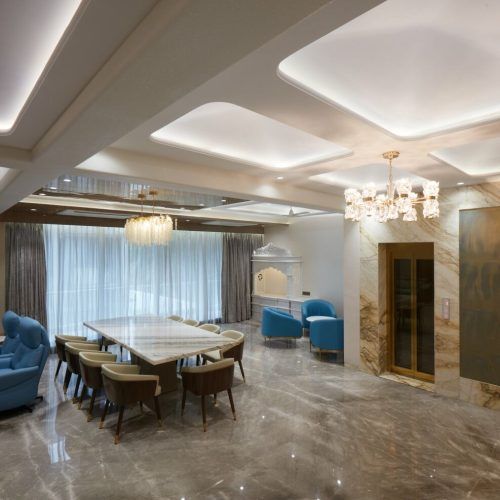
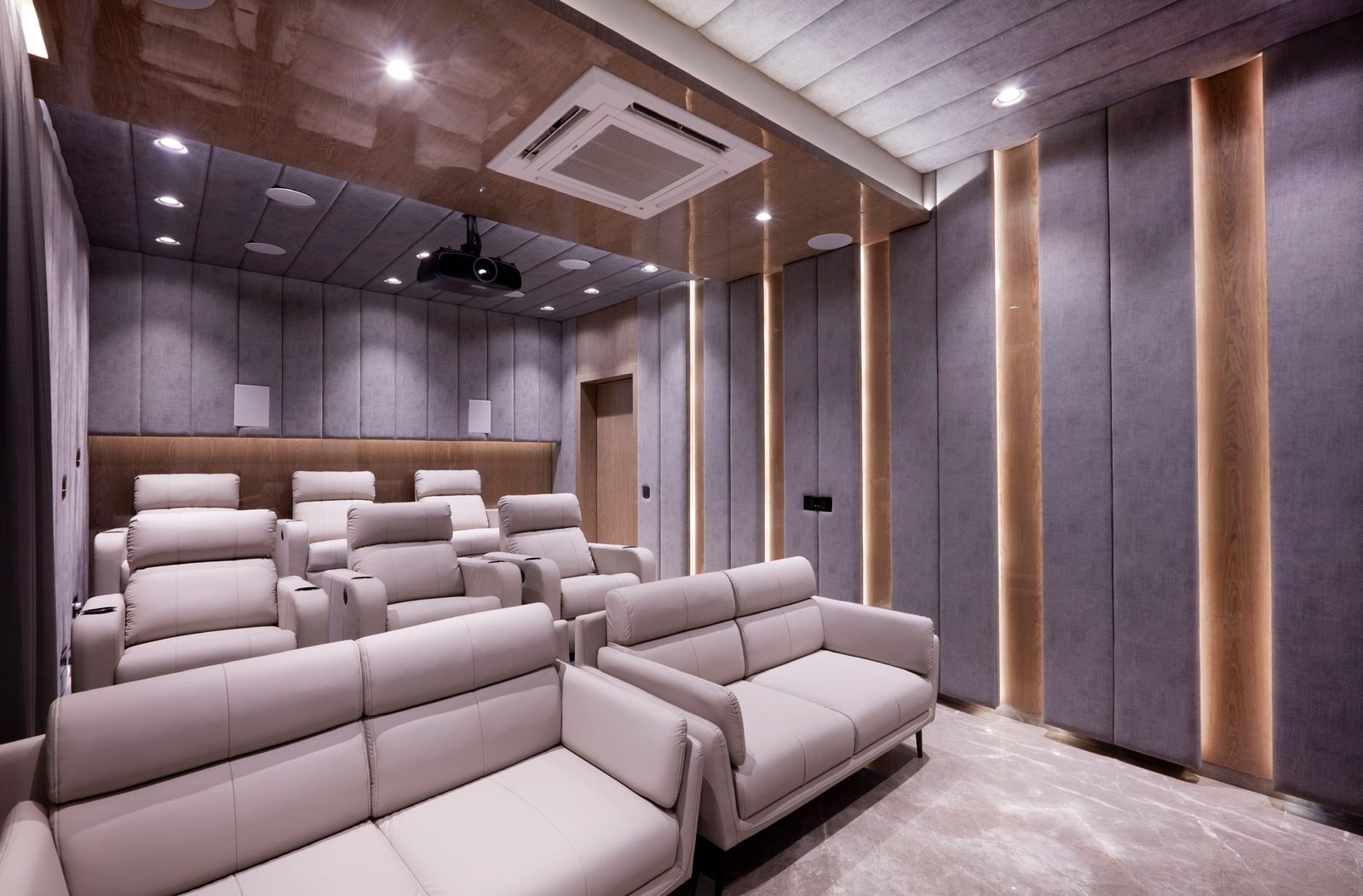
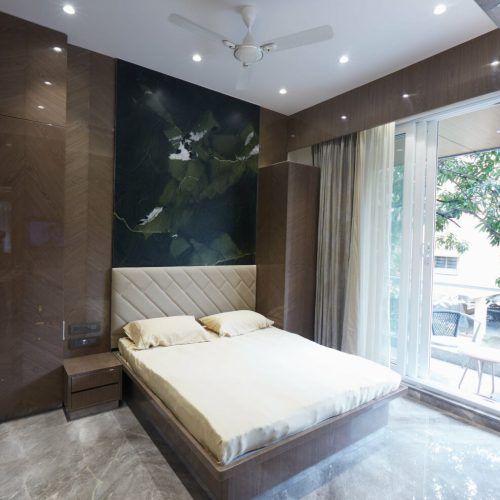
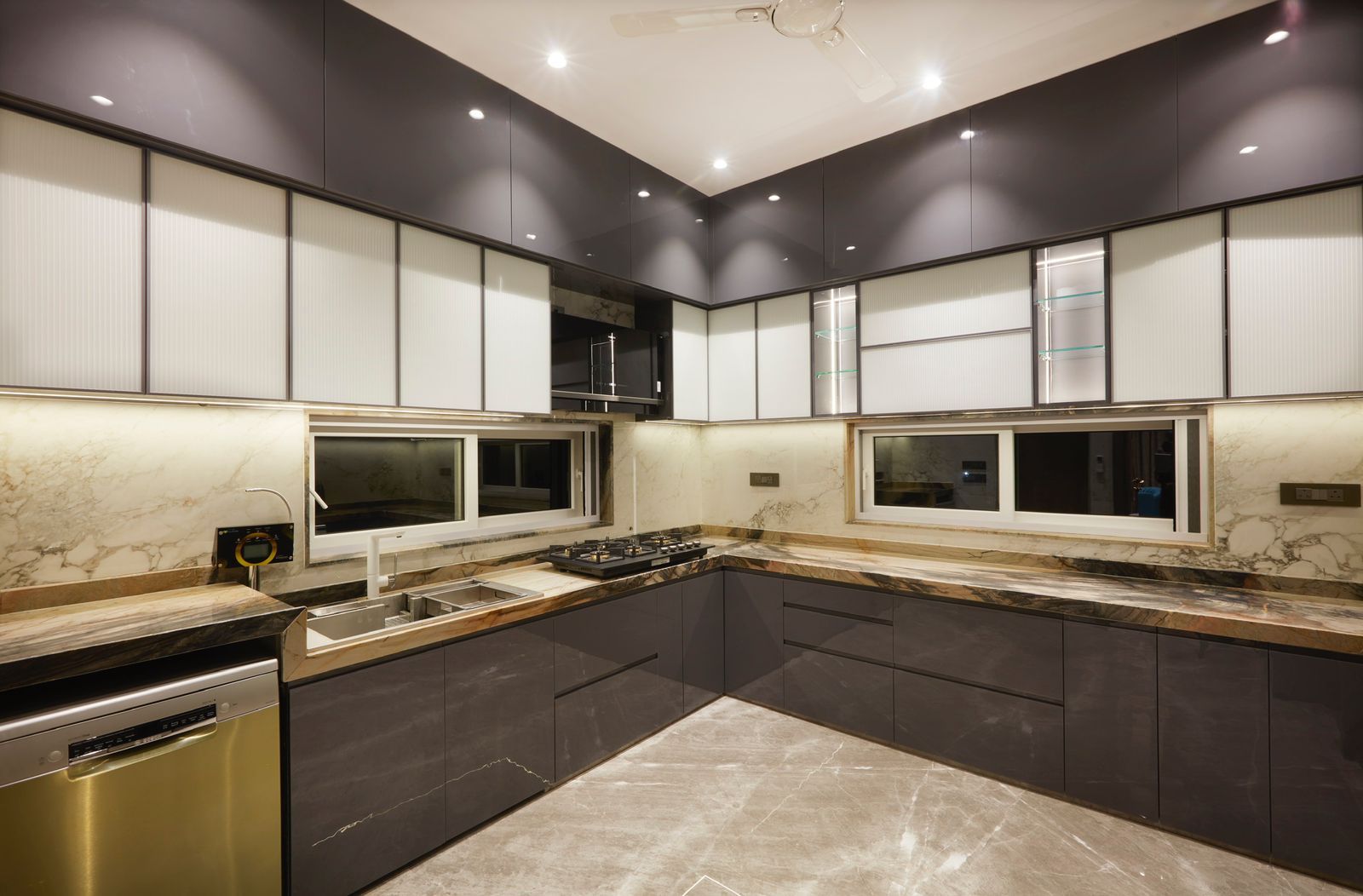
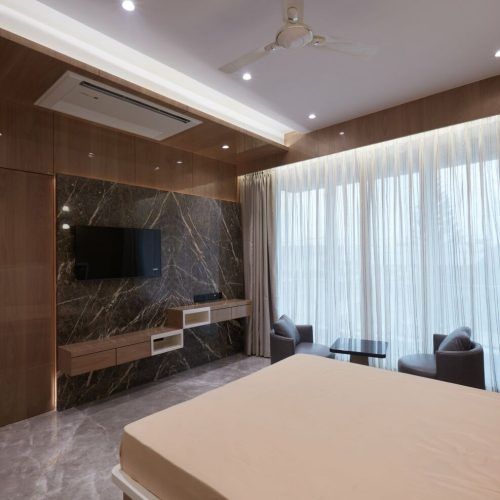
Selected work by Greenbox Design Studio. Tap any image to enlarge.
Frequently asked questions
Is gloss or matte better for a kitchen in 2026?+
Matte, in almost every Indian kitchen. Gloss acrylic shows fingerprints, oil haze and wipe marks, and a kitchen that does daily tadka dulls a gloss finish within a year. Matte acrylic at ₹2,050 to ₹2,450 per sq ft or anti-fingerprint laminate at ₹1,650 to ₹1,950 both hold up far better, and the laminate is the value pick.
Is quartz better than granite for an Indian kitchen?+
Quartz is non-porous, consistent and stain-resistant, and it is now the default in new Mumbai kitchens at ₹480 to ₹1,250 per sq ft. Granite at ₹190 to ₹480 handles direct heat better and remains excellent value if you can accept the variation between slabs and reseal it every couple of years. Both are sound; quartz costs more and asks less.
Are handleless kitchens practical in India?+
Yes, with the right system. J-profile shutters are the most practical — nothing to clean, ₹550 to ₹950 per running foot. Gola channels are cheaper but collect crumbs. Push-to-open looks best and is the one we limit to tall units, because on a loaded drawer the mechanism is the part that fails around year six.
Should I put an island in my kitchen?+
Only above about 120 sq ft. An island needs 1050 mm of clear aisle on every side, plus 600 mm of knee overhang if anyone is to sit at it. In the typical 42 to 65 sq ft Mumbai kitchen an island takes away more working counter than it adds. A peninsula off the end of a run does most of the same job in half the space.
What does a 2026-spec modular kitchen cost in Mumbai?+
For a 60 sq ft kitchen with BWP IS:710 carcass, anti-fingerprint laminate shutters, a J-profile handleless detail, a quartz counter, one tall unit with Hettich pull-outs, a magic corner, task lighting and a 90 cm ducted chimney: roughly ₹4,60,000 to ₹6,20,000 ex-GST. Add 18% GST. Appliances beyond the chimney are separate.