
The fifteen, ranked by what they cost to fix
We keep a snag and rework log across projects. The ranking below is by average cost of correction after handover, in 2026 Mumbai rates, not by how often people mention them on Pinterest.
| Mistake | Cost to fix later | Cost to avoid |
|---|---|---|
| Wrong layout — doors, circulation, wardrobe position | ₹1.5 L – ₹4 L | Two extra days in planning |
| Flooring changed after joinery | ₹1.2 L – ₹3 L | Decide before fabrication |
| Appliances selected after cut-outs are made | ₹15 k – ₹60 k per unit | Fix models at design sign-off |
| MR-grade ply in kitchen or bathroom-adjacent joinery | ₹80 k – ₹2 L (unit rebuild) | ₹90–₹140 per sq ft upgrade to BWP |
| Too few electrical points | ₹1,200 – ₹2,500 per new point | ₹380 – ₹650 per point during wiring |
| Heavy false ceiling in a 9 ft 6 in room | ₹180 – ₹260 per sq ft to redo | Peripheral cove instead |
| Single cool-white layer throughout | ₹40 k – ₹90 k to relamp and rewire | Circuit planning at drawing stage |
| Open shelving in a Mumbai kitchen | Ongoing cleaning, eventual closure | Lift-up shutters instead |
Why the ranking matters more than the list
Most mistake lists treat a badly chosen cushion and a badly placed wardrobe as equivalent problems. They are not. A cushion is a ₹3,000 decision you can reverse on a Sunday afternoon. A wardrobe placed against the only wall that could have taken a study desk is a ₹2 lakh decision that also removes an option you will want in year three. Sort by reversibility and the list organises itself: layout first, services second, specification third, styling last. The same order, incidentally, is the order in which the decisions have to be made, which is why the expensive mistakes cluster at the start of a project rather than the end.
Design and build under one accountable roof
Planning mistakes
These five all originate before a single piece of plywood is cut, which is why they are the most expensive and the most avoidable.
- Starting site work before the BOQ is frozen. Every decision taken on site is priced without competition and executed without drawings.
- Designing the wardrobe wall before checking the door swing. A 750 mm door arc into a 600 mm deep wardrobe produces a shutter that opens 40 degrees.
- Ignoring the beam grid. A 300 mm beam across the bedroom decides where the wardrobe and the ceiling cove can go, not the other way around.
- Planning furniture from the builder's plan. Builder plans are usually 2–4% out on internal dimensions; a 2,400 mm wardrobe run into a 2,380 mm gap means a filler strip.
- Leaving the entrance as an afterthought. Shoe storage, key drop and a 600 mm clear landing zone are almost never on the first plan and always missed later.
Specification mistakes
Specification errors survive photography. They fail in month eighteen, which is exactly when the studio that made them has moved on.
- MR-grade plywood anywhere near water. In Mumbai humidity the kitchen base carcass is the first casualty. BWP IS:710 costs roughly 18–25% more and lasts the decade.
- Unbranded hinges to save ₹8,000. A 40-shutter kitchen with generic hinges has visible sag within two years; Hettich or Blum soft-close adds ₹180–₹420 per hinge.
- 0.8 mm edge banding on exposed edges. It chips at the corner within a year. Specify 2 mm PVC wherever a hand touches it.
- High-gloss acrylic in a home with children. It shows every fingerprint and every swirl mark from cleaning. Matte laminate or suede-finish acrylic hides both.
- Dark granite in a north-facing kitchen. It reads as a black hole under 3000 K light; quartz in a mid tone doubles perceived brightness.
Services mistakes
Electrical and plumbing are buried before anything else is built, which makes them the second most expensive category. The pattern is always the same: the client under-specifies because points feel trivial at ₹500 each, then discovers the omission after tiling and painting, when the same point costs four times as much and leaves a patch.
| Room | Points most often missed | Add during wiring |
|---|---|---|
| Bedroom | Bedside 5A and USB, spare on free wall | ₹380 – ₹650 each |
| Kitchen | Appliance points behind tall units, hob isolator | ₹500 – ₹900 each |
| Living | Floor point under the sofa, router shelf point | ₹600 – ₹1,100 each |
| Bathroom | Geyser isolator at door, shaver point | ₹550 – ₹950 each |
| Entrance | Point for a video door phone, shoe-cabinet light | ₹420 – ₹700 each |
Finishing and styling mistakes
The last two mistakes are the reason a technically correct home can still feel wrong. Both are cheap to prevent and slow to undo.
Matching every surface
One laminate on wardrobes, TV unit, kitchen and study reads as a display flat. Two woods and one solid is a better rule.
One light source per room
A single ceiling fixture flattens everything. Three layers — ambient, task, accent — costs under ₹25,000 per room extra.
→Curtains hung at the window frame
Fix the track 100–150 mm below the slab and run it 200 mm past each side; the room gains apparent height for the price of extra fabric.
Buying art last
By then the budget is gone and the walls stay bare for two years. Ring-fence 3% of budget for art and styling.
Skipping the mock-up
One shutter sample under your own lighting prevents the most common finish regret.
Rug too small
A rug that does not reach the front legs of the sofa makes a living room look smaller, not larger.
Almost nothing in this list is a taste problem. They are sequencing problems wearing a taste costume.
Greenbox principal designer
The order that prevents most of them
You do not need to memorise fifteen mistakes. You need to make decisions in the order that makes them unnecessary. Layout is frozen before services; services are frozen before joinery fabrication; joinery is frozen before finishes; finishes are frozen before styling. Every mistake in this article is an instance of that order being broken, usually because somebody wanted to see progress on site before the drawings were finished.
- Freeze the planDoors, circulation, wardrobe and bed positions, kitchen triangle. Two extra planning days here removes the top four rows of the table above.
- Freeze servicesElectrical points, data, plumbing, AC drain routing and outdoor unit positions — all before chasing begins.
- Freeze appliances and sanitarywareActual model numbers. Cut-outs are made from these dimensions, not from category averages.
- Freeze joineryCarcass grade, shutter finish, hardware brand and internal layout, signed drawing by drawing.
- Then, and only then, start siteMobilise when the BOQ is complete. Everything decided after this point is priced without competition.
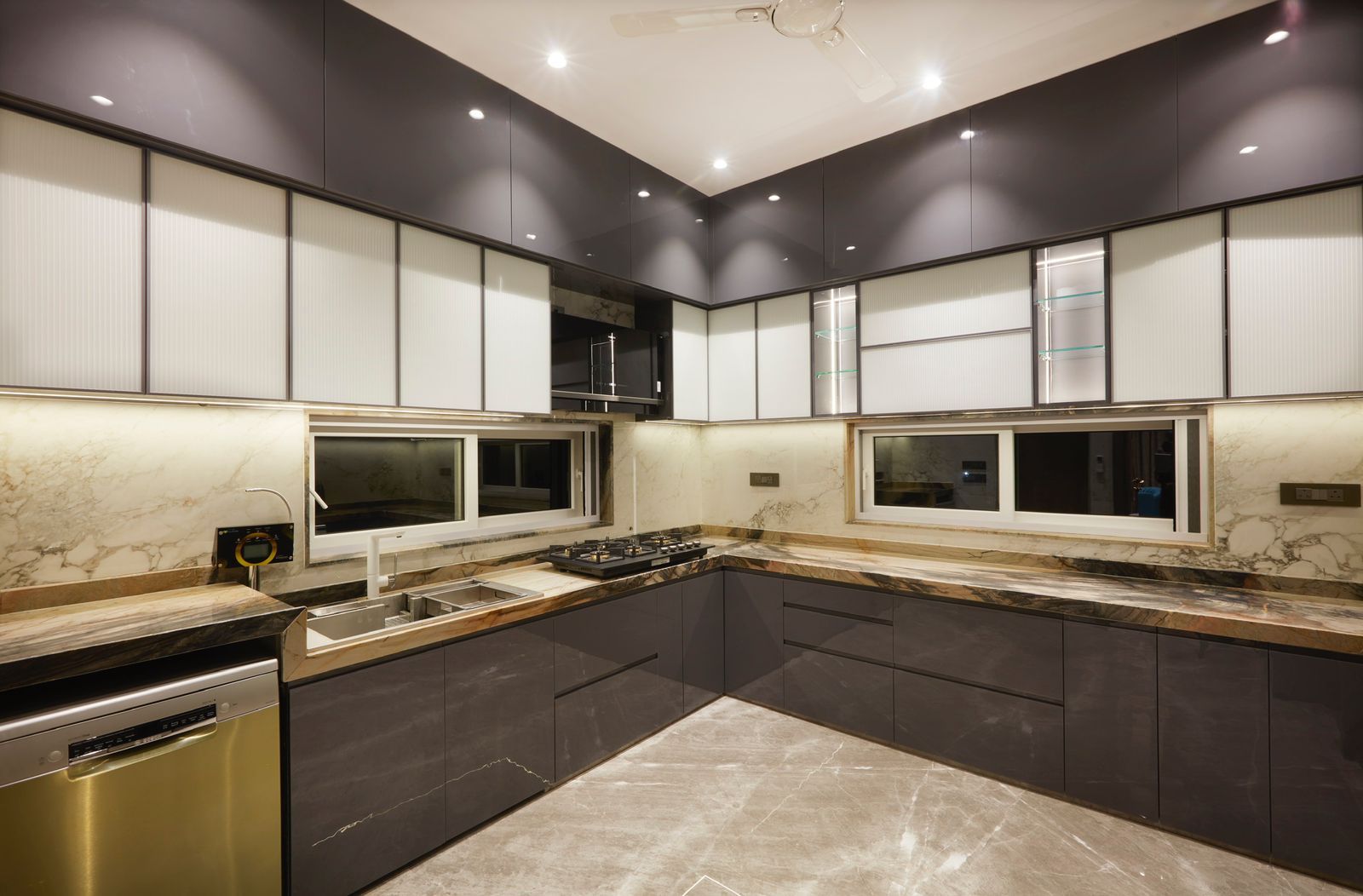
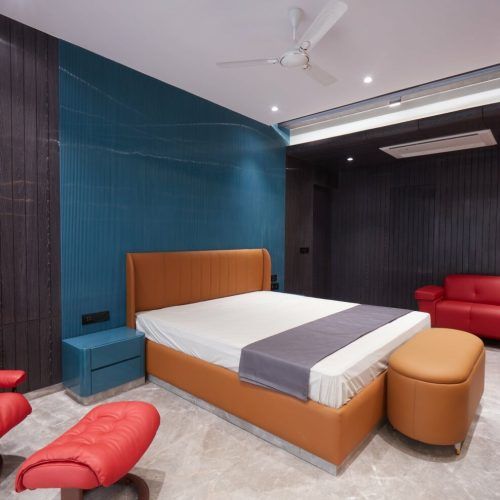
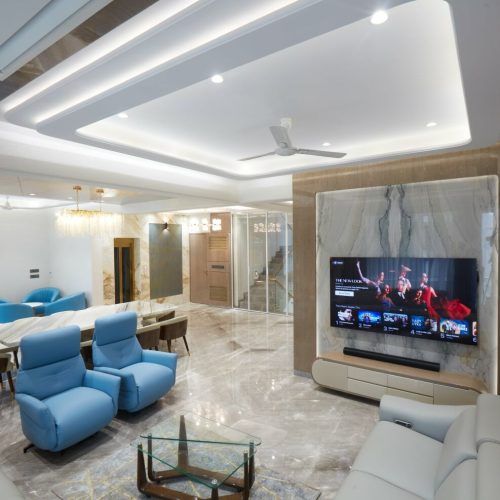
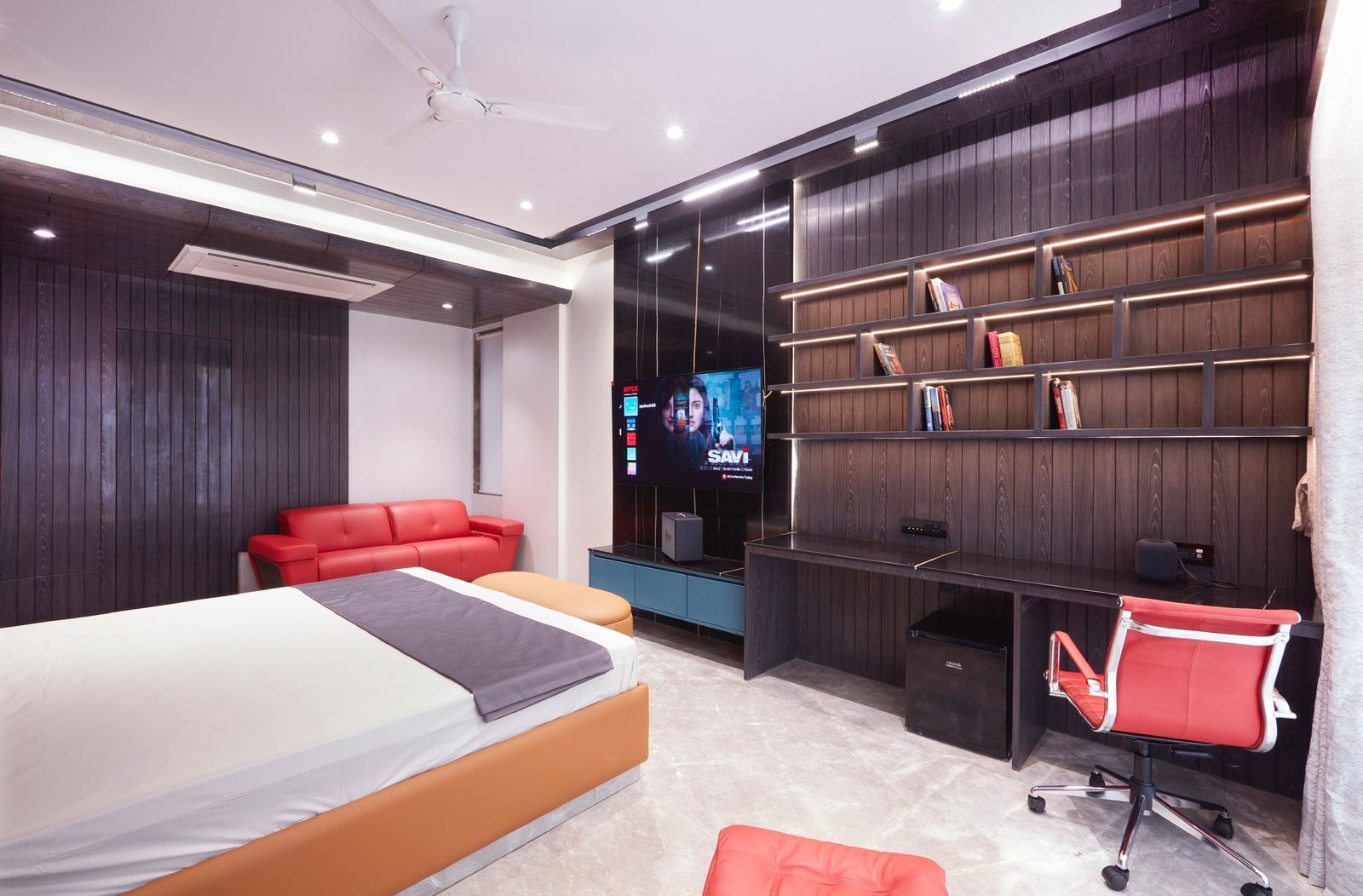
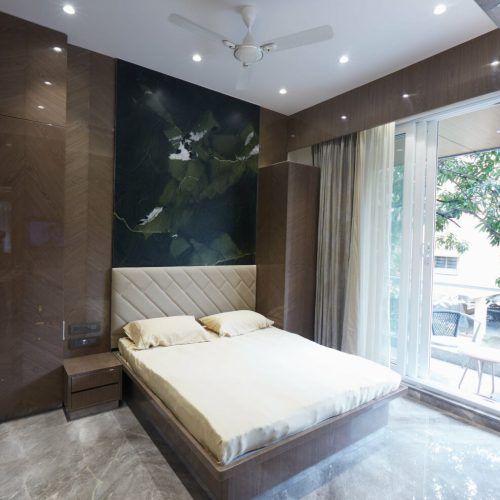
Selected work by Greenbox Design Studio. Tap any image to enlarge.
Frequently asked questions
What is the most expensive interior design mistake?+
Changing the layout after joinery has been installed. Moving a wardrobe wall or relocating a kitchen once units are fixed costs ₹1.5–₹4 lakh in Mumbai, against two extra days of planning at the drawing stage.
How many electrical points should a bedroom have?+
Plan for eight to ten: two at each bedside including a 5A and a USB, two on the study or dresser wall, one behind the TV with a data point, one for the air-conditioner and one spare on the free wall. Adding a point later costs three to four times the original.
Is a false ceiling always a mistake in small rooms?+
No, but a full-drop ceiling usually is. In rooms under 9 ft 6 in, a 100–150 mm peripheral cove gives you concealed lighting and services routing while losing almost no perceived height. A uniform 225 mm drop across the room is what makes a space feel low.
Can these mistakes be corrected after handover?+
Specification and lighting mistakes can, at two to four times the original cost. Layout mistakes usually cannot be corrected economically, because the joinery, electrical routing and flooring were all built around them.
Do designers make these mistakes too?+
Studios make sequencing mistakes when they start site work to hold a client, before drawings and the BOQ are complete. The honest fix is a frozen BOQ and a written variation procedure, which protects both sides.